
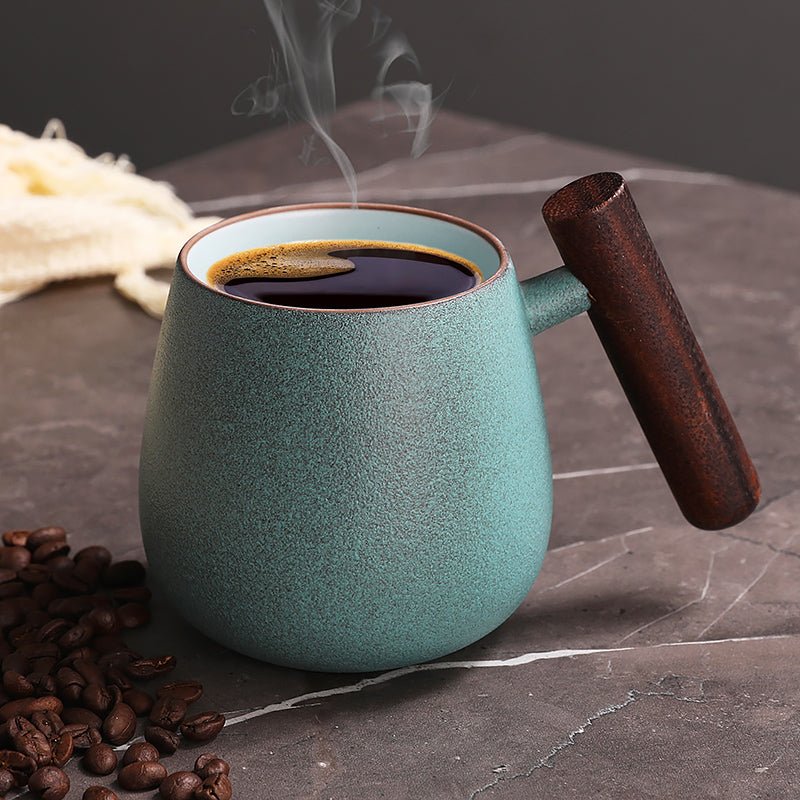
Coffee Mug 15 oz: Fit, Comfort, and What to Check Before Buying
Reading time: about 8 minutes
What does a coffee mug 15 oz actually fit?
A coffee mug 15 oz solves a very specific problem we see on kitchen counters and office desks: the buyer wants one mug that handles a full pour, a splash of milk, and a little extra room without chasing a second refill before the first cup is finished. In our store, the people who choose this size usually want more capacity than a standard 11 oz mug, but they do not want the bulk of a giant breakfast-bowl cup.
If you want to compare shapes while you shop, start with the Planet Coffee Tea Mug, the Rhombus Coffee Tea Mug, and the Handbag Coffee Tea Mug. They are useful examples because 15 oz mugs can look very different in the hand even when the capacity is similar.
For day-to-day use, 15 oz usually makes sense if you drink:
- A full drip coffee with room for cream, milk, or sugar
- Hot tea that you want to sip slowly
- Hot chocolate or a latte-style drink that needs a larger bowl than a standard mug
- Soup or oatmeal at a desk, as long as the mug opening is wide enough and the base is stable
It is not the right pick for every setup. A 15 oz mug is usually a poor match for espresso, for very small hands, or for a coffee station with a tight under-cabinet clearance. It also is not a travel mug. If you need a lid, insulation, or cup-holder compatibility, you should look at a different category entirely.
Is a 15 oz mug comfortable on a desk or in the hand?
Capacity is only half the story. The real question is how the mug behaves when you lift it at 7 a.m., carry it from the counter to a desk, or wash it after dinner. A good coffee mug 15 oz should feel balanced, not top-heavy, and the handle should give your fingers enough room that you are not squeezing the mug just to keep a grip.
We look at three things first: overall height, rim diameter, and handle opening. The exact numbers vary by design, but a 15 oz mug often feels more substantial than it sounds on paper. A taller shape can fit more liquid without looking wide, while a shorter, rounder shape can feel steadier on a desk and less likely to tip if it gets bumped.
| Size | Best for | Trade-off to check |
|---|---|---|
| 10 oz | Smaller coffee servings, tea, compact cupboards | Less room for milk or foam |
| 11 oz | Standard daily coffee and simple gift use | Can feel small for long drinkers |
| 12 oz | A middle ground for people deciding between sizes | Still may need a refill if you drink slowly |
| 15 oz | Large daily pours, milk-heavy drinks, slower sipping | Heavier in the hand and sometimes too tall for tight spaces |
A practical handle check: two fingers should pass through without scraping the mug body. If the handle is too tight, the mug can feel heavier than it really is. If the base is narrow and the mug is tall, it may feel a little less secure on a crowded desk or a slick counter.
Which material and finish should you check first?
Most 15 oz kitchen mugs are ceramic, stoneware, or porcelain. Each one has a different feel, and that matters more than shoppers expect. Ceramic is the broad category most people recognize. Stoneware usually feels denser and a bit heavier. Porcelain tends to look cleaner and thinner, which some buyers love and others find too delicate for daily use.
Our team pays attention to finish because it changes how the mug ages in real life. A glossy glaze is easier to wipe down after coffee rings or tea stains, but it can show water spots. A matte finish looks softer and more modern, but it may pick up utensil marks sooner. Neither is wrong. The right choice depends on where the mug will live.
There are a few common defect modes we watch for when mugs arrive or when customers compare options:
- A wobbly base that does not sit flat on the counter
- Pinholes or tiny glaze gaps near the rim or foot
- A handle that is attached too close to the body and pinches the fingers
- Hairline cracks from shipping impact, especially on thin-walled pieces
- Printed decoration that sits on top of the finish instead of under it
Care matters too. Plain ceramic and stoneware are often dishwasher safe, but printed artwork and metallic accents can change that. If the mug has gold trim, foil, or decorative details, do not assume it belongs in the microwave. Even with a sturdy mug, we recommend avoiding sudden temperature shock, such as moving it from a cold fridge straight to boiling water.
Which style works best for gifts, office desks, or everyday kitchens?
Style is not just decoration. It changes how the mug gets used. A sculptural mug is great for a gift or a shelf display, but a straighter-sided mug usually stacks better and can feel more practical on a busy counter. If you want to compare a few different silhouettes in one place, our collection is the easiest starting point.
Here is the way we usually sort buyers:
- For office desks: choose a shape with a stable base and a handle that is easy to grab with one hand.
- For gifts: choose a design that looks finished from every angle, because the unboxing moment matters.
- For daily kitchen use: choose a mug that is easy to rinse, easy to load in the dishwasher, and not so tall that it crowds the shelf.
- For tea drinkers: a wider opening can help the drink cool a little faster and makes room for a tea bag or infuser.
If you want a deeper size breakdown, our article on 15 oz Coffee Mug: Size, Fit, and What Buyers Should Check goes further into the common measurements people compare. If you are still deciding between a smaller cup and a larger one, the guide to 12 oz Coffee Mug Buying Guide for Fit, Comfort, and Daily Use is a useful companion read. For a direct checklist before checkout, our piece on 15 oz Coffee Mug: What Buyers Should Check Before They Buy keeps the decision practical.
What should you inspect before you click buy?
In our experience, the returns problem is usually not dramatic. It is the small mismatch: a handle that feels cramped, a mug that looks larger in photos than it does on a shelf, or a finish that is harder to care for than expected. A few quick checks will save most of that frustration.
- Check the dimensions. Look at height, top diameter, and handle width, not just capacity.
- Check the base. A flat, stable bottom is worth more than a fancy silhouette if you drink at a crowded desk.
- Check the rim. A smoother lip usually feels better for hot coffee and tea.
- Check the care notes. Dishwasher safe and microwave safe are not the same thing, and decorative accents can change both.
- Check the finish. Glossy, matte, printed, or textured surfaces will age differently in daily use.
- Check the use case. If you need a mug for travel, car cup holders, or insulated carry, a standard kitchen mug is the wrong product.
A simple rule we use in the store: if the mug will live on a counter, it should be easy to clean and hard to tip. If it will live on a desk, it should feel comfortable to hold with one hand while you type. If it is a gift, it should look good unboxed and still make sense after the first wash.
That is why our buying advice is less about chasing the biggest number and more about checking the parts that actually affect daily use. A coffee mug 15 oz is often the sweet spot for buyers who want room without moving into oversized novelty territory, but only if the shape and finish fit the way you drink.
Frequently asked questions
Is a 15 oz coffee mug too big for everyday use?
Not if you usually drink a full mug of coffee, tea, or a milk-based drink. It can feel large for people who prefer small servings, though, especially if they only want a quick pour. We see 15 oz work best for slow drinkers, home offices, and anyone who dislikes refilling.
Will a 15 oz mug fit under a drip coffee maker?
Sometimes yes, sometimes no. The answer depends on the mug height and the clearance under your machine, not just the ounce rating. If your coffee station has low hardware or a short spout area, measure before you buy.
Can I put a ceramic 15 oz mug in the dishwasher?
Many plain ceramic and stoneware mugs can go in the dishwasher, but printed art, matte coatings, and metallic accents can change the care instructions. We always suggest checking the product notes first. If you want a mug to keep its finish longer, top-rack washing is the safer habit when the maker allows it.
Is a 15 oz mug better than a 12 oz mug for lattes and tea?
Usually yes for lattes, cappuccino-style drinks, and generous tea servings because it leaves more headroom. A 12 oz mug can still work if you like a smaller cup or a lighter feel in the hand. The better choice depends on how much you actually pour, not on the number alone.
What is the biggest downside of buying a 15 oz mug?
The main trade-off is size and weight. A larger mug can feel clunky in smaller hands, take up more shelf space, and be harder to fit under some coffee makers. If you want a compact everyday cup, a smaller size may be the better match.
If you are still narrowing it down, open the full collection and compare mug height, handle room, and finish against the checklist above before you decide.
Read more
Sock Monkey Coffee Mug: What to Check Before You Buy
A sock monkey coffee mug works best when the shape, handle, and print finish fit daily use, not just the novelty factor. Here’s what we look for in our store before we recommend a playful mug as a ...
Read more
Lang Coffee Mugs: How to Choose the Right One for Daily Use
Lang coffee mugs compared by shape, comfort, and care so you can pick the right daily mug. See our store picks for desk use, tea, and gifting.
Read more
Leave a comment
This site is protected by hCaptcha and the hCaptcha Privacy Policy and Terms of Service apply.