

Christmas Mug Comparison: 6 Things to Check Before You Buy
Reading time: about 9 minutes
Every December, the same three questions hit our inbox before anyone asks about the design: will the print survive the dishwasher, is it big enough for hot chocolate, and can the kids drink from it? Those three questions are a Christmas mug comparison in miniature — care, capacity, and safety. Most gift lists skip past them and go straight to cute designs, so shoppers end up with a rim that dulled after two washes or a cocoa that overflowed the second whipped cream went on. We sell and ship these mugs all season, and this is the comparison we walk customers through: six checks that actually change which mug you should buy.
What Should a Christmas Mug Comparison Actually Cover?
Design is the fun part, but it should be the last filter, not the first. Two mugs can look nearly identical on a product page and behave completely differently in your kitchen. In our experience, satisfaction — and returns — come down to the same six variables:
- Material — how it holds heat, how it feels in hand, and where it chips first
- Capacity — a standard coffee pour versus an oversized hot chocolate
- Care labels — dishwasher and microwave guidance, which changes with the decoration
- Decoration durability — fired-in prints versus surface decals versus metallic accents
- Glaze safety — especially for kids' mugs and anything vintage or handmade
- Gift context — who is receiving it and how roughly they will treat it
If a listing answers fewer than four of the six, treat that as a gap, not a footnote. Every page in our unique coffee mugs collection keeps material, capacity, and care details visible for exactly this reason — you should be able to run these checks without emailing anyone.
Ceramic, Stoneware, Porcelain, or Bone China: Which Material Fits Your Table?
Ceramic is the umbrella word on most listings, but the mugs underneath it differ more than shoppers expect. Stoneware fires dense with thick walls, so it holds heat through a long morning of refills — that heft is a feature at the kitchen counter and a drawback for small hands. Porcelain fires hotter and thinner, which is why it feels refined and light, and also why a rim chip shows up sooner. Bone china adds bone ash to a porcelain-type body, which is how it manages to be remarkably thin yet strong; the trade-off is that many pieces carry gold or silver trim, and trim changes how you wash and heat them.
Three more materials cover the rest of the holiday shelf:
- Glass — shows off layered cocoa or a peppermint stick; borosilicate handles temperature swings better than standard glass, but pouring boiling water into any cold glass is a habit worth breaking
- Enamelware — steel under an enamel coat, with rustic campfire character; the metal core keeps it out of the microwave, and edges chip when it meets a tile floor
- Insulated stainless steel — keeps coffee hot for hours on a commute; never microwavable, and many pieces prefer hand washing
| Material | Heat and weight feel | Care pattern to verify | Best suited for |
|---|---|---|---|
| Stoneware / ceramic | Thick walls, holds heat, heavier | Plain bodies usually dishwasher-friendly; decorated prints vary | Everyday coffee, office desks |
| Porcelain | Thin, light, refined | Check decal type before dishwashing | Tea service, hosting |
| Bone china | Thinnest and lightest | Trim often means hand wash and no microwave | Collector gifts, formal table |
| Glass | Neutral, shows the drink | Avoid thermal shock unless borosilicate | Cocoa toppings, display |
| Enamelware | Rustic, chips at edges | Hand wash typical; no microwave | Cabins, camping, outdoor use |
| Insulated stainless | Hot for hours | Hand wash common; never microwave | Commutes, travel |
No material wins every column — that is the honest trade-off. Stoneware outlasts bone china in a clumsy household; bone china outclasses stoneware on a dressed holiday table. Our Christmas coffee tea mug is the in-house pick we point everyday coffee and tea drinkers toward, but run the same check on it you would run on any competitor: read the current listing for its exact material, capacity, and care labels before you order. For the year-round version of this decision, our guide to the best mug for coffee and tea compares materials, sizes, and safety in more depth.
How Much Capacity Do Coffee, Hot Chocolate, and Kids' Cocoa Actually Need?
Capacity is where holiday mugs quietly fail. A standard coffee pour runs 8 to 12 ounces, and most daily-drinker mugs live in that band. Hot chocolate is a different drink: marshmallows, whipped cream, and the near-universal habit of filling to the brim turn a 10-ounce mug into a spill. For cocoa we steer people to 14 to 16 ounces, purely for headspace.
- Daily coffee drinker: 10–12 oz keeps refills sensible without the last third going cold mid-sit
- Hot chocolate night: 14–16 oz leaves room for whipped cream and a marshmallow pile
- Kids: a smaller, lighter mug a whole hand can wrap around beats an oversized one they will tip — liquid plus a heavy body adds up fast
- Latte shapes: wider bowls show off foam but cool faster than tall, narrow profiles
Shape matters as much as the number on the box, and we break down the tall-versus-round question for a common size in our 12 oz coffee mug size comparison. The same logic applies to holiday prints sold in that capacity.
Will That Print Survive the Dishwasher? Care Rules by Decoration Type
Here is the detail most gift lists miss: two mugs from identical ceramic can age completely differently depending on how the design was applied. When mugs come back to us with complaints, the body is rarely the problem — the decoration is.
- Sublimation prints — dyed into a coating under heat, leaving no raised edge to catch or peel; these usually stand up to regular cycles, though the care label is still the final word
- Glazed decals — sit on the surface, and the print can dull or scratch after repeated dishwasher runs; rims take the most contact from rack wires, sink edges, and mouths, so that is where surface prints fade first
- Hand-painted details — usually want hand washing, and brushwork is exactly what a crowded rack knocks against
- Metallic rims, gold accents, glitter — treat these as hand-wash-only and keep them out of the microwave; metallic decoration is the reason many holiday mugs carry a do-not-microwave label at all
The practical pre-purchase check is to read the care block on the product page, not the photos. On our Christmas coffee tea mug listing, confirm the material, capacity, and care labels in the details before gifting into a heavy-dishwasher household — matching the mug to the kitchen beats replacing it in January.
Lead Safety: When to Check a Holiday Mug Before the First Sip
Glazes and painted decoration are why safety belongs in any Christmas mug comparison. The FDA advises consumers not to use traditional or handmade glazed pottery for food or drink unless the maker has confirmed the glaze is lead-free, and home lead test kits exist for pieces you cannot verify. Federal lead limits also apply to children's products, which is why we recommend buying kids' holiday mugs new from sellers who follow those rules rather than from unknown sources.
- New, mass-produced mugs from established sellers — the low-friction path; food-safe glazes are the industry norm
- Vintage and thrifted holiday mugs — beautiful, but older glazes predate today's rules; treat them as display-first and test before daily use
- Handmade pottery — a lovely gift, but ask the maker directly about lead-free glaze before serving hot drinks in it
Our store rule is simple: if we cannot verify a glaze, we do not pour hot drinks into it.
We will be blunt about the trade-off: a 1970s novelty mug can be a charming decoration and still be the wrong vessel for a child's nightly cocoa. Keep the display pieces on the shelf and pour from mugs with a verifiable safety story.
Matching the Mug to the Recipient: Office Swaps, Couples, Kids, Collectors
The right answer changes with the person, so map your recipient to a scenario first and only then to the criteria above:
- Office exchange or coworker — one well-built mug in the 10–12 oz range with a dishwasher-friendly print and no fragile trim; it has to survive a shared office sink and dishwasher
- Couples — a matching pair in the same material and design theme, with identical care labels so one mug does not age faster than the other
- Kids — lighter weight, smaller capacity, new and safety-compliant; skip metallic accents and heavy stoneware entirely
- Collectors — this is where bone china, metallic trim, and vintage pieces earn their place, as display-and-occasion mugs; make sure the recipient knows that going in
One honest limitation: if your person needs an unbreakable camp mug or an insulated commuter tumbler, a standard holiday mug is not the right tool — shop that category separately. For a single everyday-holiday pick, our Christmas coffee tea mug is where we start most gift shoppers, with the standing instruction to verify its material and capacity on the current listing. Compare it against other shapes and styles in our unique coffee mugs collection, and our Christmas mug checklist for gifts covers seven more things to compare, including under-the-tree packaging.
Frequently asked questions
What matters most in a Christmas mug comparison?
Material, capacity, and care come first, because they decide how the mug performs on day 100, not day one. Then check decoration durability and glaze safety — especially for kids — and compare designs last. A mug that looks perfect but cannot survive your dishwasher is not a bargain.
Can I microwave a Christmas mug with a gold rim?
Usually not. Metallic accents are the reason many holiday mugs carry do-not-microwave labels, so check the base stamp or the listing's care block before heating. Plain bodies with fired-in prints are the safer bet for reheating, but always confirm the label on the specific mug.
What size mug is best for hot chocolate?
Aim for 14 to 16 ounces. Standard 8–12 oz coffee mugs sit too close to the rim once whipped cream and marshmallows go in. For kids, a 10–12 oz mug they can lift safely beats an oversized one they will tip over.
Are painted Christmas mugs safe to drink from?
New mugs from established sellers are generally made with food-safe glazes. Be cautious with vintage, thrifted, or handmade pieces: the FDA advises against using traditional handmade glazed pottery for food unless the glaze is confirmed lead-free, and home test kits can check pieces you cannot verify.
Is stoneware or bone china better for everyday use?
Stoneware, for most households. Its thicker, denser body shrugs off sink knocks and holds heat through refills. Bone china is lighter and more elegant, but thin rims chip and metallic trim usually forces hand washing — better suited to occasional holiday table service than a daily commuter mug.
Run Your Christmas Mug Comparison in Two Minutes
Before you add anything to cart, run this list against the listing:
- Material named specifically — stoneware, porcelain, bone china, glass, enamel, or stainless?
- Capacity stated in ounces, and matched to coffee or cocoa?
- Dishwasher label present, and matched to your household's habits?
- Microwave label checked, especially with metallic or glitter decoration?
- Decoration type identified — fired-in print, decal, or hand-painted?
- Recipient mapped — daily drinker, cocoa kid, or collector?
- Safety story clear — new and compliant, or display-only vintage?
If a listing answers all seven, you have found a mug worth wrapping. Start in our unique coffee mugs collection and pick the one that will still look this good next December.
Read more

Mountain Coffee Mug Gift for Coffee Lovers: What Buyers Should Compare
A buyer's guide to the mountain coffee mug gift for coffee lovers: match material to drinker type, convert ounces into real cups, read glaze and care labels, and sort packaging before checkout — pl...
Read more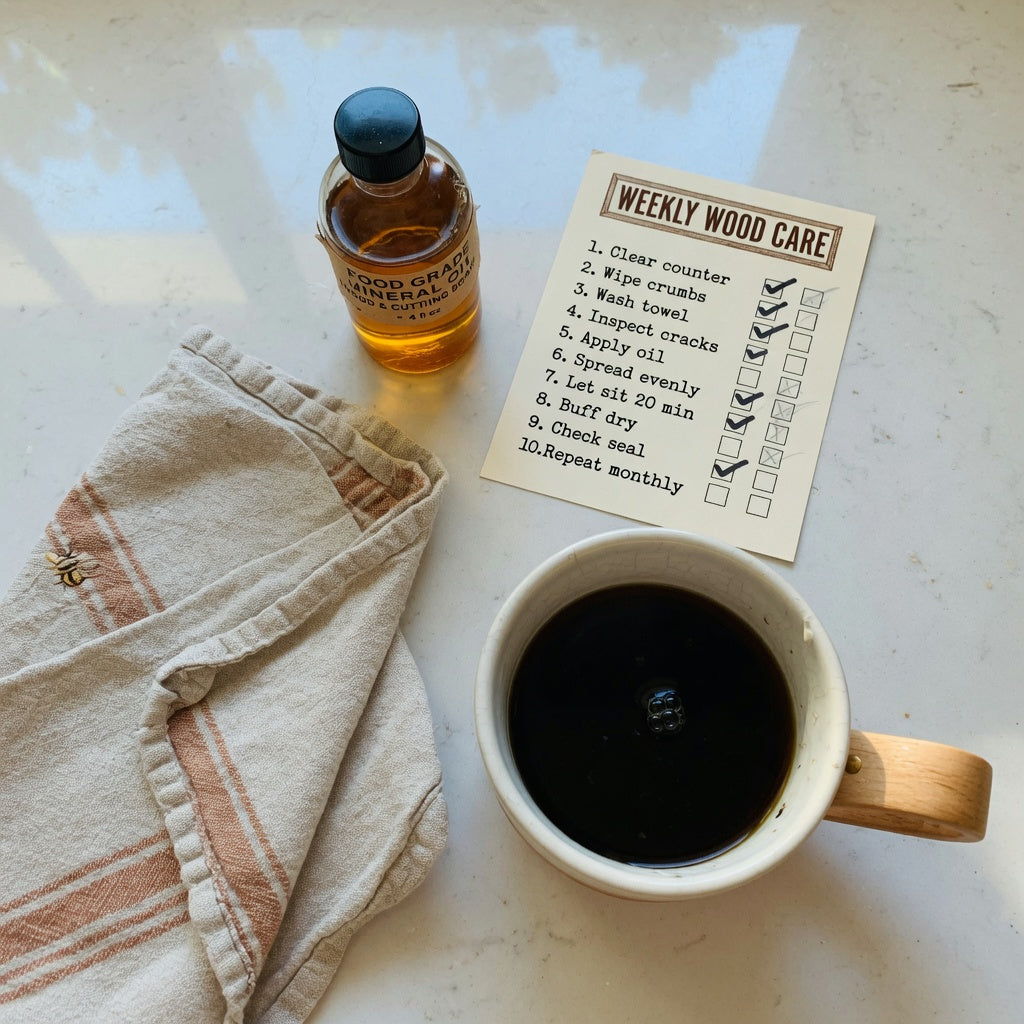
Wooden Handle Ceramic Mug Buying Checklist: What Buyers Should Compare
A shop-floor wooden handle ceramic mug buying checklist: how the handle attaches, glaze safety for hot drinks, brim-versus-usable capacity, wood finish, dishwasher and microwave reality, and the ho...
Read more
Leave a comment
This site is protected by hCaptcha and the hCaptcha Privacy Policy and Terms of Service apply.