
Ceramic Mug With Wooden Handle Daily Use Guide: Desk vs Kitchen
Reading time: about 8 minutes
A mug can look compact in a product image and still crowd a desk once its handle shares space with a mouse, notebook, and charging cable. From handling and selling this category in our store, we start with that everyday fit, not decoration alone. This ceramic mug with wooden handle daily use guide compares only what the current product pages support: a ceramic vessel, a wooden handle, listed capacity, visible vessel form, and handle shape. We do not assign a wood species or infer a coating, detachable construction, water resistance, cleaning method, or heat performance.
Will the mug share a desk, kitchen counter, or small shelf?
On an office desk, the space beside the mug matters almost as much as the ceramic body. A projecting handle can enter the mouse path, press against a notebook, or catch a charging cable when the mug is moved. An open kitchen counter is more forgiving, while a narrow shelf may require the handle to face outward. In our experience, checking this side clearance before choosing a pattern prevents more daily frustration than choosing by appearance alone.
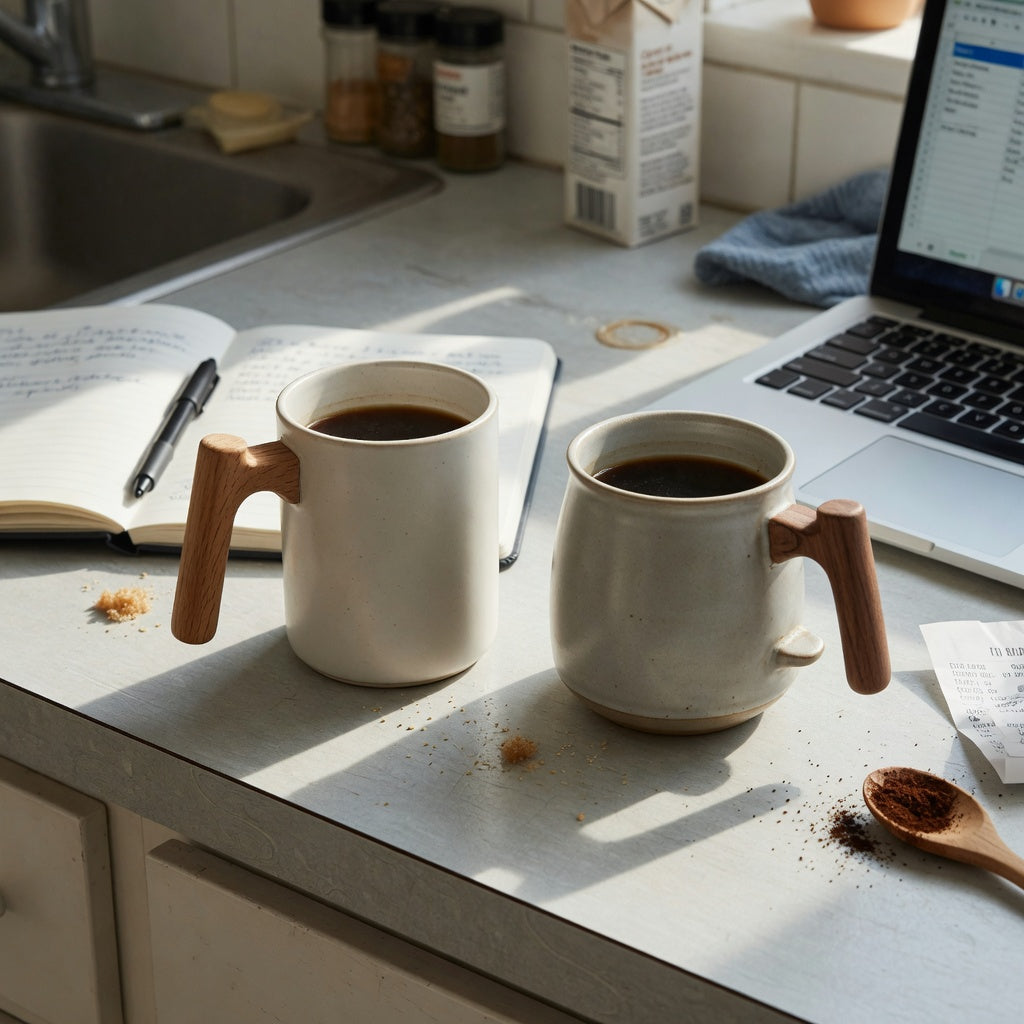
In the current product images, the Mountain Sea II coffee and tea mug with wooden handle presents a more upright vessel and a visibly open C-shaped handle. The Cloud coffee and tea mug with wooden handle has a softer, broader-looking vessel with a handle positioned closer to the ceramic body. Mountain Sea II deserves the first comparison for a visually tighter desk arrangement. The Cloud makes more sense for a shopper who prefers a broader form on an open counter. These are visual comparisons, not exact footprint measurements or guarantees of hand comfort.
How much coffee, tea, milk, or ice do you pour?
Listed capacity is the strongest objective filter available for these two mugs. Do not assume the broader-looking mug holds more, and do not choose a larger listed capacity automatically. Vessel shape and volume are related, but a product image cannot establish the usable amount of a normal serving.
- Measure the drink you already make, including milk, creamer, or water added after brewing.
- For iced coffee or tea, measure the finished drink with the amount of ice you normally use.
- Compare that amount with the current listed capacity on each product page.
- Decide whether you prefer extra room or a closer match to one serving. Do not assume the listed maximum is your ideal fill level.
This step separates a genuine daily mug from one that causes constant refills or leaves more unused volume than you want. It also keeps the decision grounded in your routine if the product listings are updated later.
Ceramic mug with wooden handle daily use guide: three buyer checks
The useful comparison comes down to three supported variables. Check them together rather than treating the wooden handle as the only meaningful feature.
| Daily-use variable | What to inspect | Decision it supports |
|---|---|---|
| Listed capacity | Compare the current capacity on each page with your measured finished drink. | Rules out a mug that is too small or unnecessarily large for your usual serving. |
| Visible vessel form | Mountain Sea II appears more upright; The Cloud appears softer and broader. | Helps match the mug to a crowded desk, open kitchen counter, or display shelf. |
| Handle shape | Mountain Sea II shows a more open C-shape; The Cloud has a closer-set handle. | Helps you judge likely finger clearance and compactness before ordering. |
If both listed capacities suit your drink, vessel form and handle shape become the practical tiebreakers. If neither capacity works, color or artwork should not override that mismatch. Start with another mug rather than adapting every drink to the cup.
Does the handle shape match your hand and carrying pattern?
Online photos cannot guarantee ergonomic fit. Hand size, the number of fingers used, and the way someone lifts a mug can reverse what looks comfortable on screen. A shopper who places three or four fingers through a handle needs different clearance from someone who uses a two-finger grip for quick lifts from the counter.
Use your current favorite mug as a baseline. Count how many fingers you place through its handle, notice whether your knuckles approach the vessel, and consider whether you carry it between rooms or leave it in one spot. The more open C-shaped handle visible on Mountain Sea II is the first one to inspect if you want more apparent interior space. The closer-set handle on The Cloud is the first to inspect if you prefer a compact grip. We would not call either universally more comfortable without your hand and the mug in the same place.
Can your shelf, drying area, and cleaning routine accommodate it?
A wooden side handle changes the storage envelope of a ceramic mug. From displaying and packing this category, we account for the handle projection rather than treating the mug like a straight-sided cup. Do not assume either product will nest with existing mugs, fit a narrow drying-rack slot, or follow the same cleaning routine as an all-ceramic mug.
- Shelf check: Allow lateral space for the handle and decide which direction it must face. A cupboard that depends on tightly nested mugs may be a poor match.
- Drying-area check: Make sure the handle will not press against adjacent glasses, plates, or rack dividers.
- Dishwasher check: Read the current product instructions or packaging. The combination of ceramic and wood does not, by itself, confirm a dishwasher-safe care method.
- Unboxing check: Under clear side light, inspect the ceramic rim, body, and base for chips or hairline cracks. Check the handle junction for visible damage, separation, or unexpected movement without twisting or forcing it.
These checks matter for gifts too. A recipient should be able to inspect the mug before putting it into daily rotation, especially if the package has traveled through several shipping stages.
Mountain Sea II or The Cloud: which routine points where?
Each recommendation should begin with the user's actual setting, followed by the reason the visible form fits that setting.
- Small office desk with notebooks and cables: Start with Mountain Sea II. Its more upright-looking vessel and open C-shaped handle make it the more relevant first comparison. It is not the automatic winner if its listed capacity misses your normal serving.
- Open kitchen counter with room for a broader form: Start with The Cloud. Its softer, wider-looking vessel suits a shopper who wants that visual profile. It is less compelling if you need the more open-looking handle shape.
- Coffee or tea with substantial milk or ice: Open both pages and let current listed capacity decide. Vessel width in a photograph is not a reliable substitute for a capacity number.
- Gift buyer who does not know the recipient's grip or counter setup: Browse the unique coffee mugs collection and compare several forms. Choose only after checking capacity and how far each handle appears to project.
Neither mug is best simply because it has a wooden handle. The right choice is the one whose capacity, visible form, and handle shape create the fewest compromises in the recipient's normal routine.
When is a different mug style the better purchase?
A ceramic mug with a wooden handle is not the right default for every household. Choose another style if you need a sealed travel vessel, a mug specified for a vehicle cup holder, or an identical set designed around compact storage. Neither linked product should be treated as a travel mug based only on its coffee-and-tea description.
A different mug is also the better choice if every item in your kitchen must have explicitly confirmed dishwasher care, or if you require a named wood species, coating, detachable handle, or water-resistance specification. Those details should come from the product listing, not assumptions based on appearance. Shoppers who value stackability and matching handles more than the mixed-material look should compare other shapes in our collection.
Frequently asked questions
What should I compare first in a ceramic mug with wooden handle daily use guide?
Start with the current listed capacity and compare it with your measured drink. Then inspect vessel form for the surface where the mug will sit and handle shape for likely finger clearance. If any one of those three variables conflicts with your routine, keep comparing before ordering.
Is Mountain Sea II the better option for a small office desk?
It is the stronger first candidate because its visible vessel form appears more upright and its handle has a more open C-shape. That does not confirm exact desk footprint or hand comfort. Check its listed capacity and product images against your available space before deciding.
Is The Cloud a practical mug for a kitchen counter?
The Cloud suits shoppers who prefer its softer, broader-looking ceramic form and closer-set wooden handle. An open counter gives that form more room than a crowded workstation. It is not the best fit if you need a visibly more open handle or a tighter-looking profile.
Can a ceramic mug with a wooden handle go in the dishwasher?
Do not assume dishwasher compatibility from the materials or product image. Follow the current care instructions supplied on the listing or with the mug. If dishwasher use is mandatory and the method is not explicitly stated, confirm it before purchasing or choose a product with clearly documented care.
Are wooden-handle ceramic mugs suitable as gifts?
They can be a good fit for someone who enjoys distinctive vessel forms and does not need a uniform, stackable mug set. Check the recipient's usual serving size, available shelf space, and likely grip before choosing. At unboxing, the recipient should also inspect the ceramic body and handle junction for shipping damage.
Your next step: Measure your finished drink, note the side clearance available where the mug will sit, and open the Mountain Sea II and The Cloud pages side by side. Choose the upright, more open-looking option or the broader, closer-handled form only after confirming listed capacity. If neither passes all three checks, return to the unique coffee mugs collection and select a form that asks for fewer daily compromises.
More from our blog
Read more
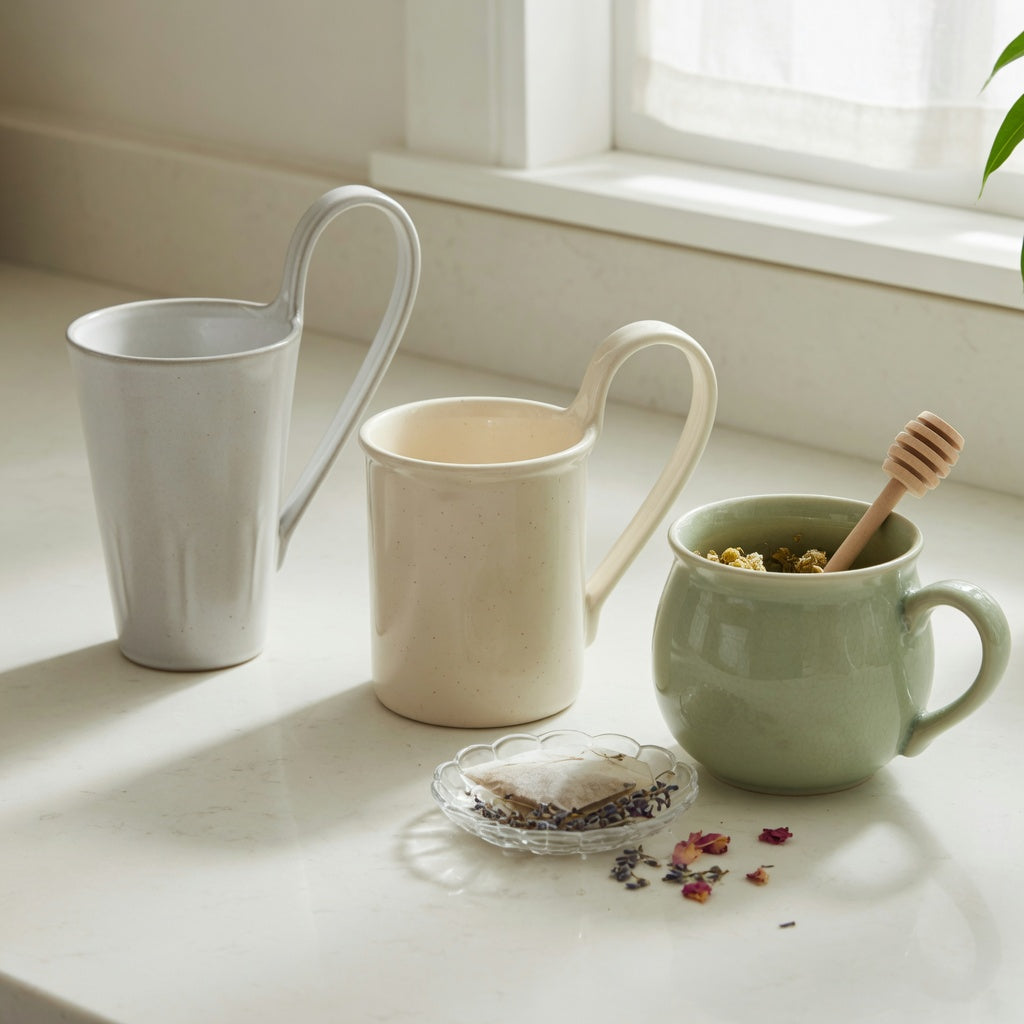
Ceramic Tea Mug Shape and Handle Guide: Compare 3 Options
Compare three current ceramic coffee and tea mugs by visible body shape, handle form, and listed 380-450 ml capacities. Use practical desk, kitchen, and gifting scenarios to narrow your choice.
Read more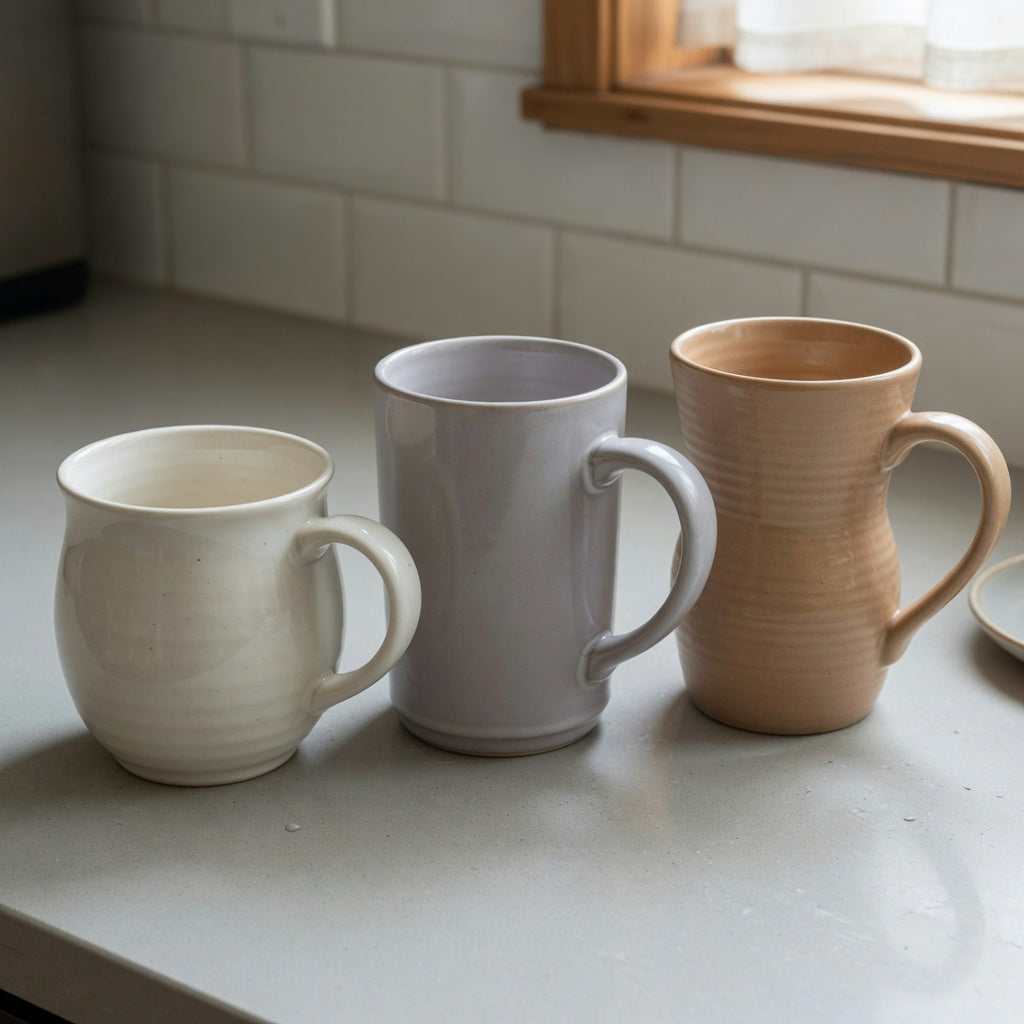
Ceramic Tea Mug Comparison: 400 ml, 440 ml, or 480 ml?
Compare three current ceramic coffee and tea mugs by listed capacity, visible body form, and handle shape. See how the 400 ml Round, 440 ml Morning Night, and 480 ml Flow fit different desks, count...
Read more
Leave a comment
This site is protected by hCaptcha and the hCaptcha Privacy Policy and Terms of Service apply.