
Ceramic Coffee Mug With Handle: Practical Replacement Purchase Checklist
Reading time: about 9 minutes
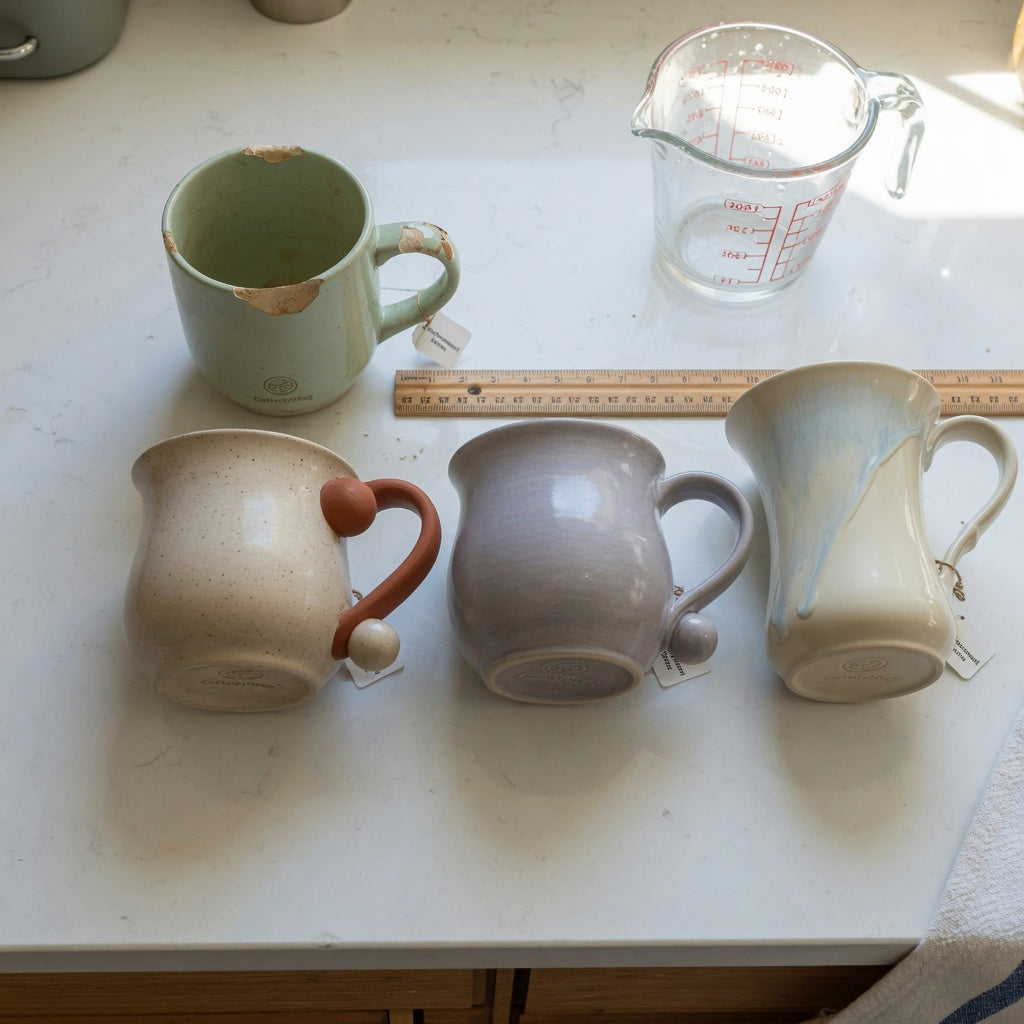
A replacement search often starts with one small failure: a chip at the drinking rim, a hairline crack beside the upper handle attachment, or a mug that no longer fits the office shelf where it is used every day. The old mug may have been almost right, so replacing it with a random new shape can exchange one annoyance for another. For that task, our ceramic coffee mug with handle replacement purchase practical purchase checklist begins with the mug leaving the cupboard, not the most attractive product photo.
At CoffeifyMug, we handle and visually inspect this category while preparing orders. That experience has taught us to separate observable product details from assumptions. We can compare listed ceramic material, visible handle form, listed capacity, and vessel shape. We cannot infer grip comfort, hand-size fit, strength, heat retention, care ratings, or dishwasher and microwave safety from appearance alone. Those boundaries matter when the goal is a dependable replacement rather than an impulse purchase.
Which failure point and daily fit should the replacement correct?
Start by identifying why the old mug is being retired. A rim chip is different from a crack at the handle junction. Glaze crazing, the network of fine lines that can appear across a glazed surface, is different again. The mug may also be intact but poorly matched to its setting: too tall for a cupboard shelf, too wide beside a monitor, or larger than the amount normally poured.
Record the old mug from several angles before disposing of it. Do not refill a cracked or chipped vessel merely to measure capacity. Use an old order record, packaging, a matching household mug, or the volume dispensed by the usual coffee maker instead.
- Material wording: Copy the wording from the base, packaging, or original listing. If it says only ceramic, do not assume a more specific ceramic body such as stoneware or porcelain.
- Usual fill: Measure the coffee or tea normally prepared in a safe measuring jug. Keep that number separate from the old mug's advertised capacity.
- Handle outline: Photograph the side profile and note a plain loop, ball accent, open curve, or another visible form. Measure maximum exterior width, including the handle, if desk or shelf clearance caused the problem.
- Vessel shape: Note straight, rounded, tapered, or flowing walls. Record overall height, widest body diameter, and base diameter when those measurements are available.
- Failure location: Distinguish a rim chip, base or foot-ring damage, glaze issue, and a line at either handle attachment point. This prevents a cosmetic preference from distracting from the original problem.
Your ceramic coffee mug with handle replacement purchase practical purchase checklist
Use this sequence before opening several product tabs. It keeps the comparison tied to the routine the replacement must serve.
- Retire the old mug from use if it is chipped, cracked, or otherwise damaged.
- Write one sentence describing its main limitation, such as insufficient shelf clearance or more capacity than you regularly used.
- Record the old material exactly as listed, without adding an unverified ceramic subtype.
- Find its listed capacity if possible, then record your usual drink volume separately.
- Photograph the handle in profile and the vessel from the side and above.
- Measure the old mug's height, body width, base, and total width including the handle when fit is part of the problem.
- Create four columns for each candidate: listed material, visible handle form, listed capacity, and vessel shape.
- Mark comfort, strength, thermal performance, and care compatibility as unknown unless the current product information addresses them explicitly.
- Remove any candidate that repeats the old mug's main limitation, then compare the remaining forms.
This checklist is deliberately narrow. Color and decorative details can break a tie, but they should not override a capacity mismatch or a vessel that will not fit its intended space.
Ball, round, or flowing: which visible form belongs on the shortlist?
The three relevant CoffeifyMug options differ most clearly in their visible forms. Read the current product pages for the listed material and capacity at the time of purchase, since those details should come from the listing rather than from a product name or photograph.
| Reader situation | Candidate | Why it is relevant | What to verify |
|---|---|---|---|
| The replacement will stay on a desk or arrive as a gift, and a distinctive handle is part of the decision. | Ball Handled Coffee Tea Mug | Its visible ball-accent handle gives you a clearly defined alternative to a conventional plain loop. | Compare listed capacity, material wording, total exterior width, and the clearance available around the handle. The ball form does not establish comfort or strength. |
| The old straight-sided vessel looked or fit poorly on the kitchen counter, and a rounded body is the variable you want to change. | Round Coffee Tea Mug | Its rounded vessel presents a direct shape contrast to a cylindrical or sharply sided mug. | Check the current listed capacity and available dimensions. A round appearance alone does not prove a smaller footprint, greater stability, or easier storage. |
| The old mug looked blocky, and you want a more continuous visual line between vessel and handle. | The Flow Coffee Tea Mug | Its flowing profile makes vessel and handle geometry the main comparison point without changing the category. | Confirm listed material, capacity, body width, and handle clearance. Do not infer hand fit or heat performance from the curved silhouette. |
If all three repeat the limitation you are trying to remove, broaden the comparison without abandoning the same four columns. Our unique coffee mugs collection is the next step for shoppers who need another visible handle or vessel form. Eliminate options that lack the information your decision requires instead of choosing one simply because it is different.
How should listed capacity be compared with your actual pour?
Listed capacity and everyday fill are not automatically the same. Most people leave headroom below the rim, and additions such as milk, foam, a tea infuser, or ice occupy space. Product listings may also use a capacity convention that is not explained, so compare listed figures consistently and ask for clarification if the measurement method affects your choice.
For an office coffee made from the same machine setting each morning, measure that output in a graduated jug. For tea, measure the water normally poured after accounting for the space you leave below the rim. If the old mug is already damaged, never pour liquid back into it for this test. The useful comparison is your safe, repeatable serving volume against each current listed capacity.
A larger number is not automatically better. Extra volume can mean unused space and a larger vessel, while a smaller mug may leave too little headroom for the way you prepare the drink. Choose according to the actual pour, then use vessel shape and handle form to separate candidates with suitable capacities.
Which unknowns should stop an assumption before checkout?
A product photograph can answer questions about visible geometry, but several purchase-critical details need explicit information. In our store, we treat an unstated feature as unknown rather than turning it into a promise.
- Grip and hand fit: A visible loop, ball accent, or flowing handle does not establish finger clearance or ergonomic comfort for a particular hand.
- Strength and durability: A thicker-looking handle or rounded body is not evidence of greater impact resistance. Ceramic mugs can still chip or crack if struck or dropped.
- Dishwasher and microwave use: Ceramic material alone does not establish either care rating. Check the exact product page and accompanying care information.
- Heat retention: Vessel shape in a photograph does not provide enough information to compare thermal performance.
- Ceramic subtype: Do not convert a general ceramic listing into a stoneware, porcelain, or firing-process claim unless that specification is supplied.
If one of these unknowns is non-negotiable, pause the order and seek product-specific confirmation. This is especially relevant for a mug expected to go through frequent dishwasher cycles or serve as a gift for someone with a specific grip requirement.
When is another mug style a better replacement?
A handled ceramic mug is not the best answer for every routine. A commuter carrying a drink in a backpack should consider a purpose-built lidded travel vessel rather than relying on breakable ceramic. A household needing tightly stacked café-style cups may find that a sculptural handle consumes too much storage space. A shopper whose primary requirement is verified microwave or dishwasher compatibility should select only a product with explicit care information, even if that means leaving this shortlist.
The same applies to vehicle cup holders and very narrow shelving. Do not assume a rounded or flowing profile will fit because it looks compact on screen. Exterior dimensions, including the handle, matter more than the visual impression. If those dimensions are unavailable and the fit tolerance is small, a different style with clearly stated measurements is the more practical purchase.
How do we inspect a replacement before it joins the cupboard?
Once a mug arrives, examine it in clear light before using or gifting it. We look along the drinking rim for chips, turn the vessel slowly to inspect the glaze, and check both points where the handle meets the body. We also place the mug on a clean, dry, level counter to identify obvious rocking and compare the received handle and vessel shape with the product listing.
Keep packaging in place until that visual check is complete, particularly for a gift unboxing. Do not heat the mug or put it through a dishwasher cycle until you have verified the applicable care guidance. Arrival inspection cannot prove future durability, but it can catch a visible mismatch or transit issue before the mug enters daily use.
Frequently asked questions
How should I use a ceramic coffee mug with handle replacement purchase practical purchase checklist?
Begin with the old mug's failure or fit problem, then record its material wording, usual fill, visible handle form, and vessel shape. Compare each candidate using those same columns and reject any option that repeats the main limitation. Leave comfort, strength, care compatibility, and heat retention in an unknown column unless product-specific information confirms them.
Should a replacement mug have the same listed capacity as the broken one?
Not necessarily. Match the replacement to the amount you normally pour and the headroom your drink requires, not just the old advertised number. Keeping usual fill and listed capacity as separate measurements produces a more useful comparison.
Does a ball-shaped or curved handle mean the mug is more comfortable or stronger?
No conclusion about comfort or strength should be drawn from the visible form alone. Use a ball accent or flowing curve as a style and geometry comparison, then verify dimensions or other product-specific information relevant to your needs.
Can I assume a ceramic replacement mug is dishwasher and microwave safe?
No. Ceramic is the listed material category, but that alone does not establish dishwasher or microwave compatibility. Read the current product page and care information, and treat either rating as unknown if it is not stated explicitly.
Where should I look if the three replacement options do not fit?
Use the broader CoffeifyMug collection to compare additional visible handle and vessel forms. Keep the same filters in place: listed ceramic material, listed capacity, handle outline, and vessel shape. A larger selection is useful only if you continue eliminating candidates that repeat the old mug's limitations.
Set the retired mug's notes beside the three product pages, cross out every candidate that fails on capacity or physical fit, and choose between the remaining visible forms. If none survives that comparison, apply the same ceramic coffee mug with handle replacement purchase practical purchase checklist to the collection before placing an order.
More from our blog
Read more
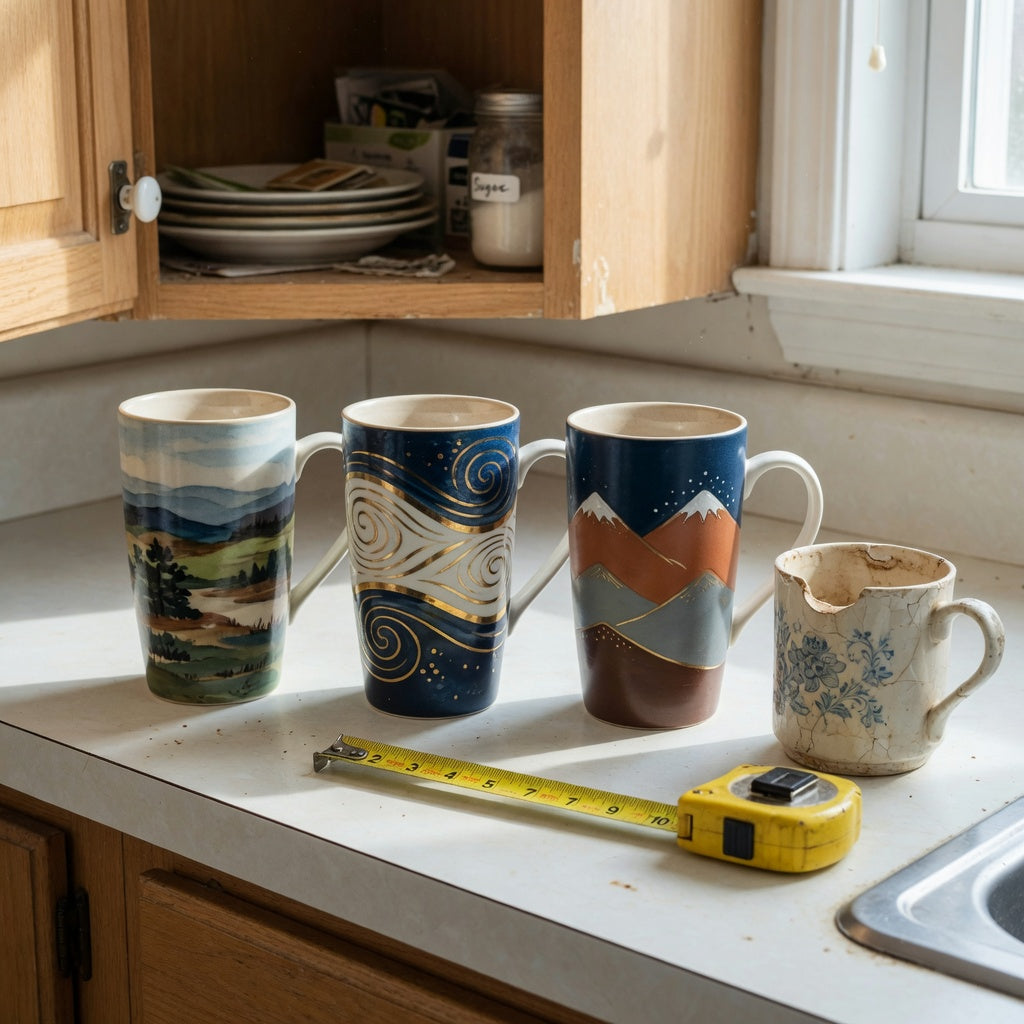
Tall Ceramic Coffee Mugs: Practical Replacement Purchase Checklist
Replace the mug that failed without repeating its shelf, grip, or capacity problems. This checklist covers what to measure, which listing details to verify, and when another mug style is the better...
Read more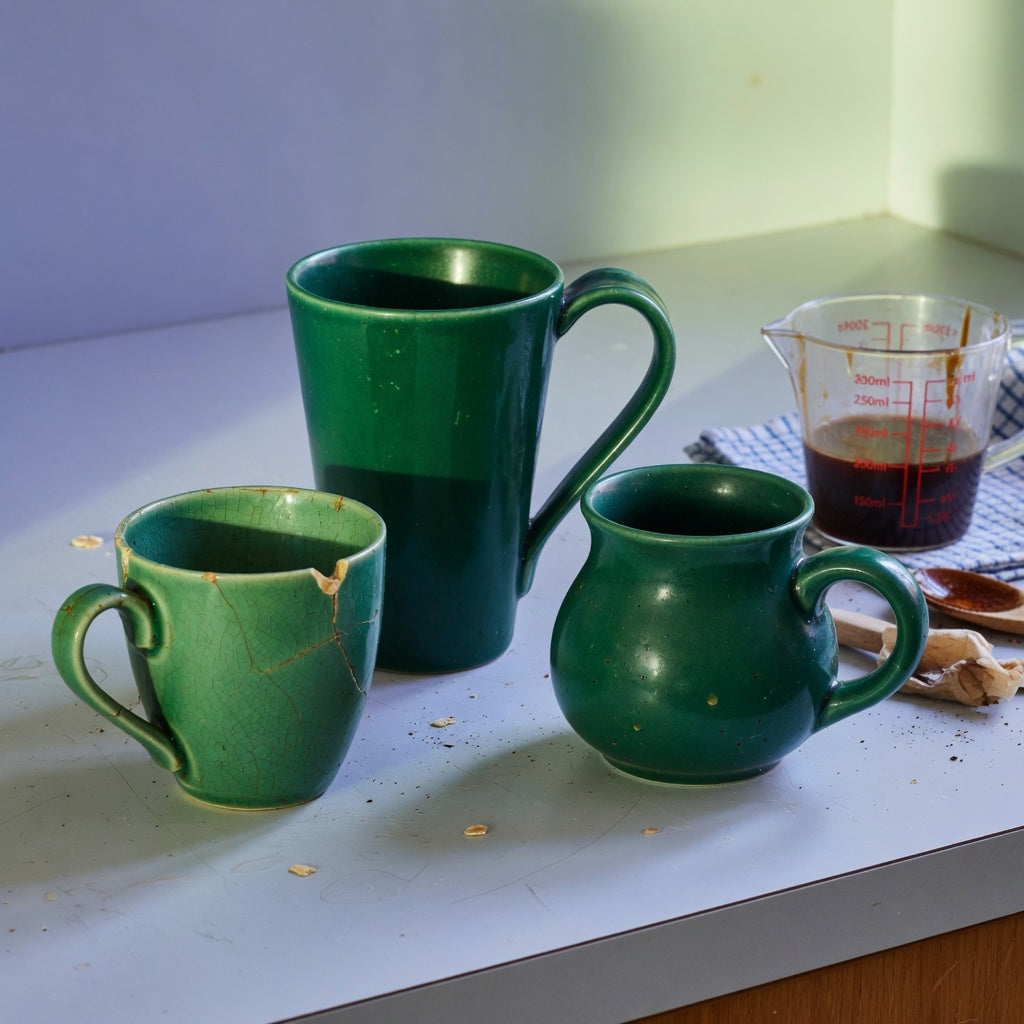
Emerald Green Coffee Mug Replacement: A Practical Purchase Checklist
Replace a broken or unsuitable emerald mug by comparing current color availability, listed capacity, visible form, and handle shape. This checklist also identifies the shade, care, and durability q...
Read more
Leave a comment
This site is protected by hCaptcha and the hCaptcha Privacy Policy and Terms of Service apply.