

Best Ceramic Mug for Apartment Counter: Fit, Care, and Storage
Reading time: about 10 minutes
The espresso machine may own one corner of the counter, but the kettle, grinder, spoon rest, and laptop claim the rest before breakfast starts. The mug ends up on the narrow strip by the sink, where its handle catches a sleeve and its base leaves a ring. That is the real test for the best ceramic mug for apartment counter use: not how generous it looks in a styled photograph, but whether it fits the station, feels steady when full, and can be stored without a cabinet traffic jam.
At CoffeifyMug, we handle and pack mugs for these ordinary routines, and the questions we hear from studio and one-bedroom shoppers are practical: How wide is the whole mug with the handle? Will it sit under the shelf? Can it go through the dishwasher? Ceramic still suits an open coffee or tea routine, but the wrong profile turns a small kitchen into an obstacle course. The useful comparison is footprint, capacity, contact surface, care language, and storage—not a styled photo alone.
Why does an apartment counter change the mug decision?
Counter space and cabinet space are different measurements. A mug can fit comfortably on a shelf and still be awkward beside a kettle because the handle becomes its widest point. Height matters too if the only landing place is under an upper cabinet or beside a coffee machine.
Watch the mug through three ordinary moments:
- Pour: Can you set it down without touching the backsplash, appliance, or shelf?
- Park: Does a full mug leave room for a spoon, coaster, laptop, or phone?
- Wash: Can you lift it from the sink or dishwasher without striking another piece?
An open ceramic mug is not a travel tumbler. If you need a leak-resistant lid, a car-cup-holder fit, or backpack-safe transport, compare insulated or lidded drinkware instead. A counter mug is best for a calm coffee or tea routine at home, in a home office, or at a nearby desk—not for every job a drink container can perform.
Best ceramic mug for apartment counter: which measurements matter?
Measure the surface before choosing a shape. A paper template is more honest than a product photograph: mark the space occupied by the base, then add the handle's widest projection and check what remains for the kettle or grinder.
| Check | Why it matters on a compact counter | What to verify on the current listing |
|---|---|---|
| Base diameter | Shows the circle that actually rests on the counter. A broader foot may feel steadier but uses more surface. | The listed base or widest foot measurement |
| Overall width | The handle can extend well beyond the cup body and become the true space limit. | Width including the handle, not body diameter alone |
| Height | Determines shelf clearance and whether the mug fits beside or beneath nearby equipment. | Overall height and the clearance in your storage spot |
| Capacity | A larger pour means fewer refills but also more weight in one hand. Many apartment shoppers compare mugs in the 8–16 fl oz range. | Written fluid-ounce capacity, not scale guessed from a photo |
| Foot and glaze | The contact ring affects cleaning, friction, and how the mug meets laminate, stone, or tile. | Material, foot-ring, pad, and finish notes, if provided |
If a listing does not give the measurements you need, do not estimate them from the handle or a lifestyle image. Tape the paper outline to your coffee strip, place the kettle where it normally sits, and leave enough room to pick up the mug without brushing the appliance cord.
Is a stackable ceramic set better than one mug left out?
Stackability is a cabinet decision before it is a counter decision. A nested set can use vertical space efficiently when it is put away, but a rack or stand may take more counter area than one mug on a coaster. For a one-mug daily routine, a single piece is often the simpler answer.
Small kitchens also expose stacking problems quickly:
- Rim contact: Twisting tightly nested mugs apart can chip the glaze or knock one rim against another.
- Damp nesting: Stacking before the inside and rim are dry can trap rinse water and coffee residue.
- Unstable towers: A stack that looks tidy can shift when a cabinet door bumps the shelf.
- Handle collisions: Handles that align poorly can catch on neighboring dishes when the stack is lifted.
Before buying a set, check whether the exact listing says that the pieces are intended to stack, how many pieces are included, and whether a rack is part of the offer. If those details are missing, treat stacking and accessories as unconfirmed rather than borrowing them from a similar product.
How should you check glaze, food-contact, microwave, and dishwasher claims?
Food-contact status is a question for the current listing, not something a glaze color can prove. Labels such as porcelain or stoneware describe a material category, but they do not replace the seller's care and appliance instructions.
The FDA guidance gives an action level of 0.5 micrograms per milliliter of leaching solution for extractable lead in ceramic cups and mugs. Its testing language refers to testing any one of six units using specified ASTM, AOAC, or FDA methods. Ceramicware that exceeds the relevant guidelines may be considered adulterated under Section 402(a)(2)(C) of the Federal Food, Drug, and Cosmetic Act because it contains an unsafe food additive.
That regulatory threshold is not a certification for a particular mug, and it does not confirm a test result for a CoffeifyMug listing. If the page is silent about food-contact use or leaves you unsure about a decorative finish, ask the seller before making it your everyday cup.
Microwave and dishwasher language must also come from the exact product page and variant. Do not transfer a claim from another color, size, marketplace listing, or similarly named mug. If the mug has metallic decoration, follow the stated microwave warning rather than assuming compatibility. If dishwasher use is permitted, keep the rim away from heavy cookware and follow the maker's rack guidance; avoid moving a very hot mug directly into cold water because sudden temperature changes can stress ceramic.
Which round or pleated profile fits your apartment coffee station?
After the hard measurements, silhouette becomes a use-case choice. If the current listing confirms the ceramic body and you want a simple outline for a one-mug station, inspect CoffeifyMug's round coffee and tea mug. A round profile is easy to compare against a paper footprint, but verify the current page for diameter, height, capacity, material, handle construction, and appliance compatibility instead of inferring them from the name or photograph.
If the mug will sit on an open shelf, serve as part of the visible kitchen decor, or be unwrapped as a gift, inspect the pleated coffee and tea cup. Pleated styling can add visual texture to a sparse counter, but grooves may require a more deliberate wipe after a milky drink and do not prove that several pieces will nest. Check the listing for the same footprint, capacity, material, and care details before deciding that the decorative profile suits your station.
If you are comparing options for roommates or want more than two silhouettes, browse the unique coffee mugs collection. Use the collection as a starting point, then apply the paper-template test to each candidate. Neither a product name nor a collection page establishes a lid, infuser, travel seal, rack, microwave claim, or dishwasher claim unless the current listing says so.
How can renters store ceramic mugs without giving back the counter?
Storage should match the number of mugs you actually use. A four-mug stand is not space-saving if it stays beside the coffee machine all week, and a tightly packed cabinet creates more rim and handle damage than a little empty shelf space.
- One-mug rotation: Use a washable coaster or small tray beside the machine, lift the mug instead of dragging it, and rinse or dry it before leaving it there overnight.
- Two-mug household: Nest only if the current listing indicates that the shape is intended to nest and the pieces sit loosely. Otherwise, give each mug its own shelf position.
- No spare shelf: A removable hook or rail can free counter space, but follow the hardware maker's load and surface instructions. Do not hang a full mug from an adhesive setup that has not been tested for that weight.
- Dishwasher routine: Leave clearance around the rim and handle, keep mugs away from heavy pans, and use the rack position specified by the product instructions.
Some unglazed foot rings may catch grit and mark laminate, while a fully glazed foot may slide on polished stone. A coaster adds a washable barrier, but it should be lifted and cleaned instead of becoming a permanent layer of coffee residue.
At delivery or a gift unboxing, inspect the rim, handle-to-body junction, and foot for chips. Look for visible glaze crazing or pinholes before the first use. We also do not have independent heat-retention data comparing compact and standard mug profiles, so choose by fit and routine rather than an unverified promise that one shape will keep a drink hot longer.
Who should choose a different mug for apartment life?
A compact open mug is a poor match if your main routine involves transport. Choose another category if you need a leak-resistant lid for a backpack, a reliable car-cup-holder fit, a very large refill-saving drink, or protection from repeated knocks on a shared desk. Ceramic can chip against a sink, tile floor, or metal pan, so a lidded insulated cup may be the more sensible choice for commutes, outdoor use, children, or pets.
Frequently asked questions
How do I choose the best ceramic mug for apartment counter use?
Start with base diameter and overall width including the handle, then check height, capacity, foot finish, and the exact care language. The best choice is the one that fits your counter routine and storage spot; no single size works for every apartment.
Should I choose a stackable mug or a single mug for a one-bedroom kitchen?
Choose a single mug if one person leaves one cup out each day. Choose stacking only when the current listing confirms intended nesting and you have a dry, stable cabinet space; a rack can return the counter space you hoped to save.
What measurements should I check before ordering a ceramic mug online?
Check the base diameter, widest overall width including the handle, height, and written capacity. Mark the base on paper and add the handle projection so you can test the real footprint beside your kettle or grinder.
How can I verify that a ceramic mug is suitable for food contact?
Look for food-contact language on the exact listing and ask the seller for clarification if it is absent. The FDA action level for extractable lead in ceramic cups and mugs is 0.5 micrograms per milliliter of leaching solution under the stated testing framework, but that regulatory information is not a certification for an individual mug.
Can I put a ceramic mug in the microwave and dishwasher every day?
Only rely on the microwave and dishwasher statements for the exact product and variant you are buying. Do not transfer them from a similar mug, and follow any warning about metallic decoration; if dishwasher use is allowed, protect the rim from heavy cookware and sudden temperature changes.
Use this five-minute check before ordering: mark the listed base diameter on paper, add the overall width including the handle, measure the shelf clearance, write down the capacity, and confirm food-contact, microwave, and dishwasher language on the exact page. Then compare the round and pleated listings above, or open the unique coffee mugs collection for more profiles. If a specification is missing, ask the seller before checkout instead of borrowing it from a similar mug.
More from our blog
Read more

Emerald Ceramic Coffee Tea Mug: Size, Glaze, Grip & Care
Compare usable capacity, stoneware versus porcelain, glaze variation, handle comfort, appliance-care labels, food-contact claims, and travel fit. See who should choose a lighter or insulated cup in...
Read more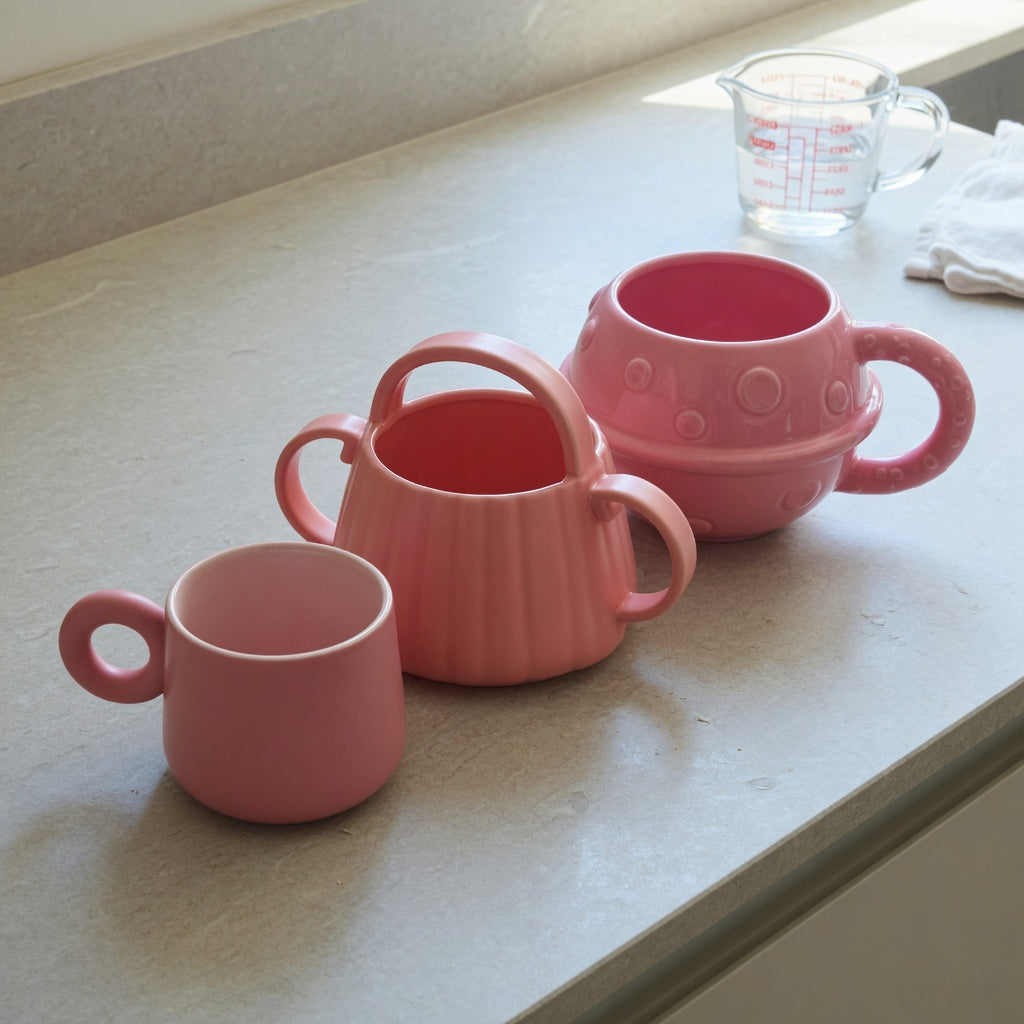
Pink Ceramic Coffee Mug: Compare 250, 310, and 380 ml
Compare the listed 250 ml ball-handle, 310 ml handbag-handle, and 380 ml planet-form Pink options. Match capacity and visible shape to your drink routine, then verify care, dimensions, and safety d...
Read more
Leave a comment
This site is protected by hCaptcha and the hCaptcha Privacy Policy and Terms of Service apply.