
USA Made Coffee Mugs: What to Compare Before You Buy
Reading time: about 8 minutes
A mug looks simple until you put it on a kitchen counter at 6:30 a.m., carry it to a desk, and run it through a few dishwasher cycles. That is usually when the difference between a decent mug and a frustrating one shows up. The lip feels sharp. The handle is too tight. The glaze looks fine from across the room but shows pinholes up close.
That is why we treat usa made coffee mugs as a buying decision, not just a style choice. In our store, we look at how a mug feels in the hand, how the finish holds up, and whether it fits real use at home, at work, or as a gift that needs to look good when it is opened.
What should you check first on usa made coffee mugs?
The first pass should be practical, not decorative. Start with the body material, the handle, the rim, and the base. If a mug misses on those four points, the origin stamp will not matter much once it is in daily use.
| What to compare | Why it matters | What we look for |
|---|---|---|
| Material | Controls heat retention, weight, and how the mug feels in hand | Ceramic or stoneware with a smooth, even glaze |
| Handle opening | Decides whether two fingers fit comfortably without pressure | Enough clearance for an adult grip, even with a full cup |
| Rim finish | Affects sipping comfort | No sharp edge, chips, or rough spots |
| Base / foot ring | Determines stability on a desk or counter | Flat sit, no wobble, no gritty edge |
For ceramic mugs, we also pay attention to glaze consistency. A good glaze should look intentional, not streaky in a way that hides defects. Small variation can be normal with handmade or small-batch work, but obvious roughness, cracks, or an uneven foot ring are different problems.
If you want a broader starting point, our all collection is the fastest way to compare styles side by side before narrowing down on one shape or design.
Which mug style fits daily use, office desks, or gifts?
The right answer depends on where the mug will actually live. A kitchen mug needs to be comfortable for repeat use. An office mug has to look good next to a laptop and survive a few distracted desk drops. A gift mug has to feel special the moment the box opens.
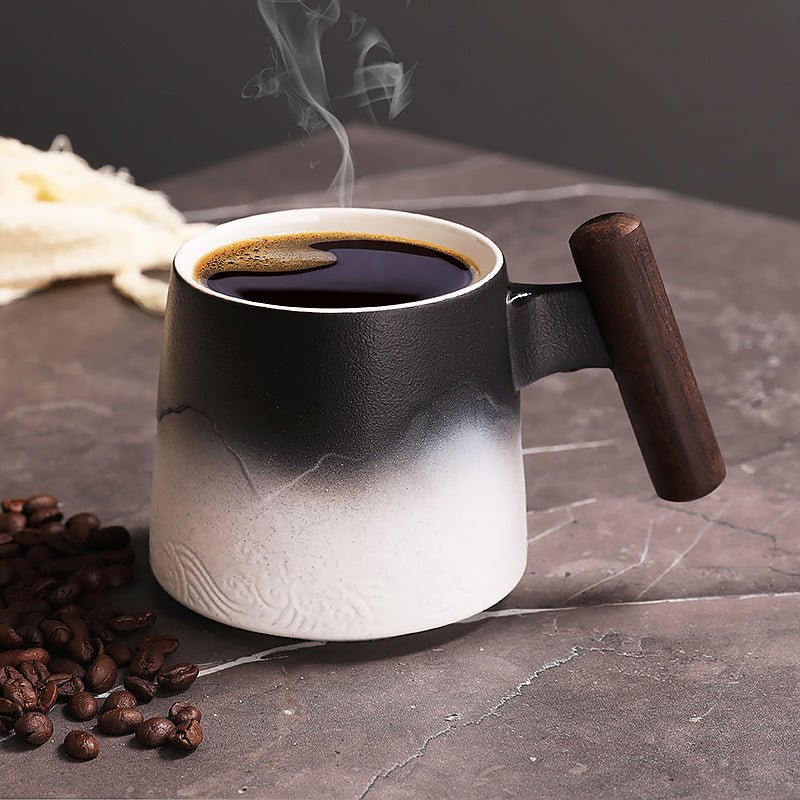
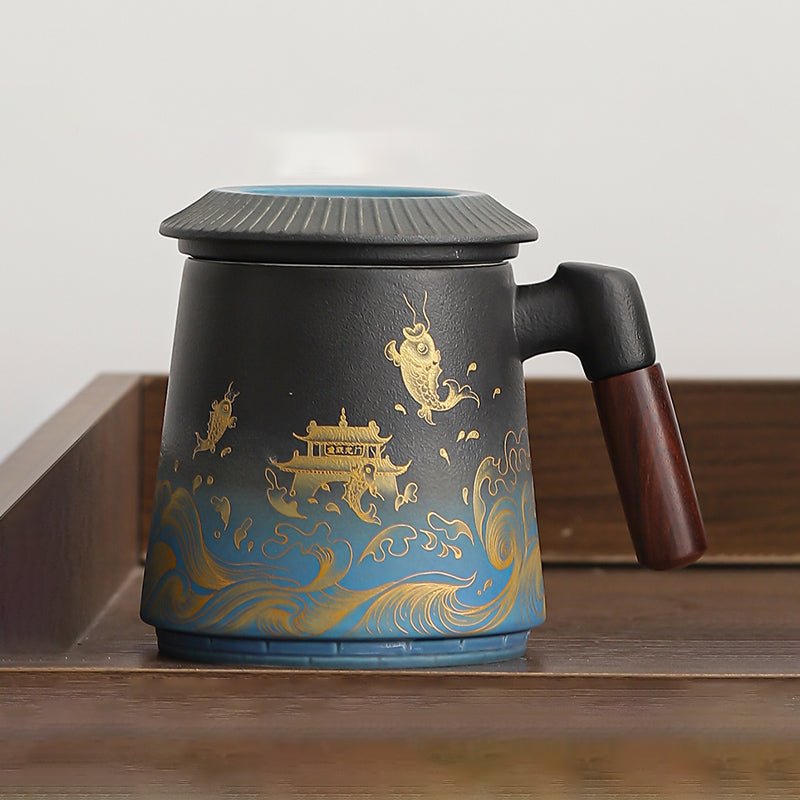
For shoppers who want a mug with a clear visual theme, our Koi Fish Coffee Tea Mug is a strong pick. It reads as more expressive than a plain white mug, which makes it better for a gift or a desk piece that still sees daily use. If the buyer prefers a calmer, more elegant look, the The Crane Coffee Tea Mug has that quieter feel. The Landscape Coffee Tea Mug is the one we would point to when someone wants scenery and a mug that looks good sitting out between uses.
Style is not just decoration. It affects whether the mug feels personal or generic. That matters for gifting, and it matters at work too, where the mug becomes part of the desk setup.
- Pick a more graphic mug if you want it to stand out in an open shelf or office break room.
- Pick a quieter design if you want it to blend into a kitchen set or gift basket.
- Pick a scene-based mug if you want something that still looks good after the coffee is gone.
What trade-offs should you expect with handmade ceramic mugs?
Handmade or small-batch ceramic mugs usually give you character, but character comes with trade-offs. The same mug that looks warm and handcrafted on a product page may have slight glaze variation, tiny surface marks, or a handle that feels a little different from the one next to it. That is normal within reason. It is not the same thing as a flaw.
The trade-off buyers should understand is this: a mug with a more artisanal finish may not be the best choice if you want perfect uniformity across a whole set. If you are building matching inventory for a conference room, a simple plain mug may be a better fit. If you want a mug that feels more distinctive on a kitchen shelf or as a gift, the small variations can be part of the appeal.
These mugs are also not the right call for every use case. If you want a travel mug with a sealed lid for commuting, a ceramic mug is the wrong category. If you want an oversized vessel for cold brew or giant iced drinks, check the capacity carefully before ordering. A great everyday ceramic mug is usually best for coffee, tea, and desk use, not as a do-everything container.
We see another issue often: buyers focus on the design and ignore the wall thickness. A very thin mug can feel elegant but lose heat faster. A thicker mug can hold heat longer but feel heavier during long meetings or second cups. Neither is automatically better. The right choice depends on how you drink.
How do we inspect a mug before it reaches a customer?
In our experience, the best time to spot problems is before the mug ever gets wrapped. We look at the same things a careful buyer notices after unboxing: rim quality, handle comfort, glaze consistency, and stability on a flat surface. That sounds basic, but that is where most day-to-day frustration starts.
Common defect modes in this category are predictable:
- A base that rocks slightly on a counter.
- A handle that looks fine but feels cramped with a full cup.
- A rough or uneven rim that makes sipping less comfortable.
- Glaze pinholes, specks, or finish inconsistencies that are visible under kitchen light.
- Hairline cracks or stress marks near the handle or foot ring.
We also think about real use cases. A mug that looks perfect in a gift box still needs to survive a sink rinse, a few dishwasher cycles, and sitting near a warm keyboard all afternoon. If the finish cannot handle that kind of routine, it is not a good daily mug no matter how good the artwork is.
For buyers comparing options with a more detailed checklist, these articles are worth reading next: Coffee Mugs Made in USA: What Buyers Should Check Before Ordering, Coffee Mugs Made in the USA: How to Compare Real Buying Options, and American Made Coffee Mugs: What Buyers Should Compare First.
What care details matter before you order?
Care is part of the buying decision, not an afterthought. If a mug is intended for daily coffee, the first question is whether the finish and decoration are meant to handle routine washing. The safest approach is to follow the maker's care guidance and avoid assuming every decorative mug should be treated the same way.
As a rule, buyers should check three things before ordering:
- Whether the mug is intended for dishwasher use or should be hand washed.
- Whether the mug can handle normal hot drinks without feeling fragile.
- Whether the finish is likely to stay comfortable after repeated use, not just on day one.
We also tell shoppers to avoid sudden temperature swings. A ceramic mug that has been sitting cold on a counter should not be treated like laboratory glassware. Hot water into a frozen mug, or a mug moving straight from the fridge to boiling liquid, is asking for stress cracks. That is especially relevant for buyers who keep mugs in garages, break rooms, or lightly heated offices.
If you are buying for gifting, care is part of the presentation too. Nobody wants to give a mug that looks beautiful but turns into a hand-wash-only item without warning. Clear care expectations make the gift easier to keep and use.
How should you compare options before you buy?
If you are deciding between several usa made coffee mugs, compare them in the same order every time. That keeps the process practical and reduces the chance that a pretty photo wins over a better everyday mug.
- Material first: ceramic versus stoneware versus any other body type.
- Feel second: handle clearance, rim comfort, and weight in hand.
- Finish third: glaze evenness, artwork clarity, and edge quality.
- Use case fourth: kitchen routine, office desk, or gift presentation.
- Care last: follow the listed washing and handling instructions.
That order works because it puts the daily experience ahead of the decoration. A mug can look strong in product photography and still be wrong for a buyer with larger hands, a small dish rack, or a strict dishwasher-only routine.
If you want the fastest path to a purchase, start with the collection, compare the art style you want, and then read the product detail closely. That is the most reliable way to buy once instead of swapping mugs after the first week of use.
Frequently asked questions
Are usa made coffee mugs usually dishwasher safe?
Some are, but not all. The correct answer is whatever the maker states for that specific mug. We always recommend checking the care guidance before assuming a decorative glaze or printed design can handle repeated dishwasher cycles.
What material is best for everyday coffee use?
For most buyers, ceramic or stoneware is the most practical choice because it balances feel, heat retention, and ease of cleaning. If you want something lighter, look closely at the weight and wall thickness. If you want the mug to hold heat longer, a thicker body usually feels better in the hand.
Do handmade mugs have normal variation?
Yes. Small differences in glaze, texture, or finish can be part of the appeal of a handmade or small-batch mug. The line to watch is whether the variation is cosmetic or whether it affects comfort, stability, or the rim.
Are these mugs good for the office?
They can be, especially if you want something more personal than a standard break-room mug. Just make sure the mug is stable on a desk and not so heavy that it becomes annoying to lift repeatedly during the day. A decorative mug also works well if you want your desk setup to feel more intentional.
What should I avoid if I want a long-lasting mug?
Avoid rough rims, wobbly bases, and vague care instructions. We also steer buyers away from mugs that are only attractive in photos but feel cramped or awkward once filled. A good mug should be comfortable empty and full.
If you want the shortest path to the right choice, compare the handle, rim, glaze, and care instructions first, then open the full collection and match the style to your daily use. That will tell you more than a polished product photo ever will.
Read more
Fish Coffee Mug Buying Guide: Style, Size, and What to Check
A fish coffee mug can be a fun desk piece or a practical daily cup, but the details matter. We break down size, handle comfort, care, and the trade-offs worth checking before you buy.
Подробнее
NFL Coffee Mugs: How to Choose a Practical Mug for Game Day
NFL coffee mugs get used at the couch, the desk, and the tailgate. Compare handle feel, capacity, finish, and care so you buy a mug that actually gets used.
Подробнее
Оставить комментарий
Этот веб-сайт защищается hCaptcha. Применяются Политика конфиденциальности и Условия использования hCaptcha.