
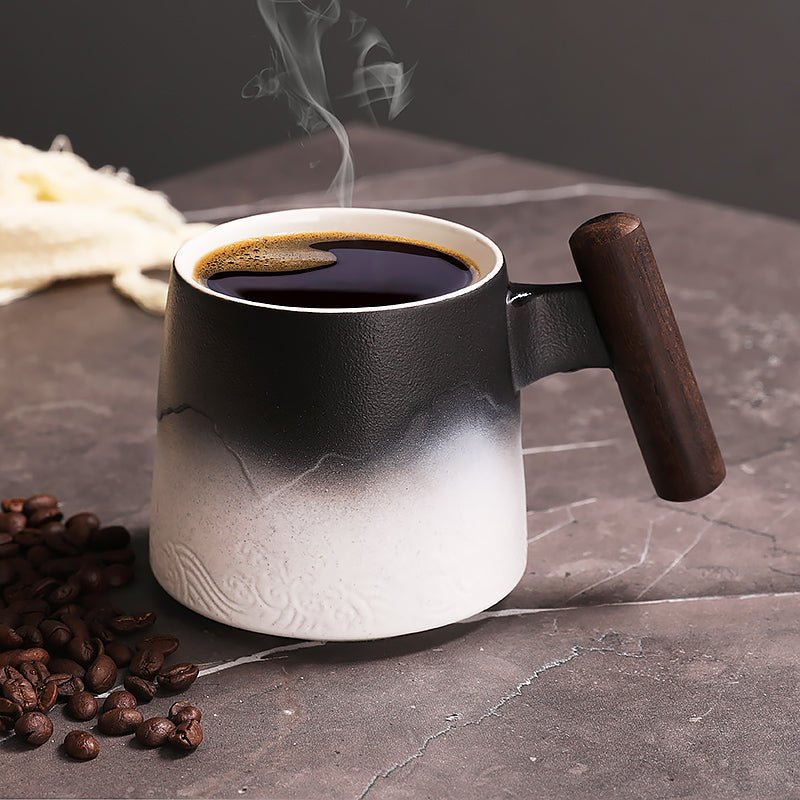
Promotional Coffee Mugs Made in USA: What Buyers Should Check
Reading time: about 9 minutes
What makes a promotional mug worth keeping on a desk?
A mug gets judged fast. It sits on a breakroom counter, gets picked up with one hand, goes through the dishwasher, and ends up either living on a desk or disappearing into a cabinet. The mugs people keep are usually the ones that feel balanced, pour well enough for daily use, and still make the logo easy to read after a few wash cycles.
That is the standard we use in our store. We look at how the mug behaves in real use, not just how it photographs. A promotional cup can have a strong imprint and still fail if the handle is too tight, the base wobbles on a flat table, or the lip feels sharp after a few sips.
If you want to compare shape-first options, start with our Pleated Coffee Tea Cup and browse our full collection to see how different profiles change the feel in hand.
- A stable base matters because promotional mugs spend a lot of time on desks, conference tables, and crowded kitchen counters.
- A comfortable handle matters because people notice finger clearance every time they drink, especially with larger pours.
- A clean printable wall matters because a logo that wraps awkwardly or lands near a curve can look cramped once the mug is filled.
- A finish that survives regular washing matters more than a one-day reveal photo.
That last point is where a lot of buyer disappointment starts. A mug can look great on arrival and still be the wrong choice for a busy office if the decoration is fragile, the body feels too light, or the shape does not fit standard cup holders, shelves, or storage cubbies.
Which material holds up best for daily office use?
For most buyers comparing promotional coffee mugs made in usa, the first real decision is material. The mug has to do three jobs at once: hold heat long enough to be useful, survive repeated washing, and give you a clean surface for branding. In practical terms, that usually means comparing ceramic, stoneware, and porcelain-style builds rather than chasing a glossy product photo.
| Material | What it does well | Trade-off | Best use case |
|---|---|---|---|
| Ceramic | Common, sturdy, easy to brand, familiar feel | Can chip at the rim if handled roughly | Office desks, welcome kits, repeat everyday use |
| Stoneware | Heavier feel, good heat retention, substantial hand feel | Can be bulky for people who prefer a lighter cup | Shared kitchens, premium gifts, slow coffee routines |
| Porcelain-style | Refined finish, often a cleaner look | Can feel less forgiving if the walls are very thin | Gift boxes, client-facing sets, polished presentation |
We usually tell buyers to pay attention to three concrete details that generic listings often bury: rim thickness, handle clearance, and glaze consistency. A thin rim can feel nice at first but is more prone to visible wear. A tight handle becomes annoying fast, especially for larger hands. Glaze pinholes or uneven finish can turn into complaints if the mug is a gift or a client-facing item.
There is also a practical limit. A standard ceramic promotional mug is not the right choice for backpack commutes, car cup holders with narrow inserts, or rough outdoor use. If the mug needs to travel, an insulated tumbler is the better fit. If it stays on a desk or breakroom shelf, a well-made ceramic body is often the smarter buy.
How do size and shape change what people actually drink?
Size is not just a number on a product page. A mug that feels right for black coffee at a desk may feel wrong for tea with milk, hot chocolate, or a bigger morning pour. The most common comparison point is 11 oz versus 15 oz, but shape matters just as much as capacity.
- 11 oz is a safe everyday size for standard coffee drinkers, office giveaways, and mail-friendly gift sets.
- 15 oz gives more room for larger pours, tea bags, and people who want fewer refills during a long work session.
- Wide mouths work well for layered drinks, tea steeping, and drinks with foam or toppings.
- Taller straight sides often give a cleaner print area and a more compact footprint on a desk.
Shape also affects how a logo reads. A straight wall usually gives more predictable placement, while a curved or sculpted body can make branding feel more subtle. That can be a plus if the mug is meant to look like a gift, but it is a drawback if the logo needs to be visible from across a conference room.
If you are comparing sculptural options, our Golden Waves Kio Coffee Tea Mug and The Flow Coffee Tea Mug are useful examples of how different silhouettes change the look and feel of a mug without changing the basic job it has to do.
The trade-off is simple. More unusual shapes can make a mug feel more premium, but they can also reduce stackability, limit carton fit, or make a wraparound design harder to place cleanly. If the order needs to ship in volume, stack neatly, or fit a tight packing plan, the most sculptural option is not always the right option.
What does "made in USA" need to mean before you buy?
Not every listing uses the same standard. A mug can be designed in one place, decorated in another, and packed somewhere else. Buyers should check what part of the process is actually domestic before treating a label as a full answer.
We recommend asking four direct questions before you order: where the mug body is made, where the decoration is applied, whether packaging is domestic, and whether the product page clearly states the manufacturing details. That keeps the conversation specific and avoids vague claims that sound good but do not tell you what is really happening.
For a deeper buying checklist, these guides are worth reading alongside this one: Coffee Mugs Made in USA: What Buyers Should Check Before Ordering, American Made Coffee Mugs: How to Compare Materials, Sizes, and Everyday Use, and Promotional Coffee Mugs That People Keep Using.
That kind of checking matters because a buyer may be comparing two similar-looking mugs and assuming they are equivalent. They are not always equivalent. One may be a better fit for office use, another may be better for gifting, and another may be the better pick only because the seller is clearer about what is actually made domestically.
We care less about the label as a slogan and more about what the buyer can verify. Clear origin details, consistent finish, and reliable everyday use matter more than a broad claim.
Which mug style fits a giveaway, office reorder, or gift box?
Different buyers need different outcomes. A trade show giveaway has to be easy to distribute. An internal office reorder has to be practical over time. A client gift needs a better presentation and fewer visual flaws. The same mug rarely wins all three jobs.
| Buying scenario | Best mug trait | What to avoid |
|---|---|---|
| Trade show giveaway | Clear branding, manageable size, easy packing | Overly fragile shapes or oversized bodies |
| Office kitchen reorder | Comfortable handle, durable finish, easy washing | Thin walls, awkward stackability, fussy care instructions |
| Client gift box | Distinctive silhouette, polished presentation, premium feel | Visible glaze flaws, crooked handles, weak print placement |
| Team welcome kit | Balanced weight, versatile capacity, dependable daily use | Highly specialized shapes that suit only one drink style |
If you are buying for a workplace, think about what happens after the first unboxing. Mugs get washed, stored, stacked, and pulled out quickly on busy mornings. The best promotional mug is the one that stays useful when nobody is thinking about it anymore.
That is why some buyers do better with a cleaner, more conventional shape, while others want a more distinctive profile that feels intentional on a desk or in a gift box. We see both use cases in our store. A sculptural mug can work beautifully for a presentation moment, but a more straightforward form is usually easier for bulk office use.
What quality issues should you inspect before shipping or gifting?
Buyers often notice quality only after the order arrives. That is too late. A quick inspection before distribution saves time and prevents avoidable complaints. The common defects are usually easy to spot if you know what to look for.
- Wobble on a flat surface: place the mug on a counter and check whether it sits level.
- Crooked handle alignment: look at the handle from above and from the side to make sure it does not lean or twist.
- Pinholes or glaze specks: small surface flaws can be normal in some styles, but they should be understood before gifting.
- Thin decoration at the edge: curved placement can make logos or artwork look stretched or cut off.
- Hairline cracks near the handle: this is a serious defect and should never be ignored.
Care matters too. If the decoration is delicate, a gentle hand wash is safer than assuming every finish will behave the same way through repeated dishwasher cycles. Even durable mugs benefit from avoiding sudden thermal shock, like moving them from a hot dishwasher to a cold stone counter immediately. That is a simple habit, but it helps prevent stress on the body and finish.
Our practical advice: open the carton carefully, inspect one sample before you commit the whole batch, and keep the packaging until you are done checking the order. That small step catches issues early and makes replacements easier if you need them.
Frequently asked questions
Are promotional coffee mugs made in USA usually dishwasher safe?
Many are, but you should not assume it. The body material, glaze, and decoration method all affect washability, and some printed finishes need gentler care. Check the product page for the care note before you buy, especially if the mugs will live in an office kitchen.
What size works best for office giveaways?
11 oz is usually the safest default because it is familiar, easy to pack, and works for most coffee drinkers. If the audience tends to drink larger pours or tea, 15 oz can make more sense. We would not choose a very large mug unless the buyer knows the recipients prefer it.
How can I tell if a mug is really made in the USA?
Look for clear statements about the mug body, decoration, and packaging. Some listings are specific about one step but vague about the others, so ask for the exact manufacturing details if the origin matters to your purchase. A trustworthy seller should be able to explain what is domestic and what is not.
What should I compare first if I am buying promotional mugs for gifts?
Start with shape, finish, and handle comfort. Gift mugs should feel pleasant in hand and look clean at arm's length, not just in a product photo. After that, check care instructions so the person receiving the mug does not have to baby it.
Do sculpted mugs work as well as standard mugs for branding?
They can, but the print area is usually less forgiving. A sculpted body may look more distinctive, yet it can make logo placement trickier and reduce stackability. If the mug needs strong visibility and easy storage, a simpler shape may be the better choice.
If you are ready to compare styles side by side, the fastest next step is to open our full collection, narrow by size and shape, and then check each product page for material, care, and origin details before you order.
Read more
15 Ounce Coffee Mug Buying Guide for Daily Use and Fit
A practical guide to choosing a 15 ounce coffee mug, including fit, everyday use, trade-offs, and which styles make sense for home, office, or gifting.
Подробнее
FBI Coffee Mug Buying Guide: Size, Style, and Gift Fit
An FBI coffee mug usually gets bought as a desk gift or a daily-use cup, so the real questions are size, print quality, and how it feels in the hand. This guide shows what we check before listing a...
Подробнее
Оставить комментарий
Этот веб-сайт защищается hCaptcha. Применяются Политика конфиденциальности и Условия использования hCaptcha.