
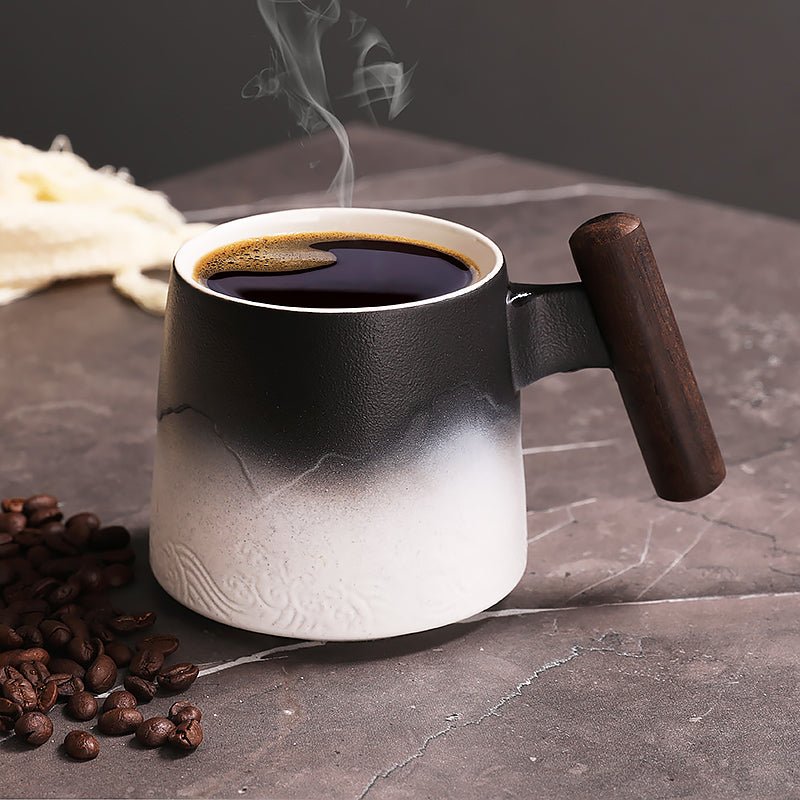
How Many Ounces in a Mug of Coffee? Real Sizes and Buyer Tips
Reading time: about 9 minutes
We see this question constantly at our store: a mug looks “normal” on the shelf, then the first pour lands higher or lower than expected. That is because mug size, shape, and fill level all change the real answer to how many ounces in a mug of coffee.
The short version is simple. Most everyday coffee mugs hold about 8 to 12 ounces, but many are sold by brim capacity, not by the amount you should actually drink from them. A mug that is labeled 12 ounces may only feel comfortable at 10 or 11 ounces once you leave room for coffee, crema, milk, or cream.
If you are comparing styles for your kitchen, office desk, or a gift, this matters. We handle these mugs as actual products, not just listing text, so we care about the part buyers feel after the first few uses: is it easy to sip from, does it fit under the coffee machine, and does it leave enough space for a full pour without sloshing.
How many ounces does a typical coffee mug actually hold?
Most standard coffee mugs fall into a few practical ranges. The important distinction is between nominal capacity and working capacity. Nominal capacity is the number you see on the product page. Working capacity is what most people pour in real life.
| Mug size | Typical use | Real-world pour |
|---|---|---|
| 8 oz | Small black coffee, espresso-based drinks with little milk | About 6.5 to 7.5 oz |
| 10 oz | Classic home coffee mug | About 8.5 to 9.5 oz |
| 12 oz | Larger everyday mug | About 10 to 11 oz |
| 14 to 16 oz | Big mug for long sipping or milk-heavy drinks | About 12 to 14 oz |
That gap exists because most mugs are not meant to be filled to the rim. A safe pour leaves room for steam, movement from the coffee maker to the table, and whatever you add after the first pour. If you fill a mug to the brim every time, it will feel larger on paper than it feels in the hand.
For a broader comparison of mug capacity and fit, we also cover this in our related guides like How Many Ounces Is a Coffee Mug? Real Sizes and Buyer Tips and How Many Ounces in a Coffee Mug? Real Sizes and Buying Tips.
Why does a 12-ounce mug not always hold 12 ounces of coffee?
Because manufacturers measure to the brim, and buyers usually drink below the brim. That is the main source of confusion. The visible bowl of the mug can look generous, but the handle position, wall thickness, and lip flare all reduce usable space in practice.
We also see another mismatch in everyday use. People often want to add milk, oat milk, half-and-half, or foam. A mug that is technically “12 ounces” can feel tight once you pour a full coffee and still need room for additions. That is why some buyers prefer a 14- or 15-ounce mug even if they rarely drink 14 ounces of coffee straight.
In our experience, the shape matters as much as the number:
- Tall, narrow mugs feel smaller in the hand but can keep coffee warmer a bit longer.
- Wider mugs are easier to sip from and mix into, but they lose heat faster.
- Thick ceramic walls improve durability and heat retention, but they can reduce usable interior volume slightly.
What size mug should you buy for black coffee, milk drinks, or tea?
The right size depends on how you actually drink. We would not recommend choosing by the number alone. A buyer making drip coffee at home has different needs from someone pulling shots and adding steamed milk.
- 8 to 10 ounces: Best if you drink plain coffee, short pours, or tea and want a compact mug that does not cool too slowly.
- 11 to 12 ounces: The safest all-purpose size for most households. It works for standard drip coffee and leaves enough room for a modest splash of milk.
- 14 ounces and up: Better for people who like larger pours, second servings, or coffee with cream and foam.
If you want a visual sense of how different shapes read in real life, look at our Golden Waves Kio Coffee Tea Mug, The Flow Coffee Tea Mug, and Mountain Sea Coffee Tea Mug. Those styles are useful examples because the same ounce rating can feel different depending on the mug silhouette, handle spacing, and lip shape.
If you are browsing all options in one place, our full collection is the fastest way to compare sizes and designs side by side.
What details should shoppers check before buying a coffee mug?
We look at a few specific details every time we inspect a mug. These matter more than a generic size label.
- Material: Most everyday mugs are ceramic, which offers a stable feel and good heat retention. Ceramic is practical for home use, but it can chip if it knocks against a sink, another mug, or a metal rack.
- Interior glaze: A smooth glazed interior is easier to clean and less likely to hold coffee staining. A rougher finish can show wear faster.
- Handle clearance: If your fingers barely fit through the handle, the mug will feel awkward when full or hot.
- Care instructions: Dishwasher-safe mugs are easier for daily use, but we still recommend avoiding sudden temperature shocks, like moving a very hot mug onto a cold stone counter.
- Rim thickness: A thinner rim usually feels better for sipping. A thicker rim can feel sturdier but may change the drinking experience.
Those details are why two mugs with the same ounce label can still feel completely different on a kitchen counter or under an office coffee machine.
How do fill lines, foam, and cream change the answer?
They change it a lot. A coffee mug is rarely used as a laboratory measuring cup. Once you add milk, sugar, whipped foam, or a shot of espresso, the practical amount of brewed coffee is lower than the mug capacity.
For example, a 12-ounce mug might comfortably hold 10 ounces of brewed coffee with space left for cream. If you top a latte or cappuccino with foam, you may only pour 8 to 9 ounces of liquid before the foam reaches the rim. That is normal. It does not mean the mug is undersized. It means the drink style uses some of the available space.
One useful habit: if you routinely fill a mug to the same level every morning, measure that fill once with water. You will know the real number, and you will not have to guess again.
What are the trade-offs between small and large mugs?
There is no universal best size. Each option gives up something.
Small mugs are better if you drink quickly, want warmer coffee in smaller servings, or prefer a lighter cup in hand. They are not ideal for people who pour long coffees with milk or who dislike refilling.
Large mugs are better for bigger pours and relaxed sipping. They are not ideal if you want a compact cup that fits low-profile coffee makers or if you dislike a mug that feels heavy when full.
We have found that many shoppers overbuy size because they imagine how they might use a mug instead of how they actually do. A large mug is useful, but it is not automatically better. If most of your mornings are one cup of drip coffee, a balanced 10- to 12-ounce mug usually makes more sense than a giant handle-heavy cup.
How do these mugs fit into everyday use at home or work?
Real use is where size decisions get proven. On a kitchen counter, a mug needs to sit safely beside a coffee maker without crowding the drip tray. On an office desk, it needs enough volume for one pour and enough stability that it does not tip when you reach for the keyboard. For gifting, the mug should look good out of the box and feel easy to hold right away.
That is why we pay attention to practical issues like dishwasher cycles, glaze durability, and handle comfort. A ceramic mug that looks great but chips easily around the lip will disappoint faster than a simpler mug that washes cleanly and holds up.
For buyers comparing styles and reading between the lines of product listings, our related guides How Many Ounces Is a Regular Coffee Mug? Buyer Guide and How Many Ounces Is a Standard Coffee Mug? A Buyer’s Guide are useful follow-ups if you want a tighter comparison of common mug labels.
Frequently asked questions
How many ounces is a standard mug of coffee?
A standard mug of coffee is usually about 8 to 12 ounces, depending on the mug size and how full you pour it. In practical use, many people drink about 8 to 10 ounces from a mug sold as 12 ounces.
Is a 12-ounce mug enough for one cup of coffee?
Yes, for most people it is. A 12-ounce mug is a solid everyday size for drip coffee, and it still leaves some room if you add a little milk or cream. If you like very large pours, you may want a 14-ounce mug instead.
Why do coffee mugs hold less than their listed size?
Because the listed size usually measures to the brim. Real drinking volume is lower since you need room for steam, movement, and additions like milk or foam. That gap is normal and expected.
What mug size is best for lattes and milk drinks?
We usually recommend 12 to 14 ounces for lattes, cappuccinos, or coffee with a generous amount of milk. Smaller mugs can feel cramped once the espresso, milk, and foam all go in.
Should I choose ceramic mugs for daily coffee use?
Ceramic is a good choice for daily home use because it feels stable, keeps a decent amount of heat, and is common in dishwasher-safe designs. It is not the best choice if you need something unbreakable for travel or a work bag.
What should you buy next?
If you want the safest all-around choice, start with an 11- to 12-ounce ceramic mug. If you know you pour larger coffees or add milk regularly, move up a size. If you prefer smaller, hotter servings, stay closer to 8 to 10 ounces.
The quickest next step is to compare a few shapes side by side in our collection and check the product capacity against how you actually drink coffee at home. That will tell you more than the label alone.
Read more
Bible Verse Coffee Mug Buying Guide for Gifts and Daily Use
A bible verse coffee mug should be easy to read, comfortable to hold, and durable enough for real daily use. This guide covers size, finish, gift fit, and the trade-offs to check before you buy.
ПодробнееBible Verse Coffee Mug Buying Guide for Gifts and Daily Use
A bible verse coffee mug should be easy to read, comfortable to hold, and durable enough for real daily use. This guide covers size, finish, gift fit, and the trade-offs to check before you buy.
Подробнее
Оставить комментарий
Этот веб-сайт защищается hCaptcha. Применяются Политика конфиденциальности и Условия использования hCaptcha.