

Coffee Mug Storage: Best Ways to Stack, Hang, and Protect Cups
Reading time: about 9 minutes
A mug that tips sideways on a narrow shelf, clanks against another handle, and chips on the rim after a few dishwasher cycles is usually a storage problem, not a mug problem. We see that often in our store: the cup looked fine online, but the shape, handle size, or finish made it awkward once it reached a real kitchen cabinet or office break room.
Good coffee mug storage is less about squeezing in the most cups and more about keeping the mugs you actually use easy to reach, clean, and intact. The right setup depends on shelf depth, cabinet height, handle clearance, and how often you wash or rotate the cups. If you are comparing mug styles at the same time, start with our full collection at https://coffeifymug.com/collections/all, then look at the shape of each mug as part of the storage decision, not after it.
What does coffee mug storage need to solve first?
Most buyers focus on capacity. That matters, but it is not the first problem. A storage setup has to answer three practical questions: can the mug sit safely, can you lift it without scraping adjacent cups, and can you clean it without creating chips or stains over time.
In our experience, the best coffee mug storage setups do four things well:
- Leave enough depth for the mug base and the handle, not just the cup body.
- Keep rims from touching hard surfaces when mugs are stacked.
- Separate daily-use mugs from display pieces so the most-used cups stay easy to grab.
- Match the storage method to the mug material, especially ceramic and stoneware, which can chip when packed too tightly.
If your shelf is shallow, a mug that looks compact in photos can still be hard to store because the handle pushes it forward. If your cabinet is tall but narrow, stacking may work better than hanging. That is why shape matters as much as decoration.
Is stacking mugs better than hanging them?
Neither option is universally better. Stacking saves vertical space. Hanging saves shelf space and keeps the bottoms visible, which is useful in a busy kitchen or office. The wrong choice usually shows up fast: handles knock into each other, glaze gets scuffed, or the rack starts to feel cramped.
| Storage method | Works best for | Watch out for | Not ideal for |
|---|---|---|---|
| Stacking | Straight-sided mugs, even bases, cabinets with strong shelf depth | Rim chips, scuffing between glazed surfaces, unstable piles | Oversized handles, hand-painted rims, very thick stoneware |
| Hanging | Small kitchens, under-cabinet space, easy-access daily mugs | Handle stress, rack rust, cups swinging into walls | Heavy mugs, damaged handles, mugs with fragile decals near the lip |
| Open shelving | Display-friendly kitchens, neatly matched sets, low-dust areas | Dust buildup, accidental bumps, sunlight fading on some finishes | Cluttered counters, high-traffic households, mismatched oversized mugs |
Stacking works well when the mugs have flat, stable bases and similar heights. Hanging is better when cabinet width is the problem and you can use a sturdy rack with enough spacing between hooks. Open shelving looks clean, but it is less forgiving if you have a lot of different mug shapes or a kitchen that collects dust quickly.
Which mug shapes are easiest to store?
Shape affects storage more than most people expect. A mug can be the right volume for coffee and still be annoying to store if the handle sticks out too far or the body tapers in a way that makes stacking unstable.
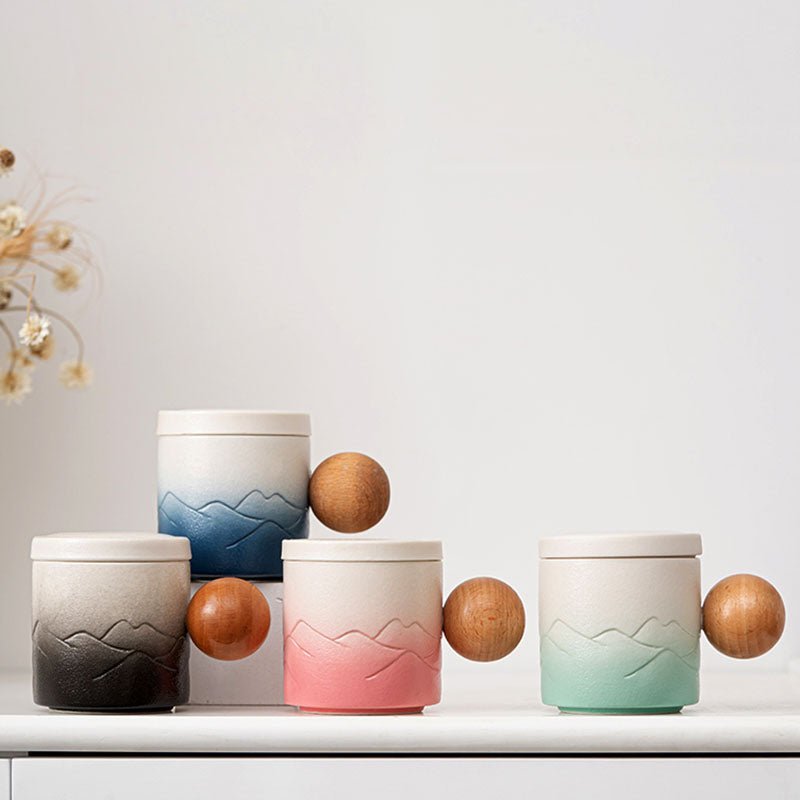
For shoppers comparing styles, we usually point them to the shape first. A cup like the Gradient Coffee Tea Mug is the kind of shape many people find easier to line up on a shelf because the profile is simple and the storage footprint stays predictable. A more retro silhouette, like the Retro Coffee Tea Cup, can look great on display, but the shape may take a little more thought if you want to stack several together. The Ball Handled Coffee Tea Mug is a good reminder that the handle is part of the storage equation: comfortable in hand, but it can require more spacing on a hook rail or in a tight cabinet.
What we tell customers is simple: the easiest mugs to store usually have a stable base, a handle that does not protrude too far, and a profile that does not flare outward aggressively near the rim. Wide flared mugs are fine, but they are less friendly to tight nesting or close stacking.
What should you check before buying mugs for your storage setup?
We check a few things every time a mug is meant for real-life use, not just a shelf photo. These details are small, but they decide whether a mug feels organized or irritating after a week.
- Base diameter: A wider base is more stable on a shelf. A narrow base may wobble if the shelf liner is textured or if the cabinet floor is slightly uneven.
- Handle clearance: Measure the space the handle occupies, not just the cup body. Handles are the reason many mugs do not sit neatly side by side.
- Rim thickness: Thicker rims tend to tolerate everyday use better, but they can also make stacking less compact.
- Surface finish: Smooth glazed ceramic is easier to wipe down than heavily textured or matte finishes that show tea or coffee marks faster.
- Storage mode: If the mug will live on a hook or rail, check for any handle shape that could stress over time if the mug is heavy.
Common defect modes in storage are usually not dramatic. They are the little things: rim chips from tight stacks, handle nicks from metal hooks, glaze marks where cups rub together, and rust stains from a low-quality rack finish. If you are using a dishwasher regularly, let the mug dry fully before nesting or stacking it. A damp base trapped against another mug can leave marks and make the next grab feel gritty.
How do kitchens, offices, and gift sets need different storage?
The right answer changes with the setting. A kitchen cabinet can get away with a different setup than an office break room, and a gift set has its own rules because presentation matters as much as convenience.
For kitchens, the goal is fast access. The mugs you use every morning should be closest to the coffee maker, not buried behind serving bowls. For offices, dust and accidental bumps matter more, so a closed cabinet or a tight shelf often beats an open display. For gift sets, the mug has to survive both packaging and the first unpacking, which means you want enough shape consistency that the cups do not rub each other in transit.
If you want a deeper comparison of these use cases, our related guide on Coffee Mug Storage Ideas for Kitchens, Offices, and Gift Sets covers the practical trade-offs. If your space is especially tight, the article Coffee Mug Storage Ideas for Small Kitchens, Offices, and Gifted Sets is the better place to start.
For shoppers comparing rack options, our article Coffee Mug Rack Guide: Materials, Fit, and Storage Choices is useful because the rack material matters. Powder-coated steel is common, but the coating quality matters. Wood can look better on a counter, but it is not the best choice if you want a highly compact layout and frequent moisture exposure.
What storage mistakes cause the most damage?
The biggest problems are boring ones. They usually happen because the storage solution is slightly too small, slightly too crowded, or slightly too hard to clean.
- Tight stacking: If you have to force a mug into a stack, the rim or glaze is probably taking the stress.
- Heavy hanging: A large ceramic mug on a weak hook can put repeated stress on the handle.
- Mixed sizes: Tall mugs stacked with short mugs can topple, especially on smooth shelves.
- Moisture trapped in cabinets: Damp mugs, especially after dishwasher use, can leave marks or odor if they are stored too soon.
- Ignoring shelf liners: A thin liner or felt pad can stop sliding and reduce minor chips on the base.
We do not recommend hanging very heavy mugs just because the rack has room. If the handle is thick but the body is heavy, the hook has to carry more stress than most buyers expect. Likewise, open shelves are not a great answer if you want a spotless look without regular dusting. They are practical, but they are not maintenance-free.
What kind of coffee mug storage works best for a simple daily routine?
If you want the fewest moving parts, use a short list of mugs and a storage layout that mirrors how you drink coffee. Keep the everyday mugs closest to the machine, store extras one shelf away, and separate display mugs from the cups you wash constantly.
A simple routine looks like this:
- Keep the 2 to 4 mugs you use most within arm's reach of the coffee maker.
- Store less-used mugs in a second row or a separate cabinet.
- Let mugs dry fully before stacking them.
- Rotate the cups so the same handle is not always taking the hook load.
- Check the storage area every few weeks for chips, dust, and moisture.
That approach is especially useful if you are building a gift set or picking a few mugs from our collection and want them to live neatly on the counter instead of turning into clutter. The right cup should fit the shelf without becoming a project every morning.
Frequently asked questions
How many coffee mugs can fit on one shelf?
That depends more on handle width and shelf depth than on the mug count alone. A shelf can hold several mugs if they are straight-sided and close in size, but one wide handle can reduce the usable space fast. Measure the shelf front to back and leave enough room so the handles do not press against the cabinet door.
Is it okay to stack coffee mugs every day?
Yes, if the mugs have stable bases and you are not forcing them together. Daily stacking is fine for most ceramic mugs, but avoid stacking damp mugs or crowding different sizes into the same pile. If you start seeing chips on the rim or glaze marks between mugs, the stack is too tight.
What is the best mug rack material for ceramic mugs?
Powder-coated metal is usually the most practical because it gives you strength without looking bulky. Wood can work for lighter mugs and a warmer look, but it is less forgiving around moisture. If the rack finish feels thin or scratchy, it may wear faster where the hooks meet the mug handles.
Do open shelves make mugs dusty?
Yes, open shelves collect dust faster than closed cabinets. They look good when the mugs are part of the room design, but they need a quick wipe-down more often. If you do not want that maintenance, closed storage is the safer choice.
Can I store gift mugs in the box long term?
You can, but only if the box is dry and the mug is fully clean before you pack it away. Long-term boxed storage is better for gifting than for daily use because you may miss small chips or moisture buildup if the mug stays sealed too long. For gifts, add padding so the mugs do not rub during transport.
If you are comparing mugs for storage-friendly shapes, start with the collection at https://coffeifymug.com/collections/all, then choose the style that matches your cabinet depth, shelf height, and how you actually drink coffee. A mug that fits the room is usually the one you keep using.
Read more
White Coffee Mug Buying Guide for Daily Use and Gifting
A practical look at what makes a white coffee mug worth buying, from finish and size to comfort and care. We also point you to a clean, everyday option and the collection if you want to compare sty...
Подробнее
Car Coffee Mug Buying Guide for Fit, Materials, and Real Trade-Offs
A practical car coffee mug guide from our store, focused on fit, material choice, and what actually works in a cup holder. We cover the trade-offs so you can buy the right style the first time.
Подробнее
Оставить комментарий
Этот веб-сайт защищается hCaptcha. Применяются Политика конфиденциальности и Условия использования hCaptcha.