
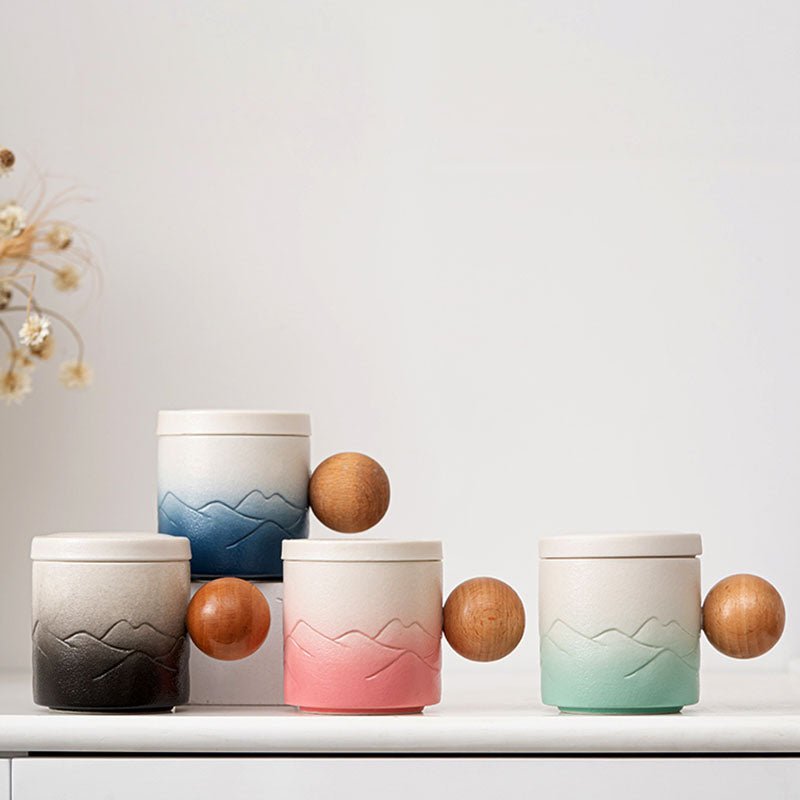
Small Coffee Corner Ideas for Office Desks and Shared Kitchens
Reading time: about 8 minutes
A single mug can take over a desk faster than people expect. Add a spoon, a sugar jar, a napkin stack, and a laptop, and the coffee setup starts competing with the work space instead of supporting it.
The best small coffee corner ideas for office desks and shared kitchens are not about adding more pieces. They are about choosing fewer items, picking the right mug shape, and leaving enough room to set something down without moving three things first.
In our store, we see the same pattern again and again: the setups that stay useful are the ones that can be cleaned quickly and reset in under a minute. That is usually a better goal than a decorative coffee station that looks nice on day one and turns into clutter by Friday.
What actually fits on a desk or shared counter?
Start with the space, not the accessories. A coffee corner that works on a home office desk will usually fail in a shared kitchen if the same desk setup tries to serve three people at once. The difference is traffic. On a private desk, the mug just needs to stay out of the keyboard zone. In a shared kitchen, the corner has to survive other people reaching in, refilling, and setting things back down in the wrong place.
We like to think in practical terms:
- One mug, one spoon, one small container, and one tray is enough for a personal desk corner.
- A shared kitchen corner needs a clear surface for the mug, a place for stirrers, and a container that closes cleanly.
- If the counter sits under low cabinets, a tall mug or stacked storage can become annoying fast.
- If the surface is narrow, the mug base matters more than the decoration on it.
That last point matters more than most buyers expect. A wide base leaves less room for a hand, a mouse, or a notepad. A mug with a stable, smaller footprint is usually easier to live with on a desk that already carries work tools.
Which mug shape saves space without feeling awkward?
Shape changes how a mug behaves on a small surface. A round mug often feels easy to set down and pick up quickly. A taller mug can reduce spread on the counter, but it may feel less stable if the desk is crowded or if the bottom shelf sits close to the mug rim. That trade-off is exactly why we keep more than one profile in the shop.
If you want to compare two practical options, look at the Round Coffee Tea Mug for a lower, compact feel and the Landscape Tall Coffee Tea Mug for a slimmer vertical profile. For a broader comparison across shapes, the ceramic coffee mugs collection is the fastest place to see what fits a tight setup.
| Setup choice | Best use | Trade-off |
|---|---|---|
| Round mug | Desk corners with limited horizontal room | Can use more surface area than a taller profile |
| Tall mug | Shared kitchens with limited counter depth | May feel less steady under low cabinets or crowded shelves |
| Oversized mug | Long meetings or extended sipping | Usually too bulky for a small desk station |
If you are comparing larger cups for long work sessions, our Coffee Large Mug Buying Guide for Daily Use and Desk Comfort and A buyer's guide to large capacity coffee mugs cover the practical side of size, handling, and desk comfort.
How do you keep a shared coffee corner from turning into clutter?
The cleanest shared kitchen stations are usually the least ambitious. One tray, one bin, and one rule for where clean mugs live. That is enough. Once people start adding separate jars for every sweetener, multiple spoon holders, and decorative extras that no one resets, the corner stops working.
A good setup uses friction in the right places and removes it everywhere else:
- Put the mug and spoon on a tray so the whole station can be moved or wiped in one pass.
- Use one closed container for sugar or stirrers instead of several open dishes.
- Leave room for a drip, a lid, or a quick rinse without splashing the keyboard or the floor.
- Keep the daily-use item in front. Put backup stock behind it or in a cabinet.
For shared spaces, cleanliness is not just appearance. It affects whether the station gets used respectfully. A mug with coffee residue left on the rim, a damp spoon, or a sticky base ring tends to make the whole corner feel neglected. That is why smooth-glazed ceramic is a sensible choice for everyday use: it wipes clean easily, but it still needs regular care. If your setup sees a lot of sink and dishwasher cycles, our Coffee Mug Care Tips to Make Your Mug Last Longer is the practical follow-up.
What should you stock, and what should you leave out?
The fastest way to simplify a small coffee station is to treat every item as guilty until it proves useful. If it does not get used every day, it probably does not belong on the counter.
Keep these items close:
- A single mug or a very small set of matching mugs.
- A spoon or stirrer container that is easy to wipe.
- One sealed tin or jar for sugar, tea, or a similar dry ingredient.
- Napkins or a small cloth that can be replaced without effort.
Leave these out unless the corner is genuinely large enough:
- Extra decorative containers that only collect dust.
- Open bowls of sugar in a busy shared kitchen.
- Bulky coffee gear that belongs in a full brew station, not a desk corner.
- Mugs that are too large to fit comfortably under cabinets or beside a monitor.
A small coffee corner is not the right place for every brewing style. If your team wants a full carafe, grinder, filters, and multiple serving mugs, that is a different station with a different footprint. Trying to force that into a desk corner usually creates more cleanup than convenience.
There are also mug quality details worth checking before you buy. Look for a flat base that sits level on the desk. A mug that wobbles is annoying, and near a laptop it becomes a real risk. Check the handle opening too. If two fingers do not fit comfortably, the mug becomes awkward when full. And inspect the rim and foot ring for chips or rough glaze. Those are the areas that show wear first after repeated sink contact and dishwasher cycles.
That is why we like to pair practical buying with practical care. A well-made ceramic mug is not fragile in normal use, but it is not indestructible either. Avoid thermal shock, do not drag the base across a gritty sink, and dry the foot ring if your counter surface stains easily.
What works better on a desk, and what works better in a shared kitchen?
The right setup changes with the setting. A desk setup is personal. A shared kitchen setup has to be obvious, easy to reset, and hard to mess up.
For an office desk, the best setup is usually minimal:
- One mug.
- One spoon.
- One small container or tin.
- Enough empty space for a notebook or keyboard.
For a shared kitchen, the same setup needs a little more structure:
- A tray or mat to define the station.
- A visible place for clean mugs and a separate place for used ones.
- Labels if multiple people refill the same items.
- A cleanup habit that happens at the end of the day, not once a week.
If you want one setup to do both jobs, choose the simplest version that still feels intentional. A ceramic mug with a compact footprint, a small tray, and one sealed container is usually enough. Anything more should earn its place.
Frequently asked questions
What size mug works best for a small office desk?
A medium mug is usually the safest choice because it gives you enough capacity without taking over the desk. If your work surface is narrow, a taller profile can save width, but make sure the mug still feels stable beside your keyboard and mouse.
Are ceramic mugs a good choice for shared kitchens?
Yes, especially if you want something easy to wipe clean and simple to standardize across a group. Ceramic is not the best choice if people are rough with dishes or regularly stack cups in a way that chips rims and handles.
What should I avoid in a tiny coffee corner?
Avoid oversized mugs, open sugar bowls, and decorative accessories that do not get used daily. Those items eat space and make cleanup slower. A small station works best when every item has a job.
How do I keep a coffee corner from staining the counter?
Use a tray or mat, keep a cloth nearby, and dry the base of the mug if it drips after washing. On light counters, coffee rings show quickly, so the habit of wiping the area at the end of the day matters more than the material alone.
Should I buy one mug or a matching set?
If the corner is for one person, one mug is enough. For a shared kitchen, a small matching set looks neater and is easier to manage, but only if everyone is willing to wash and return pieces to the same place.
Which setup should you choose first?
If you are starting from zero, make the decision in this order:
- Measure the surface where the mug will sit.
- Check whether the station sits under low cabinets.
- Decide whether the setup is for one person or a shared group.
- Pick the mug shape that leaves the most usable space around it.
- Choose the fewest accessories that still make cleanup easy.
If you want the simplest next step, start with the ceramic coffee mugs collection and compare the round and taller profiles side by side. From there, pick the mug that fits the desk, the cabinet clearance, and the way your team actually uses coffee every day.
Read more

Tall Landscape Ceramic Coffee Mug: Who It Fits Best
A practical buyer guide for shoppers comparing a tall landscape ceramic mug against standard everyday cups. It explains who benefits from the shape, where it works best, and when a different mug is...
Czytaj dalej
Coffee Mug Buying Guide for First-Time Buyers
This buying guide helps first-time coffee mug buyers compare size, material, handle comfort, and care so they can choose a mug that fits daily use.
Czytaj dalej
Zostaw komentarz
Ta strona jest chroniona przez hCaptcha i obowiązują na niej Polityka prywatności i Warunki korzystania z usługi serwisu hCaptcha.