
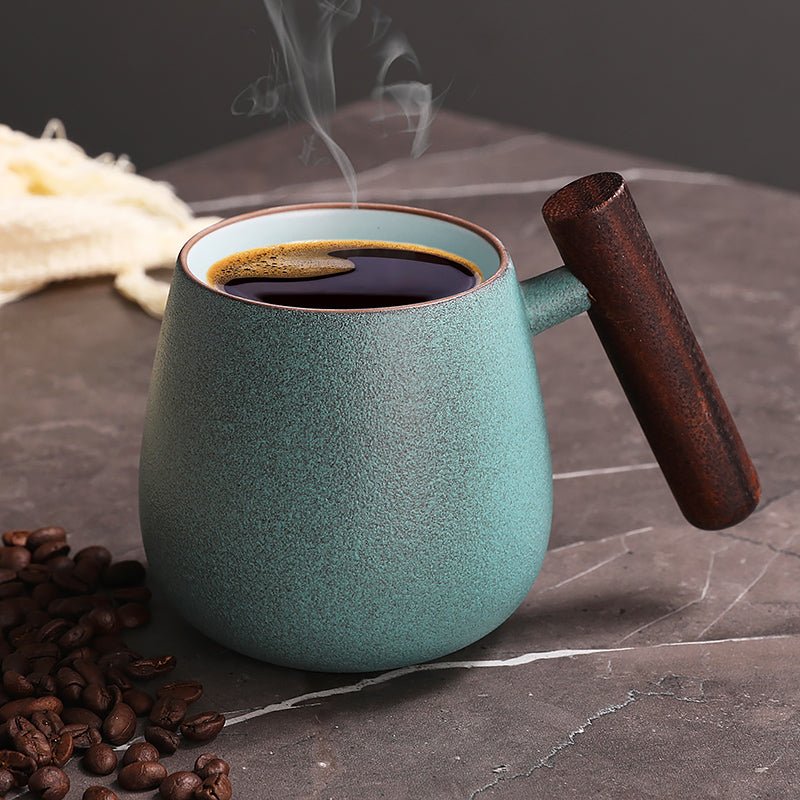
Coffee Mug Ounces: How to Pick the Right Size Before You Buy
Reading time: about 8 minutes
A 12-ounce mug sounds simple until you pour in hot coffee, add milk, and realize the drink stops well below the rim. We see that mismatch often in our store: the label says one thing, but the way a mug feels on a kitchen counter or office desk tells a more useful story.
If you are comparing coffee mug ounces, the real question is not just how much a mug can hold. It is how much you actually want to drink, how much room you need for cream or foam, and whether the mug is shaped for everyday use or just for a photo.
How many coffee mug ounces should you expect?
Most everyday coffee mugs land somewhere between 8 and 12 ounces, with larger mugs often moving into the 14 to 16 ounce range. Oversized mugs can go bigger, but once you get past the standard range, the mug starts to behave more like a bowl than a daily drinking cup.
That matters because capacity is usually listed as the full amount to the rim. The amount you can comfortably drink is usually lower. Leave room for heat, crema, foam, milk, and the small splash that happens when a mug is moved from counter to couch.
| Mug size | Typical use | What it feels like in real use |
|---|---|---|
| 6 to 8 oz | Small drip coffee, tea, espresso-based drinks with less volume | Compact, lighter, and easier to finish while the drink is still hot |
| 8 to 12 oz | Standard daily coffee | The most practical range for most counters, desks, and cabinets |
| 14 to 16 oz | Large coffee, latte-style drinks, cocoa | More room for milk and less risk of spilling when carrying it across a room |
| 20 oz and up | Big pours, soup-like drinks, long work sessions | Not ideal if you want a mug that stays comfortable in one hand |
Which mug size fits each type of drink?
The right size depends on what you actually pour into the mug, not the label on the shelf. A black coffee drinker usually has a very different need from someone who adds a heavy splash of milk or makes a latte at home.
- Black coffee: 8 to 10 ounces is often enough if you like a smaller, hotter drink.
- Drip coffee with milk: 10 to 12 ounces usually gives enough room without feeling oversized.
- Lattes and cappuccino-style drinks: 12 to 16 ounces is more forgiving because foam and milk take space.
- Tea or hot chocolate: 12 ounces and up is more comfortable if you tend to sip slowly.
- Cold brew: A mug is usually not the best match if you want a lot of ice or a large serving. A glass or tumbler works better.
There is also a practical issue that people overlook: a mug that is too large can make a normal coffee look half full, which can feel underwhelming even when the volume is fine. A smaller mug can help a drink stay hot longer and look more balanced on a breakfast table.
Why does the same ounce label feel different in two mugs?
Two mugs can both be labeled 12 ounces and still feel completely different in the hand. One may be tall and narrow, which can feel more compact and easier to hold. Another may be wide and shallow, which gives more surface area and cools faster.
In our store, we pay attention to details that buyers rarely see in a product photo: the opening diameter, the wall thickness, the balance of the handle, and whether the base sits flat without wobble. Those small things affect daily use more than the number on the listing.
Common issues we watch for are straightforward:
- Wobble on the counter: A mug that does not sit flat can feel cheap and can be annoying every time you set it down.
- Handle clearance: If the handle opening is too tight, larger hands or gloved hands do not fit comfortably.
- Glaze wear: Repeated dishwasher cycles can dull some finishes over time, especially on decorative pieces.
- Hairline cracks: These are a reason to stop using the mug, even if the crack looks minor.
A ceramic mug is also not an insulated mug. That is the trade-off. It is better for the table, the office, and a relaxed morning routine, but not the best choice if you need heat retention for an hour-long commute or if the drink must fit in a car cup holder.
Which mug size should you buy for home, office, or gifting?
If you are buying for yourself, start with the routine you already have. If you are buying a gift, think about the recipient’s actual habits instead of defaulting to the biggest mug in the box.
- For home use: 10 to 12 ounces is the safest all-around choice for most people.
- For a desk or home office: 11 to 15 ounces can work well if you like fewer refills during the day.
- For a gift: Choose a shape and design that feels personal, but keep the size practical if you do not know the drink preference.
- For espresso drinkers: A large mug is usually unnecessary and can make the drink feel diluted by scale.
If you want a straightforward everyday shape, our Round Coffee Tea Mug is the kind of piece that fits cleanly into a daily routine. If you are choosing by style as much as by volume, the Elk and Moon Coffee Tea Mug and the Koi Fish Coffee Tea Mug are better examples of how a mug can be useful without feeling generic.
For shoppers comparing options across the store, the full collection is the fastest way to compare shapes, artwork, and capacity side by side.
What should you check on the product page before you buy?
The ounce number is only the first filter. A better purchase comes from checking the details that affect how the mug behaves after it arrives, not just how it looks in a thumbnail.
- Listed capacity: Confirm whether the number is full-to-rim or the practical drinking amount.
- Dimensions: Height and diameter matter if you store mugs under cabinets or beside a brewer.
- Material: Ceramic feels classic and sturdy, but it is heavier and less insulating than a travel tumbler.
- Care instructions: If a mug is dishwasher-safe, it still helps to place it securely so it does not chip against other items.
- Use case: A decorative mug can be perfect for gifting and still be the wrong pick for all-day coffee refills.
If you want more background before choosing, our related guides cover the same question from slightly different angles: How Many Ounces Is a Coffee Mug? Real Sizes and Buyer Tips, How Many Ounces Is a Coffee Mug? Sizes, Fits, and Buying Tips, and How Many Ounces Is a Standard Coffee Mug? Buyer Guide.
How do you care for a ceramic coffee mug?
Most ceramic mugs are simple to live with, which is part of the appeal. They are easy to rinse, usually fine in a dishwasher if the product page says so, and they feel more substantial than thin drinkware.
That said, ceramic does have limits. Sudden temperature changes can stress the material, so it is smarter to avoid moving a mug from very hot to very cold water in one step. Decorative printing can also wear differently over time depending on the finish, the detergent, and how tightly mugs are packed in the dishwasher.
For everyday use, we recommend three habits: do not bang the mug against the sink, let it cool before washing if it has been sitting in very hot liquid, and retire any mug with chips around the rim or base. A small chip can become a bigger problem faster than most buyers expect.
Frequently asked questions
How many ounces is a standard coffee mug?
A standard coffee mug is usually in the 8 to 12 ounce range, with 10 or 11 ounces being a common everyday size. The exact usable amount is often a bit lower than the label because you need room near the rim for safe sipping.
Is a 12-ounce mug enough for lattes?
For many home lattes, yes. A 12-ounce mug usually gives enough room for espresso plus milk and foam, but if you make larger milk drinks or add extra toppings, a 14 to 16 ounce mug feels less cramped.
Should I buy an 8-ounce or 12-ounce mug?
Choose 8 ounces if you drink smaller servings and want coffee to stay hot longer. Choose 12 ounces if you add milk, drink tea, or want a more versatile mug for everyday use.
Are ceramic coffee mugs dishwasher safe?
Many are, but you should always check the product listing. Even when a mug is dishwasher-safe, a crowded rack, hard contact with other dishes, or repeated high-heat cycles can still wear on the finish over time.
Why do some mugs list ounces and others list dimensions?
Ounces tell you the capacity, while dimensions tell you how the mug fits in real life. Both matter. A mug that holds the right amount can still be awkward if it is too tall for your cabinet or too wide for your hand.
If you are ready to choose, compare three things first: the listed capacity, the mug shape, and the care instructions. Then browse the full collection and pick the mug that matches how you actually drink coffee, not just the number printed in the product title.
Read more
Princess House Coffee Mugs: What Buyers Should Check Before Ordering
Princess House coffee mugs can be a smart vintage find, but condition, replacement risk, and everyday durability matter more than the brand name. Here is how we help shoppers compare the trade-offs...
Czytaj dalej
Fall Coffee Mug Buying Guide: Sizes, Styles, and Best Picks
A practical guide to choosing a fall coffee mug for daily coffee, tea, or gifting, with size comparisons, online buying checks, and store picks that stay useful past October.
Czytaj dalej
Zostaw komentarz
Ta strona jest chroniona przez hCaptcha i obowiązują na niej Polityka prywatności i Warunki korzystania z usługi serwisu hCaptcha.