
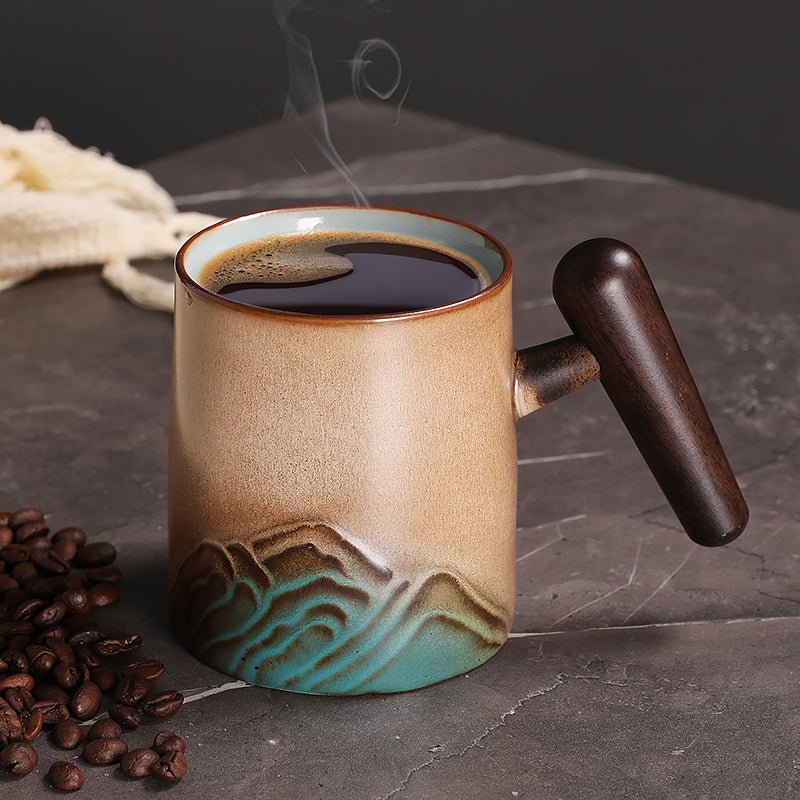
Cake in a Coffee Mug: How to Make, Serve, and Choose the Right Mug
Reading time: about 8 minutes
A mug cake that spills over the rim, turns rubbery in the middle, or dries out around the edges usually has one thing in common: the mug was wrong for the batter. We see that problem a lot in our store because people tend to grab the nearest cup, not the right one.
cake in a coffee mug sounds simple, and it can be. But the mug matters more than most recipes admit. The width, fill level, material, and even the way the handle sits on a microwave turntable all affect the result.
We handle mug sizes and styles every day at CoffeifyMug, and in our experience the best mug dessert is the one that matches the batter, the microwave, and the person eating it. If you want the deeper mug-fit side of this topic, our Coffee Mug Cake: What It Is, How It Works, and What to Use piece is a helpful starting point.
What makes cake in a coffee mug work better than a bowl?
A mug gives you a smaller, taller shape that helps portion control and makes microwave baking easier to monitor. A bowl can work, but mugs are better for quick single servings, less mess, and a more finished presentation on a desk, dorm counter, or break room table.
The catch is that a mug is not just a mini mixing bowl. It changes heat flow. Ceramic mugs hold heat differently than thin glass or metal, and that affects how fast the batter sets. For a standard microwave dessert, we usually recommend a sturdy ceramic mug with a wide enough opening to stir without scraping batter halfway up the walls.
In practical terms, this means looking for a mug that is:
- Microwave-safe ceramic or another microwave-safe material clearly labeled for heat use
- Wide enough at the top to leave room for rise, not just enough volume on paper
- Comfortable to clean after cocoa, butter, or oil ingredients cling to the sides
If you are comparing mug sizes, our size guides can help. We break down fit and use cases in the 10 oz Coffee Mug article, the 11 oz Coffee Mug guide, and the 12 Ounce Coffee Mug Buying Guide.
What mug size should you use for a mug cake?
The safest choice for most cake in a coffee mug recipes is an 11 oz or 12 oz mug. That gives the batter room to rise without climbing over the edge. A 10 oz mug can work for leaner batters or smaller portions, but it leaves less buffer if the recipe is heavy on leavening.
We prefer to think about fill level rather than just printed capacity. A mug marked 12 oz may still have thick walls or a narrower opening that makes it feel smaller in practice. A mug cake batter should usually sit below the midpoint before cooking, because the microwave can push the rise quickly and unevenly.
| Mug size | Best for | Trade-off |
|---|---|---|
| 10 oz | Smaller portions, careful testers | Less headroom, easier to overflow |
| 11 oz | Most standard mug cake recipes | Needs a little attention on batter amount |
| 12 oz | Roomier batter, easier stirring | Can make a small portion look sparse |
For buyers comparing options, we often steer people toward an 11 oz mug if they want one piece of drinkware that does more than dessert. If the mug is too oversized, the cake can look flat and underfilled even when the recipe is correct. If it is too small, you get overflow and a mess on the turntable.
For a closer look at the size trade-offs, see our focused posts on the 11 oz mug and 12 oz mug.
Which mug materials handle microwave cake best?
For cake in a coffee mug, ceramic is usually the most forgiving choice. It heats more evenly than many thin alternatives and tends to feel stable on a kitchen counter, office desk, or dorm shelf. It also presents well if you are serving the dessert straight from the mug.
Here is the practical trade-off:
- Ceramic: Best all-around for mug cakes; durable, familiar, and usually microwave-safe when labeled properly.
- Glass: Can work if microwave-safe, but often runs hotter to the touch and may not feel as sturdy for daily use.
- Metal: Not suitable for microwave baking.
We also advise checking the mug’s finish. A smooth interior makes cleanup easier after butter, cocoa, or sugar. A heavily textured glaze can trap residue around the bottom curve and handle base. That is not a dealbreaker, but it is the kind of detail shoppers notice after the third round of microwave baking.
If you want a mug you can use for both coffee and dessert, browse our full mug collection and compare shapes before buying. Our product page also shows the current options in one place.
How do you keep a mug cake from overflowing or turning rubbery?
The two most common failures are overflow and overcooking. Overflow usually comes from a mug that is too small, batter that is filled too high, or too much leavening. Rubberiness usually comes from too much microwave time, especially on a high-wattage appliance with a very small mug.
These are the fixes we suggest most often:
- Start with a mug that gives headroom. An 11 oz or 12 oz mug is safer for most recipes.
- Mix only until combined. Overmixing can make the crumb dense.
- Use a shorter first cook. Check the top before adding more time.
- Let it rest briefly. The center finishes setting after the microwave stops.
- Keep toppings light. Heavy mix-ins can sink or create wet spots.
One thing we tell customers honestly: mug cake is not the best choice if you want a perfectly layered sponge, a crisp edge, or a cake for slicing. It is a quick single-serve dessert. It should taste good fast, not behave like an oven-baked layer cake.
For recipe-specific timing and troubleshooting, our guides Coffee Cake Mug Cake Recipe: Right Mug, Timing, and Fixes and Coffee Cake Mug Cake: How to Make It Work in the Right Mug go deeper into the timing side.
What details should buyers check before using a mug for dessert?
We look at the same practical details every time a mug goes from shelf to microwave. They matter more than the print on the side.
- Microwave-safe labeling: Do not assume every ceramic mug is safe just because it feels solid.
- Capacity versus usable space: Thick walls can make a mug feel smaller inside.
- Handle clearance: A bulky handle can make it awkward to rotate in a small microwave.
- Ease of cleaning: Smooth interiors are easier after butter, syrup, or cocoa batter.
- Daily use beyond dessert: The best mug should also work for coffee, tea, or desk-side snacks.
In our store, we often help buyers choose a mug that does double duty. That matters because most shoppers do not want a one-use dessert cup sitting in the cabinet. They want something that still looks good after dishwasher cycles, commute mornings, and office reheats. For that reason, a practical ceramic mug with a sturdy base usually makes more sense than a novelty-shaped cup.
Our rule of thumb: if you would not be comfortable washing it, microwaving it, and using it for coffee all week, it is probably not the right mug for a mug cake.
What is the easiest mug cake setup for a kitchen, office, or gift?
The easiest setup is a medium ceramic mug, a spoon, and a recipe you already trust. Nothing fancy. That is why mug cakes work so well as a last-minute dessert, a workday treat, or a small gift for a friend who likes baking but does not want a full pan of leftovers.
For different buying scenarios, we see three common use cases:
- Kitchen counter use: Go for a sturdier mug with a wider mouth and easy cleanup.
- Office desk use: Pick a mug that is stable, plain enough for daily use, and not so tall that it feels top-heavy.
- Gift use: Choose a mug with a clean look and enough capacity to handle both dessert and coffee later.
If you are shopping specifically for a mug that can handle both beverages and microwave desserts, browsing our all mugs collection is the simplest way to compare shapes, sizes, and styles. If you already know you want a practical starter piece, our products page is the quickest next stop.
Frequently asked questions
What size mug is best for cake in a coffee mug?
An 11 oz or 12 oz mug is usually the safest choice for most mug cake recipes. A 10 oz mug can work, but it leaves less room for rise and makes overflow more likely if the batter is filled too high.
Can I use any ceramic mug in the microwave?
No. Only use ceramic mugs that are labeled microwave-safe. Some decorative mugs have metallic paint, cracked glaze, or hidden damage that can make them a bad fit for microwave use.
Why does my mug cake come out rubbery?
Rubbery texture usually means the cake was cooked too long or mixed too much. Try a shorter first cook, stop as soon as the top looks set, and let the mug sit for a minute before eating.
Is a mug cake better in a wide mug or a tall mug?
A wider mug is usually easier for mug cakes because batter rises more evenly and is easier to stir. Very tall, narrow mugs can make mixing awkward and can leave the center undercooked while the edges overcook.
Can I make cake in a coffee mug without a special mug cake mug?
Yes, as long as the mug is microwave-safe and large enough for the batter. Many people use a standard coffee mug around 11 oz or 12 oz, which is often the most practical choice for everyday use.
If you are ready to compare mug shapes for dessert and daily coffee, start with the sizes that fit your kitchen habits best: the 10 oz guide, the 11 oz guide, and the 12 oz guide. Then check our full collection for the mug that gives you enough room to bake without making cleanup harder.
Read more
Best Thermal Coffee Mug: What to Look For Before You Buy
A practical buyer’s guide to choosing the best thermal coffee mug for commuting, desk use, and gifts. We cover insulation, lid design, materials, sizes, and the trade-offs that matter before you or...
Czytaj dalej
How to Create a Coffee Mug That Fits Your Daily Routine
A practical guide to create a coffee mug with the right size, material, shape, and finish for everyday use. We cover real trade-offs so you can choose a mug that feels good on the desk, in the kitc...
Czytaj dalej
Zostaw komentarz
Ta strona jest chroniona przez hCaptcha i obowiązują na niej Polityka prywatności i Warunki korzystania z usługi serwisu hCaptcha.