
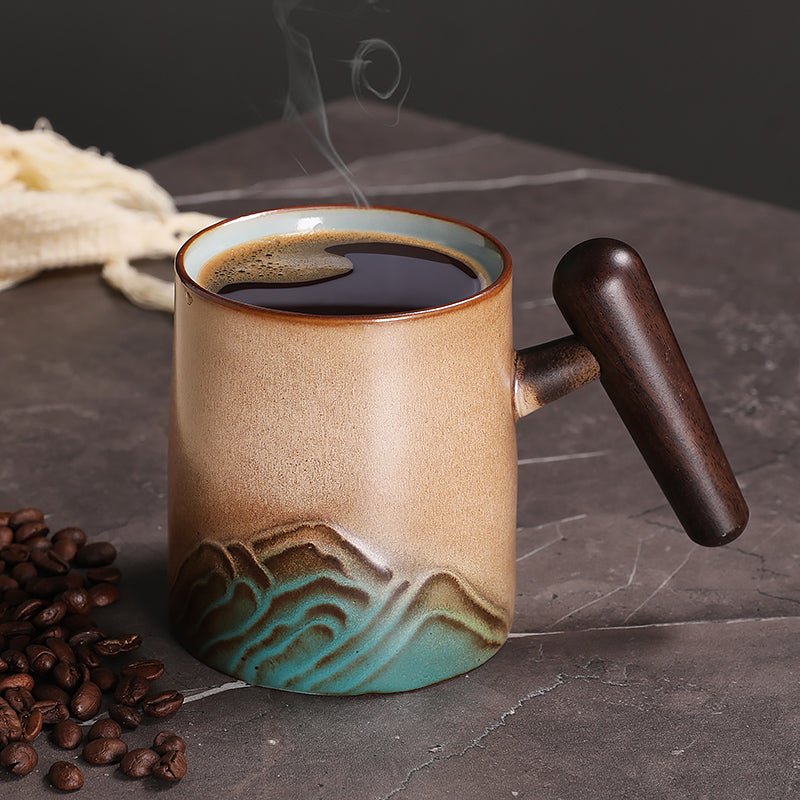
Scotty P's Big Mug Coffee: What Buyers Should Check Before Buying
Reading time: about 9 minutes
A mug that looks generous on a product page can feel awkward the first time you carry it from the counter to a desk or couch. That is the real question behind scotty p's big mug coffee: people want a larger cup that still feels balanced, pours cleanly, and survives everyday use.
In our store, we see shoppers compare big mugs for three reasons: fewer refills, a better fit for milk-heavy drinks, and a handle that is easier to grip than the small ring on a standard cup. The trade-off is real. A bigger mug is heavier when full, takes more shelf space, and is not the best pick if you like espresso, cup-holder travel, or very fast cooling.
What does a big mug actually mean?
There is no single industry cutoff for a large mug, so the size conversation matters more than the name. For most buyers, a big mug starts around 14 to 16 ounces and becomes clearly oversized at 18 ounces and up. Once you reach the 22 to 24 ounce range, the mug can feel more like a personal serving vessel than a standard coffee cup.
That size change affects more than capacity. It changes hand feel, heat retention, storage, and even how the drink smells as you sip. A wider opening can let aroma rise faster, but it can also cool the coffee sooner. A taller mug may hold more liquid, yet it can feel top-heavy if the base is narrow.
| Capacity | Typical use | What to check |
|---|---|---|
| 14 to 16 oz | Large everyday mug | Handle clearance, base stability, and lip comfort |
| 18 to 20 oz | True big mug for drip coffee or lattes | Weight when full and whether it fits your shelf |
| 22 to 24 oz | Extra-large mug for long sipping sessions | Balance, heat retention, and easy cleaning |
| 28 oz and up | Very large serving mug | Whether you actually want a cup this heavy on a daily basis |
If you want a broader buying checklist, our article on Big Coffee Cups: What to Check Before You Buy a Large Mug covers the core details we look for before we list anything in our store.
Which details should you check before buying one?
Size alone does not tell you whether a mug will work well at home or at the office. The small details decide whether it feels comfortable after the first sip or annoying by the third refill. We pay attention to the parts people notice only after the mug has already landed on the kitchen counter.
- Handle clearance: Make sure your fingers fit without pressing against the mug wall. A handle that is too tight feels worse as soon as the cup is hot.
- Base width: A wider base is usually steadier on a desk or side table. Narrow bases can wobble, especially when the mug is filled close to the rim.
- Rim shape: A smooth rim matters more than many buyers expect. A thick or uneven lip changes the drinking feel and can make the mug seem bulkier than it is.
- Wall thickness: Thicker walls often feel sturdy and hold heat longer, but they also add weight. Thin walls feel lighter, yet they may cool faster and can chip more easily if the mug is knocked.
- Glaze quality: Look for even glaze coverage, especially inside the mug, around the handle joint, and near the foot ring. Pinholes, rough spots, or hairline cracks are the kinds of defects we would not ignore.
Those details are why a mug can look right in photos and still miss the mark in daily use. If you are comparing options quickly, our guide to Big Mug Coffee: How to Choose the Right Large Mug for Daily Use breaks the decision down into practical checkpoints instead of style language.
Which materials work best for daily use?
Most big mugs people buy for home use are some form of ceramic, often stoneware or porcelain. Both can work well. The better choice depends on how you drink, how you wash dishes, and whether you care more about a sturdy feel or a lighter cup in the hand.
| Material | Strengths | Trade-offs |
|---|---|---|
| Stoneware | Solid feel, good everyday durability, often comfortable for long sipping | Heavier when full and can chip if banged against a sink or shelf |
| Porcelain | Lighter feel, smoother finish, often a cleaner drinking edge | Can feel thinner and may not insulate as much as a thicker mug |
| Earthenware | Warm look and approachable weight, often easy to decorate | Can be more prone to wear if the glaze is thin or the mug is handled roughly |
For everyday coffee, we tend to favor a mug with an even glaze, a stable base, and a finish that does not feel chalky or rough. If a mug is labeled microwave-safe or dishwasher-safe, that is useful, but the label still matters more than the material alone. Hand-wash only mugs can be fine, but they are a weaker fit for busy kitchens and office break rooms.
If you want to compare our current mug options directly, start with our products page or browse the broader collection when you want to compare shapes and finishes side by side.
Is a big mug right for your routine?
A big mug is a good fit if you want fewer refills, drink coffee slowly, or mix in milk, foam, cocoa, or tea. It is also useful for people with larger hands who hate the cramped feel of a small handle. On a desk, a larger mug can be more stable than a narrow cup if the base is wide enough.
It is not the best choice for everyone. If you drink espresso, move around a lot while sipping, or prefer coffee that stays hot in smaller servings, a large mug may work against you. The same goes for crowded shelves and compact dish racks. An oversized mug takes more room and can be annoying if you already fight for cabinet space.
We tell shoppers to think about the drink, the room, and the cleanup. A mug that is ideal for a Sunday morning pour can be a poor fit for a weekday commute, and that is not a flaw. It just means the mug has a use case.
How do we compare large mugs in our store?
We look at the same things a shopper notices at home. First, we check whether the mug sits flat on a counter without a wobble. Then we look at the handle joint and the rim, because those are the spots that reveal sloppy production fastest. Finally, we ask whether the mug would still feel good after a few dishwasher cycles and a few weeks of use, not just on day one.
There are a few common failure modes we watch for in this category:
- Handle stress points: The joint where the handle meets the body can show weakness if the mug is made carelessly.
- Uneven glaze: Thin coverage can leave rough patches inside the cup or around the base.
- Wobbly foot rings: A mug that rocks on the counter usually feels less refined and less safe in daily use.
- Too much top weight: Very tall mugs can feel awkward if the upper half is heavy and the base is too small.
That is why we like pairing size guidance with real-use checks. Our article on Scotty P Big Mug Coffee: How to Choose a Large Mug That Works goes deeper on comfort, shape, and the everyday details that matter after the first pour.
What should you buy if you want a big mug for coffee, not a display piece?
If your goal is daily use, focus on function first. A mug with a clean finish, a handle you can wrap without squeezing, and a base that sits securely will outperform a more decorative cup that only looks good on a shelf. We see this all the time in gift unboxings: the pretty mug gets photographed, then the heavier, simpler one becomes the one people actually grab every morning.
For practical buyers, the best choice usually checks these boxes:
- It holds the amount you actually drink, not the amount that sounds impressive.
- It fits your hand with some room to spare, even when the mug is hot.
- It matches your cleanup routine, whether that means dishwasher use or hand washing.
- It fits your cabinet, shelf, or mug rack without forcing everything else aside.
If your coffee routine is mostly at home, a large mug can make sense. If you need travel performance, a lidded tumbler is the better tool. If you want a smaller, hotter drink, a standard mug or cup may be the better fit. The right answer is not always the biggest one.
Frequently asked questions
What size is best for scotty p's big mug coffee?
For most buyers, 16 to 20 ounces is the sweet spot. That range is large enough for a generous pour without becoming awkwardly heavy when full. If you drink very slowly or add a lot of milk, 22 ounces can work, but it is not the most convenient size for everyone.
Is a big mug too heavy for daily use?
It can be if the walls are thick and the capacity is very large. A good big mug should feel solid, not tiring. If you plan to carry it around the house or office often, look for a balanced shape and a handle with enough clearance for your fingers.
Can I put a large mug in the dishwasher or microwave?
Only if the mug is labeled for that use. The material alone does not guarantee it, and some decorative finishes are not meant for high heat or repeated washing. If easy cleanup matters to you, check the care instructions before you buy.
What is the biggest mistake shoppers make with oversized mugs?
They buy for capacity and ignore balance. A mug can hold a lot and still be uncomfortable if the handle is cramped, the base is narrow, or the rim feels awkward. The mug you use every day should be easy to hold when it is full, not just impressive on a shelf.
Are big mugs good for lattes, tea, or hot cocoa?
Yes, especially if you like room for milk or foam. Big mugs work well for drinks that benefit from a wider opening and a slower sip. They are less useful for espresso-focused drinks, where a smaller cup usually makes more sense.
What should you check before ordering one?
Use this short checklist before you buy:
- Confirm the capacity matches your actual pour size.
- Check handle clearance with the mug full in mind, not empty.
- Look for a flat, stable base that will not wobble on your counter.
- Review the care label so you know whether it fits your kitchen routine.
- Decide whether you want stoneware weight, porcelain lightness, or another ceramic feel.
If you are still comparing options, the fastest next step is to scan our full collection and compare size, shape, and finish against the checklist above. That will tell you quickly whether a big mug is the right buy, or whether a smaller, easier-handling cup will suit you better.
More from our blog
Read more
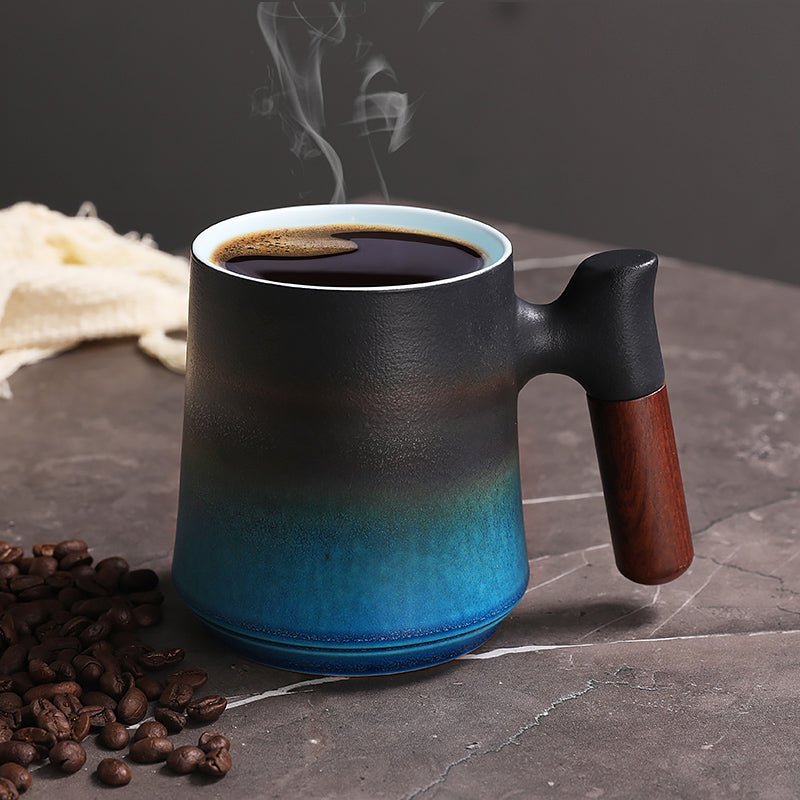
Ray Dunn Coffee Mugs: What to Check Before You Buy
Ray Dunn coffee mugs are popular for the simple lettering and farmhouse look, but the details matter: size, handle comfort, glaze quality, and care instructions. Here’s how we help shoppers compare...
Per saperne di più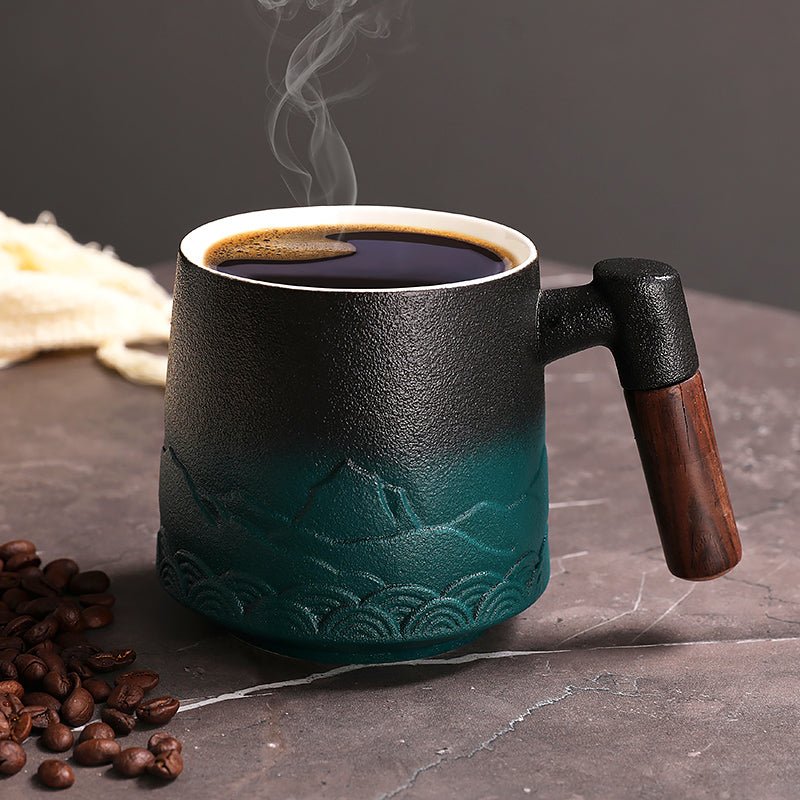
Coffee Mug Painting: Materials, Methods, and What Holds Up
Coffee mug painting works best when the mug surface, paint, and cure method match how the mug will be used. We cover what holds up on real kitchen counters, what to avoid, and which mug shapes make...
Per saperne di più
Commenta
Questo sito è protetto da hCaptcha e applica le Norme sulla privacy e i Termini di servizio di hCaptcha.