
Ceramic Espresso Cup Buying Guide: Capacity, Size, and Honest Fit
Reading time: about 9 minutes
A short espresso can look stranded at the bottom of a cup that seemed compact in the product photo. That is the core ceramic espresso cup buying problem: the label may describe the intended drink, but the listed capacity determines how the cup will actually look and feel on your counter.
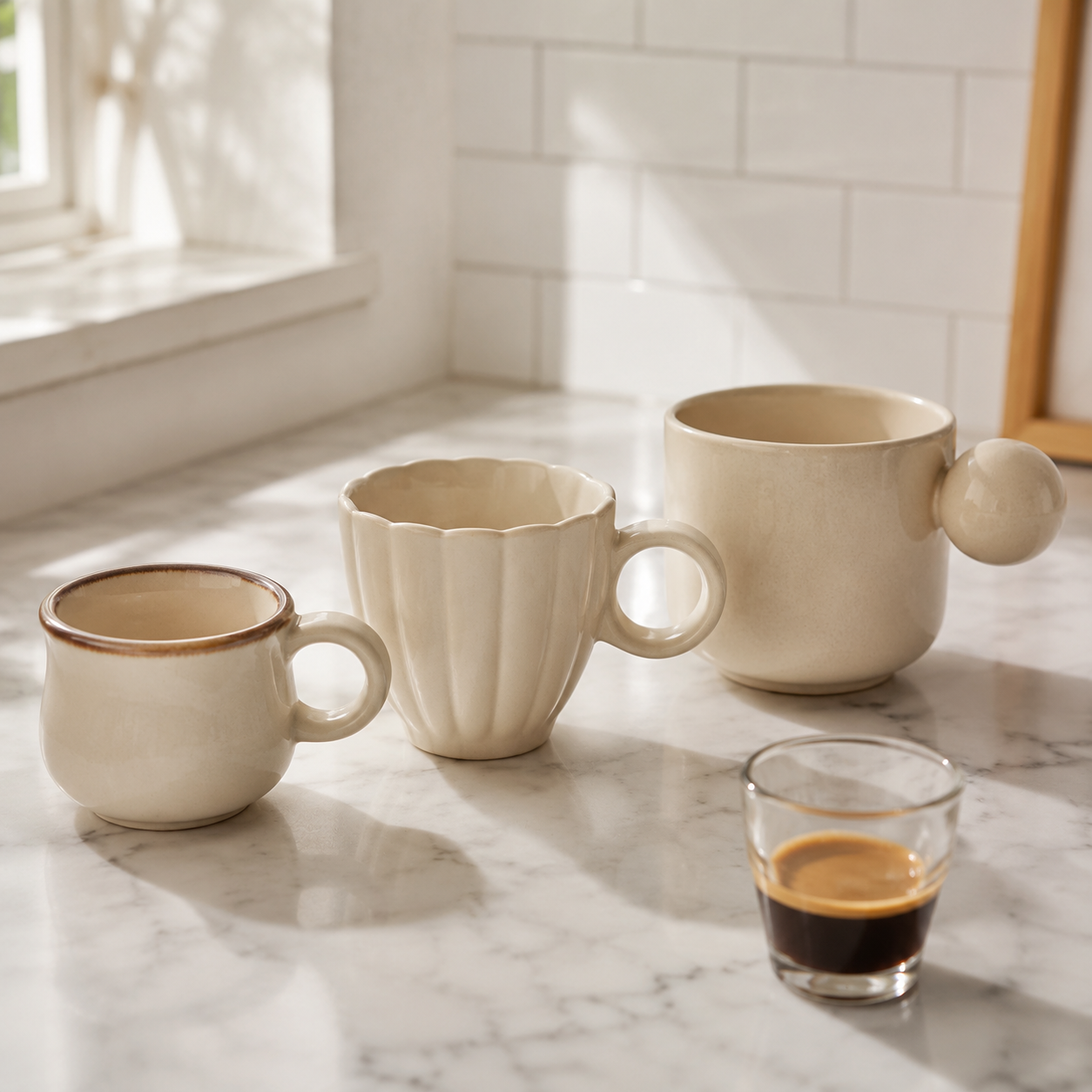
In our store, we find that shoppers get a better result when they compare the amount they normally pour with the vessel capacity before focusing on style. CoffeifyMug's three compact espresso-style options are listed at 170 ml, 200 ml, and 250 ml. All three can hold espresso, but they may be larger than the traditional single-shot demitasse many buyers picture.
What capacity should a ceramic espresso cup have?
Start with your own recipe. A single espresso may be roughly 25 to 35 ml, while a double or a longer recipe may reach 50 to 70 ml before milk or added water. Recipes vary, so measuring one normal serving in a marked kitchen cup gives you a more useful answer than relying on the drink name alone.
Many traditional demitasse cups are around 60 to 90 ml. Against that reference, even the 170 ml Retro Coffee Tea Cup, the smallest of the three listed options, provides considerably more room. That extra capacity can suit a longer espresso, a small milk drink, or someone who dislikes filling a cup near the rim. It is less suitable if you want the close proportions of a cafe-style single-shot cup.
- Mostly straight single shots: look for the smallest available capacity and accept that 170 ml will still leave visible empty space.
- Double espresso or a small amount of milk: 170 ml or 200 ml gives more room for the complete serving.
- Longer coffee recipes: 200 ml or 250 ml may be more practical, depending on how much water or milk you add.
- Traditional demitasse presentation: a vessel below these listed capacities may be the better category.
If form matters as much as volume, browse the unique coffee mugs collection and compare each product page rather than assuming every compact-looking cup has demitasse capacity.
170 ml, 200 ml, or 250 ml: what changes at the table?
| Listed capacity | CoffeifyMug option | Situation it can suit | Main trade-off |
|---|---|---|---|
| 170 ml | Retro Coffee Tea Cup | Straight espresso, doubles, or short drinks where you want the smallest option in this group | Still larger than many traditional single-shot demitasse cups |
| 200 ml | Pleated Coffee Tea Cup | Espresso with added milk or water, or buyers who want a middle capacity | A short shot will occupy only a small part of the vessel |
| 250 ml | Ball Handled Coffee Tea Mug | Longer coffee servings or shoppers who prefer the visible ball-handle form | Closer to a small coffee mug than a classic demitasse in capacity |
The 30 ml steps between these cups are meaningful for presentation. In a 170 ml vessel, a double espresso still has plenty of headroom. In a 250 ml vessel, the same drink will appear smaller and sit deeper in the cup. That is not a performance flaw, but it changes the visual balance and the angle at which you drink.
Capacity also affects how useful the cup is beyond espresso. The 200 ml and 250 ml choices leave more room for milk, tea, or a longer coffee. If your actual target is a full desk mug rather than a compact coffee cup for espresso, compare the scale with our 16 ounce coffee mug buyer's guide. A 16 ounce mug is a distinctly larger category, so this comparison can prevent buying too small or too large.
Will a small espresso cup fit beneath your machine?
Capacity does not reveal exterior height, base width, or handle projection. We cannot promise machine fit from the 170 ml, 200 ml, or 250 ml figures alone. Before ordering a small espresso cup for a specific machine, measure the space where the cup will sit.
- Measure vertically from the drip tray to the lowest part of the coffee outlet.
- If you brew onto a scale, place the scale on the tray and measure the clearance that remains.
- Check the usable tray depth so the cup base can sit level rather than on a raised edge.
- Allow side room for the handle, especially where a machine body or steam wand narrows the area.
Use exterior dimensions from the current product listing if they are supplied. If they are not available, do not infer them from capacity or photographs. Two 200 ml ceramic cups can have very different proportions: one may be low and wide, while another may be taller and narrower.
The same check applies to shelves and office storage. A cup may fit comfortably under a brewer but take more horizontal room because of its handle. Buyers working with a crowded coffee station should measure both clearance and available counter space.
How do ceramic form, rim, and handle affect daily use?
Ceramic is a practical cup material, but the word alone does not tell you wall thickness, total weight, rim profile, or finish. Those details influence the experience. A thicker body may feel more substantial, while a thinner rim can feel more direct at the sip. Since those measurements are not part of the verified capacity information here, inspect the current product photos and description rather than treating one ceramic cup as identical to another.
Handle form deserves the same attention. The Ball Handled Coffee Tea Mug has a visible ball-handle design, which gives it a more distinctive form than a conventional loop. A decorative handle can be the reason someone chooses the cup, but it may not suit every hand or grip preference. Shoppers who prioritize a familiar hold may prefer the Retro or Pleated form after comparing their product photos.
If the cup will move between espresso and tea, capacity becomes especially relevant. A 170 ml vessel can feel generous for espresso but compact for tea, while 250 ml provides more room without entering oversized mug territory. Our tea ceramic cup buying guide covers that use case in more detail.
What should you inspect before first use and after washing?
We recommend checking any ceramic vessel under good light as soon as it arrives, particularly if it is intended as a gift. Shipping damage can be subtle, and discovering a rim chip during a gift unboxing leaves fewer options than checking it in advance.
- Rim: look and feel for chips, sharp spots, or rough exposed ceramic where your mouth will contact the cup.
- Body: inspect for hairline cracks. Rotate the cup because a fine line can disappear under shadow.
- Handle joint: check both points where the handle meets the body. This is a common stress area on handled ceramic vessels.
- Base: set the empty cup on a flat counter and confirm that it rests steadily rather than rocking.
- Surface: if the cup is glazed, inspect unusual pinholes or cracking in the glaze and compare them with the seller's product information and return policy.
Follow the care directions on the current listing. Do not assume dishwasher or microwave suitability merely because a vessel is ceramic. If no care method is stated, hand washing with a soft sponge and non-abrasive detergent is the conservative approach.
Avoid abrupt temperature changes. For example, do not take a very cold ceramic cup and immediately fill it with extremely hot liquid. During dishwasher loading, if dishwasher use is confirmed for the item, keep the cup away from heavy cookware that could strike the rim or handle during a cycle. Stop using a cup if it develops a spreading crack or a sharp chip.
Which CoffeifyMug size matches your usual order?
Choose the 170 ml Retro Coffee Tea Cup if you mainly drink straight espresso or doubles and want the smallest listed capacity in this group. It fits the buyer who accepts extra room around a short shot in exchange for a ceramic vessel that can also accommodate a somewhat longer serving. It is not the best match for someone seeking a tightly proportioned 60 to 90 ml demitasse.
Choose the 200 ml Pleated Coffee Tea Cup if your routine moves between espresso, a small milk addition, and tea. Its listed capacity sits between the other two, while its visible pleated form gives shoppers a clear style reason to select it. A traditional single espresso will still look small inside it.
Choose the 250 ml Ball Handled Coffee Tea Mug if you regularly add more milk or water, want the largest listed capacity, and prefer its distinctive visible handle. It is better considered a compact coffee or tea mug that can hold espresso rather than a classic single-shot cup.
These recommendations are based on listed capacity, ceramic material, and visible form. They are not guarantees of machine clearance, hand fit, or drink-specific performance. Check the current product page for any additional measurements and care information before ordering.
Frequently asked questions
Is a 170 ml ceramic espresso cup too large for one shot?
It is larger than many traditional single-shot demitasse cups, so one shot will leave substantial empty space. It can still be a practical choice if you prefer headroom, drink doubles, or occasionally add milk or water.
What cup capacity works for a double espresso?
Measure the output of your usual recipe first, because double-shot volumes vary. A 170 ml cup provides ample room for many double espresso recipes, while 200 ml or 250 ml is more useful when you regularly add milk or water.
Will the Retro, Pleated, or Ball Handle cup fit under my espresso machine?
Capacity alone cannot confirm that. Measure the vertical clearance above the drip tray, subtract the height of any scale you use, and compare the result with exterior product dimensions if those dimensions are provided.
Can I put these ceramic cups in a dishwasher or microwave?
Use only the care guidance stated on the current product page or packaging. Ceramic material by itself does not guarantee dishwasher or microwave suitability, so hand washing is the conservative choice when instructions are unavailable.
What is the difference between an espresso cup and a demitasse?
Demitasse refers to a small cup traditionally associated with short coffee servings. Many demitasse cups are around 60 to 90 ml, while the CoffeifyMug options covered here are listed at 170 ml, 200 ml, and 250 ml, making them more generous in capacity.
Use this checkout checklist
- Measure your normal finished drink, including milk or added water.
- Decide whether you want demitasse proportions or extra headroom.
- Check machine clearance, shelf space, and handle room separately from capacity.
- Review current exterior dimensions and care instructions without inferring missing details.
- Inspect the rim, body, handle joints, and base promptly after delivery.
For the closest fit in this group, start at 170 ml. For more room, compare 200 ml and 250 ml by your actual recipe and preferred form, then review the current options in CoffeifyMug's unique ceramic mug collection.
More from our blog
Read more
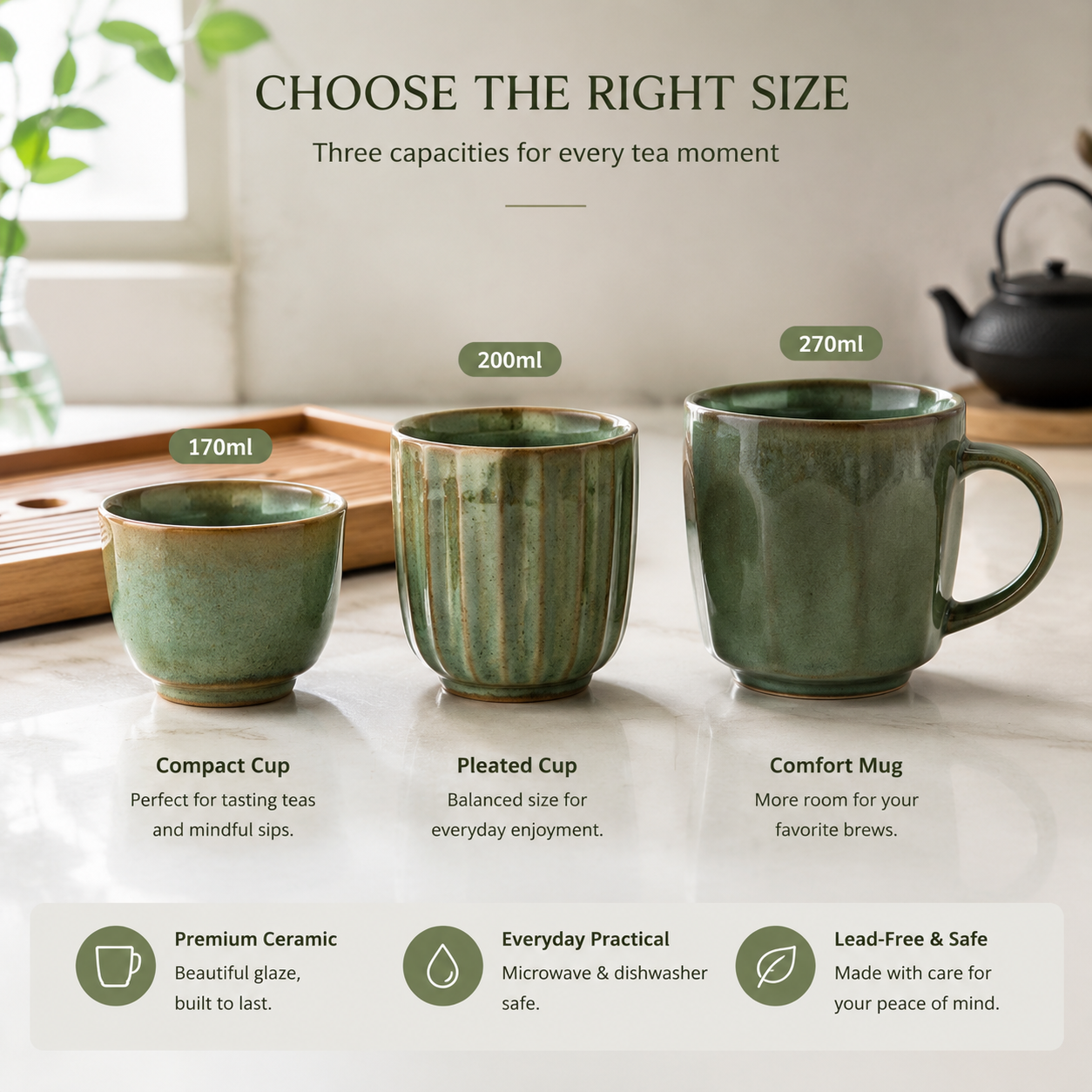
Green Tea Mug Buying Guide: Capacity, Shape, and Ceramic Options
Compare 170 ml, 200 ml, and 270 ml mug options by listed capacity, visible shape, and refill preference. Includes practical ceramic checks for desks, kitchens, and gifts.
Per saperne di più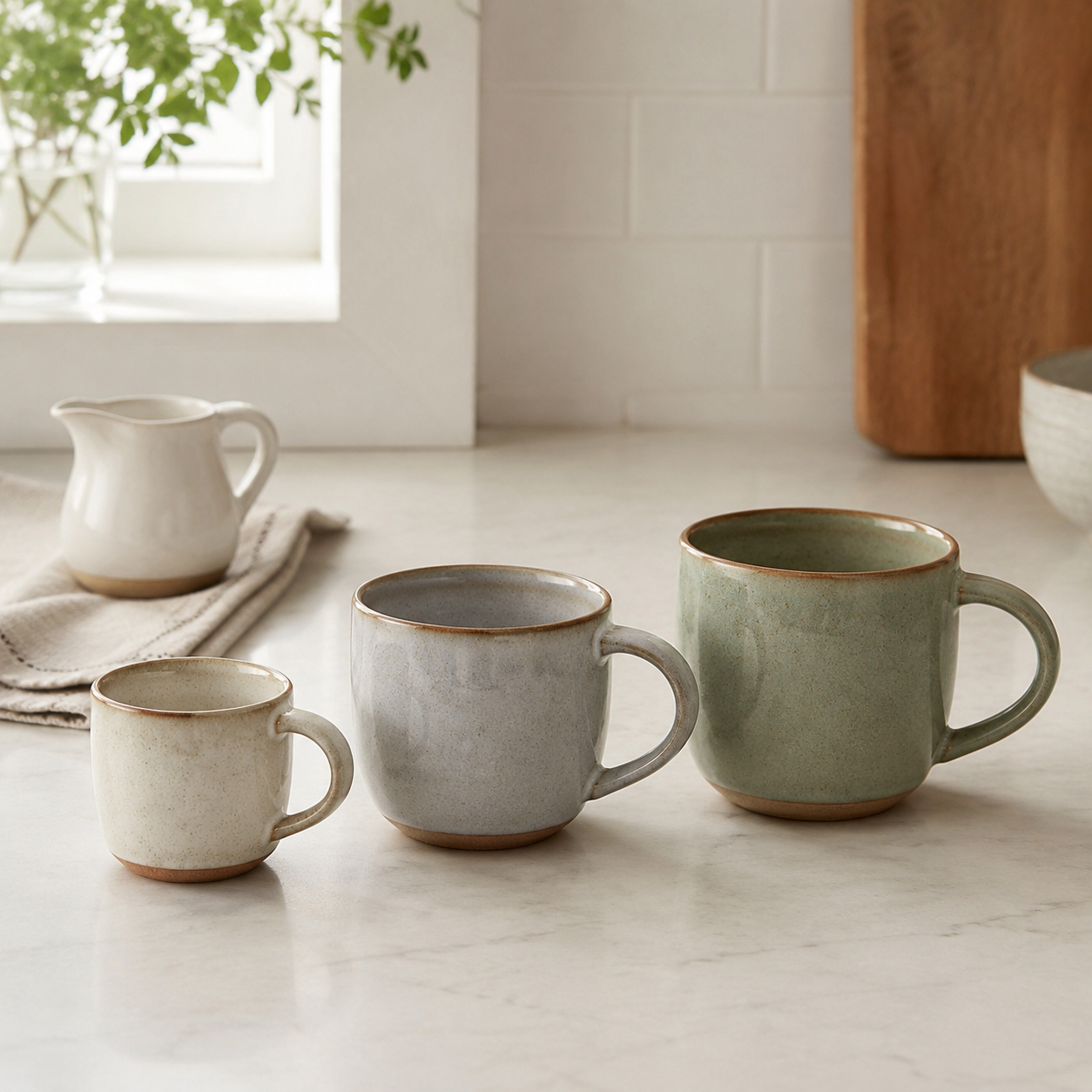
Cappuccino Coffee Mug Buying Guide: Ceramic Cup Sizes
Compare 170 ml, 200 ml, and 270 ml cup options, then check ceramic finish, handle fit, rim feel, and care details before choosing a daily cappuccino cup.
Per saperne di più
Commenta
Questo sito è protetto da hCaptcha e applica le Norme sulla privacy e i Termini di servizio di hCaptcha.