
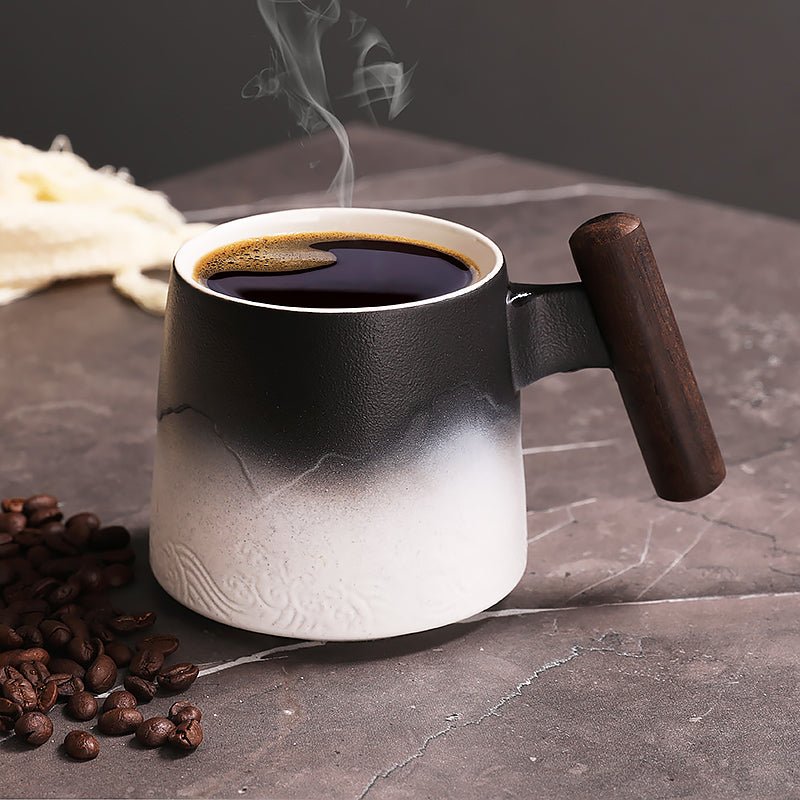
Made in USA Coffee Mug: What Buyers Should Check Before Ordering
Reading time: about 9 minutes
A mug can look right on a product page and still feel wrong the first time you wrap your hand around it at the office desk. The handle pinches, the base wobbles on the counter, or the glaze feels rough where your thumb lands. That is usually where the real buying decision happens.
If you are shopping for a made in USA coffee mug, the label matters less than the details behind it. In our store, we look at how a mug feels full of coffee, how it holds up after repeated dishwasher cycles, and whether it is the right size for real daily use. If you want a quick primer on the origin question itself, start with our guide, Coffee Mugs Made in USA: What Buyers Should Check Before Ordering.
What should you verify before buying a made in USA coffee mug?
The first check is simple: make sure the product details explain what “made in USA” actually covers. Sometimes buyers mean the clay body, the glazing, the decoration, and the final assembly all happen domestically. Other times, only part of the process does. If domestic origin is the reason you are paying attention, verify that before you order.
We also pay attention to how the mug is presented for day-to-day use, not just the headline label. A good mug should sit flat, pour or sip cleanly, and clean up without special handling after a normal breakfast rush. That matters more than a vague claim on a listing.
- Body origin: check whether the ceramic body is made domestically, not just decorated here.
- Finish: look for a smooth glaze inside and out with no obvious rough spots.
- Shape: a balanced base and a comfortable handle matter every morning.
- Care: confirm dishwasher and microwave guidance before you buy.
That last point sounds basic, but it saves headaches. If a mug has metallic decoration or a specialty finish, it may not belong in the microwave. We would rather see a clear limitation in the product description than find out after the first reheated cup.
Which material feels best for daily coffee?
Most shoppers narrow this down to ceramic, stoneware, or porcelain. In practice, the best choice depends on where you will use it and how much weight you like in your hand. Our team handles mugs all the time, and the difference is obvious as soon as you pick one up with hot coffee inside.
| Material | Best for | Trade-off |
|---|---|---|
| Stoneware | A heavier feel, sturdy desk use, and a more substantial hand feel | Can be bulkier and may feel too heavy for people who prefer a lighter mug |
| Porcelain | A lighter, finer feel that works well for coffee tables and gift sets | Usually feels less rugged than stoneware and can show chips more quickly |
| Ceramic with a glazed finish | Everyday use, easy cleaning, and straightforward styling | Quality varies a lot, so glaze quality and handle construction matter |
If you need a mug for camping, a workshop shelf, or a commute, a ceramic mug may not be the best fit at all. Enamel or insulated stainless can be a better category for those jobs because they handle rougher use and movement better. For a kitchen counter, however, a well-made ceramic mug still wins on feel.
That is the part many buyers miss: “best” is not one material for every person. It is the one that matches the way you actually drink coffee.
What size works for drip coffee, lattes, and desk refills?
Capacity is where a lot of mug purchases go wrong. A mug can look generous online and still feel cramped once you pour in a normal serving of coffee, cream, or foam. If you want a deeper size comparison, we have separate guides for 10 oz coffee mugs, 12 oz coffee mugs, and 15 oz coffee mugs.
We think about size in practical terms:
- 10 oz to 12 oz: good for standard drip coffee, smaller hands, and people who finish one cup before it goes cold.
- 14 oz to 15 oz: better for long desk sessions, larger pours, or anyone who adds milk and still wants room left.
- 16 oz: useful if you want a bigger serving, but it can feel bulky for smaller cabinets and lighter drinkers.
One detail we watch closely is the balance between capacity and handle clearance. A larger mug with a cramped handle can be less comfortable than a smaller mug that is shaped well. That is why our own size comparisons always include fit, not just volume. If you want a broader overview, our 16 Ounce Coffee Mug Buyer’s Guide and 11 oz Coffee Mug guide can help you compare edge cases.
For buyers comparing a few mugs side by side, the simplest test is this: imagine the mug on a crowded desk next to a laptop, a notebook, and a charger cable. If it is too wide, too tall, or too top-heavy for that scene, you will notice it every day.
What details separate a mug that feels good from one that annoys you?
Small construction details matter more than the logo. A mug can be made in the United States and still be awkward if the handle is too narrow, the rim is too thick, or the bottom does not sit flat. Those flaws are not dramatic, but they show up every time you use it.
Here are the details we inspect most often:
- Rim thickness: a clean, even rim feels better at the lips and gives a more polished drink experience.
- Handle shape: you want enough room for a comfortable grip without forcing your fingers into a tight pinch.
- Foot ring: the bottom should sit level, not rock on a hard table.
- Glaze quality: pinholes, rough patches, or uneven color can be a sign of lower attention to finish.
- Decoration durability: decals and printed designs should hold up through normal washing if the mug is going to be used daily.
Common defect modes are usually easy to spot once you know what to look for. We see a lot of buyers overlook a slightly uneven foot ring until the mug wobbles on a desk. Another common issue is a rough seam or sharp edge where the handle meets the body. Those are small things on paper and annoying things in real life.
If the mug is intended as a gift, a clean exterior and a smooth inner glaze matter even more. People notice the unboxing, then they notice whether the mug feels pleasant enough to use on Monday morning.
How should you care for a made in USA coffee mug?
Care depends on the finish, but a few habits protect most mugs. We treat the dishwasher as normal for everyday ceramic mugs only when the product information says it is safe. If the mug has a metallic accent, a foil-like detail, or a specialty hand-finished surface, we recommend following the more conservative care guidance.
- Let the mug cool before washing if it has been used for very hot drinks.
- Avoid rapid temperature changes, such as moving from a cold cabinet to boiling water.
- Do not stack heavy mugs tightly if the glaze can rub or chip at the rim.
- Use the top rack only if the maker says dishwasher use is fine.
- Hand wash decorated pieces when you want the print or finish to last longer.
Microwave safety deserves a separate check. Many plain ceramic mugs are fine, but not all decorated mugs are. That is especially true if there is metallic ink, a metallic rim, or any component that is not meant to heat. If you need a mug for reheating coffee between meetings, confirm that before ordering.
In our experience, the biggest wear does not come from drinking. It comes from sinks, cabinets, and repeated stacking. That is why a durable glaze and a stable base matter as much as the design itself.
Is a made in USA coffee mug a good choice for gifts and offices?
It often is, but there are limits. A domestically made mug can be a strong gift because it feels deliberate and practical. It is easy to explain, easy to use, and less likely to feel disposable. For offices, a well-made mug also holds up better to daily desk use than novelty drinkware that looks clever on day one and awkward by week two.
That said, a made in USA coffee mug is not the best fit for every buyer. If the person wants an ultralight travel mug, a lidded commuter cup, or a large insulated tumbler, this is the wrong category. If they prefer camping gear or a mug that can be tossed into a backpack without worry, enamel or stainless is a better call.
For buyers who want to browse our broader assortment, the easiest place to start is our full collection or the products page. We keep those pages useful for side-by-side comparison because the best choice usually becomes obvious once you compare size, shape, and finish in one place.
That comparison step matters. A mug that looks great in isolation may not be the one you actually want next to your grinder, on your work desk, or in the hands of the person you are buying for.
Frequently asked questions
How can I tell if a coffee mug is really made in the USA?
Check whether the product page explains the origin of the body, decoration, and final assembly. If the listing is vague, ask the seller directly so you know whether “made in USA” refers to the whole mug or only part of the process. Clear origin details are better than a broad claim with no support.
What size made in USA coffee mug is best for everyday drip coffee?
For most people, 10 oz to 12 oz is the most practical range for standard drip coffee. If you add milk or tend to refill less often, 14 oz to 15 oz usually feels better. Larger mugs are useful, but they can feel heavy and take up more cabinet space.
Are made in USA coffee mugs usually dishwasher safe?
Many are, but not all of them. The finish, decoration, and any metallic accents determine that more than the origin label does. Read the care instructions closely and treat decorated or specialty-finished mugs more carefully if you want them to stay looking clean.
Is a made in USA coffee mug a good gift?
Yes, if the person likes practical gifts and uses a mug every day. It is less ideal if they mainly drink on the go or prefer a large insulated tumbler. For gifts, the safest choice is a comfortable size, a smooth finish, and a design that fits a kitchen or office without trying too hard.
What are the biggest quality problems to watch for?
The most common problems are a wobbly base, a handle that feels cramped, rough glaze spots, and decoration that does not hold up well in washing. Those issues do not always show up in photos, so the written details matter. If a mug has clear care instructions and a straightforward size description, that is usually a good sign.
If you are narrowing down your options, compare the size guides first, then check the finish and care notes on the mug you like best. After that, browse the collection and choose the one that fits the way you actually drink coffee.
More from our blog
Read more
Mackenzie Childs Coffee Mugs: What to Check Before You Buy
Mackenzie Childs coffee mugs stand out fast on a counter, but the real buying decision is about size, handle comfort, finish, and care. This guide breaks down the details we check before recommendi...
Read more
Coffee Mug Set 6: What to Check Before You Buy for Daily Use
A coffee mug set 6 works best when the size, material, and handle shape match your kitchen. We break down the checks we use before recommending a set.
Read more
Leave a comment
This site is protected by hCaptcha and the hCaptcha Privacy Policy and Terms of Service apply.