
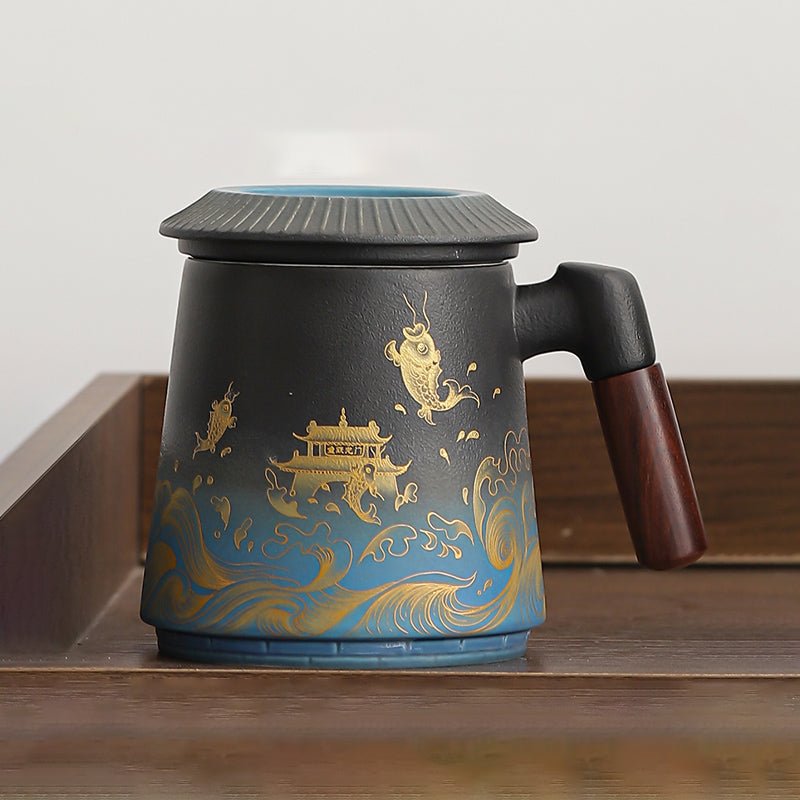
Japanese Coffee Mug: What to Check Before You Buy
Reading time: about 9 minutes
A Japanese coffee mug can look simple on a product page and still fail in daily use: too small for a full morning pour-over, too thick at the rim, or so delicate that it chips the first time it knocks against the sink.
We see that mismatch often in our store. Buyers want the calm look, the balanced hand feel, and a mug that works on a real kitchen counter or office desk. The right choice is usually less about decoration and more about size, weight, rim shape, and how the glaze will age after repeated washing.
What makes a Japanese coffee mug different from a standard mug?
A Japanese coffee mug usually leans toward a more considered shape. Some are handleless and cup-like. Others keep a small handle but use a slimmer profile, a shorter wall, or a more tactile glaze than the average oversized diner mug.
That difference matters in use. A handleless cup feels excellent for small pours and table service, but it is not the best option if you sip coffee while standing at a desk or if you like your drink very hot. A handled mug is easier for commuting between kitchen, sofa, and office, but it may lose some of the quiet, tea-cup feel that many buyers want in a Japanese coffee mug.
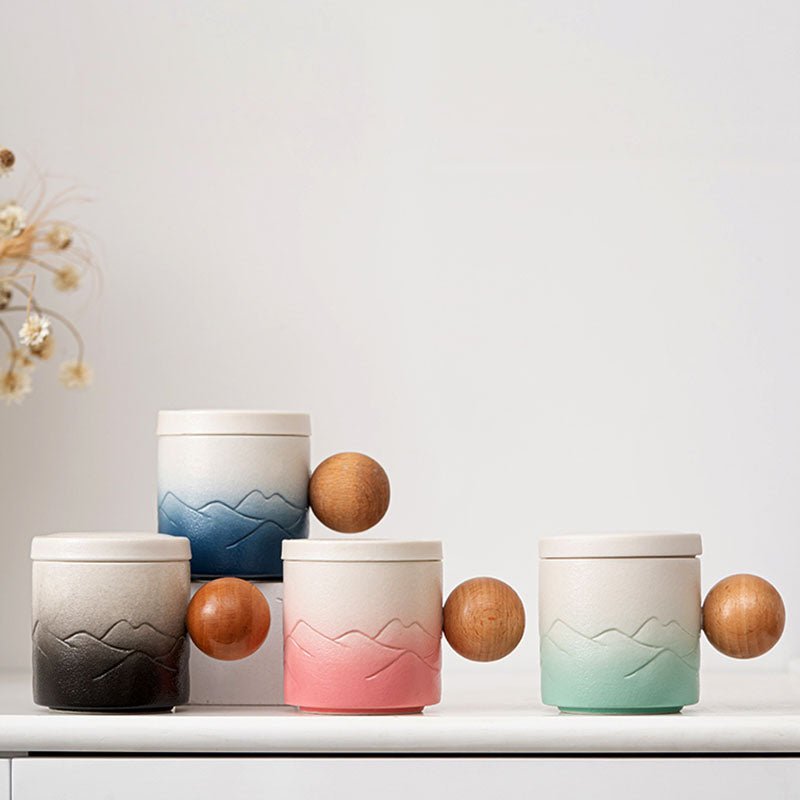
If you are comparing individual styles, start with the Mountain Coffee Tea Mug, the Great Mountain Coffee Tea Mug, and the Emerald Coffee Tea Mug, then browse all mugs to compare the rest of the lineup side by side.
In our experience, the buyers who are happiest with this style are the ones who want something calmer than a jumbo breakfast mug. They are usually choosing for drip coffee, a small latte, espresso plus milk, or a slow cup at the desk. If you need a travel mug, a spill-proof lid, or a very large 16 oz vessel, this is not the right category.
Which size works best for your coffee routine?
Size changes the whole experience. A mug that looks elegant at 8 oz can feel cramped if you regularly make a pour-over that lands closer to 10 or 12 oz once the dripper finishes. On the other hand, a bigger mug can lose the compact, hand-held feel that makes Japanese-style drinkware appealing in the first place.
Here is the practical way we help buyers think through it:
- 8 to 10 oz: Best for black coffee, smaller servings, and people who do not want a heavy mug on the desk. These mugs usually feel more precise and warm up quickly in the hand.
- 10 to 12 oz: The most flexible range for daily drip coffee and smaller milk drinks. This is the size range that tends to work for most households because it gives room without feeling oversized.
- 12 oz and up: Better if you pour a larger home brew or like extra milk, but the mug may start to feel less compact and less traditionally Japanese in profile.
If you want more help separating capacity from real-world fit, our related guides go deeper on the same buying questions: Japanese Coffee Mug: Size, Material, and What to Check Before You Buy, 10 oz Coffee Mug: Size, Fit, and What to Check Before You Buy, and 12 Ounce Coffee Mug Buying Guide for Daily Use and Better Fit.
A good rule: if you like your coffee hot from the first sip to the last, lean a little smaller. A smaller mug cools faster once poured, but it also empties before the drink gets flat or lukewarm. If you add milk or spend a long time at the desk, the slightly larger size is usually the safer pick.
Which material should you pick: porcelain, stoneware, or earthenware?
Material changes weight, heat retention, and the way a mug wears over time. For a Japanese coffee mug, the three common materials are porcelain, stoneware, and earthenware. Each one has a different feel in the hand and a different tolerance for daily use.
| Material | What it feels like | Best for | Watch-outs |
|---|---|---|---|
| Porcelain | Light, smooth, and usually refined at the rim | Clean presentation, lighter hand feel, and coffee served at the table | Thinner walls can feel less forgiving if the mug is knocked against a hard sink |
| Stoneware | Heavier, grounded, and often better at holding heat | Daily drip coffee, desk use, and buyers who want a solid feel | Can chip on the rim or foot ring if it is stacked carelessly |
| Earthenware | Warm, tactile, and often more rustic in appearance | Gift sets and decorative everyday use | Usually more porous than porcelain, so glaze quality matters even more |
Porcelain is usually the easiest to keep visually clean because the body is dense and the surface tends to stay smooth. Stoneware gives many buyers the best balance of comfort and heat retention. Earthenware can be beautiful, but it needs a bit more respect in the sink and on crowded shelves.
The common mistake is choosing a mug based only on glaze color. In a real kitchen, the body material matters more than the photo. A beautiful matte exterior can still hide a heavy wall, a narrow foot ring, or a rim that feels too thick once you actually drink from it.
What shape and finish should you check before you buy?
Shape is where a mug either feels right immediately or gets quietly moved to the back of the cabinet. We check the rim, the wall thickness, the base, and the handle shape because those are the parts you notice every single day.
- Rim thickness: A thin, even rim usually feels better than a blunt one. If the lip catches on your mouth or feels clumsy, the mug will not get used as often.
- Wall shape: Straight walls look clean and usually stack better, while a slightly tapered body can sit more comfortably in the hand.
- Foot ring: The mug should sit flat. If it rocks even a little on a countertop, that is a real usability issue, not a minor cosmetic detail.
- Glaze finish: Glossy surfaces are usually easier to wipe clean. Matte finishes can be beautiful, but they may show water spots, tea marks, or hand oils more clearly.
- Interior color: A lighter interior makes it easier to see coffee residue, milk streaks, and any crack lines that need attention.
We also watch for common defect modes that a buyer can miss in product photos: pinholes in the glaze, pooling near the base, hairline crazing, uneven feet, and sharp edges at the rim or handle join. Small variations are normal on handmade or artisan-style pieces. Deep cracks, wobble, or rough spots are not.
A mug that sits well in the hand usually matters more than a dramatic glaze. If it feels awkward on first use, it will keep feeling awkward.
Care matters too. If the maker says a mug is dishwasher safe, that is useful, but it still helps to avoid crowded racks and repeated knocks against other ceramics. Hand washing preserves the surface of matte or textured finishes longer. For microwave use, always follow the listing rather than assuming every ceramic mug is safe.
Which mugs in our store make sense to compare first?
For shoppers who want a Japanese coffee mug look without spending time comparing every style one by one, we suggest starting with the pieces that signal different visual directions. The product names alone do not tell the whole story, so the best next step is to check shape, capacity, and care notes on each listing.
- Mountain Coffee Tea Mug: A good starting point if you want a grounded, natural feel and a mug that reads as calm rather than flashy.
- Great Mountain Coffee Tea Mug: Useful if you want a stronger visual presence and a mug that still feels rooted in the same understated style family.
- Emerald Coffee Tea Mug: A sensible option if you want color to do more of the work and you prefer a mug that can also function as a gift.
We recommend using the product pages to compare capacity, finish, and care instructions rather than relying on name alone. The right Japanese coffee mug is rarely the most ornate one. It is usually the one that looks good on the table, feels stable in the hand, and does not punish you after a week of dishwasher cycles.
If you are still narrowing the choice, browse all mugs and compare the options by size first, then by glaze and rim shape. That order saves time and usually leads to a better fit.
What should you avoid if you want the mug to last?
The biggest mistake is buying for appearance alone. A Japanese coffee mug can be beautiful and still be the wrong daily mug if it is too small, too heavy, or too delicate for the way you actually drink coffee.
Here is what we tell buyers to avoid:
- Do not choose a size that only works on paper. A mug can look generous in photos and still be awkward once you pour in a full brew.
- Do not ignore the rim. A thick or uneven rim changes the drinking experience more than most people expect.
- Do not assume all ceramics handle the same way. Matte finishes, textured glazes, and handmade surfaces need more care than plain glossy pieces.
- Do not buy a decorative mug for rough office use. If the mug will live on a shared desk or crowded shelf, favor a simpler shape with a stable base.
The limitation is straightforward: this style is not ideal for travel, giant lattes, or people who want every drink to stay sealed for an hour. It is a better match for someone who wants a considered mug for home, studio, or office use. That is why the best buyers think about the mug as part of the routine, not just as a pretty object.
Frequently asked questions
What size Japanese coffee mug is best for daily drip coffee?
For most people, 10 to 12 oz is the most practical range. It gives enough room for a normal pour-over or drip coffee without feeling oversized on the table. If you drink black coffee and prefer a tighter, more compact cup, 8 to 10 oz can also work well.
Is stoneware or porcelain better for a Japanese coffee mug?
Stoneware usually feels warmer, heavier, and better for everyday desk use because it holds heat well. Porcelain is lighter, finer at the rim, and often easier to keep looking clean. If you want a more substantial hand feel, choose stoneware; if you prefer a lighter and more refined mug, porcelain is usually the better pick.
Can I put a Japanese coffee mug in the dishwasher?
Only if the product listing says it is dishwasher safe. Many ceramic mugs can handle normal washing, but matte glazes, hand-finished surfaces, or decorative details may wear faster with repeated machine cycles. If you want the finish to stay crisp longer, hand washing is the safer choice.
Are handleless Japanese coffee mugs practical for everyday use?
They are practical for some buyers and awkward for others. Handleless mugs feel good for small pours and slower drinks, but they can be uncomfortable if the coffee is very hot or if you move around while sipping. If you want a mug for a fixed desk or table setting, they can work well.
What should I check before buying a Japanese coffee mug online?
Check the size, material, rim thickness, base stability, and care instructions first. After that, look at the glaze finish and whether the mug is meant for everyday use or more for display. If the listing shows a wobble, a thick lip, or no care guidance, we would be cautious.
If you want the fastest next step, compare the mug pages above against your usual coffee routine, then check the all mugs collection with size, rim shape, and care notes in mind. That comparison usually makes the right choice obvious fast.
Read more
Pendleton Coffee Mug Buying Guide: Size, Handle, and Daily Use
A Pendleton coffee mug should do more than match the look. We break down handle comfort, size fit, care trade-offs, and which mugs make sense for desks, kitchens, and gifting.
En savoir plus
Pendleton Coffee Mug Buying Guide: Fit, Handle, and Daily Use
A practical guide to choosing a Pendleton coffee mug based on handle comfort, size, material feel, and everyday cleanup. We compare our wooden-handle options, explain the trade-offs, and show where...
En savoir plus
Laisser un commentaire
Ce site est protégé par hCaptcha, et la Politique de confidentialité et les Conditions de service de hCaptcha s’appliquent.