
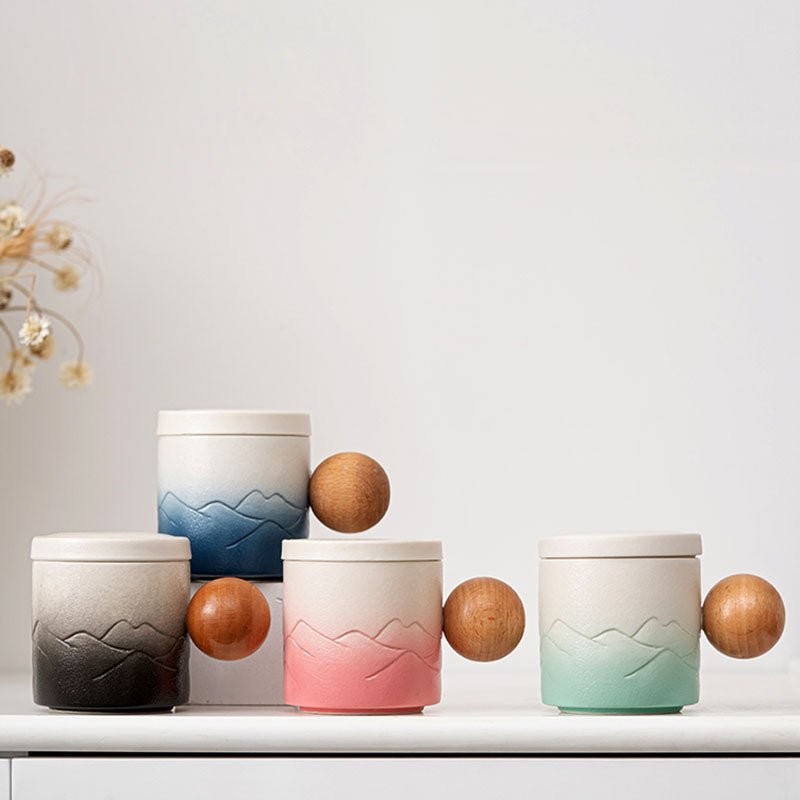
Big Tea Cup: How to Pick One for Daily Tea and Better Comfort
Reading time: about 8 minutes
A big tea cup earns its place on the counter when one tea bag is not enough for the morning, but a full teapot feels like too much cleanup. We see shoppers reach for a larger mug for desk work, long calls, and evenings when they want a second cup without standing back at the kettle.
The mistake is buying by appearance alone. A cup can look roomy in a photo and still feel awkward in the hand, too tall for a cabinet shelf, or too heavy once it is filled to the brim. We handle enough mugs to know the details that matter: how the handle sits, whether the rim feels even, and whether the base stays steady on a kitchen counter or office desk.
How big should a big tea cup be for daily use?
Most shoppers mean roughly 12 to 16 ounces when they say big tea cup, but the right size depends on how you actually drink tea. If you brew a standard bag and like a little headroom for milk, honey, or lemon, a 12 to 14 ounce cup is usually easier to live with than an oversized mug that takes longer to warm up and cools unevenly.
If you steep loose leaf, pour from a larger pot, or like a fuller cup at your desk, 16 ounces or more starts to make sense. That extra volume gives you room for the tea itself, a strainer or infuser, and enough space so the drink does not feel crowded at the rim. For a lot of buyers, the sweet spot is the size that lets them finish a cup without refilling right away, but still fits under a cabinet shelf.
- 10 to 12 oz: Better if you want a lighter feel, smaller pours, and easier storage.
- 12 to 14 oz: A practical middle ground for most daily tea drinkers.
- 16 oz and up: Useful if you drink tea slowly, add milk, or want a mug that doubles as a larger everyday cup.
That is why size should be checked against your routine, not just the label. A cup that feels generous at first glance can become annoying if it is too heavy when full, while a smaller cup can feel underpowered if you are refilling it every ten minutes.
Which material works best for a big tea cup?
Material changes how a big tea cup behaves more than most people expect. In our store, we pay attention to heat retention, rim comfort, chip resistance, and how the finish holds up after repeated washing. A cup that looks good on day one is not enough if it feels flimsy by week three.
| Material | What it feels like | Best for | Trade-off |
|---|---|---|---|
| Ceramic | Balanced weight, familiar feel, good heat retention | Everyday tea, office desks, home kitchens | Can show tea stains on light interiors if not rinsed promptly |
| Stoneware | Heavier, sturdier, more substantial in the hand | Buyers who like a solid mug and slower heat loss | Can feel bulky if you prefer a lighter cup |
| Porcelain | Finer rim, lighter feel, more refined look | Gift purchases, formal table settings, smaller hands | May chip sooner if it gets knocked around in a sink or cabinet |
| Glass | Shows the color of the tea, lighter visual profile | Loose-leaf tea, herbal blends, presentation | Cools faster and does not hide fingerprints or mineral marks |
For a low-maintenance daily mug, ceramic or stoneware is usually the easiest answer. For a gift, porcelain can feel more polished. Glass is the most visual choice, but it is not the best pick if you want the tea to stay warm while you answer emails or take a long call.
We also tell shoppers not to assume every decorated mug is microwave-safe. Metallic trim, foil accents, or special surface finishes can change the care routine, and a big tea cup that needs hand washing is not ideal if you want something you can rinse, load, and move on with.
What details make a big tea cup comfortable to hold?
The details that matter are usually the boring ones. Handle shape, rim thickness, base stability, and the balance between wall thickness and weight make the difference between a mug you enjoy and one you keep avoiding.
- Handle clearance: You should be able to slide two fingers through without scraping your knuckles.
- Even rim: A slightly uneven rim is easy to ignore in a listing photo, but you feel it every time you sip.
- Flat base: A mug should sit securely on a desk, tray, or kitchen counter without rocking.
- Wall thickness: Thicker walls hold heat well, but if they are too thick the mug can feel heavy before you even pour tea.
- Glaze quality: A smooth interior makes cleanup easier and helps reduce the look of tea stains over time.
In our experience, the common defect modes buyers notice first are a slightly wobbly base, a handle that feels too tight after the mug is full, and glaze issues like tiny pinholes or rough spots near the rim. None of those are dramatic on paper. All of them are annoying in daily use.
A big tea cup should feel stable, not oversized. If you are holding it with one hand while standing at the sink, it should feel secure. If you are setting it down next to a laptop, it should not demand extra caution every time you move it.
Is a big tea cup better than a standard mug for tea?
Sometimes yes, sometimes no. A larger cup is better when you drink tea slowly, want room for milk or sweetener, or prefer a mug that can carry you through a longer work block without a refill. It also makes sense if you use tea bags that open up better in a wider cavity or if you pour from a kettle and want less risk of splashing at the top.
A standard mug can be the better choice if you like stronger, smaller servings, want something that fits neatly into a packed cabinet, or prefer a lighter cup in the hand. Bigger is not automatically better. A very large mug can be awkward if you drink quick, hot tea and want it gone before it cools, and it can feel clumsy if you are used to compact cups and saucers.
If you want a sturdier everyday option, we point shoppers to our The Rock Coffee Tea Mug. If you want to compare more shapes and sizes before deciding, start with our all mugs collection.
For buyers who want a deeper comparison, these guides fill in the details without pushing you toward the wrong size: Big Tea Cup Buying Guide: Size, Material, and Daily Use, Tea Ceramic Cup Buying Guide: Size, Finish, and Daily Use, and Large Tea Cup Buying Guide: What to Check Before You Buy.
Our honest take: a big tea cup is best for buyers who want one mug to do real work every day. It is not the best choice if you only drink a small amount, need a cup that travels well in a car, or want something delicate and ceremonial for occasional use.
What should you check before you buy a big tea cup?
We always suggest comparing a few practical points before you click buy. Those details matter more than a lifestyle photo, and they are the reason one mug gets used every morning while another stays in the back of the cabinet.
- Capacity: Match the cup size to the way you actually pour tea, not to the biggest number you see.
- Handle comfort: Check whether your fingers will fit once the mug is full and warm.
- Cleaning: Look for a smooth glaze and a shape that does not trap residue around the base or handle joint.
- Storage: Make sure the mug fits your shelf height and does not force you to reorganize your cabinet.
- Durability: If you use the dishwasher often, prefer a shape and finish that can handle repeated cycles without looking tired too quickly.
Those checks sound simple because they are. But they save you from the most common regret we hear from shoppers: the mug looked right, but it did not feel right once they started using it every day.
Frequently asked questions
What size is best for a big tea cup?
For most daily tea drinkers, 12 to 14 ounces is the most practical range. It gives you enough room for tea and a little milk or sweetener without becoming hard to hold or slow to finish. If you like larger pours or loose-leaf tea, 16 ounces can work better.
Is a big tea cup good for loose-leaf tea?
Yes, especially if you use an infuser or tea basket and want enough space for the leaves to open up. A wider, deeper cup can also make cleanup easier because the tea has room to circulate. Just make sure the rim is comfortable and the base is stable.
Can I use a big tea cup for coffee too?
You can, and many buyers do. A big tea cup works well for drip coffee, cafe-style milk drinks, and hot water with lemon. If you want a mug for both tea and coffee, choose a shape that feels balanced when full rather than one that is oversized just for volume.
What material is easiest to clean?
A smooth glazed ceramic mug is usually the easiest day-to-day option. It rinses well, handles normal dishwashing, and does not need special care as often as glass or fine porcelain. If the mug has decorative trim or an unusual finish, check the care instructions before assuming it can go in the dishwasher or microwave.
What should I avoid in a big tea cup?
Avoid a mug with a handle that feels tight before it is filled, a base that rocks on the counter, or a rim that feels rough when you sip. Also avoid assuming that a larger mug is automatically better if you only drink small servings. The wrong size becomes clutter, not convenience.
If you are narrowing it down now, use four checks: capacity, handle clearance, rim comfort, and care instructions. Then compare your shortlist against our all mugs collection and choose the big tea cup that fits your daily routine instead of just your first impression.
Read more
Large Coffee Cups for Daily Use: How to Choose the Right One
Large coffee cups solve a real daily problem: enough capacity for a full pour without constant refills. We break down what size, shape, and material actually work on a kitchen counter, at a desk, o...
En savoir plus
Lead Free Coffee Mugs: How to Choose a Safe Everyday Mug
Compare lead free coffee mugs by shape, handle comfort, and everyday care. We break down which styles fit desk coffee, tea, and gifts, plus what to avoid if you want a mug that stays easy to live w...
En savoir plus
Laisser un commentaire
Ce site est protégé par hCaptcha, et la Politique de confidentialité et les Conditions de service de hCaptcha s’appliquent.