
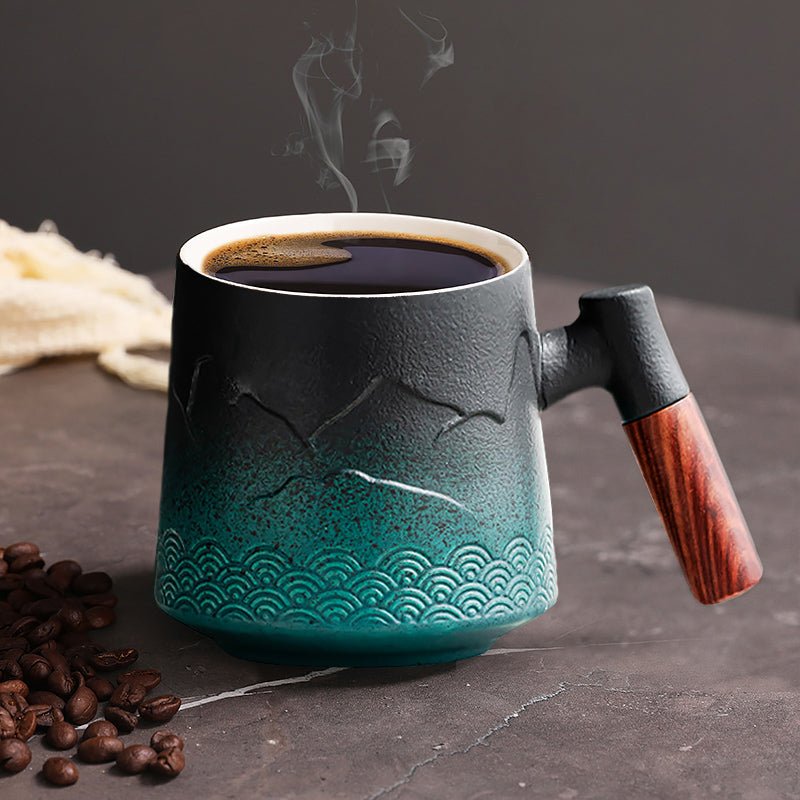
Wooden Mugs: What Buyers Should Check Before Ordering
Reading time: about 8 minutes
What should you check first on a wooden mug?
A wooden mug looks right at home on a kitchen counter or office desk, but the first wash tells you a lot. If the rim feels rough, the base rocks, or the finish already looks patchy, the mug may be more decorative than practical.
In our store, we look at wooden mugs the same way a buyer does after unboxing: does it feel comfortable, does it hold a normal pour of coffee without feeling cramped, and will it stay presentable after repeated hand washing? Those are the questions that matter.
Start with these checks:
- Rim finish: It should feel smooth against the lip, with no splintering or sanding marks.
- Interior treatment: A sealed or lined interior is easier to live with than raw wood that can absorb stains and aroma.
- Base stability: The mug should sit flat. A slight wobble on a hard table is a real annoyance, especially on a desk.
- Handle or grip shape: If the mug has a handle, check the joint where it meets the body. If it is handleless, make sure the wall thickness still feels secure in hand.
If you are comparing options across our catalog, start with our products page and narrow from there rather than choosing by photos alone. Wood grain can look very different from one piece to the next.
Which wood and finish details matter most?
The wood itself matters, but the finish often matters more in daily use. Dense hardwoods tend to feel more solid in the hand, while lighter or softer woods can show wear sooner if the finish is thin. A mug made from attractive wood can still be a poor buy if the sealing is inconsistent or the grain opens up around the rim.
We pay attention to three practical details that generic listings often skip:
- Wood type: Dense hardwoods usually resist dents better than softer woods. They still need care, but they hold up more cleanly on a busy counter.
- Interior surface: Fully sealed interiors are easier to clean and less likely to hold coffee smell. Raw interiors are usually a better fit for display than for daily brewing.
- Finish feel: A good finish should feel dry, smooth, and even. If it feels sticky or cloudy, that is a sign to look more closely.
Common defect modes are usually easy to spot once you know what to look for:
| What to inspect | What good looks like | What to avoid |
|---|---|---|
| Rim | Even sanding and a smooth drinking edge | Rough fibers, chips, or sharp spots |
| Interior | Consistent sealing or lining | Patchy coating, visible gaps, or raw pores |
| Body | Uniform grain and solid wall thickness | Hairline cracks, soft spots, or warping |
| Base | Flat seating on a table | Rocking, twisting, or an uneven bottom |
That is the kind of detail that separates a keepsake from a daily mug. If you are buying for display first and use second, a more decorative finish may be fine. If you want a mug that handles morning coffee every day, prioritize the seal and rim quality over the grain pattern.
Are wooden mugs good for daily hot coffee?
Yes, but only if the mug is built for it. A well-made wooden mug can handle normal hot coffee service, especially for a single serving on a breakfast table or a slow cup at a desk. It is not the best choice if you want a mug that can sit in a sink, go through a dishwasher, or take repeated abuse without care.
Here is the honest trade-off:
- Good for: Coffee you drink soon after pouring, desk use, slow mornings, and gifting.
- Not good for: Dishwasher cycles, microwave heating, long soaks, or rough communal kitchen use.
- Less ideal for: People who want a zero-maintenance mug they can treat like ceramic or stainless steel.
That does not make wooden mugs fragile by default. It just means the buyer needs to match the mug to the habit. If you want a mug that can live in a breakroom and survive every shortcut, ceramic or insulated steel is the safer pick. If you want warmth in the hand and a quieter feel on the table, wood has real appeal.
We would not recommend wooden mugs for someone who plans to use the same mug for boiling water, microwave reheating, and dishwasher cleanup. That is the wrong use case for the category.
For buyers comparing sizes in the same coffee habit, our size guides help narrow the fit: 8 Ounce Coffee Mugs: What Buyers Should Check Before Ordering, 12 oz Coffee Mugs: What to Check Before You Buy, 16 Ounce Coffee Mugs: Size, Materials, and Fit Guide, and 20 Ounce Coffee Mugs: What Buyers Should Check Before Ordering.
How do you choose the right size for your coffee habit?
Size matters more with wooden mugs than with plain ceramic because the shape and wall thickness can change how full the mug feels in hand. A cup that looks generous online may drink smaller once you add a pour-over, milk, or foam.
Use the capacity, not just the photos, to decide:
- 8 oz: Best for small servings, espresso-based drinks, or people who do not want a heavy mug on the desk.
- 12 oz: A practical everyday size for drip coffee and most single servings.
- 16 oz: Better if you like a longer sit-down cup or tend to pour a little extra.
- 20 oz: Useful for buyers who want a larger-capacity mug, but it can feel bulky if the body is thick or the handle is small.
If you are torn between sizes, our guide A buyer's guide to large capacity coffee mugs is the right comparison point for bigger pours.
One practical note from handling this category: larger wooden mugs can feel heavier than their stated capacity suggests because the walls are often thicker than ceramic. That is not a defect. It is part of the material trade-off. Buyers who want a light, airy feel usually prefer smaller capacities.
How should you clean and care for a wooden mug?
Care is where many buyers make the wrong assumption. A wooden mug is not a leave-it-and-forget-it item. It does not need complicated maintenance, but it does need a routine.
Our basic care approach is simple:
- Rinse soon after use so coffee does not sit in the cup and stain the interior.
- Wash by hand with mild soap and a soft sponge.
- Dry immediately with a towel instead of leaving it to air-dry upside down in a puddle.
- Store it dry, not nested inside a damp stack of dishes.
- Follow the maker's finish guidance if the mug needs occasional conditioning oil.
That routine protects the finish and helps avoid the common problems we see after a few weeks of misuse: dulling around the lip, surface roughness from repeated soaking, and small cracks that start where the rim or base gets abused.
If you are gifting wooden mugs, include the care note with the box. People often treat a new mug like ceramic until the first visible stain shows up. Setting expectations early is the difference between a useful gift and a returned one.
Who should buy wooden mugs, and who should choose something else?
Wooden mugs make sense for buyers who care about texture, presentation, and a warmer feel in the hand. They are a strong choice for a morning coffee ritual, a desk setup, a cabin-style kitchen, or a gift that looks more considered than standard drinkware.
They are not the best fit for every shopper. Choose a different material if you want:
- A mug that can go in the dishwasher every day.
- A vessel for microwave reheating.
- Maximum scratch resistance with minimal upkeep.
- Very thin walls and a light ceramic-style feel.
That is the honest buying decision. Wooden mugs are about experience as much as function. If the tactile feel matters to you, the trade-offs are manageable. If convenience matters more than anything else, another material is the better buy.
For shoppers comparing the rest of the assortment, our full collection is the easiest place to compare styles side by side after you have ruled out the wrong size or finish.
Frequently asked questions
Are wooden mugs safe for hot coffee?
Yes, if the mug is made and finished for drinkware use. We would still avoid boiling water, long soaking, or letting the mug sit full for hours. A sealed or lined interior is the safer choice for regular hot coffee.
Can wooden mugs go in the dishwasher?
We do not recommend it. Repeated dishwasher cycles can weaken the finish, dry out the wood, and cause warping or cracking over time. Hand washing is the better long-term option.
Do wooden mugs change the taste of coffee?
They can if the interior is raw or poorly sealed. A well-finished mug should not add a strong taste, but wood can retain aroma if it is not cleaned and dried properly. If taste neutrality is your priority, ceramic or stainless steel is easier to trust.
What size wooden mug should I buy for everyday use?
For most buyers, 12 oz is the safest everyday pick. If you usually drink larger pours, 16 oz gives more room without getting too bulky. Smaller servings, like espresso drinks, work better in 8 oz.
What is the biggest problem with wooden mugs?
The biggest issue is moisture management. If you soak them, stack them wet, or treat them like dishwasher-safe mugs, they wear out faster. A wooden mug lasts much longer when it is washed by hand and dried right away.
If you are down to two finalists, compare them against the checklist above, then browse our products or the full collection to pick the size and finish that fits your routine.
More from our blog
Read more
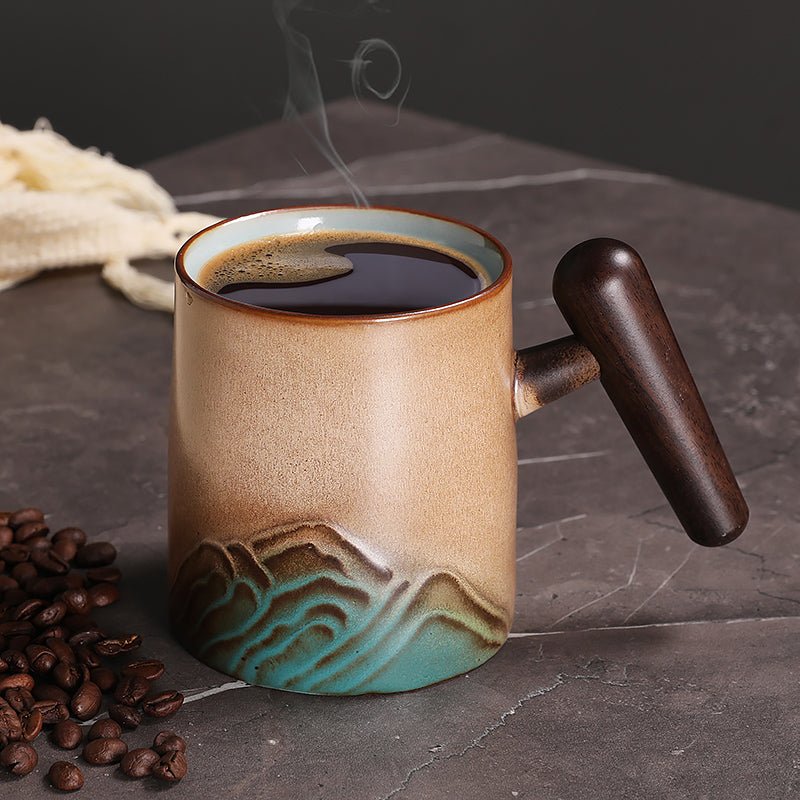
Coffee Mugs Extra Large: What to Check Before You Buy
A practical buyer’s guide to coffee mugs extra large, with the size, material, and shape details that matter on a kitchen counter, office desk, or gift list.
Leer más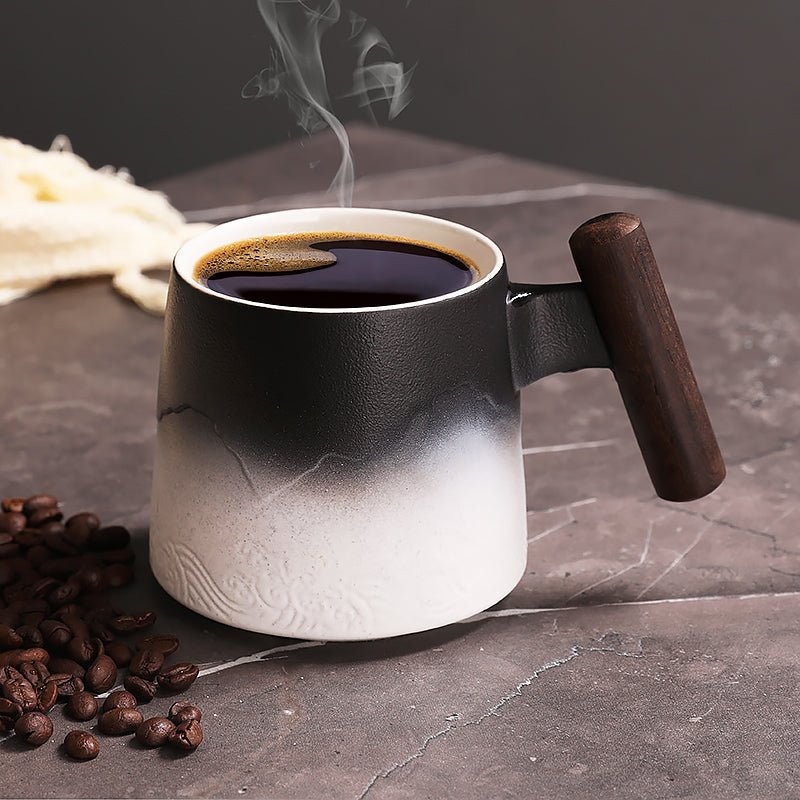
Dragon Coffee: What Buyers Should Check Before They Buy
Dragon coffee usually points to a dragon-themed mug or gift search, not a single product type. We break down what to check for size, material, care, and fit before you buy.
Leer más
Dejar un comentario
Este sitio está protegido por hCaptcha y se aplican la Política de privacidad de hCaptcha y los Términos del servicio.