
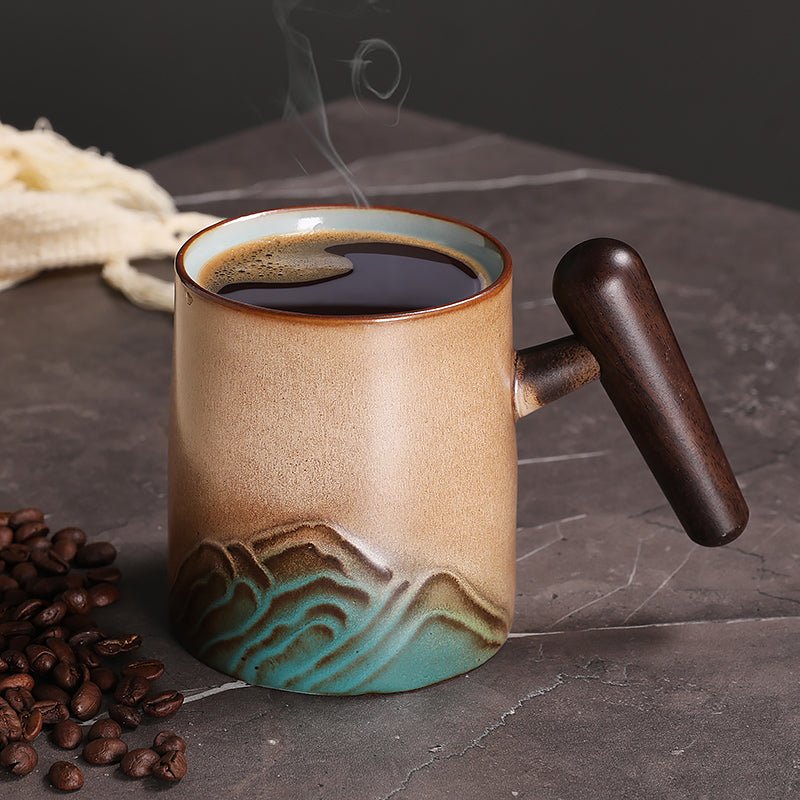
Large Ceramic Mugs: What to Check Before You Buy
Reading time: about 9 minutes
We see the same mistake over and over: someone buys a mug for the extra capacity, then discovers the handle is awkward, the rim feels too thick, or the cup is so heavy it stays on the desk instead of moving with them through the day. Large ceramic mugs solve a real need, but the right one has to fit your hand, your coffee routine, and your dishwasher.
If you are comparing options, start with our product selection and the broader full collection. If you want a deeper comparison of oversized formats, our guides on large ceramic coffee mugs and extra large ceramic coffee mugs cover the next layer of decisions.
What makes large ceramic mugs worth buying?
A good large ceramic mug does more than hold more liquid. It changes how people drink coffee or tea at home, at a desk, or during long calls. For many buyers, the appeal is simple: fewer refills, a steadier sip, and a mug that feels substantial in the hand without becoming a travel tumbler.
In our store, the shoppers who choose large ceramic mugs usually fall into one of three groups:
- People who want a full pour with milk, foam, or room for cream.
- Office buyers who want something stable on a desk and easy to wash.
- Gift buyers looking for a mug that feels more generous than a standard 11 oz cup.
That said, bigger is not automatically better. Large ceramic mugs are usually heavier than standard mugs, and a fuller body can cool faster if the cup has a wide opening. If you prefer an espresso-style drink, a compact mug is usually the better fit. If you commute with your coffee, a ceramic mug is not a replacement for an insulated travel cup.
The key is matching the mug to the use case, not just the volume.
How much capacity should you actually choose?
Capacity is the first detail buyers notice, but it should not be the only one. For large ceramic mugs, the useful range often starts around 14 oz and moves into 16 oz, 18 oz, and 20 oz territory. That extra room matters if you drink drip coffee, pour tea with milk, or want enough space for whipped cream, hot chocolate, or a spoon of sugar without overflow.
Here is the practical way we suggest thinking about size:
| Capacity range | Best for | Trade-off |
|---|---|---|
| 14 to 16 oz | Everyday coffee, tea, moderate pours | More comfortable for most hands, but less room for add-ins |
| 16 to 18 oz | Long desk sessions, larger coffee servings | Heavier when full, especially with thick walls |
| 18 to 20 oz+ | Big pours, soup, cocoa, buyers who want fewer refills | Can feel bulky; not ideal if you have small cabinets or small hands |
A useful detail many shoppers miss: the interior shape matters as much as the stated capacity. A mug with tall straight walls can hold more while keeping a smaller footprint, while a wide bowl-like mug spreads heat and aroma differently. If you want a stronger fragrance from coffee, a slightly wider opening can help. If you want heat retention, a more closed shape often performs better.
Which ceramic details matter most in daily use?
The material sounds straightforward, but not every ceramic mug behaves the same. We check a few things closely because they affect how the mug wears after a week, a month, and a year of dishwasher cycles.
- Wall thickness: Thicker walls feel sturdy and keep the mug stable, but they add weight and can make the mug feel bulky when full.
- Glaze quality: A smooth, even glaze is easier to clean and less likely to stain from coffee or tea. Uneven glaze can leave rough patches near the rim or handle.
- Foot ring: A flat, clean base helps the mug sit level on counters and desk trays. A rough foot ring can scratch wood surfaces.
- Handle attachment: The handle should feel solid, not hollow or loose. Weak joins are one of the common failure points on larger mugs because the extra volume adds leverage.
We also pay attention to defect modes that are easy to miss in product photos. Hairline crazing in the glaze, a rim that feels sharp, or a handle that sits too close to the body can turn a good-looking mug into a daily annoyance. These are not glamorous details, but they are the ones people notice after a few days of use.
If you are comparing larger formats and want a more specific checklist, our article on ceramic coffee mugs 20 oz breaks down fit, heat, and care in more detail.
How do you judge comfort before you buy online?
You cannot fully test a mug through a screen, so you need proxies that predict comfort. We look for clues that tell us how the mug will feel in real life, especially at a kitchen counter or on an office desk where people use mugs repeatedly without thinking about them.
Check these points before you commit:
- Read the dimensions, not just the ounces. A 16 oz mug can still be too tall for a pod coffee machine or too wide for a cup warmer.
- Look at the handle opening. If you like to fit two fingers through the handle, make sure it is not decorative-only.
- Check the rim shape. A rolled or slightly rounded rim feels better for daily drinking than a sharp edge.
- Confirm the base diameter. A mug that is too wide may crowd a drip tray, warming plate, or small dish rack.
- Think about weight when full. Large ceramic mugs can become tiring if you hold them for long meetings or while reading.
Comfort is personal, but a mug should disappear into the routine. If you notice yourself adjusting your grip every time you lift it, that mug is probably not the right one. The best pieces feel balanced when full, not just attractive when empty.
What should you expect from care and durability?
Most shoppers want a mug that goes from microwave to dishwasher without drama. That is a reasonable expectation for everyday ceramic drinkware, but durability still depends on how the mug is made and how it is used.
Our practical care advice is simple:
- Wash new mugs before first use.
- Let very hot mugs cool before moving them from a sink to a cold surface.
- Do not use a mug with visible cracks, chips, or glaze damage.
- Stack carefully, if you stack at all, because large ceramic mugs can chip at the rim and foot ring.
- Avoid sudden temperature swings when possible. Ceramic tolerates daily use well, but sharp thermal shock is still a risk.
What are large ceramic mugs not ideal for? They are not the best choice if you need a lightweight vessel for commuting, hiking, or all-day carry. They are also not the right pick if your cabinet space is tight and you need slim nesting drinkware. In those cases, a travel mug or a smaller cup will usually serve you better.
For buyers comparing practical features like lids, our guide to ceramic coffee mugs with lids is useful if spill resistance matters more than open-cup drinking.
Which large ceramic mugs work best for gifts?
Large ceramic mugs are popular gifts because they are useful, easy to understand, and easy to pair with coffee, tea, cocoa, or a gift card. They also photograph well, which matters for gifting and unboxing. But gift buyers should be careful: a mug that feels elegant in photos can still feel awkward in the hand if the proportions are off.
For gifts, we suggest focusing on three things:
- Neutral usability: Choose a style that works on a kitchen shelf, office desk, or breakfast table.
- Finish quality: A smooth glaze and clean rim read as more polished than a mug with uneven edges or visible surface flaws.
- Practical size: A mug that is too oversized can feel novelty-driven instead of useful.
Gift buyers sometimes ask for the biggest mug available because it feels more generous. That is fine for a cocoa lover or someone who keeps a long coffee beside the keyboard, but not ideal for someone who prefers smaller servings or has limited cabinet space. Oversized mugs can become shelf decorations if they are too heavy or too broad.
How do our buyers compare large ceramic mugs with other mug styles?
We usually see shoppers comparing large ceramic mugs against standard coffee mugs, insulated tumblers, and novelty oversized cups. Each has a different job.
Large ceramic mugs are the best fit when you want a home-friendly cup that feels sturdy and easy to wash. Standard mugs are better if you value lighter weight and quicker heat control. Insulated tumblers win for travel and spill resistance. Novelty oversized cups can be fun, but they often trade away comfort and balance.
If you are still deciding what level of capacity makes sense, our post on large capacity coffee mugs is a good next read. It helps separate useful capacity from excess bulk.
Here is the short version we give shoppers in our store:
- Choose ceramic if you want a classic drinking experience and easy cleanup.
- Choose a larger size if you actually finish bigger pours, not just because the mug looks impressive.
- Choose a simpler profile if you need stacking, cabinet efficiency, or steady desk use.
Frequently asked questions
Are large ceramic mugs microwave safe?
Many are, but you should always confirm the product details before using one in the microwave. We also recommend checking for metallic accents, special prints, or cracks, because those are common reasons a mug should not be microwaved. If a mug gets very hot after a short cycle, that is a sign to be cautious with repeated use.
What size is considered a large ceramic mug?
In most shopping contexts, a large ceramic mug starts around 14 oz and goes up through 20 oz or more. The exact line varies by brand, but anything clearly above a standard 11 oz mug usually falls into the large category. The best size depends on how much coffee or tea you actually drink in one sitting.
Do large ceramic mugs stay hot longer?
They can hold heat well, but they do not behave like insulated mugs. A thicker ceramic body helps, yet a wide opening can release heat faster than a narrower mug. If heat retention is your top priority, ceramic is fine for desk use, but an insulated tumbler is better for long carry times.
What defects should I check for when my mug arrives?
Look for rim chips, hairline cracks, rough glaze spots, and a handle that feels unstable. Also set the mug on a flat counter to make sure it sits level and does not rock. Those checks take less than a minute and tell you a lot about long-term durability.
Are large ceramic mugs a good choice for office use?
Yes, if you want a stable mug that is easy to wash and pleasant to use at a desk. They are less ideal if you move around a lot or need spill resistance. For desk work, the right large ceramic mug should feel balanced, not top-heavy, and fit comfortably beside a keyboard or notebook.
If you want to compare styles side by side, start with our full collection, then narrow by capacity and shape. If you want a tighter checklist before you buy, our guides on large ceramic coffee mugs and extra large ceramic coffee mugs are the fastest way to avoid the usual size and comfort mistakes.
Start with the dimensions, the handle, and the glaze finish. Then pick the mug that fits your desk, your cabinet, and the amount you actually drink.
Related from our store
Read more
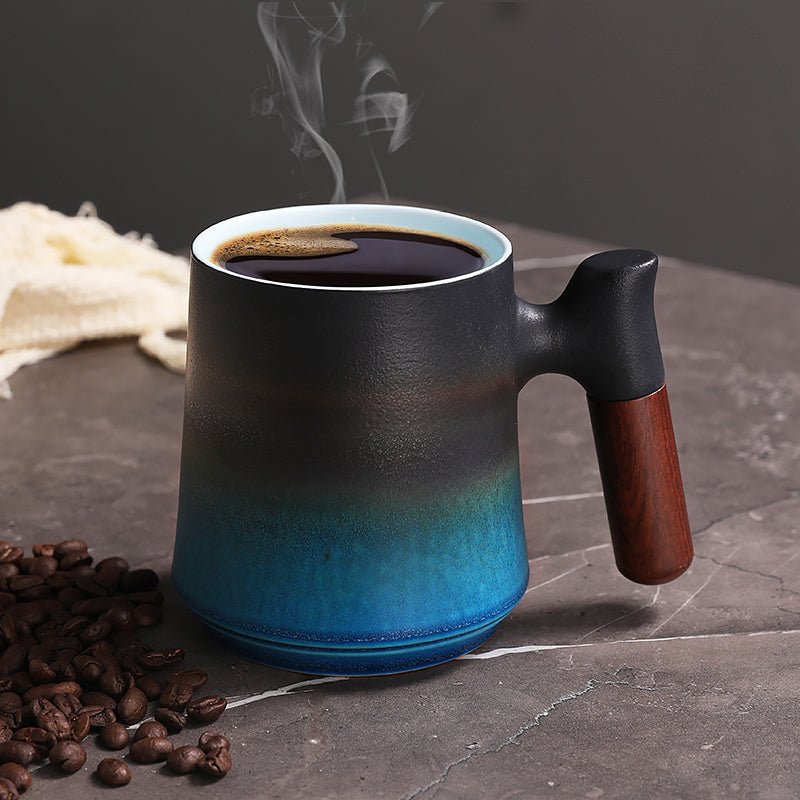
Mug for Tea: How to Choose the Right Size, Shape, and Material
A practical buying guide for anyone comparing a mug for tea at home, at work, or as a gift. We break down size, shape, material, and care so you can pick a cup that fits how you actually drink tea.
Leer más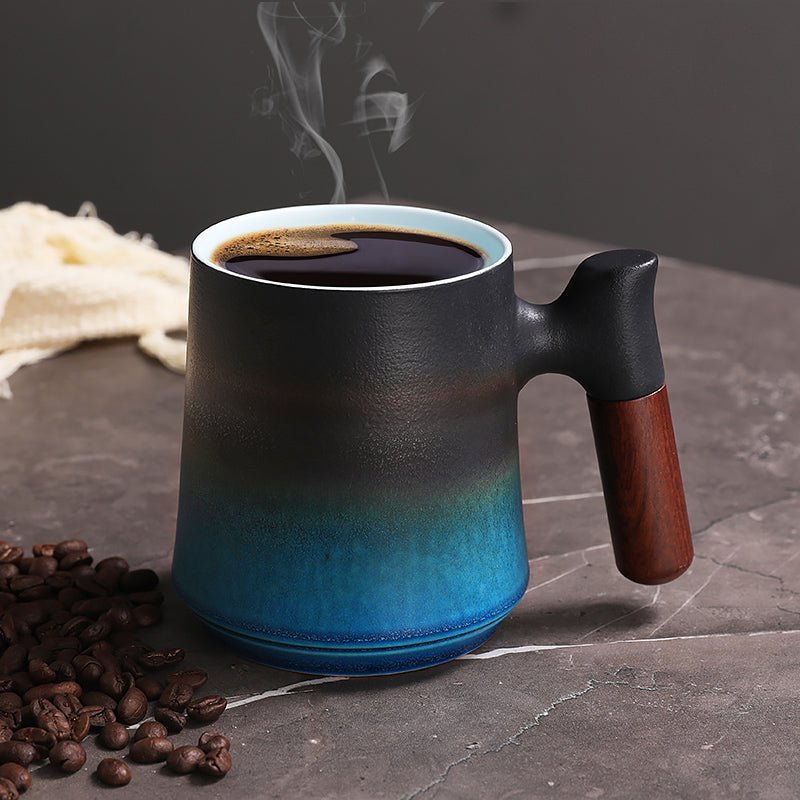
Giant Coffee Mugs: How to Choose the Right Size, Shape, and Material
Giant coffee mugs look simple, but the wrong size, shape, or material can make them awkward to hold, too heavy when full, or a poor fit for your brewer. This guide breaks down what actually matters...
Leer más
Dejar un comentario
Este sitio está protegido por hCaptcha y se aplican la Política de privacidad de hCaptcha y los Términos del servicio.