
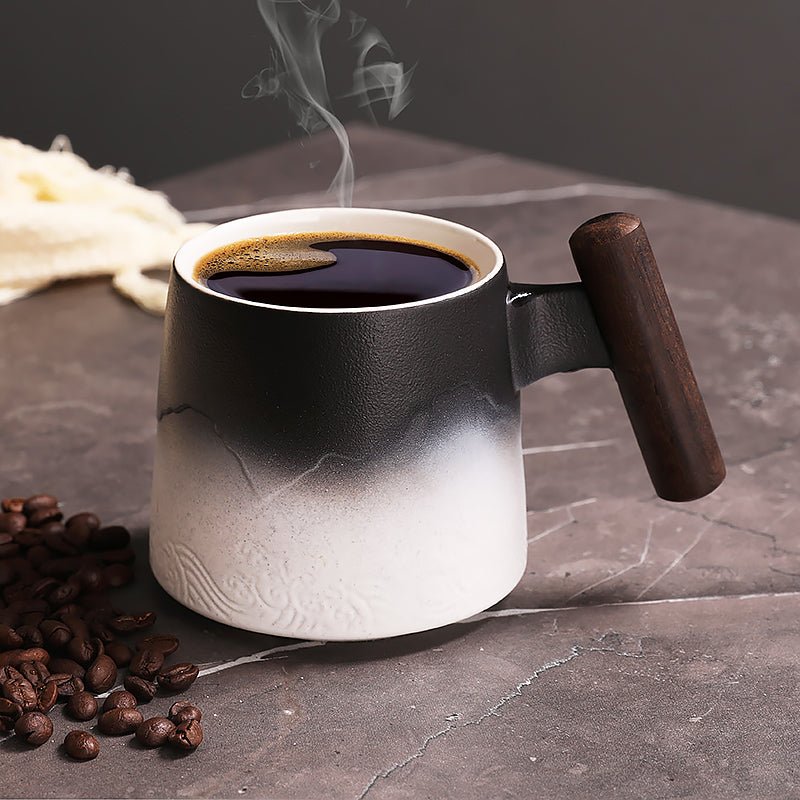
Heavy Coffee Mugs: What to Look For Before You Buy
Reading time: about 8 minutes
A mug with some real weight changes the way coffee feels on a desk or kitchen counter. It sits down with confidence, stays put near a laptop or breakfast plate, and feels less fragile in the hand than a thin, lightweight cup.
That extra heft is not automatically better, though. In our store, we see buyers choose heavy coffee mugs for different reasons: a steadier base, a warmer feel, or a more substantial gift. We also see the same mistakes repeat, especially with handles that are too narrow, mugs that are too tall for a cabinet shelf, or thick walls that make the mug clumsy instead of comfortable.
If you are comparing options, start by looking at our full collection and pay attention to the shape, not just the capacity. Weight matters, but balance matters more.
Why do some people prefer heavy coffee mugs?
Heavy coffee mugs tend to feel more grounded in daily use. They are less likely to skid across a smooth counter, and the extra mass often gives the mug a warmer, more substantial hand feel that many shoppers notice as soon as they lift it.
That matters in ordinary settings. A mug on an office desk next to a keyboard. A cup on a crowded kitchen island while breakfast is being plated. A gift unboxed at the office and used immediately. In each of those situations, a lighter mug can feel a little fragile or top-heavy, especially if the handle is small and the base is narrow.
There are trade-offs.
- Heavy mugs are not the best choice if you commute with coffee or carry a drink between rooms all morning.
- They are usually a poor fit for people who want the lightest possible cup for repeated refills.
- Some heavy mugs are simply thick, not better made, so they can feel bulky without adding real comfort.
If you are comparing smaller formats, our 12 oz Coffee Mugs: What to Check Before You Buy guide covers the point where a compact mug still feels substantial without becoming oversized.
What materials make a mug feel heavy?
Most of the weight in a coffee mug comes from material density, wall thickness, and the size of the base. A thick stoneware mug with a wide foot ring will usually feel heavier than a thin porcelain mug of the same capacity, even if both hold the same amount of coffee.
| Material | How it feels in hand | Best for | Trade-off |
|---|---|---|---|
| Stoneware | Dense, sturdy, slightly rustic | Everyday coffee, desk use, gifting | Can chip if knocked against a sink or stacked carelessly |
| Thick ceramic | Solid and balanced | People who want a classic mug shape with more heft | May feel bulky if the handle opening is too tight |
| Porcelain with a thick wall | Smoother and often a bit lighter than stoneware | Shoppers who want a refined look without a feather-light cup | Usually not as heavy as it appears |
| Cast iron | Very heavy, very substantial | Specialty use and display | Not ideal for everyday sipping, and it needs careful care to avoid rust |
Stoneware is the most common match for heavy coffee mugs because it gives you mass without making the mug feel industrial. A glazed stoneware body also handles daily rinsing and dishwasher cycles reasonably well, provided the finish is made for that use. What we watch for in our own product checks is not just the material, but the base diameter, the smoothness of the rim, and whether the handle joins the mug with a clean, reinforced attachment point.
If you want a broader comparison across capacities and materials, our 16 Ounce Coffee Mugs: Size, Materials, and Fit Guide is a useful bridge between smaller daily mugs and larger, heavier formats.
How do you choose a heavy mug that still feels comfortable?
Comfort is where a lot of heavy mugs either earn their keep or become shelf decoration. Weight alone does not make a good mug. The way the weight is distributed matters more, and the handle is usually the deciding factor.
We look for a few details every time:
- Handle clearance: There should be enough room for two or three fingers without pinching. A thick mug with a tiny handle can feel tiring fast.
- Balance: A mug should feel stable when it is full, not just empty. If it leans forward because the body is tall and the base is narrow, the weight becomes a nuisance.
- Rim thickness: A very thick rim can make sipping feel bulky. A smooth, slightly refined lip is easier to drink from, even on a heavier mug.
- Foot ring: A flat, even base helps the mug sit solidly on tile, wood, or a desk mat. A wobble is a red flag.
- Finish: Matte glazes can look great, but they can show utensil marks or feel a little rough if the firing is inconsistent. Glossy glazes are usually easier to wipe clean.
In our experience, the mug that gets used most often is rarely the heaviest one. It is the one that feels dense without feeling awkward. That is why we tell shoppers to compare the handle first, then the base, then the capacity. A heavy mug with a good handle is pleasant. A heavy mug with a poor handle gets left in the cabinet.
If your current routine leans toward bigger pours, our 20 Ounce Coffee Mugs: What Buyers Should Check Before Ordering article explains where heft starts to compete with sheer size.
Which size works best for heavy coffee mugs?
Size and weight should be treated together. A compact mug can feel dense and controlled, while a large mug can feel heavy in a way that is less comfortable after the first few sips. The right choice depends on how you actually drink coffee.
Use this rough comparison:
- 8 oz: Best for espresso drinks, short pours, and people who want a small mug that feels solid without taking much cabinet space.
- 12 oz: A strong everyday size if you want a mug that feels substantial but still easy to lift and wash.
- 16 oz: A common sweet spot for buyers who want a fuller mug with enough capacity for drip coffee, tea, or larger pour-overs.
- 20 oz: Best for long desk sessions or big morning pours, but it can feel bulky if the handle is undersized or the mug is too tall.
For shoppers comparing moderate sizes, our 16 oz Coffee Mugs: What to Check Before You Buy guide covers the middle ground in more detail. If you are trying to decide between a smaller everyday mug and a larger one, our buyer's guide to large capacity coffee mugs helps you sort out the practical differences before you order.
There is one limit worth saying plainly: heavy coffee mugs are not the best fit for everyone. If you have wrist pain, limited grip strength, or you just want something that disappears in your hand, a lighter ceramic mug may be the better buy.
How should you care for a heavy mug so it lasts?
Heavy mugs are sturdy, but they are not indestructible. The most common failure points we see are hairline cracks near the handle join, chips on the rim from sink impact, and a tiny wobble caused by an uneven foot ring. None of those issues usually show up on day one. They appear after repeated use, dishwashing, and stacking.
Simple care goes a long way:
- Let the mug cool before rinsing it if it has been filled with very hot coffee. Sudden temperature changes can stress ceramic.
- Use the dishwasher only if the finish is made for it. If the mug has metallic accents or a delicate matte glaze, hand washing is safer.
- Dry the base after washing so water does not sit in the foot ring.
- Avoid tapping the rim against the sink or the edge of a grinder, since heavy mugs can still chip if they are knocked hard enough.
- Do not stack mugs tightly if the glaze is soft or the rim is prone to wear.
A practical test we use is simple: set the mug on a flat counter and give the handle a gentle lift with one hand. If it feels balanced and the base stays planted, it is usually easier to live with over time. If it feels top-heavy, noisy on the counter, or awkward to wash, the extra weight is not helping.
For shoppers who want to compare a heavier everyday cup against smaller options, the 8 Ounce Coffee Mugs: What Buyers Should Check Before Ordering article is useful because it shows the other end of the spectrum clearly.
Frequently asked questions
Are heavy coffee mugs better at keeping coffee hot?
Sometimes, but not automatically. A heavier mug often has thicker walls, and that can slow heat loss for the first few minutes. The shape, wall thickness, and whether the mug was pre-warmed matter more than weight alone.
Are heavy coffee mugs dishwasher safe?
Many stoneware and ceramic mugs are dishwasher safe, but not all finishes are equal. Check for metallic trim, delicate matte glazes, or hand-painted decoration before putting them through repeated cycles. If the mug has any special finish, hand washing is the safer choice.
What material is best for a heavy coffee mug?
Stoneware is usually the best balance of heft, durability, and everyday comfort. It feels substantial without being as specialized as cast iron. Thick ceramic is also a good option if you want a smoother, more refined look.
Are heavy coffee mugs good for people with hand or wrist pain?
Not always. A mug that feels satisfying to one person can feel tiring to another if it is too large or the handle is hard to grip. If you have hand or wrist concerns, look for a moderate weight, a wide handle, and a shorter profile rather than the heaviest mug available.
What should I check before buying a heavy mug online?
Check the stated capacity, the material, the handle opening, and whether the base is flat enough to sit steady. Product photos help, but they do not tell you whether the mug feels balanced in the hand. If those details are missing, the listing is not giving you enough to buy confidently.
If you are ready to compare shapes and finishes, browse our product page alongside the full collection, then choose the mug that matches how you actually drink coffee: desk use, breakfast use, or a larger pour that needs a steadier grip.
More from our blog
Read more
Gnome Coffee Mug: What to Check Before You Buy
A practical buyer's guide to gnome coffee mug options, with size, material, care, and gifting checks we use before recommending one. Use it to compare daily-use mugs, shelf decor, and gift-ready pi...
Leer más
Hello Kitty Coffee Mug Buying Guide: Size, Material, and Use Cases
A hello kitty coffee mug can be a daily cup, a gift, or a shelf piece, but the right choice depends on size, handle comfort, print durability, and care. We break down what to check before you buy a...
Leer más
Dejar un comentario
Este sitio está protegido por hCaptcha y se aplican la Política de privacidad de hCaptcha y los Términos del servicio.