
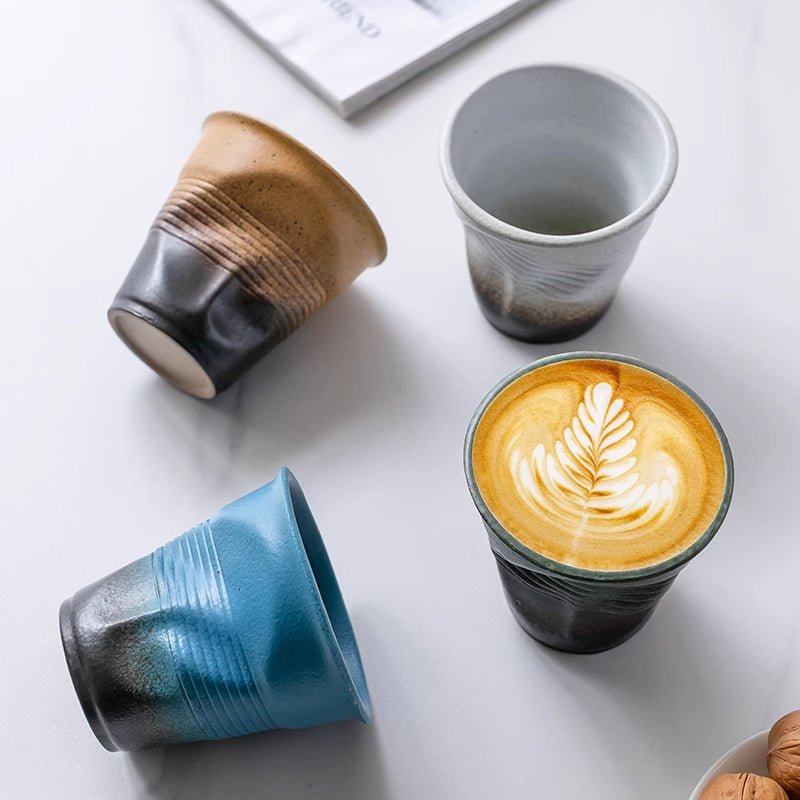
Decaf coffee cup capacity guide: 170, 200, or 270 ml?
Reading time: about 10 minutes
A cup that looks right on the kitchen counter can still feel wrong after the first refill. We see this most often when a shopper chooses by shape alone, then discovers that the cup is smaller than their usual serving or larger than they enjoy holding. This decaf coffee cup capacity guide compares the three current CoffeifyMug options we can verify: 170 ml, 200 ml, and 270 ml. The practical difference is not just how much each holds. It is also how often you refill, how much room you leave below the rim, and how the filled cup feels at a desk or table.
Decaf coffee cup capacity guide: what changes between 170, 200, and 270 ml?
The listed capacities are straightforward, but the gaps between them matter. The 200 ml cup holds 30 ml more than the 170 ml option. The 270 ml mug adds another 70 ml over the 200 ml cup and 100 ml over the smallest choice.
| Current option | Listed capacity | Best serving pattern | Main trade-off |
|---|---|---|---|
| Retro Coffee Tea Cup | 170 ml | Compact servings and planned refills | Limited room for a larger pour |
| Pleated Coffee Tea Cup | 200 ml | Moderate servings without moving to mug capacity | Only 30 ml more than the Retro cup |
| Emerald Coffee Tea Mug | 270 ml | Longer desk or kitchen-counter servings | More weight and volume when filled |
These are listed capacities, not instructions to fill the vessel to the rim. In daily use, most people leave some headspace to reduce spills while walking from the counter to a table. Your comfortable serving volume will therefore be lower than the maximum capacity. The amount of headspace you prefer can be just as important as the number printed on the product page.
Practical rule: choose for the amount you normally pour plus the rim clearance you actually use, not for the largest serving you might prepare occasionally.
Is the 170 ml Retro cup better for compact servings and refills?
The 170 ml Retro Coffee Tea Cup is the most compact option in this comparison. It fits a shopper who deliberately serves a smaller amount, finishes it, and is comfortable returning for another pour. On a crowded desk or a kitchen table shared with a plate, that smaller capacity may also feel less intrusive.
The trade-off is clear: 170 ml does not leave much flexibility for anyone whose routine already approaches 200 ml. Once you reserve a little room below the rim, the usable serving is smaller again. This is not the best option for a person who wants one generous cup to last through a long meeting or work session.
We would map the Retro cup to these situations:
- You prefer a compact serving: 170 ml keeps the cup aligned with that routine instead of leaving a large vessel partly filled.
- You do not mind refilling: the smaller capacity works when a second pour is part of your normal pattern.
- You want less visual bulk: the cup format makes more sense than moving directly to the largest mug in the current range.
Handle fit still needs attention. A compact body does not automatically mean a compact handle, and hand comfort cannot be predicted from capacity alone. Check the product images for finger clearance and consider whether you normally hold a cup by the handle only or support the body with your other hand.
Does 200 ml offer enough extra room over 170 ml?
The 200 ml Pleated Coffee Tea Cup occupies the narrow middle position. Its 30 ml increase over the Retro cup is useful when 170 ml feels restrictive but 270 ml feels more like a full mug than you need.
This size often makes sense for a measured, moderate routine. You gain a little more room for your usual pour and rim clearance without adding the full 100 ml difference between the smallest and largest options. It is a controlled step up, not a dramatic capacity change.
Choose the Pleated cup when your situation looks like this:
- A 170 ml cup would be filled too close to the rim: the extra 30 ml creates more breathing room for the same serving.
- You want fewer immediate refills: 200 ml extends the serving modestly without committing to 270 ml.
- You still prefer a cup rather than the largest mug format: it provides a middle choice within the current catalog.
The limitation is that 30 ml may not solve a significant capacity mismatch. If you routinely want far more than a compact cup provides, moving from 170 to 200 ml could still leave you refilling sooner than expected. Shoppers who already know that 200 ml is not enough should compare the Emerald mug instead of choosing the middle size by default.
When does the 270 ml Emerald mug fit a longer serving routine?
The 270 ml Emerald Coffee Tea Mug is the largest verified option here. It gives you 70 ml more capacity than the Pleated cup and 100 ml more than the Retro cup. That difference is noticeable during office work, reading, or a slower kitchen-table serving where getting up for an early refill is inconvenient.
The reader situation is simple: you want one longer serving, you normally leave useful space below the rim, and a filled mug feels natural in your hand. In that case, the Emerald is the most direct current product fit.
It is not automatically the most comfortable option for every shopper. More liquid means more carried weight, and that changes the leverage at the handle. People with smaller hands, limited grip comfort, or a strong preference for light cups may be happier with 170 or 200 ml even if that means refilling. The 270 ml capacity is also not intended to replace a substantially larger 350 ml or 12 oz routine.
If 270 ml still sounds undersized, our Americano cup capacity comparison discusses how 200, 270, and 350 ml serving patterns differ. Shoppers accustomed to larger vessels can also use the 12 oz ceramic mug capacity guide as a reference before choosing from this smaller range.
How should handle comfort affect the capacity decision?
Capacity tells you the maximum volume, but it does not describe the whole handling experience. In our store, we encourage shoppers to look at the handle and cup body together. A handle can appear generous from the side while still placing a knuckle close to the cup wall. A larger vessel can also feel balanced when empty but noticeably different after a full pour.
Use these checks while reviewing the product images:
- Look at the handle opening: estimate whether you prefer one-finger, two-finger, or fuller finger clearance rather than assuming every cup is held the same way.
- Consider the filled weight: 270 ml of liquid creates more load at the handle than 170 ml, regardless of the vessel's empty weight.
- Check the handle-to-body spacing: limited clearance can cause knuckle contact, especially for larger hands.
- Think about your grip: shoppers who cradle the cup body may evaluate comfort differently from those who carry it only by the handle.
- Allow for movement: a cup carried across an office or from a kitchen counter benefits from more headspace than one that stays beside the brewer.
We cannot determine personal handle comfort from capacity alone. Product photography helps, but hand size and grip style remain individual. If the handle shape is your first priority, browse the current unique coffee mugs collection and compare the side views before settling on a capacity.
How many refills will each cup encourage?
Refill frequency depends on how much you actually serve, not only on listed capacity. Still, the three sizes create distinct routines. A 170 ml cup supports shorter servings with more frequent returns to the kitchen. A 200 ml cup extends that routine slightly. A 270 ml mug is the better fit for keeping one serving at an office desk or table for longer.
Think through one normal day rather than an idealized weekend setup:
- Short counter visit: choose 170 ml if you prefer a compact cup and expect to finish the serving before moving on.
- Breakfast or moderate desk serving: choose 200 ml if 170 ml feels tight but you do not want the bulk of the largest option.
- Longer work block: choose 270 ml if avoiding an early refill matters more than minimizing filled weight.
For households sharing cups, the middle size can be easier to assign across different routines, but it will not satisfy every preference. A person who wants a compact cup and another who consistently wants the largest available serving may be better served by buying different capacities rather than forcing one compromise size.
What should you inspect and confirm before regular use?
Capacity is only one part of receiving a cup or mug. During unboxing, place the empty vessel on a flat counter and confirm that the base sits steadily. Inspect the rim for chips, then look closely at the handle joints for visible cracks or damage from transit. These are sensible checks for any handled drinkware item and do not depend on a particular style.
Care requirements can vary, so do not assume dishwasher or microwave compatibility from appearance alone. Follow the care information on the current product page or packaging. If hand washing is specified, avoid striking the rim against the sink or other dishes, and do not use a damaged cup.
Also verify the scale as soon as it arrives. A 170 ml cup may look larger in a close product photograph, while a 270 ml mug can appear compact without another object beside it. Measuring your usual serving into a household jug before ordering is the most reliable way to understand the capacity difference.
Frequently asked questions
How should I use this decaf coffee cup capacity guide?
Measure the amount you normally pour, then add the headspace you prefer below the rim. Match that combined requirement to 170, 200, or 270 ml, while also considering whether you want frequent refills or one longer serving.
Is a 170 ml decaf coffee cup too small for daily use?
It is not too small for someone who prefers compact servings and does not mind refilling. It is a poor fit if your normal pour already approaches 170 ml because you would have little room left below the rim.
Is there a noticeable difference between 170 ml and 200 ml?
The difference is 30 ml, so it is a modest increase. It can provide useful headspace for the same serving, but it may not be enough for someone trying to reduce refill frequency substantially.
Which current cup is best for an office desk?
The 270 ml Emerald mug is the strongest fit if you want a longer serving and fewer trips away from the desk. Choose 170 or 200 ml instead if a lighter filled cup, smaller footprint, or shorter serving matters more.
Can I use the 270 ml mug for a much larger serving?
No. The verified capacity is 270 ml, and practical use also requires some clearance below the rim. If your usual routine is closer to 350 ml or 12 oz, a different size category will suit you better.
A quick capacity checklist before you order
- Measure your normal serving rather than estimating from your current cup.
- Add enough headspace for carrying the cup comfortably.
- Choose 170 ml for compact servings and planned refills.
- Choose 200 ml for a moderate step up with 30 ml more room.
- Choose 270 ml for a longer serving with fewer early refills.
- Review handle opening, knuckle clearance, and filled-weight preference.
- Confirm the current care instructions on the product page.
If you are still split between sizes, start with the serving you make most often, not the largest one you might make occasionally. Then compare the Retro, Pleated, and Emerald options in our unique coffee mugs collection to choose the capacity and handle format that best match that routine.
More from our blog
Read more
Small Ceramic Coffee Cup Capacity Guide: Current Size Fit
Compare current 170, 200, and 270 ml ceramic cups by serving size, refill pattern, headspace, and daily routine. See which CoffeifyMug product best matches a short coffee, measured pour, or longer ...
Leer más
Oversized ceramic coffee mugs capacity guide: 400, 440, 480 ml
Compare 400, 440, and 480 ml ceramic mugs by usable pour, refill frequency, drink style, and current CoffeifyMug product fit. Includes practical guidance for milk, ice, desk use, care, and gifting.
Leer más
Dejar un comentario
Este sitio está protegido por hCaptcha y se aplican la Política de privacidad de hCaptcha y los Términos del servicio.