
Coffee Mug Storage Guide: What Fits Cabinets, Counters, and Small Spaces
Reading time: about 10 minutes
The front row of mugs gets used. The back row turns into a handle tangle, and the cup you want before work is trapped behind gift mugs, seasonal mugs, and one oversized favorite that never quite fits anywhere. That is the real coffee mug storage problem: not just how many mugs you own, but how their shape, weight, and drying habits interact with the space you already have.
In our experience at CoffeifyMug, shoppers rarely regret choosing a mug they love, but they do regret buying one that fights the cabinet every morning. A mug can look perfect on a product page and still be wrong for a shallow shelf, a crowded office desk, or an under-cabinet hook. If you match the mug to the storage first, the buying decision becomes much more practical.
What usually makes coffee mug storage fail?
Most storage problems repeat themselves. Handles collide, rims tap the shelf above, damp mugs go back into a closed cabinet too soon, and a rack meant for light cups gets loaded with heavier ceramic pieces. Our team handles enough mugs in the store to see the same pressure points again and again: chips show up at the rim, the handle junction, and the base edge far more often than in the middle of the mug.
- Deep cabinets hide the back row. If you cannot see the mugs, you stop rotating them and the front row gets overcrowded.
- Handle clearance gets ignored. Buyers measure shelf width but forget that a projecting handle can steal more usable space than the mug body.
- Moisture gets trapped in the foot ring. A mug fresh from the dishwasher can look dry while the ring on the base still holds water.
- Display and daily use get mixed together. A gift mug you want to show off needs a different home than the plain mug you grab half awake before work.
That is why the best coffee mug storage plan starts with use case. Separate daily mugs, guest mugs, and display pieces first. Then decide where each group belongs.
Which storage setup fits your kitchen or desk?
No single setup wins in every kitchen. The right choice depends on access, dust exposure, and how much vertical clearance you actually have once the shelf above and cabinet door are factored in.
| Storage setup | Best for | What it does well | Main trade-off |
|---|---|---|---|
| Closed cabinet shelf | Everyday kitchens | Keeps mugs cleaner and protects glaze from grease and dust | Deep shelves can bury the back row |
| Open shelf | Display pieces and quick access | Makes favorite mugs easy to grab and easy to see | Needs regular dusting, especially near the stove |
| Wall rack or mug tree | Small counters with vertical space | Uses height instead of shelf depth | Not ideal for bulky handles or heavier mugs |
| Under-shelf hooks | Tight cabinets with unused underside space | Turns dead space into storage | Needs enough drop so the mug base does not hit the shelf below |
| Drawer tray or padded drawer section | Small cups and low-profile tea pieces | Keeps cups contained and out of sight | Usually poor for tall mugs with large handles |
| Desk tray or single mug station | Office desks and home workspaces | Controls clutter around notebooks, chargers, and pens | Only works if you limit yourself to one or two mugs |
Before you shop, measure three things: shelf height, usable depth with the door closed, and how far the handle sticks out on your current mug. If you want to compare several styles against those numbers, browse our full collection with a tape measure nearby. It sounds basic, but it prevents the most common mistake we see: buying a mug for the photo first and dealing with the fit later.
How should mug shape guide what you buy?
Shape matters more than color once the mug enters a real kitchen. A straight-sided mug usually lines up more cleanly in a cabinet than a flared silhouette. A tight C-handle packs closer than a decorative handle with a wider profile. Heavier stoneware also asks more of a wall rack than a lighter cup does, so the storage method should influence the purchase.
We usually tell shoppers to compare mugs in four practical ways:
- Handle projection: The farther the handle extends, the more side-to-side clearance you need.
- Base width: Wider bases feel stable on counters but take up more shelf frontage.
- Rim shape: A flared rim can be pleasant to sip from, but it is harder to fit into dense rows.
- Weight and wall thickness: Thick ceramic feels substantial in the hand, but it is not the best match for every hook rack.
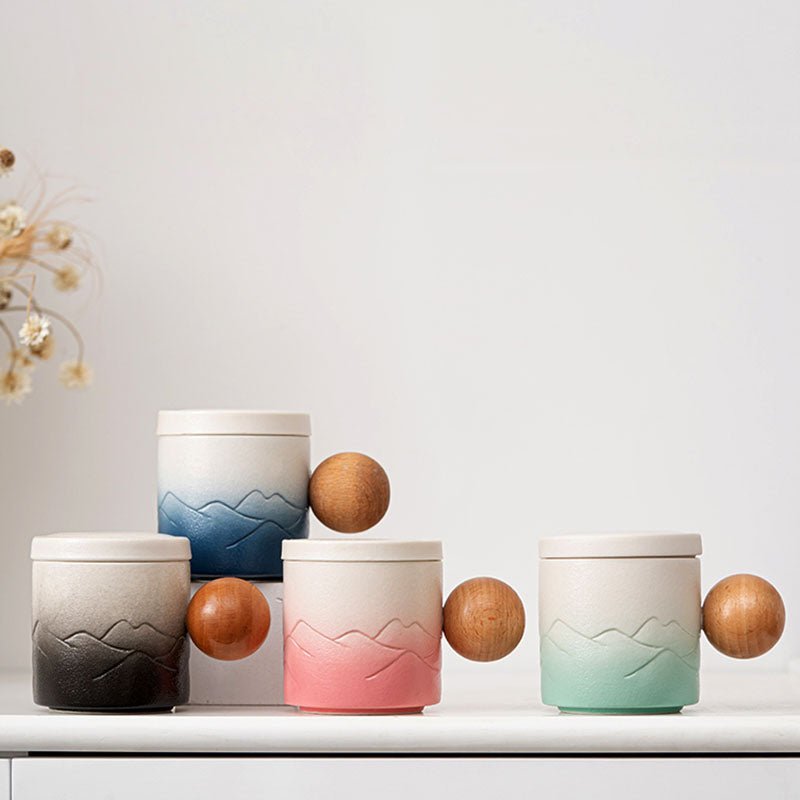
That is where a few options in our store become easier to sort out. The Gradient Coffee Tea Mug makes sense for buyers who want a daily mug that can disappear neatly into a cabinet and still look good on an open shelf. The color gives it personality, but the buying logic is still practical: this is the direction to consider if you want visual interest without turning every mug into a display piece.
The Retro Coffee Tea Cup fits a different shopper. If the mug is likely to sit on a visible shelf, be wrapped as a gift, or become the cup you bring out when guests notice the details, a retro style often earns that space. The trade-off is simple: style-forward cups are not always the best use of a tightly packed cabinet if your only goal is maximum storage density.
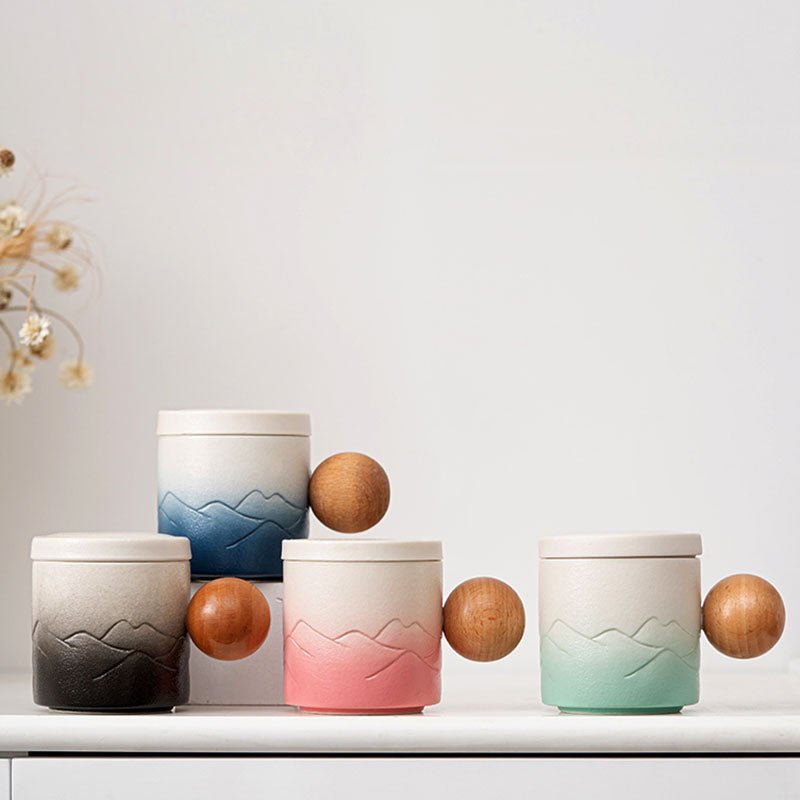
The Ball Handled Coffee Tea Mug solves a different problem. A more pronounced handle can feel better in the hand and easier to grip, especially if you dislike tight handles, but it needs more breathing room on a shelf or rack. We would not call that the best choice for the narrowest mug trees or crowded office shelves. If comfort matters more than compactness, though, it is the right trade-off.
What is the safest way to store mugs after washing?
A mug that came out clean can still be stored badly. The usual issue is trapped moisture. Water sits in the foot ring, inside the curve where the handle joins the body, and sometimes under the base if you flip the mug too soon. That is how clean cabinets start smelling stale.
- Let the mug dry fully before putting it away. Check the base ring, not just the inside.
- Store upright in a closed cabinet once dry. Upside-down storage only makes sense on a very clean open shelf and only if the base is fully dry.
- Use smooth pegs or coated hooks for hanging storage. Rough bare metal can scuff glaze over time.
- Keep heavier mugs on lower shelves. Reaching above shoulder height with a weighty ceramic mug is where drops happen.
- Wipe open shelving near the stove. Steam and cooking oil leave a film faster than most buyers expect.
Closed cabinets are not glamorous, but they are often the best answer for mugs you use constantly. Open shelves look better in photos, yet they are not ideal if you cook often, run a small kitchen, or simply do not want another surface to dust every few days.
Which coffee mug storage ideas are not worth the hassle?
Some setups sound efficient and become annoying almost immediately. Good coffee mug storage should make the mug easier to use, not harder to reach.
- Stacking non-stackable mugs: If the base is not designed to nest, the top mug rubs the rim below it and chips become a real risk.
- Overloading a mug tree: Once handles touch each other, every removal becomes a small collision test.
- Using open shelves beside the stove: This is a poor choice if you dislike wiping off grease film.
- Hanging bulky mugs under a low shelf: If the mug base nearly touches the counter or the shelf below, you will hate using that spot.
- Keeping daily mugs on the highest shelf: The storage may look tidy, but it is not practical at 6:30 in the morning.
There is also a buying trade-off here. If you want one mug to fit a very tight rack, a bold handle shape is not the best fit. If you want a mug that adds character to an open shelf or gift unboxing, a plain compact shape may feel too utilitarian. The right answer depends on what problem you are actually solving.
How do small kitchens, office desks, and gift sets change the plan?
Small spaces do not need more organizers first. They need stricter rotation. In many apartments and workspaces, the biggest gain comes from limiting what stays within arm's reach and being honest about what is really used during a normal week.
- Count your true daily rotation. For many people, that is two to four mugs, not twelve.
- Keep only those mugs on the prime shelf or counter zone. Put guest mugs higher up or farther back.
- Use one desk mug station. On an office desk, even one extra mug starts competing with cables, notebooks, and chargers.
- Store gift pieces intentionally. If a mug is part of a gift moment, decide whether it will be displayed, used daily, or kept as a special-occasion piece.
We see this a lot after gift unboxings. The mug that feels special on day one often ends up living on a desk or open shelf because there was never a real cabinet spot planned for it. That is not necessarily a problem. It just means the buyer should choose differently than someone who wants a mug to vanish into a dense weekday cabinet lineup.
If your space is tight, start with storage-friendly logic: keep the everyday cabinet row simple, reserve open display for one or two favorites, and buy shapes that suit the room you have. If you want to compare options with that mindset, our collection is the best place to line up style against storage reality.
Frequently asked questions
Should coffee mugs be stored upright or upside down?
Upright is usually better for closed cabinets because it protects the rim and lets any leftover moisture evaporate more naturally. Upside down works on a clean open shelf, but only if the mug is fully dry and the shelf surface is clean enough that you are not putting dust against the drinking rim.
Can under-cabinet hooks hold ceramic mugs?
Yes, but the hook spacing and drop clearance matter more than people expect. A ceramic mug with a bulky handle or heavier body can be awkward on a cramped hook system, so check that the mug base hangs freely and does not bump the shelf below when you remove it.
What mug shape is easiest to store in a small kitchen?
A mug with a straightforward body and moderate handle projection is usually the easiest to line up in a cabinet. Very wide handles, broad flared rims, and oversized novelty shapes take more usable space than their volume suggests.
How many mugs should stay on the counter?
Only the mugs you reach for constantly. For most kitchens, that means a small daily rotation rather than the full collection, because once the counter rack is crowded it stops being convenient and starts being visual clutter.
Why do mugs smell stale in a cabinet?
The usual cause is trapped moisture, especially in the base ring after washing. Let the mug dry completely before storing it, and if the cabinet itself holds humidity, leave the door open for a short time after unloading clean dishes so the space can air out.
Use this quick buying checklist before you order: measure shelf height, check usable depth with the cabinet door closed, decide if the mug will live on display or behind a door, and be honest about how many mugs you actually use each week. Then browse our collection and choose the mug shape that fits your storage first. That one step prevents most clutter, chip risk, and daily frustration.
More from our blog
Read more
Car Coffee Mug Buying Guide for Fit, Comfort, and Daily Use
A practical guide to choosing a car coffee mug that fits the cupholder, stays manageable on the road, and avoids the spill and chip problems we see most often. We also call out when a regular mug i...
Leer más
Large Coffee Mugs with Handles: What to Check Before Buying
Large coffee mugs with handles solve the refill problem, but only if the handle fits your hand and the mug stays balanced when full. This guide compares materials, size trade-offs, and the models w...
Leer más
Dejar un comentario
Este sitio está protegido por hCaptcha y se aplican la Política de privacidad de hCaptcha y los Términos del servicio.