
Stone Coffee Mugs: Size, Weight, and Finish Buying Guide
Reading time: about 9 minutes
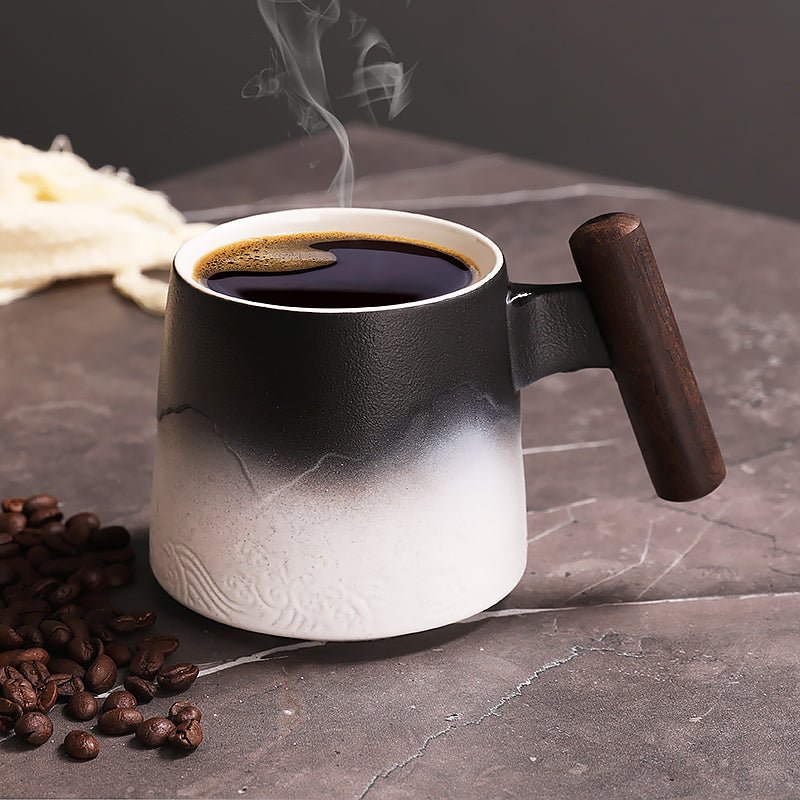
A good stone coffee mug feels different the first time you set it on a counter: heavier than thin porcelain, steadier on a desk, and better at holding heat through a slow morning. The mugs that get returned most often in our store are not the pretty ones. They are the ones that wobble, feel awkward in the hand, or chip at the rim after a few dishwasher cycles.
If you are shopping for stone coffee mugs, the real question is not just how they look. It is how they drink, how they clean up, and whether the handle and capacity match the way you actually make coffee.
What should stone coffee mugs feel like in daily use?
Most stone coffee mugs are made from a dense ceramic body, usually stoneware, with a glazed drinking surface. That combination is why they feel substantial. The better ones sit flat on the counter, balance well when full, and do not tip easily when you reach for a spoon, a lid, or a pastry beside them.
In our experience, a mug that feels too heavy at empty weight will feel even heavier after you pour in coffee, milk, and maybe a little foam. That matters on a kitchen counter. It matters on an office desk. It matters even more if someone plans to carry the mug one-handed from the machine to a laptop.
Stone coffee mugs are a strong fit for people who want:
- Better heat retention for a slow drink
- A stable base that does not skate around easily
- A more substantial feel than lightweight cups
- A classic, everyday look that works in a kitchen or office
They are not the best choice if you want the lightest possible mug, if you commute with coffee in hand, or if you prefer a very thin rim. For those needs, a different mug style may be more comfortable.
The best stone mug should feel balanced, not just heavy. Weight alone does not make a mug better.
What size should you choose first?
Size is the first decision we ask shoppers to make, because stone coffee mugs often feel larger in hand than the number on the label suggests. A wide body with a thick wall can make a 12 oz mug drink smaller than expected, while a tall, narrow 14 oz mug can feel crowded under a drip machine.
If you want a quick starting point, use the way you actually brew coffee. Our size guides can help narrow it down: see 12 oz coffee mugs for standard pours, 14 ounce coffee mugs if you like a little extra room, and 16 ounce coffee mugs if you want more capacity for milk, foam, or a longer drink.
Here is how we usually break it down:
- 8 to 12 oz: best for black coffee, espresso-based drinks, and smaller hands
- 14 oz: a practical middle ground for drip coffee with room for cream
- 16 oz: useful for larger pours, longer work sessions, and people who dislike refills
- 20 oz: best for big breakfast mugs or those who want one cup to cover the whole morning
If you want more capacity guidance, our 20 ounce coffee mugs article covers the trade-offs around weight, desk space, and fill line. The larger you go, the more important handle comfort and base stability become.
Which details do we inspect before we buy stone coffee mugs?
We look at stone coffee mugs the same way we would if they were going onto a busy kitchen shelf or into a gift box. A mug can look good in a product photo and still miss the basics in person. That is where small defects and poor proportions show up.
Here are the details we check first:
- Rim finish - The drink edge should feel smooth, not sharp or uneven. A rough rim is a daily annoyance, even if the mug looks fine from a distance.
- Handle clearance - Your fingers should fit without squeezing the mug body. A handle that is too small turns a full mug into a hand cramp.
- Base stability - The mug should sit level on a countertop or desk. A slight wobble is a sign to pass.
- Glaze coverage - A consistent glaze helps with cleaning. Pinholes, thin spots, and obvious crazing can become long-term problems, especially around the inside wall and rim.
- Foot ring condition - An unglazed foot ring is normal on many stoneware mugs, but it should be smooth. A rough bottom can scratch a table.
- Wall thickness - Thicker walls usually feel sturdier and hold heat better, but too much thickness adds bulk without improving the drinking experience.
Common defect modes we watch for include hairline cracks near the handle join, glaze pinholes that collect staining, and uneven bases that cause the mug to rock slightly on a hard surface. Those are not decorative quirks. They are functional issues.
For shoppers who want a broader browse, our current range is available on the products page, and our full assortment lives in all collections.
Are stone coffee mugs good for everyday use?
Yes, if the person using them wants a sturdy mug that keeps coffee warm longer than a thin, lightweight cup. Stone coffee mugs are a strong everyday choice for a home kitchen, a work-from-home setup, or a desk where the mug may sit for 20 minutes between sips.
They are less ideal for some routines. If someone grabs coffee while walking out the door, a stone mug is usually the wrong format. If grip strength is a concern, a heavy mug can be tiring. If the mug will live in a crowded dish rack or a bag, the thicker body can still chip if it knocks against metal or another hard surface.
For daily use, the practical rule is simple: choose stone coffee mugs when you want stability and warmth retention, but skip them if you want light weight, travel convenience, or a very compact shape.
Care matters too. If the listing says dishwasher-safe, we still recommend the top rack when possible. Let the mug cool before washing. Sudden temperature changes are hard on ceramic bodies, especially if the mug has any visible crazing or a lot of thickness variation. Hand wash if the decoration is delicate or if the glaze finish seems especially matte and prone to showing marks.
| Use case | Stone coffee mugs fit | Why |
|---|---|---|
| Kitchen counter coffee | Good | Stable base, good heat retention, easy to set down between sips |
| Office desk mug | Good | Substantial feel and less chance of tipping than a very light cup |
| Commuting or walking outside | Poor | Too heavy and not meant for spill-free transport |
| Small hands or limited grip | Mixed | Check handle size and total weight before buying |
How do stone coffee mugs compare with other mug materials?
Stone coffee mugs sit in the middle of the mug world for many shoppers. They are usually sturdier and more substantial than fine porcelain, but less fragile-looking than some lightweight ceramics. Compared with glass, they are better at hiding everyday wear and tend to feel warmer in the hand right away.
The biggest trade-off is weight. Stoneware is not the best pick if your priority is portability or one-handed convenience. It is also not the easiest material to judge from a photo alone, because two mugs with the same capacity can feel very different once you hold them.
Here is the practical comparison we use when someone is deciding:
- Stoneware: best for heat retention, daily kitchen use, and a solid feel
- Porcelain: best when you want a lighter, finer rim and a more delicate look
- Glass: best when you want to see the drink, but it often loses heat faster and can feel more fragile
- Light ceramic blends: best when weight matters most, though they may not have the same heft or heat holding
None of those options is universally better. If you want a mug that feels like a dependable desk companion, stone coffee mugs make sense. If you want the thinnest possible lip or the lightest handle, porcelain may be the better fit.
What should you buy if this is for a gift or shared office?
For a gift, we usually suggest a neutral glaze, a comfortable handle, and a size that does not force the recipient to overthink the coffee-to-mug ratio. A 12 oz or 14 oz mug is the safest bet for most people, especially if you do not know whether they drink black coffee, cappuccinos, or tea. The 16 oz coffee mugs guide is useful too if you are shopping for someone who likes a larger morning pour.
For an office, we would prioritize a flat base, a handle with enough space for two or three fingers, and a shape that is easy to park under a coffee machine drip tray if needed. A big mug can be great, but only if it does not crowd the workspace or feel awkward beside a keyboard.
If the mug is for a shared office kitchen, choose a finish that hides minor fingerprints and dries without spots. Glossy interiors are usually easier to rinse clean than textured interiors. Matte exteriors can look excellent, but they may show marks sooner if they are handled a lot.
Frequently asked questions
Are stone coffee mugs the same as stoneware mugs?
Most of the time, yes. In retail listings, stone coffee mugs usually means mugs made from stoneware, which is a dense ceramic body fired to be durable for everyday use. The exact feel still depends on wall thickness, glaze, and the shape of the handle.
Do stone coffee mugs keep coffee hot longer?
They usually hold heat better than very thin cups because the walls are thicker and denser. They are not a replacement for a travel mug or insulated tumbler, but they do work well for people who drink slowly at a desk or kitchen table.
Can stone coffee mugs go in the dishwasher?
Many can, but the listing should say so clearly. If a mug has decorative printing, a matte finish, or a rough unglazed base, we would wash it more carefully. Top-rack dishwasher use is the safest default when the mug is marked dishwasher-safe.
What size stone coffee mug is best for everyday use?
For most people, 12 oz to 16 oz is the practical range. Twelve ounces suits standard coffee servings, while 14 oz or 16 oz gives more room for milk, foam, or a larger pour without feeling oversized. If you drink a lot at once, a 20 oz mug may be better, but it is heavier and takes more space.
What should I avoid when buying stone coffee mugs?
Avoid mugs with a wobbly base, a sharp rim, or a handle that barely fits your fingers. We also pass on mugs with visible glaze defects, rough foot rings, or any sign of a hairline crack near the handle or rim. Those are the details that turn a nice-looking mug into a short-lived one.
If you are narrowing the choice now, compare size, handle comfort, and care instructions first, then browse our current selection on the all collections page or start from the products page. That is the fastest way to find stone coffee mugs that will actually work on a real kitchen counter, not just in a photo.
More from our blog
Read more

Starbucks Hawaii Coffee Mug: What Buyers Should Check Before Buying
A Starbucks Hawaii coffee mug can be a smart buy if you care about condition, glaze quality, and how it feels on a real desk. We break down what to inspect, what to avoid, and when a different mug ...
Weiterlesen
Sunflower Coffee Mug Buyer's Guide: Size, Material, and Care
A sunflower coffee mug should do more than look cheerful on a shelf. This guide breaks down the sizes, materials, print details, and care checks we use in our store so you can pick one that fits da...
Weiterlesen
Hinterlasse einen Kommentar
Diese Website ist durch hCaptcha geschützt und es gelten die allgemeinen Geschäftsbedingungen und Datenschutzbestimmungen von hCaptcha.