
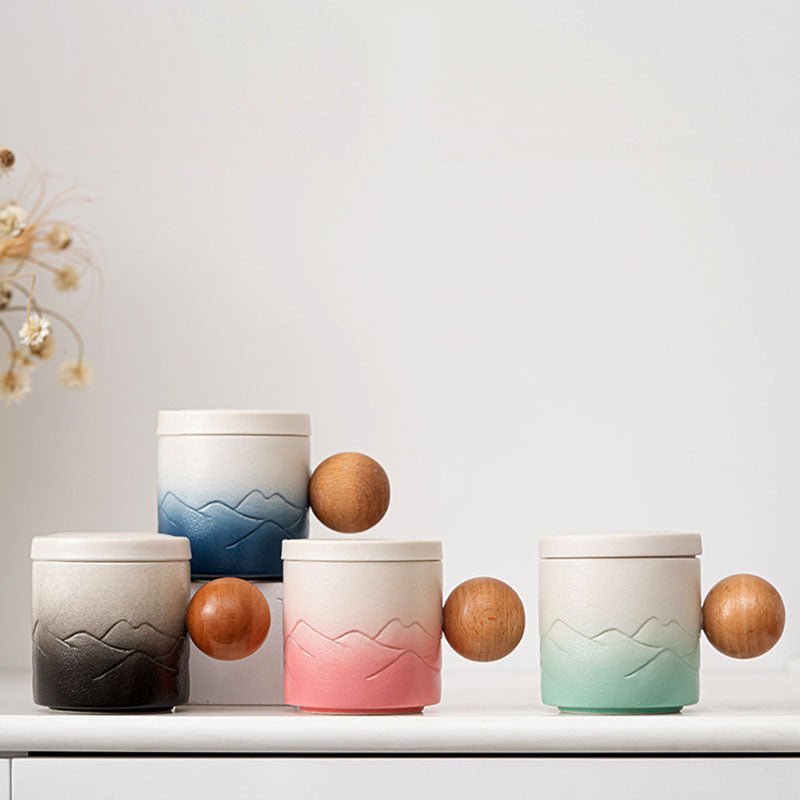
Stacked Coffee Mugs: What to Buy for Tight Shelves and Desks
Reading time: about 10 minutes
The problem usually shows up on the second day, not the first. A stack of mugs looks neat on the shelf, then one starts rocking, one handle catches on the mug above it, and the rim picks up light scuffing from being pulled out in a hurry before work.
That is why we treat stacked coffee mugs as a storage tool first and a style choice second. In our store, we pay attention to how a mug behaves on a narrow cabinet shelf, on an office credenza, and on a drying rack after a dishwasher cycle. A mug that photographs well but feels awkward every morning is not a good buy.
If you are comparing options now, start with our full mug collection so you can see shape, height, and style side by side. For a polished tall profile, the White Golden Waves Tall Coffee Tea Mug is a strong reference point. If you prefer a more grounded look for open shelving, the Mountain Tall Coffee Tea Mug fits that direction better. If the mug is mainly a gift or a conversation piece, the Handbag Coffee Tea Mug brings more personality, though it is not the most efficient shape for a strict uniform stack.
What makes stacked coffee mugs actually useful?
A useful stackable mug saves space without creating extra handling friction. That sounds obvious, but many mugs miss one of those two goals. Some sit neatly but are hard to separate with one hand. Others feel comfortable to drink from but waste vertical space because the body flares out too much.
We look for four basic things before recommending stacked coffee mugs for daily use:
- A flat, stable base: If the foot ring rocks on a hard countertop, the stack will only get more annoying on a shelf.
- Handle clearance: You should be able to grip the mug without scraping your knuckles against the mug above it.
- A smooth rim and glaze: Friction points show up quickly where mugs touch each other during storage.
- Easy lift-off: The top mug should come away cleanly instead of dragging across the lip or shoulder of the one below.
In real kitchens, this matters most on shallow shelves, apartment cabinets, office break-room cubbies, and coffee bars where several mugs share one narrow area. If you have a wide cabinet with plenty of height, stacked coffee mugs may not solve a real problem for you. A wider standard mug can feel more natural in the hand if storage is not tight.
Which mug shapes stack best without wobbling?
Shape is usually the deciding factor. Tall straight-sided mugs tend to be easier to line up than very round mugs, and round mugs tend to be easier than novelty shapes. That does not mean novelty mugs are a bad buy. It means you should match the mug to the job.
| Shape | How it performs in a stack | Best fit |
|---|---|---|
| Tall, straighter wall | Usually the cleanest use of vertical space and the easiest to align | Small kitchens, desks, shared shelves |
| Rounded or bowl-like body | Comfortable to hold but often uses more shelf width and height | Relaxed home use, larger cabinets |
| Novelty silhouette | Can be charming, but often less predictable to store in a uniform stack | Gifts, display, occasional use |
Two small details matter more than many shoppers expect: the foot ring and the shoulder line. If the foot ring is uneven, the mug rocks. If the shoulder of the mug flares sharply, the mug above it may sit awkwardly or leave less room to grab the handle. We also watch the lip closely. A rolled, even rim tends to feel better in use and is less likely to create that scratchy ceramic-on-ceramic drag when one mug is lifted off another.
For buyers who want a refined tall shape that suits cleaner spaces, the White Golden Waves Tall Coffee Tea Mug is the kind of profile we suggest for desks and modern shelving. The Mountain Tall Coffee Tea Mug points in the same tall direction, but with a warmer, more natural visual feel.
What should you inspect before adding stacked coffee mugs to cart?
This is the part shoppers skip, and it is where the best decisions are made. We always recommend checking the construction details before focusing on pattern or color.
- Set the base on a hard surface in your mind: Look for a defined foot and a level stance. A mug with even a slight wobble becomes irritating fast in a stack.
- Study the handle placement: A cramped handle opening is uncomfortable on its own, and even worse if another mug sits close above it.
- Check the rim shape: A smooth rounded lip is usually more pleasant for daily coffee than a sharp-feeling edge.
- Look at body width versus height: A mug can be stackable in theory but still take up too much front-to-back shelf depth if it bulges in the middle.
- Think about cleaning: If you use a dishwasher, remember that mugs still touch rack tines, neighboring cups, and sometimes each other during unloading.
The most common defect modes we watch for are not dramatic. They are the little things customers notice after a week: a base that does not sit flat, a handle that feels slightly twisted off-center, light glaze wear where rims meet, and tiny chips that start at the lip after repeated sink contact. Those are real-world problems, not showroom problems.
One more trade-off is worth saying clearly: stacked coffee mugs are not always the best choice for people who prefer oversized cups, very wide handles, or a broad cafe-style bowl shape. Compact stacking usually asks for a more controlled silhouette. If your priority is maximum hand room or a very large pour, a non-stackable mug may fit you better.
Are stacked coffee mugs better for kitchens, offices, or gifts?
They can work in all three places, but the best style changes with the setting.
For small kitchens: We usually suggest a taller silhouette with a clean footprint. It uses vertical space better and tends to look less bulky on open shelving. If your cabinet opening is low, measure the inside height before you buy. Leave enough room above the top mug so you are lifting it straight up rather than tilting it out.
For office desks and break rooms: Simplicity wins. A mug that looks tidy beside a laptop, notebook, or compact coffee machine usually gets used more often than one that feels overly decorative. The White Golden Waves Tall Coffee Tea Mug makes sense here because the profile feels clean and presentable without asking for a lot of shelf space.
For warm-toned kitchens and rustic shelves: Buyers often want a mug that still saves space but does not feel stark. The Mountain Tall Coffee Tea Mug is the better direction if you want stacked storage with a softer, earthier visual presence.
For gift unboxings and personality buys: A novelty shape can be the right answer, especially if the mug is meant to stand out. The Handbag Coffee Tea Mug fits that role well. The trade-off is practical: novelty shapes often do not store as neatly as simpler tall mugs, so we would not point a strict space-saver shopper there first.
That is the pattern we see most often in our store. Buyers shopping for storage efficiency lean toward cleaner, taller forms. Buyers shopping for gifting are more willing to trade stacking efficiency for character.
How do stacked coffee mugs hold up in daily use?
Daily use is where weak designs get exposed. A mug may survive a photo shoot and still be frustrating during breakfast cleanup, a rushed office refill, or a crowded dishwasher unload.
Here is what matters most in everyday handling:
- One-handed removal: If you need two hands every time, the stack is already less convenient than it looks.
- Drying behavior: Mugs stacked before they are fully dry can feel sticky or trap moisture around the contact points.
- Rim durability: The lip is the first place we see chips if mugs knock against a sink or metal drying rack.
- Shelf discipline: In shared kitchens, the best stackable mug is the one people can put back correctly without thinking about it.
We tell customers to be realistic about dishwasher claims. If a mug is dishwasher-safe, that helps, but it does not mean wear disappears. Ceramic surfaces can still bump against other items, and metallic rack contact can mark the foot ring over time. Hand washing is gentler, but even then, the habit that matters most is lifting mugs straight up instead of sliding them against each other.
If your home coffee routine involves large lattes, oversized tea servings, or long work sessions where you do not want refills, a smaller stackable shape may feel limiting. That is not a flaw. It is just a mismatch between the mug and the routine.
Our rule is simple: if stacked coffee mugs save shelf space but slow down the morning grab, they are not doing their job.
How should you care for stacked coffee mugs so they last longer?
The good news is that care is straightforward. The bad news is that small bad habits add up fast.
- Let mugs cool and dry fully before stacking them back in the cabinet.
- Lift upward rather than twisting one mug against another.
- Avoid knocking the rim against stone counters, stainless sinks, or dishwasher rack edges.
- If your shelf is slick, add a thin liner so the bottom mug does not slide when you pull the top one free.
- Check the foot ring occasionally for roughness or wear if the mugs are moved in and out several times a day.
These steps sound minor, but they make a visible difference over time. In our experience, glaze scuffs, tiny edge chips, and shelf wobble nearly always start with rushed handling rather than one big accident.
If you are still comparing shapes and finishes, browsing the full collection side by side is the easiest way to spot which mugs are built for compact storage and which are better as stand-alone statement pieces.
Frequently asked questions
Are stacked coffee mugs good for very small kitchens?
Yes, especially if your cabinet or shelf is short on width but has enough height to lift the top mug off cleanly. The best results come from mugs with a flat base, controlled body shape, and handles that do not collide with the mugs above or below.
Do stacked coffee mugs chip more easily than regular mugs?
They can if the rims rub together or if the mugs are dragged apart instead of lifted. Most wear starts at the lip, the foot ring, or the point where mugs bump a sink or drying rack, so handling matters as much as design.
What style of stacked coffee mugs is easiest to live with every day?
A tall mug with a straighter wall is usually the easiest daily option because it uses vertical space efficiently and tends to line up more neatly. Rounded and novelty shapes can still work, but they are usually less efficient if storage is your main goal.
Should I buy novelty stacked mugs or simple tall mugs?
Buy novelty styles if the mug is mainly for gifting, display, or personality. Buy simpler tall styles if you want repeatable storage, easier shelf alignment, and less daily fuss in a busy kitchen or office.
How do I choose the right stacked coffee mugs from your store?
Start with the collection page and compare each option for base stability, handle clearance, and overall silhouette. If you want the most practical storage direction, begin with the tall styles like the White Golden Waves Tall Coffee Tea Mug or the Mountain Tall Coffee Tea Mug; if the mug is more about gifting impact, look at the Handbag Coffee Tea Mug.
What is the smartest next step before you buy?
Use a short checklist before you make the final call. Measure your shelf height. Decide whether the mug is for tight daily storage, desk use, or gifting. Then compare each option for base stability, handle room, and how much style complexity you really want in the stack.
- If storage efficiency is the priority, start with the taller, cleaner profiles.
- If the mug needs to look polished in an office or coffee nook, lean toward a refined tall shape.
- If the mug is meant to surprise someone as a gift, a more playful silhouette may be worth the storage trade-off.
The fastest way to narrow it down is to browse our full collection with those checks in mind. That keeps you focused on how the mug will actually live on your shelf, not just how it looks in a product photo.
More from our blog
Read more
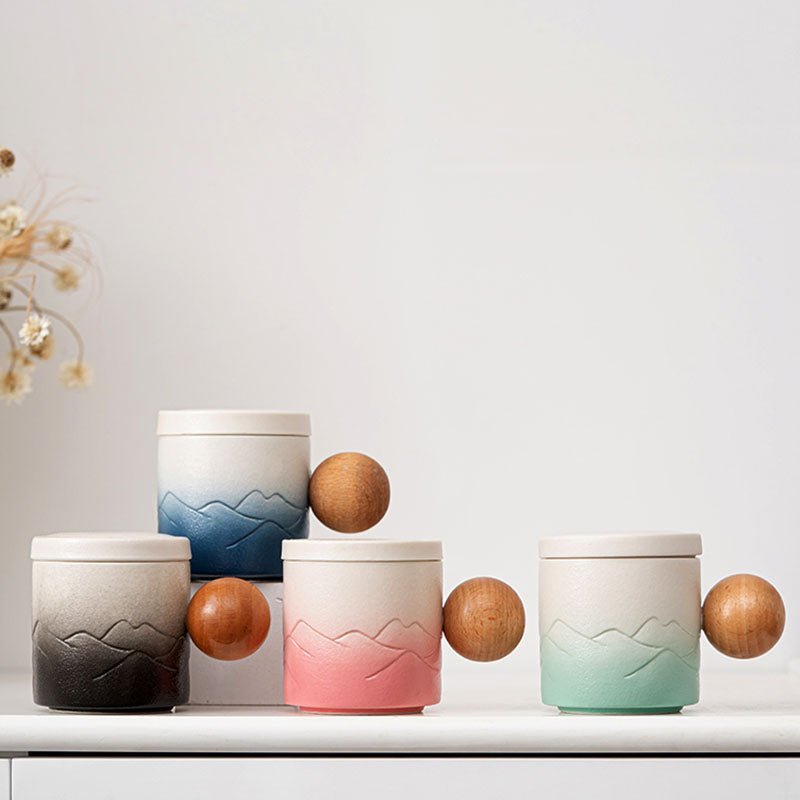
Fancy Mugs for Gifts, Desks, and Everyday Coffee
Fancy mugs should do more than sit on a shelf. We break down what makes one comfortable to use, which styles work best for gifting, and what to check before you buy.
Weiterlesen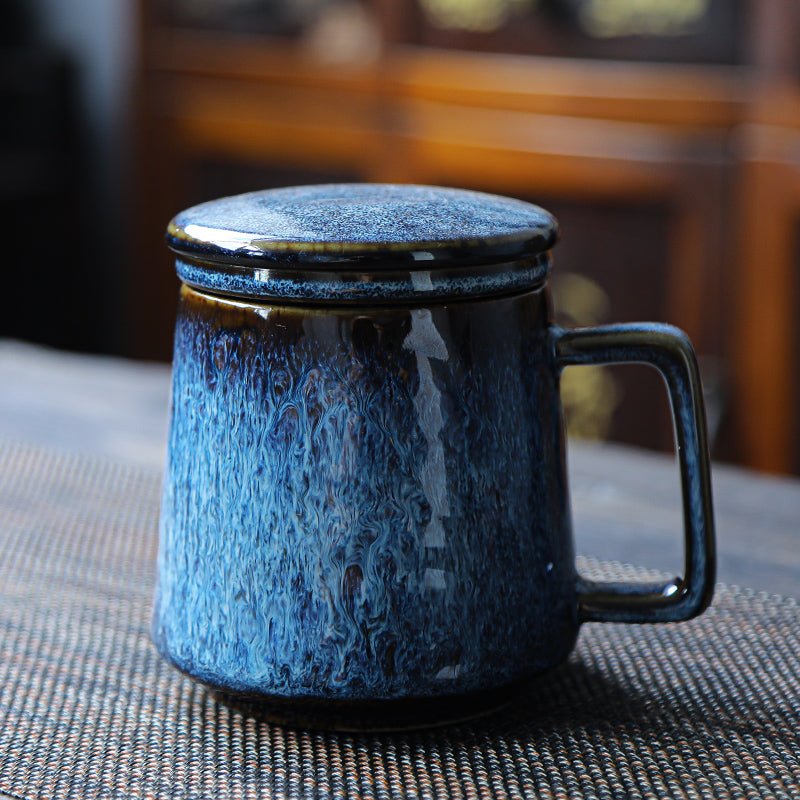
Coffee Mugs Used on the Show Psych: Which Ones Are Worth Buying
A mug that looks right on a Psych-themed shelf but feels awkward in hand gets retired fast. We compare the shapes that fit the vibe, what to check before buying, and which options are better for da...
Weiterlesen
Hinterlasse einen Kommentar
Diese Website ist durch hCaptcha geschützt und es gelten die allgemeinen Geschäftsbedingungen und Datenschutzbestimmungen von hCaptcha.