
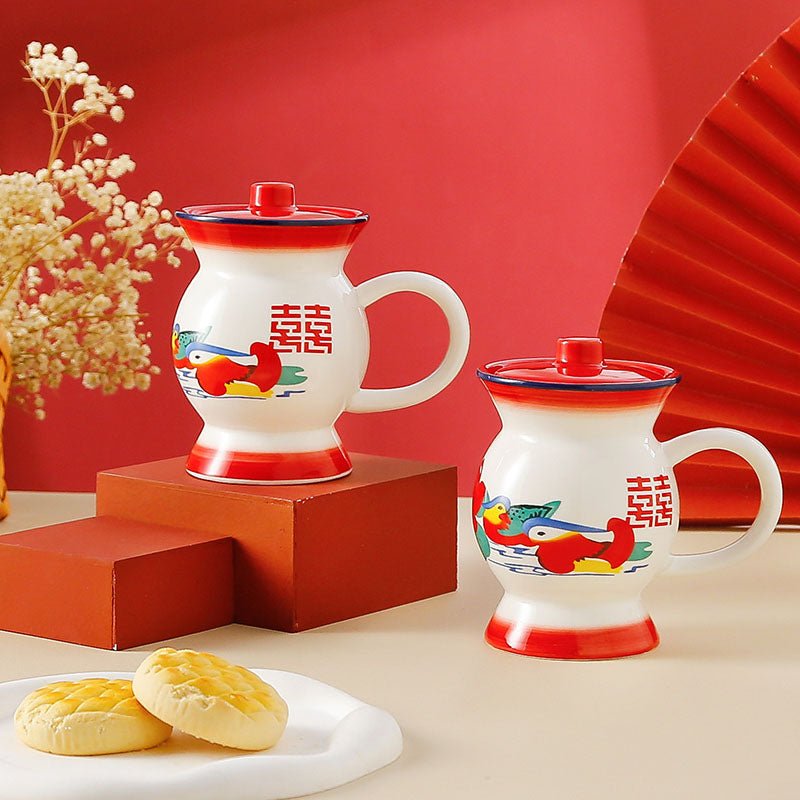
Oversized Mugs: How to Choose Size, Shape, and Comfort
Reading time: about 9 minutes
We see the same pattern in our store all the time: someone starts with a standard mug, pours coffee, adds milk, and immediately wishes there were more room. Oversized mugs fix that problem, but only if the shape, weight, and handle actually fit the way you drink.
If you want to compare real options first, start with the Pleated Coffee Tea Cup, the Golden Waves Kio Coffee Tea Mug, and the The Flow Coffee Tea Mug. For the broader assortment, our all collection is the fastest way to compare styles side by side before you narrow anything down.
What makes oversized mugs worth buying for everyday use?
Oversized mugs are not just bigger cups. They change the way you use your drinkware. A little extra capacity gives you room for milk, foam, tea bags, or just a slower morning without topping off every few minutes.
In our experience, shoppers usually move into this category for one of three reasons: they want a more generous pour, they want a mug that feels substantial on a desk, or they want a gift that looks deliberate instead of generic. That is why oversized mugs show up so often in office setups, home kitchens, and unboxing gifts that need to feel a step above the everyday 12 oz mug.
If you are still comparing capacities, our guide on Oversized Coffee Mugs: How to Choose the Right One is a useful starting point because it focuses on what size actually feels right in use, not just on paper.
The trade-off is simple: bigger mugs are less convenient if you want something light, compact, or easy to stash in a small cabinet. They are also not the right pick if you mostly drink espresso, if you carry coffee between meetings, or if your mug shelf is already crowded.
What size should you actually choose?
There is no single number that makes a mug feel oversized. For some shoppers, 16 oz feels large enough. For others, oversized starts closer to 20 oz or beyond. The useful question is not just how much liquid fits, but how the mug behaves when it is full, half full, and sitting on your counter or desk.
| Size range | Best for | Trade-offs |
|---|---|---|
| 16 to 18 oz | Daily coffee with a little extra room for milk or tea | Still manageable, but may not feel oversized if you pour large drip coffee |
| 20 oz and up | Long desk sessions, tea drinkers, and people who want fewer refills | Heavier when full and takes more space in the dishwasher and cabinet |
| Wide, bowl-style oversized mugs | Home use, cozy drinks, and slow sipping | Cool down faster and can feel awkward if you want a narrow sip line |
If you want a deeper breakdown of fit and capacity, our article on 16 Ounce Coffee Mugs: Size, Materials, and Fit Guide is a good companion read. It helps when you are deciding whether a 16 oz mug is enough or if you really need something roomier.
A practical rule from our side: choose the smallest oversized mug that still leaves you comfortable headroom. Too much extra volume can make the mug feel bulky without improving the drinking experience.
Which shape feels best in the hand?
Shape matters more than many shoppers expect. Two oversized mugs can hold about the same amount, but one feels balanced while the other feels top-heavy or hard to grip. The handle, foot ring, and wall profile all change how the mug behaves once it is full.
- Straight-sided mugs feel sturdy and are easy to stack, but they can read as bulky if the walls are thick.
- Rounded or bellied mugs often feel more comfortable in the palm and can look softer on a shelf.
- Flared rims make sipping easier, though they sometimes lose heat a little faster because the opening is wider.
- Tall, slim oversized mugs save counter space, but they can be less stable if the base is narrow.
We pay attention to handle clearance because that is where comfort shows up fast in real use. If two fingers do not fit without scraping the body of the mug, most people notice it the first week. The same goes for lip thickness. A mug can look beautiful and still feel awkward if the rim is too thick for relaxed sipping.
That is one reason we like reading shape advice alongside product photos. Our broader post on Oversized Mugs: How to Choose the Right Size, Shape, and Material is useful if you want to compare profile, material, and feel before you buy.
Which material and finish hold up best?
Oversized mugs are usually handled differently than small cups. They get filled more often, carried more carefully, and washed more frequently because people rely on them for daily coffee or tea. That makes material and finish part of the buying decision, not just decoration.
Ceramic and stoneware are the most common choices we see for this category. Stoneware usually feels heavier and tends to hold heat well, which works nicely on a desk. Ceramic can feel a little lighter and cleaner in the hand. Porcelain often looks refined and feels elegant, but it can be less forgiving if the mug gets knocked against a sink or crowded dish rack.
Finish matters too. A glossy glaze is usually easier to wipe down after a dishwasher cycle or a splash of coffee, while a matte finish can feel richer in the hand but may show fingerprints or utensil marks more clearly. Metallic accents, textured surfaces, and highly decorative glazes can be beautiful, but they may come with more care requirements.
When we inspect mugs, we look for the small things that generic listings often skip:
- an even foot ring that sits flat on the counter
- a handle that is aligned, not twisted or pinched in too tightly
- smooth glaze at the rim and around the handle joins
- no wobble when the mug is set down empty
Those checks matter because common defect modes are easy to miss online. Hairline crazing, glaze pooling, rough edges, and small chips around the foot can all turn a pretty oversized mug into something annoying to use. If the care notes say hand wash only, follow that. If the mug is labeled microwave-safe or dishwasher-safe by the maker, that is a helpful convenience, but the product page should always be the final word.
What do oversized mugs work best for, and what are they bad at?
Oversized mugs shine in a few very specific situations. They are excellent for a slow coffee at a kitchen counter, a long tea session at a work desk, or a gift that feels more thoughtful than a standard cup. They also work well if you like room for milk, oat milk, foam, or a spoonful of sugar without filling the mug to the brim.
They are not the best choice for everything. If you need something for a car cup holder, a travel bag, or quick espresso-based drinks, oversized mugs are the wrong tool. They can also be awkward on small mug trees, tight shelves, and shallow dish racks. A big mug that does not fit where you store it will become a problem fast.
So the real question is not just whether you like large mugs. It is whether your routine matches the mug. If you mostly drink a plain 8 to 12 oz coffee and want something lightweight, a smaller everyday mug may suit you better. If you like one generous refill and a more relaxed desk setup, oversized mugs make sense.
How do we compare oversized mugs before listing them?
In our store, we do not treat oversized mugs like simple decor. We look at how they feel in real use, because a mug that photographs well can still be clumsy on a kitchen counter. That means checking balance, handle comfort, glaze consistency, and whether the piece feels stable when it is full.
We also pay attention to packaging and unboxing because oversized mugs are more likely to be gifted. A mug that arrives chipped, wobbly, or rough around the rim is a return waiting to happen. The same is true after a few dishwasher cycles if the finish starts to look tired or if the surface shows flaws that were hidden in the product photos.
Before we recommend a mug, we ask a few practical questions:
- Does the handle fit comfortably with two fingers?
- Does the base sit flat without rocking?
- Is the opening wide enough for easy sipping, but not so wide that the drink cools too quickly?
- Will it fit the cabinet, dishwasher, and shelf space the customer actually has?
If you want more background on how shoppers think through this category, our guide on Oversized Coffee Mugs: How to Choose the Right One is still one of the clearest references for comparing everyday use cases.
Frequently asked questions
What size counts as oversized mugs?
Most shoppers start thinking of a mug as oversized once it moves beyond the standard everyday range and gives them extra room for milk, tea, or a larger pour. For many buyers, that begins around 16 oz and becomes more obvious at 20 oz or above. The real test is how it feels in your hand and how much empty space you want above your drink.
Are oversized mugs dishwasher safe?
Some are, but not all. The safest approach is to follow the care instructions on the product page, especially if the mug has a matte finish, metallic detail, or a textured glaze. If you want lower-maintenance drinkware, choose a mug that is clearly built for regular dishwasher use.
Do oversized mugs keep coffee hot longer?
Sometimes, but not automatically. A thicker wall or more insulating material can help retain heat, while a very wide opening can let heat escape faster. If heat retention matters most, look at wall thickness, shape, and whether the mug is meant for slow sipping rather than fast refills.
Are oversized mugs good for tea?
Yes, especially if you like loose-leaf tea, multiple infusions, or a long desk session with a single cup. They are less useful if you want a small, concentrated tea service or if you prefer a mug that heats up and cools down quickly. For many tea drinkers, the extra space is the main benefit.
What should I check before buying an oversized mug online?
Check capacity, handle clearance, base stability, care instructions, and whether the shape fits your cupboard or dishwasher. If the product photos only show the mug from one angle, look for close shots of the rim, handle, and foot ring. Those details tell you more about everyday comfort than a styled hero image does.
If you are deciding between two or three oversized mugs, compare handle clearance, base stability, and the amount of empty space you want above the coffee line. Then move to our all collection and pick the one that fits your routine instead of just your feed.
Read more
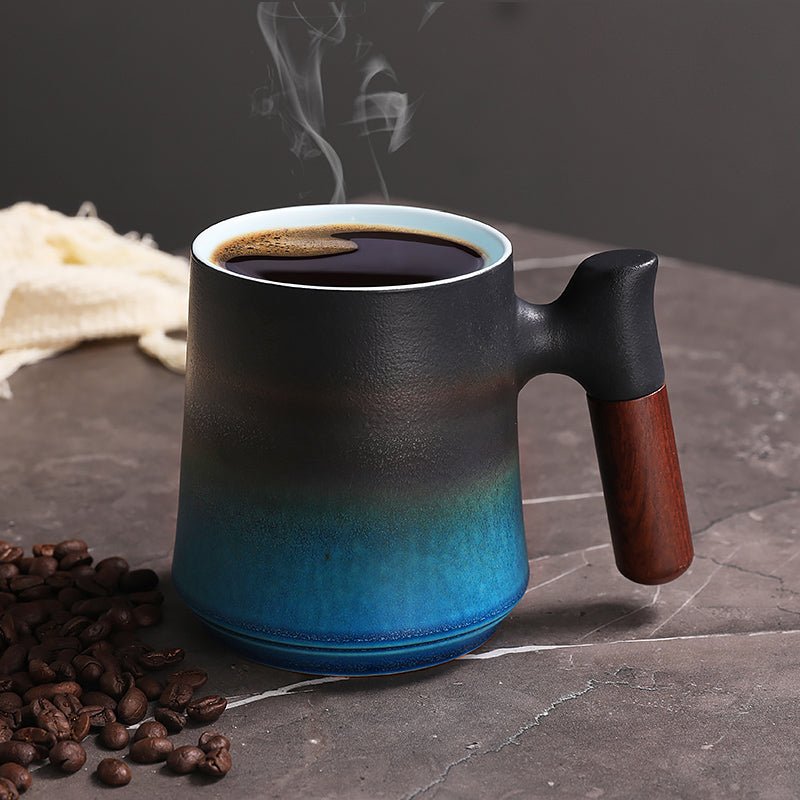
Dragon Coffee: What to Check Before You Buy a Mug
Dragon coffee usually means a themed mug search, not a drink recipe. We break down size, handle comfort, print durability, and care notes so you can choose a mug that works on a real kitchen counte...
Weiterlesen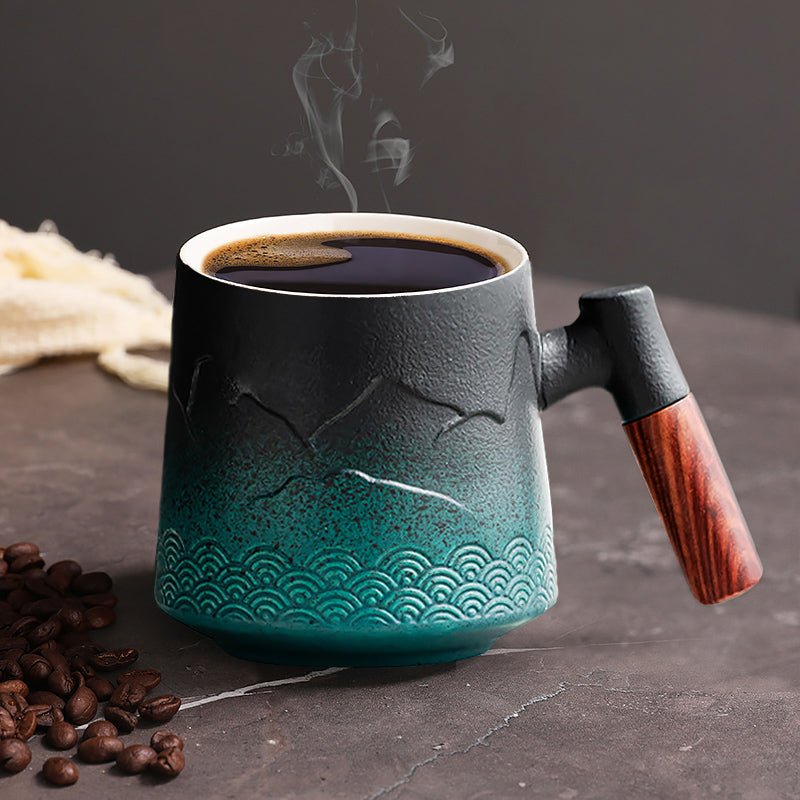
Tea Handle Buying Guide: How to Choose the Right Mug Handle
A good tea handle disappears in the hand and still feels stable when the mug is full. We compare wooden and ball-handled options, plus what to check before ordering.
Weiterlesen
Hinterlasse einen Kommentar
Diese Website ist durch hCaptcha geschützt und es gelten die allgemeinen Geschäftsbedingungen und Datenschutzbestimmungen von hCaptcha.