
Normal Coffee Mug Size: What Buyers Should Expect Before Ordering
Reading time: about 9 minutes
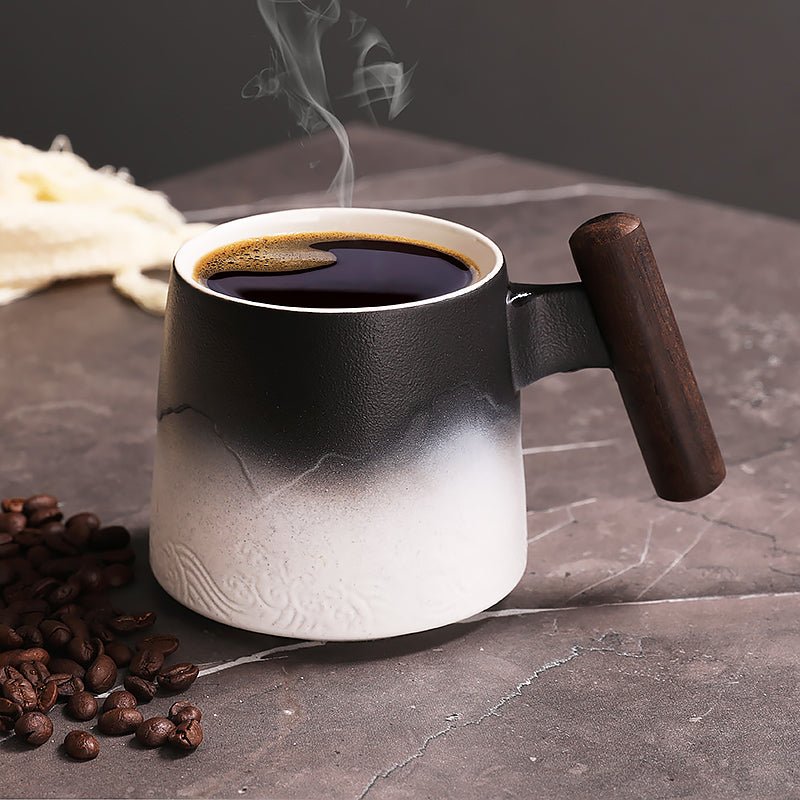
A mug that looks normal in a product photo can feel tiny on a kitchen counter. We see it most often when someone pours coffee, adds milk, and realizes there is no room left at the top. The normal coffee mug size people usually mean is around 11 to 12 oz, but the right pick depends on how you brew, how you drink, and where the mug has to fit.
In our store, we handle mugs that end up on kitchen counters, office desks, and gift tables, so we pay attention to the details that change everyday use. The capacity number matters, but so do the handle opening, rim thickness, wall thickness, and whether the mug still clears the shelf under a cabinet.
If you are comparing labels, our average coffee mug size guide and standard coffee mug size guide explain how retailers use those terms differently. If you want a deeper size-by-size breakdown, we also have dedicated notes on the 11 oz coffee mug and the 10 oz coffee mug.
What does normal coffee mug size usually mean?
For most shoppers, normal coffee mug size means a mug in the 11 oz to 12 oz range. That is the size you see most often in gift sets, office kitchens, and everyday ceramic mugs. It is large enough for a standard pour of drip coffee without looking oversized, but not so large that it feels like a bowl in your hand.
That said, normal is not a fixed measurement. A 10 oz mug can be the right fit for a strong black coffee drinker. A 15 oz or 16 oz mug makes more sense for someone who adds milk, uses larger brew batches, or wants one mug for coffee and tea. Size on the label does not tell the whole story. A thick ceramic body with a broad handle feels different from a slimmer porcelain mug even if both are marked 11 oz.
Capacity on the label is not the same as comfortable drinking space. A mug filled to the brim is not a practical daily mug.
Many everyday mugs in the normal coffee mug size range are around 3.5 to 4 inches tall and roughly 3 to 3.5 inches across, though the handle shape changes the hand feel more than the raw measurement. If the mug has a wide belly or a tall profile, it may still fit the same ounce rating while feeling very different on a desk or under a brewer.
How do 10 oz, 11 oz, 15 oz, and 16 oz mugs actually feel?
This is where buyers usually make the wrong call. On paper, the gap between sizes looks small. In the hand, it is obvious. We often tell customers to think about the mug as a daily tool, not just a number.
| Size | How it feels | Best use case | Main trade-off |
|---|---|---|---|
| 10 oz | Compact, light, and easy to empty | Strong black coffee, espresso drinks with less milk, smaller servings | Too small for milk-heavy drinks or big pours |
| 11 to 12 oz | The most familiar everyday mug shape | Standard drip coffee, office use, general gifting | May feel cramped for lattes or extra foam |
| 15 oz | Noticeably fuller in the hand | Longer coffee sessions, tea, larger servings | Can cool more slowly at first, but also feels bulkier |
| 16 oz | Large and desk-friendly | Milk drinks, hot chocolate, big morning pours | Not ideal if you want a compact mug or have tight cabinet space |
There is a practical difference between a mug that holds 11 oz to the rim and a mug that is comfortable with 11 oz in use. Most buyers need a little headspace for steam, crema, milk, or a spoon. A mug that is technically large enough but filled too high is awkward to carry and easy to slosh.
For buyers who want a broader side-by-side view, our 15 oz coffee mug guide and 16 ounce coffee mug buyer's guide show why these larger mugs work well for some drinks and not for others. We also cover the closely related 16oz coffee mug size because shoppers often compare those two labels before they buy.
What should you check before buying a mug for home or office use?
Size is only one part of the purchase. We look at a few practical details every time because they affect whether a mug becomes a daily favorite or ends up sitting in the back of the cabinet.
- Usable capacity: A mug sold as 11 oz may not feel like 11 oz when you want room for milk or foam. If you drink coffee with cream, leave a little extra space.
- Handle clearance: If your fingers barely fit through the handle, the mug will feel annoying after a few uses. This matters most on thicker stoneware mugs.
- Rim thickness: A thinner rim feels lighter on the lip, while a thick rim can feel sturdier but less refined. This is one of the details customers notice only after a week of use.
- Material and care: Ceramic and stoneware are common for daily mugs, while porcelain tends to feel lighter and a little more delicate at the edge. If you plan to use a dishwasher often, check the finish, not just the size.
- Cabinet and brewer fit: A mug can have the right capacity and still be awkward if it is too tall for a shelf or too wide for a coffee machine tray.
In our experience, the most common wear issues are chips on the rim, hairline cracks near the handle join, and glaze crazing after repeated dishwasher cycles. Those are not reasons to panic, but they are the first signs that a mug is being pushed harder than it likes. A daily mug should survive normal washing and loading without turning into something you handle carefully every time.
If keeping coffee warm matters more than total volume, our Mug Keeps Coffee Hottest article is worth reading before you buy. A smaller mug can help a drink stay hotter because there is less open surface area, but a mug that is too small may force you to refill sooner. That is the trade-off.
If you want to compare current shapes and capacities in our store, start with our products page or browse the full collection.
Which size works best for coffee, tea, and milk drinks?
The right mug size depends on what is actually going into it. A normal coffee mug size works well for many drinks, but not all of them need the same headspace.
- Drip coffee: 10 oz to 12 oz is the safest everyday range. It gives you a familiar pour without making the mug feel oversized.
- Black coffee or Americano: 10 oz can be ideal if you drink a strong, hot cup quickly. It is compact and easy to handle.
- Coffee with milk or cream: 11 oz to 15 oz gives you breathing room. If you like a generous splash of milk, a larger mug is easier to live with.
- Tea: 11 oz to 15 oz is usually comfortable, especially if you steep loose tea or use a larger bag and want room for the infusion.
- Hot chocolate or larger lattes: 15 oz to 16 oz is often the better fit because these drinks take up more volume and lose less comfort when the mug is not packed to the top.
A normal coffee mug size is not the best choice for every drinker. If someone wants a mug for a commute, a travel tumbler is better. If someone wants a very large latte or bowl-like presentation, a 16 oz mug may make more sense than the classic 11 oz shape. On the other hand, if your coffee goes cold before you finish it, a big mug can be the wrong answer even if it looks appealing.
That is why we push buyers to think about the next five minutes of use, not just the photo. Where will it sit? Will it fit under the machine? Will it still feel comfortable in one hand after the first few sips? Those details are the difference between a mug that is fine and a mug that gets used every day.
What size do we recommend for daily use and gifts?
If you want one safe answer, we usually point people toward 11 oz or 12 oz for general daily use. That size works for most drip coffee drinkers, fits common cabinet shelves, and still feels familiar when it is unboxed as a gift. It is the least risky middle ground.
For gifting, the best choice depends on who is receiving it. A coworker who drinks black coffee may prefer 10 oz. A family member who likes a big milky latte may be happier with 15 oz or 16 oz. If you are buying without knowing the person well, the normal coffee mug size range is the safer bet because it is versatile and not too specialized.
Our practical recommendation looks like this:
- Choose 10 oz if the drinker likes smaller servings, strong coffee, or a compact mug.
- Choose 11 oz to 12 oz if you want the most standard, widely accepted everyday size.
- Choose 15 oz if you want extra room without jumping straight to a very large mug.
- Choose 16 oz if the mug needs to handle milk drinks, hot chocolate, or a big morning pour.
The main limitation of the classic size is simple: it is not made for volume-heavy drinks. If someone regularly makes oversized lattes or wants one mug to cover breakfast and a second refill, the normal coffee mug size can feel tight. That is not a flaw. It is just a mismatch.
Frequently asked questions
Is 11 oz a normal coffee mug size?
Yes. For most buyers, 11 oz is right in the normal coffee mug size range. It is one of the most familiar everyday sizes for home kitchens and office desks. If you drink coffee with milk or want extra headspace, 12 oz may feel more comfortable.
Is a 15 oz mug too big for everyday coffee?
Not necessarily, but it depends on the drink. A 15 oz mug is useful for tea, hot chocolate, and larger coffee pours, but it can feel bulky if you only drink a small black coffee. If you sip slowly, the larger opening can also let the drink cool faster.
What mug size fits best under a coffee machine?
It depends on the machine, tray height, and spout clearance. A shorter 10 oz or 11 oz mug is usually the safest starting point, especially for compact brewers. Always check height and width, not just capacity, because some wide mugs will not sit well under the spout.
Is ceramic better than stoneware for a daily mug?
Both can work well, but they feel different in use. Ceramic often feels a little lighter and cleaner in hand, while stoneware usually feels thicker and more substantial. If you want something that feels sturdy on a desk, stoneware can be a good fit. If you want a lighter cup, ceramic may be better.
How do I know if a mug is too small for lattes?
If the mug leaves no room for milk, foam, or a spoon, it is too small for your routine. A 10 oz mug can work for a smaller latte, but many latte drinkers prefer 15 oz or 16 oz because the extra room keeps the drink comfortable to hold and drink. Look at the usable fill, not just the label.
If you are still deciding, use one last check: match the mug to your usual drink, the space on your counter, and the way you wash dishes. Then compare the shapes on our full collection and choose the size that fits your routine instead of the one that only looks right in a photo.
Read more
How Many Ounces Is a Regular Coffee Mug? Buyer Guide
Most regular coffee mugs fall between 8 and 12 ounces, with 11 and 12 ounces common on shelves. We break down what that means in real use so you can buy the right size.
Weiterlesen
Bone China Coffee Mugs: What Buyers Should Check Before Ordering
Bone china coffee mugs feel lighter, look cleaner, and suit buyers who want a refined everyday cup. We cover size, care, trade-offs, and what to inspect before you order.
Weiterlesen
Hinterlasse einen Kommentar
Diese Website ist durch hCaptcha geschützt und es gelten die allgemeinen Geschäftsbedingungen und Datenschutzbestimmungen von hCaptcha.