
Mug Handle Guide: Grip, Material, and What to Check Before Buying
Reading time: about 10 minutes
A mug that looks right on a product photo can feel wrong the first time you lift it from a desk, kitchen counter, or office microwave. The difference is often the mug handle: shape, thickness, clearance, and material all change how steady the mug feels when it is full and hot.
In our store, we see the same pattern over and over. Buyers focus on the cup body first, then notice the handle only after the mug arrives. That is usually too late. If you want a mug that is easy to carry with one hand, comfortable for long coffee breaks, and not awkward to wash or store, the handle deserves the first look.
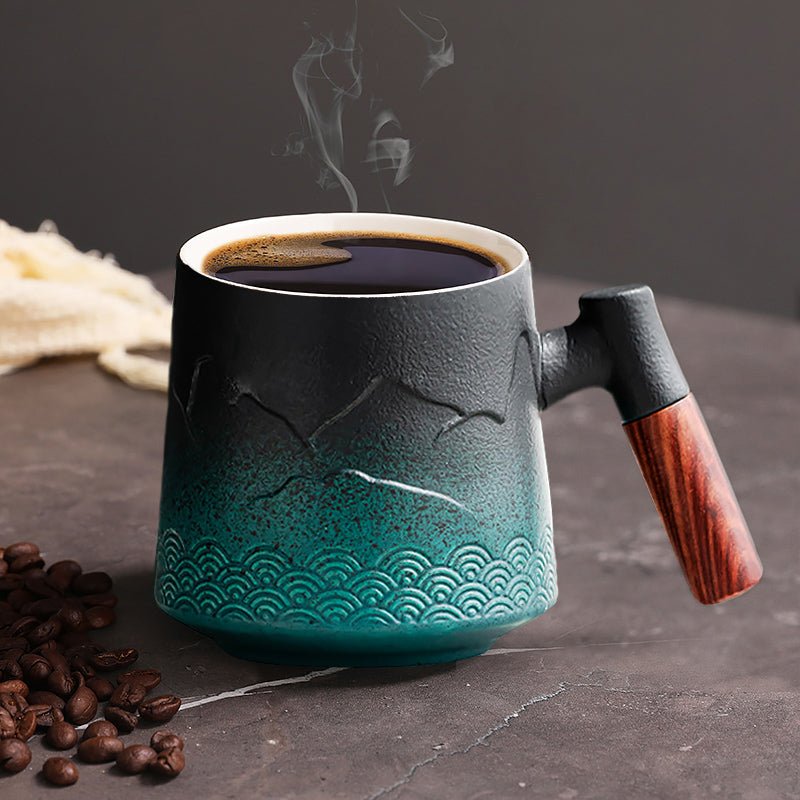
For a quick browse of current options, start with our full collection, then compare a few handle styles side by side. If you want concrete examples, the Mountain Sea II Coffee Tea Mug with Wooden Handle and The Cloud Coffee Tea Mug with Wooden Handle show how a wooden grip changes the feel, while the Ball Handled Coffee Tea Mug leans into a different, more sculptural hold.
What does a mug handle actually change in daily use?
The short answer is comfort, control, and heat management. A good mug handle gives your fingers room to settle without pinching, supports the mug when it is full, and keeps your knuckles away from the hottest part of the body.
We look at handle behavior in real situations, not just on a shelf. A mug may feel fine when empty, then become clumsy once coffee, tea, or cocoa adds weight. The handle should still feel balanced when you are carrying it from a kettle to a desk, or from the kitchen to a couch with one hand occupied.
Three practical things change the experience immediately:
- Finger clearance: If the opening is too tight, your index finger presses into the ceramic or wood.
- Grip angle: A handle that tilts slightly outward usually feels more natural than one that tucks too close to the mug wall.
- Wall thickness near the join: A handle attached too close to the body can trap heat and feel cramped in larger hands.
That is why two mugs with the same capacity can feel very different in use. One is easy for a quick sip at the sink. Another is better for slow drinking at a desk where you keep picking it up all morning.
Which mug handle shape feels best in the hand?
There is no single best handle shape. The right choice depends on hand size, drinking habits, and where you use the mug most. We see most buyers fall into one of these preferences:
| Handle style | What it feels like | Best for | Trade-off |
|---|---|---|---|
| Rounded loop handle | Familiar and easy to hold | Everyday coffee, shared kitchens | Can feel cramped if the opening is narrow |
| Wooden handle | Warmer to the touch and visually softer | Desk mugs, gift purchases, slower sipping | Usually not the best choice for long dishwasher or soak cycles |
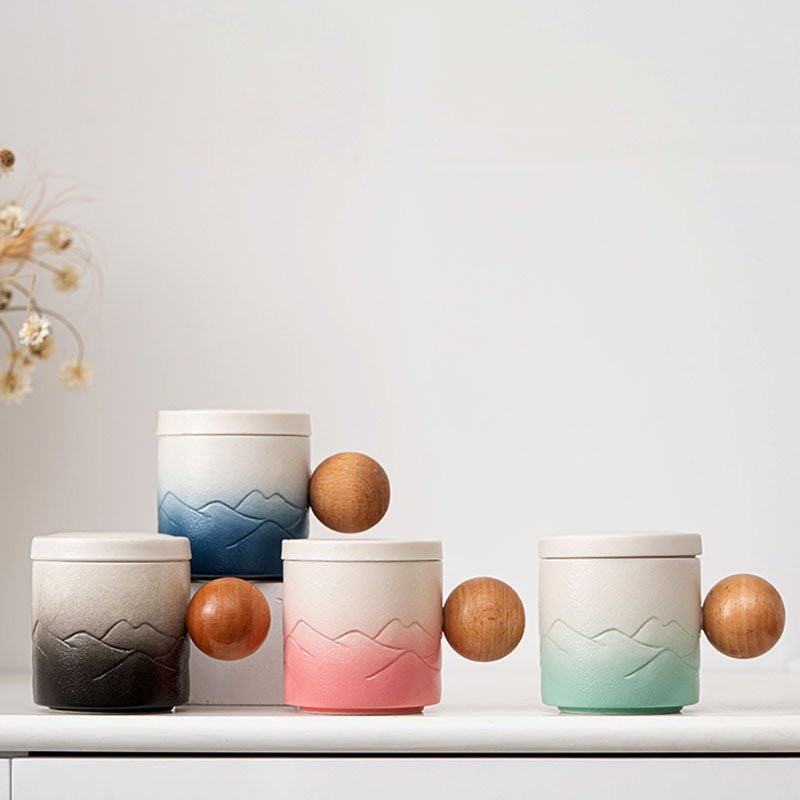
| Ball handle | More distinctive, often more sculptural | Buyers who want a stronger design statement | Can be less intuitive if you prefer a classic grip |
That table hides an important point: a stylish handle is not automatically a practical one. A ball-shaped grip can look appealing in photos, but if you hold your mug with two fingers and a thumb, you may prefer something more traditional. On the other hand, a plain loop can feel ordinary but work better when you are half-awake and reaching for coffee before a meeting.
If you want a deeper buying framework for handle shape and fit, our Handle Mug Buying Guide: What Real Buyers Should Check covers the practical points we look for before we add a mug to the store.
Is a wooden mug handle a good choice?
A wooden mug handle can be a strong choice if you want a warmer look and a handle that does not feel cold when you first pick up the mug. In the hand, it tends to soften the look of the cup and makes the mug feel less industrial. That is part of why the wooden-handle mugs in our store do well as gifts and desk mugs.
The trade-off is care. Wood does not like long soaks, aggressive scrubbing, or being left wet in the sink. If you are the kind of buyer who wants to toss everything into the dishwasher without thinking, a wooden handle may frustrate you. It can still be the right buy, but only if you are comfortable with a little extra care.
Our practical care advice for a wooden mug handle is simple:
- Rinse soon after use so coffee oils do not sit on the surface.
- Wash gently by hand instead of leaving it submerged.
- Dry the handle fully before putting the mug away.
- Avoid harsh abrasives that can rough up the finish over time.
The Mountain Sea II Coffee Tea Mug with Wooden Handle and The Cloud Coffee Tea Mug with Wooden Handle are good reference points if you are comparing how a wooden handle changes the feel of an otherwise simple mug body.
A wooden handle is not the best option for heavy dishwasher use, rushed office cleanup, or buyers who often leave mugs in a shared sink for hours. For those situations, a plain ceramic or stoneware handle is usually easier to live with.
How do we judge handle comfort before we list a mug?
We look at the same practical questions a shopper would notice after the box is opened. A pretty mug that fails these checks becomes a shelf piece, not an everyday mug.
- Can you get two or three fingers through the handle comfortably? If not, it may feel tight once the mug is hot.
- Does the mug still feel balanced when full? A handle should help stabilize the mug, not pull it sideways.
- Is the grip smooth but not slippery? A handle that is too polished can become harder to control when condensation or dishwater is involved.
- Does the handle meet the body cleanly? Uneven joins or rough seams are the kind of defect that becomes annoying fast.
- Will the handle suit your cleaning routine? The easier the material, the more likely the mug stays in rotation.
These are the details that matter at the kitchen counter, at the office desk, and during gift unboxings. A mug can be beautiful and still be a poor daily choice if the handle spacing is wrong or the edge under your finger is too sharp.
Which mug handle works best for different buyers?
Different buyers feel different annoyances. That sounds obvious, but it is the part people usually skip.
If you mostly drink coffee at a desk, a comfortable handle with good clearance matters more than ruggedness. If you are choosing a gift, appearance and first-touch comfort carry more weight because the buyer may not know the recipient’s exact preferences. If you want a mug for a shared kitchen, you probably care less about sculptural style and more about easy washing and a universally familiar grip.
Here is the short version we give customers:
- For daily home use: choose a mug handle that feels easy to hook with two fingers and does not crowd the cup body.
- For gifts: wooden or visually distinctive handles often feel more special out of the box.
- For low-maintenance use: a simpler ceramic handle is easier to live with than one that needs gentler care.
- For small hands: avoid oversized handles that create too much spread between fingers and thumb.
- For larger hands: avoid handles with a tight inner opening or thin profile that digs in after a few minutes.
If you are still deciding between different everyday styles, our Coffee Mug with Handle: How to Choose the Right Everyday Mug is a useful companion read.
What problems do we see most often with mug handles?
Most handle problems are not dramatic. They are small annoyances that add up.
The most common issues we see are:
- Too-tight finger space: fine for a photo, annoying after five minutes.
- Uneven attachment: the handle sits slightly off-center, which makes the mug feel awkward when lifted.
- Sharp inner edges: especially noticeable when the mug is filled with a hot drink and you grip harder.
- Material mismatch: a decorative handle that looks great but does not suit dishwashing or hot-drink use.
We also see buyers underestimate storage. A wider handle can make the mug harder to fit on crowded shelves or in narrow dishwasher racks. That is not a reason to avoid it, but it is a real trade-off if your kitchen is already tight.
For buyers who want a broader comparison of handle-based options, our 2 Handle Coffee Mug Buying Guide: Grip, Care, and Best Picks is useful if you are comparing mugs that prioritize stability and grip over minimalism.
How should you care for a mug handle so it lasts?
Care depends on the handle material, but the habits are straightforward. If the handle is ceramic or stoneware, the main risk is chipping from knocks against sinks, counters, or other mugs. If the handle is wood, moisture and prolonged soaking are the bigger concerns.
We recommend a simple routine:
- Do not stack mugs by the handle unless the product is designed for it.
- Avoid banging the handle against the faucet or drying rack.
- Let hot mugs cool before washing so temperature shock is less abrupt.
- Inspect the join where handle meets body for small chips or hairline stress marks.
That last point matters. A tiny chip near the handle is often the first sign of wear. It may not affect the mug immediately, but it is the place we watch most carefully when inspecting returned or handled stock.
Frequently asked questions
How do I know if a mug handle is too small for my hand?
If your fingers have to press against the mug body or the handle edge to fit through, it is too small for comfortable daily use. A good fit leaves a little space so the mug does not feel cramped when it is full and warm. If you often drink while walking around the house, a tighter handle is even more annoying.
Are wooden mug handles safe for hot drinks?
Yes, wooden handles are commonly used on mugs meant for hot drinks, and they can feel comfortable in the hand. The main limitation is care, not heat resistance: wood prefers gentler washing and thorough drying. If you want the least maintenance possible, a plain ceramic handle is easier.
What is better for everyday use, a ball handle or a regular loop handle?
A regular loop handle is usually easier for most buyers because the grip is familiar and predictable. A ball handle can feel more distinctive and stylish, but it is not always the most natural choice if you want quick, one-handed use. If you gift mugs often, the more traditional loop tends to be the safer pick.
Can I put a wooden-handle mug in the dishwasher?
We would not make that the default choice unless the maker specifically says it is dishwasher-safe. Wood generally lasts better with hand washing, mild soap, and quick drying. If you want a mug you never have to think about after breakfast, choose a simpler non-wood handle.
What should I compare before buying a mug with a handle?
Check handle clearance, grip comfort, cleaning routine, and how the mug feels when full. Also look at how the handle joins the body, because rough seams or uneven alignment are the kind of small flaws that become obvious in daily use. If you want a one-page checklist, our Coffee Mug with Handle: How to Choose the Right Size and Material is a useful follow-up.
If you are ready to compare styles, open the full collection and look at the handle first, not last. That is usually the fastest way to avoid buying a mug that looks right online but feels wrong at the sink, the desk, or the first morning pour.
Read more
Handled Mug Buying Guide: Fit, Grip, and Best Uses
A handled mug sounds simple until you compare grip comfort, cup size, and daily use. This guide breaks down what to check before you buy, plus where a handled mug makes the most sense.
Weiterlesen
Great Tea Mugs: How to Choose the Right One for Daily Use
A practical guide to great tea mugs, with real buying trade-offs on size, shape, material, and everyday comfort. We also show where one mug works for both tea and coffee, and where it does not.
Weiterlesen
Hinterlasse einen Kommentar
Diese Website ist durch hCaptcha geschützt und es gelten die allgemeinen Geschäftsbedingungen und Datenschutzbestimmungen von hCaptcha.