
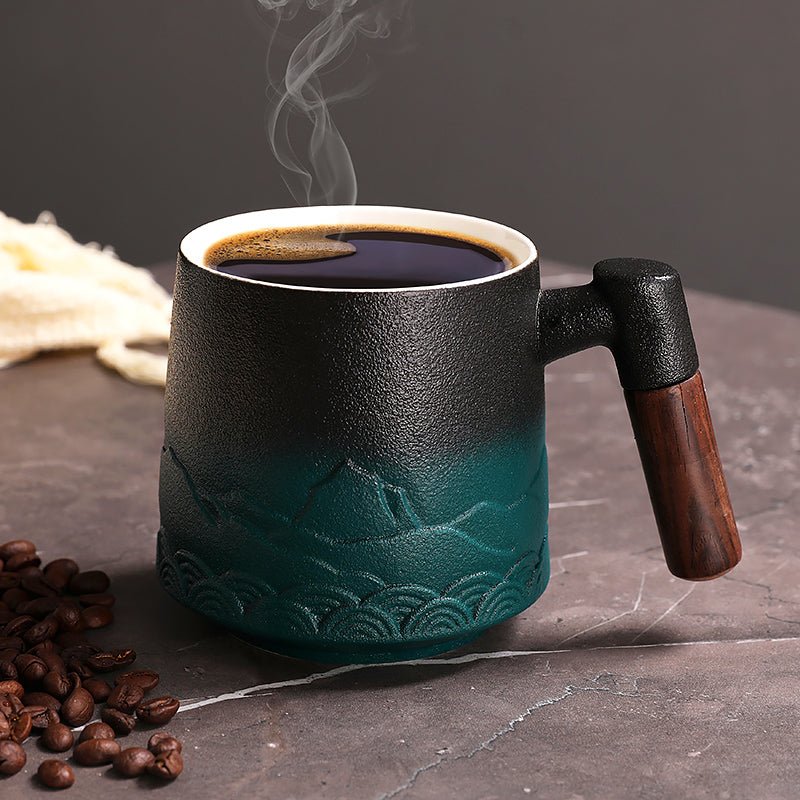
Mikasa Coffee Mugs: What to Check Before You Buy
Reading time: about 8 minutes
A mug can look perfect in a product photo and still fail in a real kitchen. We see it happen with Mikasa coffee mugs and similar stoneware mugs: the handle feels tight with a full pour, the base is a little wide for the shelf, or the glaze starts showing wear after repeated dishwasher cycles. That is why we look at the pieces people actually touch, wash, and store.
If you are comparing shapes rather than brand names alone, start with a mug that fits your routine. Our Rhombus Coffee Tea Mug is a good example of a clean, structured shape for a desk or breakfast setup, and you can browse our collection if you want to compare profiles side by side before choosing a daily mug.
What should you check first in Mikasa coffee mugs?
We start with four things: capacity, material, handle comfort, and finish. Those are the details that change the experience more than the name on the box. In our store, the mugs that move fastest are the ones that feel balanced in the hand, sit flat on the counter, and fit the way customers actually drink coffee.
- Capacity: a mug that is too small pushes people to refill twice, while an oversized mug cools coffee before the last sip.
- Wall thickness: thicker walls keep heat a bit longer, but they also make the mug heavier in a laptop-and-notebook setup.
- Handle space: a comfortable handle should give room for three or four fingers without pinching.
- Glaze and base: look for a smooth glaze and a foot ring that does not scrape the table or catch grit.
If you want a deeper breakdown of the same decision points, our guide on Mikasa Coffee Mugs: Size, Material, and Buying Guide walks through the details buyers usually compare before checkout.
Which mug size works best for daily coffee?
Size sounds simple until you use the mug on a real morning. A 12 oz mug is often the most practical middle ground for drip coffee and tea, while 14 oz and 16 oz mugs make sense for people who add milk, like a larger pour, or keep the mug on a desk for a long stretch. Smaller cups can feel refined, but they are less forgiving if you like room for cream or foam.
| Capacity | Best for | Trade-off |
|---|---|---|
| 8 to 10 oz | Espresso drinks, smaller servings, after-dinner coffee | Less room for milk and add-ins |
| 12 oz | Most daily drip coffee drinkers | Not ideal if you always pour a large cup |
| 14 to 16 oz | Long desk sessions, lattes, tea that you sip slowly | Heavier when full and takes more cabinet space |
For shoppers trying to decide between common daily sizes, our 12 oz Coffee Mugs: How to Choose the Right Mug for Daily Use article and 16 Ounce Coffee Mugs: Size, Materials, and Fit Guide are useful references. They help you compare mug size against cabinet clearance, coffee volume, and how much weight you want to lift with one hand.
Do stoneware, ceramic, and porcelain feel different in real use?
Yes, and the difference matters more than people expect. Stoneware usually feels sturdier and a little heavier. Porcelain tends to feel finer and lighter, with a cleaner lip. Standard ceramic mugs sit somewhere in between depending on wall thickness and glaze.
The right choice depends on the job you want the mug to do.
- Stoneware: good for everyday kitchen use and a more solid hand feel, but it can be heavier for office use.
- Porcelain: better if you want a lighter mug with a more refined feel, though it can feel less forgiving if knocked against a sink edge.
- General ceramic: flexible and common, but quality varies more, so the glaze, finish, and handle shape deserve extra attention.
We do not treat material as a style choice only. The way a mug sits in the hand, resists chipping around the rim, and survives the dishwasher matters more than the label alone. If you are buying for a shared kitchen, a sturdy finish usually beats a delicate look.
What details tell you a mug will hold up?
The small stuff reveals the most. A good mug should not wobble on the counter, the handle should feel secure without sharp edges, and the glaze should be even enough that you do not notice rough spots where your lip or thumb rests. We also pay attention to the underside, because a raw or gritty base can scratch tables and feel cheap after a few uses.
Our rule in the store is simple: if the handle feels awkward empty, it will feel worse once the mug is full.
Common problem areas we watch for:
- Hairline crazing: fine lines in the glaze can show up after repeated heat changes.
- Chipped rims: the first impact usually happens at the sink or on a crowded shelf.
- Loose-feeling handles: not literally loose, but shaped so thin that they feel unstable in the hand.
- Unfinished foot rings: these can scrape surfaces and pick up stains faster.
If your mugs live in a dishwasher, the safest bet is a smooth, simple shape with fewer decorative ridges where residue can collect. If you hand-wash, decorative pieces can be fine, but they should still be easy to rinse around the handle and base.
How do Mikasa coffee mugs compare with other styles we sell?
Some shoppers want the classic, versatile look associated with Mikasa coffee mugs. Others care more about silhouette or gift appeal than about matching a formal dinner set. That is where shape becomes the deciding factor.
For a more structured, geometric profile, the Rhombus Coffee Tea Mug gives you a clean line that works well on a desk or open shelf. If you want something more vertical and visually distinctive, the White Golden Waves Tall Coffee Tea Mug offers a taller silhouette that feels different from the average round mug. And if you want a playful gift piece for an office swap or a housewarming, the Handbag Coffee Tea Mug is the kind of mug people remember when they open the box.
That comparison matters because not every mug is meant for every use. A tall mug is not the best choice for a compact espresso station. A novelty handle is not ideal if you want a fast, no-fuss daily mug. A heavier stoneware mug is not the first choice for someone who carries coffee between meetings all day.
Which mug is better for gifts, offices, or everyday rotation?
We usually narrow it down by use case, not by style alone.
- For daily home use: choose a balanced mug with enough room for your usual pour and a handle that stays comfortable after the coffee is hot.
- For office desks: pick a mug with a stable base and a shape that does not crowd a keyboard or notebook.
- For gifts: choose a mug with clear visual character, strong packaging appeal, and a size that feels useful rather than decorative only.
- For a shared kitchen: keep to simple finishes that are easy to rinse and less likely to show wear quickly.
That is also where trade-offs matter. A decorative mug can be fun, but it may not stack well or fit a crowded cupboard. A larger mug feels generous, but it can be awkward if you only drink a small amount of coffee at a time. A lighter mug feels easy in the hand, but it may not keep heat as long as a thicker one.
Frequently asked questions
Are Mikasa coffee mugs good for everyday use?
They can be, especially if you choose a size and shape that match your routine. The practical test is not the label; it is whether the mug feels balanced, fits your cabinet, and survives normal dishwasher use without showing rough wear around the rim or base.
What size Mikasa coffee mug should I buy for drip coffee?
For most drip coffee drinkers, 12 oz is the safest starting point. If you add milk or like a larger pour for a long desk session, 14 oz to 16 oz is often more comfortable. Smaller sizes work better if you prefer a tighter, more concentrated serving.
Are heavier mugs better than lighter ones?
Not always. Heavier mugs often feel more stable and can hold heat a bit longer, but they are less comfortable if you carry coffee around the house or office. Lighter mugs are easier to handle, yet they may feel less substantial on the table.
What should I check before buying a mug online?
Check capacity, handle size, base width, and care notes. Those four details tell you more about daily comfort than photos alone. If the product page shows dimensions, compare them with your current mug and with the clearance in your cabinet or mug rack.
Which mug is best if I want something different from a standard round cup?
A mug with a stronger shape can feel more intentional on a desk or shelf. In our store, the Rhombus Coffee Tea Mug and the White Golden Waves Tall Coffee Tea Mug are two good examples, depending on whether you want a geometric look or a taller profile.
If you are narrowing this down today, start with your usual serving size, then compare handle comfort and cabinet space. After that, browse our full collection and pick the shape that fits the way you actually drink coffee.
Read more
Polish Coffee Mug Buying Guide for Smooth Finish and Daily Use
A polished coffee mug looks great on the counter, but the finish, rim shape, and care instructions decide whether it stays that way after real daily use. Here is what we check before we stock or re...
WeiterlesenPolish Coffee Mug Buying Guide for Smooth Finish and Daily Use
A polished coffee mug looks great on the counter, but the finish, rim shape, and care instructions decide whether it stays that way after real daily use. Here is what we check before we stock or re...
Weiterlesen
Hinterlasse einen Kommentar
Diese Website ist durch hCaptcha geschützt und es gelten die allgemeinen Geschäftsbedingungen und Datenschutzbestimmungen von hCaptcha.