
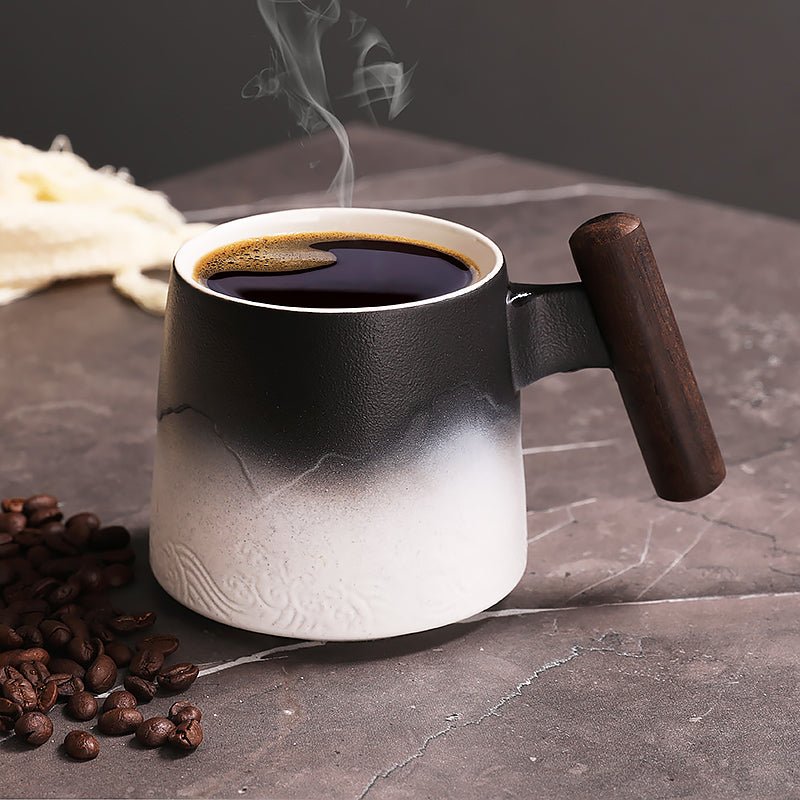
How to Get Rid of Coffee Stains in Mugs Without Damaging the Finish
Reading time: about 9 minutes
We see the same pattern on kitchen counters and office desks: a mug looks clean after a quick rinse, then a brown ring settles into the inside wall by the end of the week. In our store, we also see the other side of it. People scrub harder, the glaze dulls, the printed design starts to fade, and the mug ends up looking worse than the stain.
If you want how to get rid of coffee stains in mugs without ruining the finish, the safest path is to match the cleaning method to the mug itself. Ceramic, matte glaze, printed mugs, and stainless steel travel mugs do not respond the same way.
For a deeper finish-safe walkthrough, we also cover the same problem in How to Clean Coffee Stains from Mugs Without Damaging the Finish.
Why do coffee stains cling to some mugs more than others?
Coffee leaves behind tannins and oily residue. On a smooth, glossy mug, that film usually wipes away with a little detergent. On a matte glaze, a micro-scratched interior, or a mug with a narrow base and tighter curve, residue hangs on longer because there is more surface for it to grip.
We notice this a lot with white ceramic mugs that sit on a desk all day. The stain line usually forms where the coffee level stops and starts, especially if the mug is reused without a full wash between fills. Hard water can make the problem look worse because it leaves its own film behind, which gives coffee residue something else to stick to.
Three details matter more than most buyers expect:
- Finish: glossy glazed ceramic is easier to clean than matte or chalky finishes.
- Shape: a wider opening is easier to scrub than a tall, narrow mug with a tight interior curve.
- Decoration: decals, metallic trim, and printed wraps can wear if you use abrasive pads or repeated long soaks.
If you are comparing shapes because cleaning ease matters, our size guides for 12 oz Coffee Mugs: What to Check Before You Buy and 16 Ounce Coffee Mugs: Size, Materials, and Fit Guide explain why mouth width, wall thickness, and handle clearance affect day-to-day use as much as capacity does.
What is the safest first method to try on a coffee-stained mug?
Start with the least aggressive option. That matters because the fix for a plain glazed mug can damage a printed mug, and a cleaner that works on stainless steel can be too harsh for a decorative ceramic piece.
- Rinse the mug with warm water as soon as you notice the stain.
- Add a drop of dish soap and wipe the inside with a soft sponge.
- If the ring remains, make a paste of baking soda and a little water.
- Apply the paste to the stained area and let it sit for 5 to 10 minutes.
- Rub gently, rinse fully, and dry with a clean towel so the stain does not dry back in place.
That simple sequence handles a lot of everyday mug staining, especially on glossy ceramic and plain stoneware. We prefer it for mugs that live on a kitchen shelf or get reused at a desk, because it cleans the stain without changing the surface feel.
Do not use steel wool, a harsh scouring powder, or a rough scrub pad on a gloss finish. It can leave fine scratches that trap coffee residue faster next time.
If the stain has sat overnight or longer, you may need a second pass. That is normal. It does not mean the mug is ruined.
Which cleaning method should you use for ceramic, printed, or insulated mugs?
The right method depends on the material. We handle mugs across all three of these categories, and the same cleaner is not the best fit for each one.
| Mug type | Best approach | What to avoid | Practical note |
|---|---|---|---|
| Glossy ceramic | Baking soda paste, then warm rinse | Steel wool and abrasive powders | Usually the easiest to recover after a brown ring forms |
| Matte glaze or textured ceramic | Mild dish soap, soft sponge, short baking soda contact time | Long soaking and harsh scrubbers | Matte finishes can show wear if scrubbed repeatedly in one spot |
| Printed or decal mug | Gentle hand washing and light spot cleaning | Bleach, long vinegar soaks, abrasive pads | Printed wraps and decals can fade or lift at the edges |
| Stainless steel travel mug | Baking soda rinse or diluted vinegar, then full rinse | Leaving strong cleaner trapped in seams or lids | Residue often collects near the rim, threads, and gasket |
| Double-wall insulated mug | Clean the drinking surface and lid parts separately | Soaking the whole mug if the manufacturer says not to | Some insulated mugs should not sit in a full sink bath |
For stainless steel mugs, the issue is often not the wall itself. It is the lid, gasket, and thread line where coffee residue collects. We have seen office mugs that looked fine on the outside but held a stale ring around the silicone seal.
For a broader care perspective on surface-safe cleaning, see How to Get Coffee Stains Out of Mugs Without Damaging the Finish. That guide is useful if you are choosing between hand-washing, soak methods, and a more careful spot-clean approach.
What should you avoid on mugs with decals, gold trim, or matte glaze?
This is where a lot of good mugs get damaged. A decal mug that looks sturdy may have a delicate overglaze print. A gold-trimmed mug may be hand-wash only. A matte finish can look clean at first and then show shiny wear marks after repeated abrasive cleaning.
We do not recommend the same treatment for every mug because the finish matters as much as the body material. A mug with gold trim is not the right candidate for overnight vinegar soaks. A printed souvenir mug is not a good match for heavy scrubbing. A matte glaze is not ideal if you want the fastest possible clean with a rough sponge.
- Do not use bleach on decorative prints unless the care instructions specifically allow it.
- Do not scrub metallic trim with a rough pad.
- Do not leave a mug soaking for hours just because the stain looks dark.
- Do test a small area first if you are unsure how the finish will react.
We say this plainly because some mugs are built for easy cleaning, while others are meant more for display, gifting, or occasional use. If a piece already has a worn finish, the stain may not be the real problem. The surface itself may have reached the point where cleaning only helps so much.
That is where a replacement can be the better choice. If you are comparing options, our current range is in products, and the full assortment is in all mugs. You can also pair that with our article on Bulk Coffee Mugs: How to Choose Sets That Actually Get Used if you are replacing a set for an office, break room, or team kitchen.
How do we keep coffee mugs from staining again?
The easiest way to deal with coffee stains is to keep them from setting in. That sounds obvious, but the habit difference is real. A mug that is rinsed right after use stays cleaner than one that sits with dried coffee along the inner wall for a day or two.
In our experience, these habits help most:
- Rinse the mug soon after finishing the drink, even if you are not washing it immediately.
- Wash the inside with a soft sponge instead of a scrubber that cuts into the glaze.
- Dry the mug after washing so water spots do not mix with coffee residue.
- Use the dishwasher only if the mug is labeled dishwasher-safe, and place it where the finish will not rub against racks or other items.
- For office use, choose a mug with a wider opening and a smoother interior finish.
That last point matters more than many shoppers expect. A mug that looks great on a product page can still be annoying to clean if the opening is narrow, the inner curve is steep, or the glaze is textured. That is why size and shape are part of the decision, not just color or print. If you are shopping for a desk mug, our 16 Ounce Coffee Mugs: Size, Materials, and Fit Guide is a useful place to compare comfort, capacity, and cleaning ease.
One more practical point: if a mug is used for sweetened coffee or flavored drinks, residue can build up faster. Sugar and syrup leave a sticky film that holds stain. A quick wash after those drinks prevents the harder-to-remove ring you see later.
Frequently asked questions
Can baking soda remove old coffee stains from mugs?
Yes, baking soda is one of the safest first options for old coffee stains on ceramic and glazed mugs. Make a paste with a little water, let it sit briefly, then wipe gently with a soft sponge and rinse well. If the stain has been sitting for weeks, you may need a second round.
Will vinegar damage a coffee mug?
White vinegar is usually fine on plain ceramic or stainless steel when it is diluted and rinsed well afterward. It is not a good choice for mugs with delicate decals, metallic trim, or finishes that the maker says should not be soaked. If the mug has a decorative surface, keep the cleaner mild.
How do you clean coffee stains from a travel mug lid?
Take the lid apart if it is designed to come apart, then wash the gasket, threads, and drinking edge separately. Residue often hides in the silicone seal and around the flip top, not just in the main cup. Avoid leaving cleaner trapped inside those parts, especially on insulated mugs.
Why do white mugs stain more easily?
White mugs do not stain more easily in a technical sense, but they show coffee residue faster because the contrast is obvious. A light glaze also makes brown rings, hard-water film, and fine scratches easier to see. That is why many office mugs look stained even when the residue is only on the surface.
Can the dishwasher remove coffee stains from mugs?
Sometimes, but not reliably. The dishwasher helps with fresh residue on dishwasher-safe mugs, yet older rings often stay behind, especially on matte finishes or narrow mugs. For set-in stains, a quick pre-wash by hand works better than hoping the cycle will do all the work.
If you are replacing mugs rather than rescuing them, compare smooth-glaze ceramics, wider-mouth shapes, and dishwasher-safe finishes in our collection of all mugs. That is usually the fastest way to pick a mug that cleans easily the next time coffee sits a little too long.
More from our blog
Read more
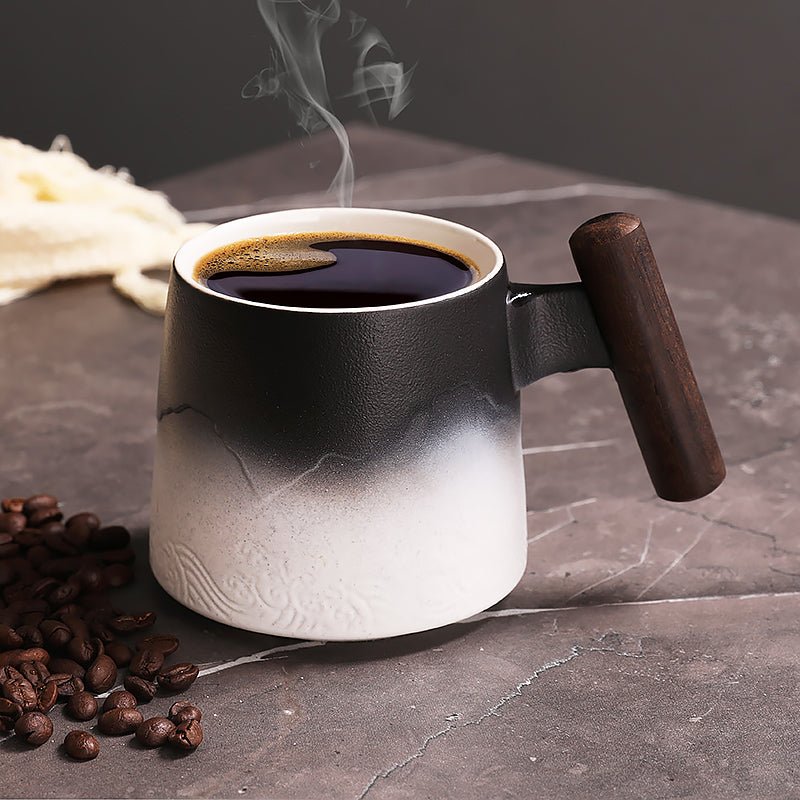
Picture Coffee Mugs: What to Check Before You Buy
Picture coffee mugs work best when the photo is sharp, the mug size fits the drink, and the care matches daily use. We break down the details buyers should check before ordering.
Weiterlesen
Good Travel Coffee Mugs: What to Buy for Commutes and Trips
Good travel coffee mugs need more than a tight lid. The best ones balance leak resistance, heat retention, cup-holder fit, and easy cleaning without making every sip awkward.
Weiterlesen
Hinterlasse einen Kommentar
Diese Website ist durch hCaptcha geschützt und es gelten die allgemeinen Geschäftsbedingungen und Datenschutzbestimmungen von hCaptcha.