
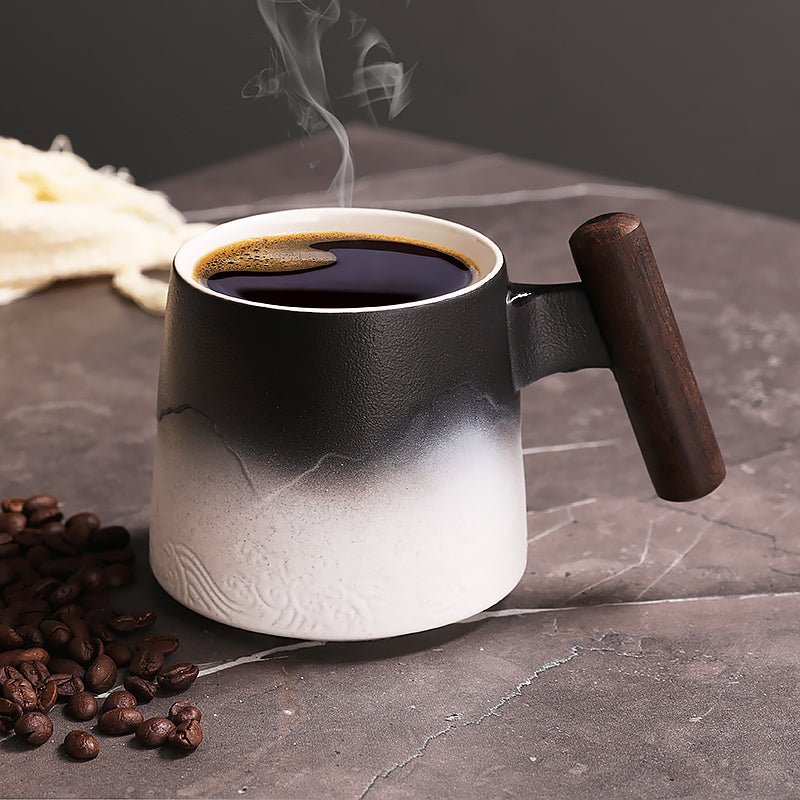
How Many Oz Is a Regular Coffee Mug? Common Sizes and Fit
Reading time: about 9 minutes
A mug that feels normal in one kitchen can feel too small or too oversized in another. We see this all the time in our store: someone wants a “regular” coffee mug, but they really mean a cup that holds one full pour from a drip machine, leaves room for milk, and still fits under a cabinet shelf.
If you’re asking how many oz is a regular coffee mug, the practical answer is usually 8 to 12 oz. That range covers the mugs most people reach for every day. Some households use 6 oz cups for espresso-style drinks, while others call 14 oz or 16 oz mugs “regular” because they want more coffee with less refilling.
The tricky part is that mug size and usable pour size are not always the same thing. A mug labeled 12 oz may not hold 12 oz comfortably if you need space for crema, milk, or a safe carry without sloshing. We’ve handled enough mug shipments and customer questions to know that the printed capacity is only part of the story.
What does a regular coffee mug usually hold?
Most people mean a mug in the 8 oz to 12 oz range when they say regular. That lines up with older diner-style cups, standard office mugs, and many everyday ceramic mugs used for drip coffee or tea.
Here is the simplest way to think about it:
- 8 oz — Smaller, traditional cup size. Good for black coffee, tea, or a short pour.
- 10 oz — A middle-ground mug that works well for many daily coffee drinkers.
- 12 oz — Often the most practical “regular” size for home use because it leaves a little room at the top.
If you want a broader breakdown across common sizes, our guide on How Many Oz Is a Coffee Mug? Common Sizes and What Fits Best is a useful next read. It compares the full range more closely, including where each size tends to fit best.
Why do some people call 16 oz a regular mug?
Because “regular” depends on use. In a busy kitchen, a 16 oz mug feels normal if someone pours coffee once in the morning and wants a big handle, a wider drink surface, and room for milk or creamer. In an office setting, that same mug may feel oversized and awkward under a single-serve machine.
We see 16 oz mugs chosen for practical reasons:
- They can hold a full pour from many home coffee makers.
- They leave space for milk, syrup, or whipped topping.
- They are easier for people who drink slowly and want the coffee to last longer.
But there is a trade-off. Larger mugs can make coffee cool a bit faster because of the wider opening, and they take more cabinet room. If your shelf space is tight, a big mug can become annoying fast. If you want that larger everyday size, our 16 Ounce Coffee Mug Buyer’s Guide: Size, Material, and Fit is worth a look before you buy.
How do mug size and actual capacity differ?
This is where a lot of shoppers get caught. A mug can be marketed by its nominal size, but real-world fill volume depends on the shape of the cup, the curve of the rim, and how high you fill it. Two mugs both listed as 12 oz may not feel the same in hand.
Three concrete things affect usable capacity:
- Wall thickness: Thicker ceramic walls can reduce the actual beverage space a little, even if the mug looks larger from the outside.
- Rim shape: A wide flared rim can make the mug feel bigger but still not add much safe fill space.
- Handle placement: A high handle can change the profile and how comfortably the mug carries when it is full.
That is why many shoppers compare the listed ounces with the mug’s dimensions and photos. A mug that measures about 3.5 to 4 inches tall and around 3.25 to 3.75 inches across often lands in that “regular” zone, though shape matters just as much as size.
Which mug size works best for black coffee, milk drinks, and tea?
The best mug size depends on what you actually pour into it. We’ve watched buyers choose based on the drink they make most often, and that is usually the smartest way to shop.
| Drink type | Practical mug size | Why it works |
|---|---|---|
| Black coffee | 8 oz to 12 oz | Keeps the drink focused and less likely to cool too quickly. |
| Latte or cappuccino | 10 oz to 12 oz | Leaves room for foam and milk without feeling oversized. |
| Drip coffee with cream | 12 oz to 14 oz | Good balance between a normal pour and extra room at the top. |
| Tea | 8 oz to 12 oz | Comfortable for hot tea without making the cup bulky. |
If you are comparing smaller options, our 8 oz Coffee Mug: What to Check Before You Buy covers the cases where a compact mug makes more sense. For many daily drinkers, the 12 oz Coffee Mugs: What to Check Before You Buy article is the most balanced match because 12 oz is roomy without becoming bulky.
What should you check before buying a regular coffee mug?
We always tell shoppers to look past the headline ounce number. The best everyday mug has to work on a real counter, survive real washing, and feel right in the hand after the third refill.
- Measure the opening and height. A mug can be “regular” on paper and still not fit under your espresso machine or cabinet shelf.
- Check the material. Most everyday mugs are ceramic or porcelain. Ceramic tends to feel sturdy and familiar, while porcelain often has a finer finish and lighter feel.
- Look at care instructions. If you wash mugs daily, dishwasher-safe construction matters. Hand-painted or metallic-accent mugs may need more careful washing.
- Inspect the handle. A good handle should fit at least two fingers comfortably without pinching. That matters more than people expect once the mug is full.
- Consider chip-prone areas. The rim and base are the most common wear points. A mug that chips easily at the lip is frustrating no matter how good it looks on day one.
In our store, we pay attention to those small details because that is what customers notice after the gift wrap comes off or after a week of dishwasher cycles. If you want to browse current options by size and style, our full mug collection is the easiest place to compare shapes side by side.
Is 12 oz the best regular mug size for most people?
For many buyers, yes. A 12 oz mug is the closest thing to a safe default. It is large enough for a standard pour, but not so large that it feels like a travel cup without a lid.
That said, 12 oz is not ideal for everyone. It may be the wrong choice if:
- You mostly drink espresso, cortados, or short black coffee and want a smaller, hotter serving.
- You use a pod machine that fills short cups and do not want excess empty space.
- You like a larger 14 oz to 16 oz pour and refill less often.
The trade-off is simple: smaller mugs keep drinks more concentrated and often feel more classic, while larger mugs are more forgiving for milk-heavy drinks and long mornings. Neither is universally better. The right one depends on how you actually drink.
How do regular mugs compare with bigger mugs like 20 oz and 24 oz?
Once you move past the regular range, the mug starts acting more like a bowl-shaped drink vessel than a classic cup. That can be useful, but it changes the experience.
Our buyers usually notice these differences right away:
- 20 oz mugs are better for people who want a large refill-free drink, but they can feel heavy when full and may be too tall for some coffee stations. See our 20 oz Coffee Mug: What to Check Before You Buy.
- 24 oz mugs are for very large servings, soup-like drinks, or long desk sessions. They are not the best choice if you want a classic coffee mug feel. Our 24 oz Coffee Mug: What to Check Before You Buy breaks down the trade-offs.
Those larger sizes are not wrong. They just solve a different problem. If your goal is a regular mug that feels comfortable in the hand and easy to store, oversized options can be more mug than you need.
What is a regular mug not good for?
A regular mug is not the best choice for every drink setup. We say that because shoppers sometimes buy one size and then try to force it into a different use case.
Here is where a regular mug may fall short:
- High-volume drinkers may find 8 oz or 10 oz too small and spend too much time refilling.
- Milk-heavy drinks may need more space than a compact mug allows, especially if you want foam on top.
- Travel use is not what these mugs are made for. Without a lid, they are not spill-proof and are not meant to replace a travel tumbler.
- Very small kitchens may still struggle with oversized “regular” mugs if the handle or height is too large for the shelf.
If your coffee setup is limited to one machine, one shelf, and a quick rinse after use, a straightforward ceramic mug in the 10 oz to 12 oz range is often the least fussy choice.
Frequently asked questions
How many oz is a regular coffee mug in most homes?
Most homes use a mug in the 8 oz to 12 oz range as the regular size. If someone drinks drip coffee with milk or likes a little extra room at the top, 12 oz is often the most practical choice.
Is a 12 oz mug considered standard?
Yes, 12 oz is commonly treated as a standard everyday coffee mug size. It is large enough for a normal pour and small enough to still feel like a classic mug instead of an oversized cup.
Is 8 oz too small for coffee?
Not if you prefer a shorter serving, black coffee, or tea. Eight ounces can feel too small for people who add milk, use a large drip coffee pour, or drink slowly over a long stretch.
What size mug should I buy for gifting?
For most gift buyers, 12 oz is the safest pick because it works for many drink styles and feels broadly useful. If the person drinks a lot of coffee, a 14 oz or 16 oz mug may be a better fit, but only if they have the cabinet space for it.
Do bigger mugs keep coffee warmer longer?
Not usually. Bigger mugs often have a wider opening, which can let heat escape faster. A smaller, fuller mug can sometimes help coffee stay pleasant longer, especially if you are drinking it fairly quickly.
If you are still deciding, compare your daily pour against the mug’s usable space, not just the label. Then check the collection that matches how you actually drink: a classic 8 oz cup, a balanced 12 oz mug, or something larger if you want fewer refills. Start with our full collection of mugs and pick the size that fits your counter, your machine, and your morning routine.
More from our blog
Read more
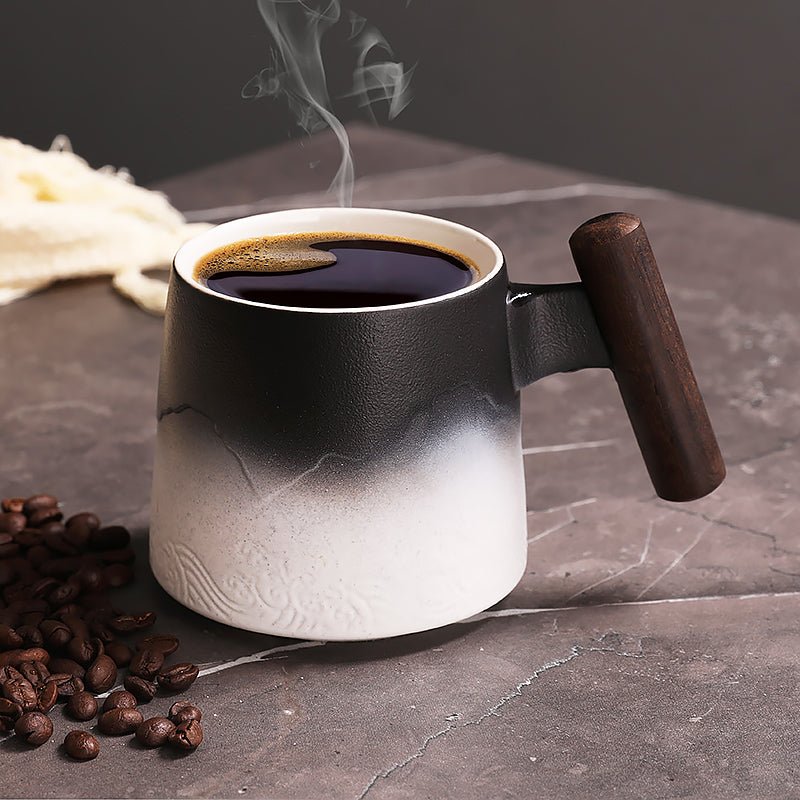
Hand Warmer Coffee Mug: What to Check Before You Buy
A practical buying guide for shoppers comparing a hand warmer coffee mug against standard mugs and mug warmers. We break down materials, size, grip, and care so you can choose the right fit for des...
Weiterlesen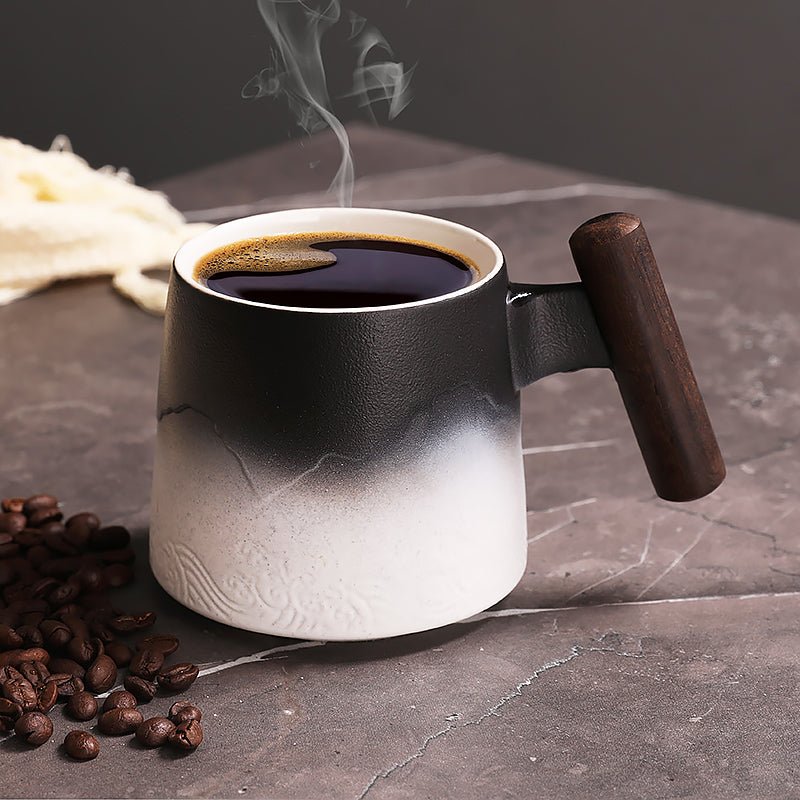
Black Rifle Coffee Mug: What Buyers Should Check Before Ordering
A practical buyer’s guide to choosing a black rifle coffee mug that fits your desk, cabinet, and daily routine. We cover size, material, care, and the trade-offs that matter before you buy.
Weiterlesen
Hinterlasse einen Kommentar
Diese Website ist durch hCaptcha geschützt und es gelten die allgemeinen Geschäftsbedingungen und Datenschutzbestimmungen von hCaptcha.