
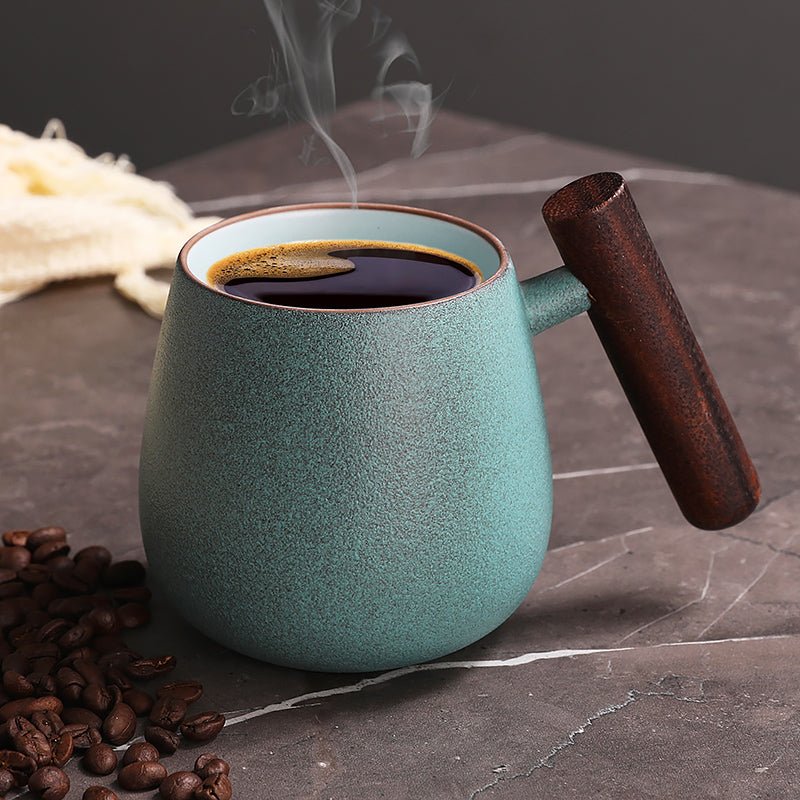
Hand Thrown Coffee Mugs: How to Choose the Right One
Reading time: about 9 minutes
We see the same problem on real kitchen counters and office desks: a mug can look right in a product photo and still feel wrong after one sip. The handle may pinch, the rim may feel thin, or the base may wobble just enough to make the mug feel unfinished.
That is why hand thrown coffee mugs deserve a closer look before you buy. The appeal is not only the shape. It is the balance in the hand, the way the glaze feels at the lip, and the small variation that makes each mug feel less generic. If you want to browse everything first, start with our all collection, then narrow down by shape and daily use.
What makes hand thrown coffee mugs different in daily use?
A hand thrown mug usually has a more tactile profile than a mass-pressed mug. The wall thickness can vary slightly from one side to the other, the foot ring may be more pronounced, and the handle attachment often gives the mug more personality. That is part of the appeal. It is also why two mugs that look similar online can feel completely different on your desk.
In our store, the biggest reason people choose this category is simple: they want a mug that feels individual. That can be a good thing for morning coffee at home, afternoon tea at work, or a gift that does not feel off-the-shelf. The trade-off is just as real. Hand thrown coffee mugs are usually not the best choice if you want perfectly stackable cabinet storage, identical duplicates for a café shelf, or the most utilitarian travel-style cup.
For buyers who care about routine more than decoration, think about these daily-use differences:
- Weight: A slightly heavier mug can feel steadier, but too much weight gets tiring during long desk sessions.
- Rim shape: A smooth, even rim matters more than most people expect. It affects the first sip, and it is one of the easiest things to notice immediately.
- Handle clearance: If your knuckles touch the body, the mug will feel cramped even if the design looks good.
- Glaze variation: Small color shifts, speckling, or tonal movement are normal in this category. That is a feature, not a defect, as long as the surface is even and well finished.
If you like finish variation as much as shape, our guide on Hand Painted Coffee Mugs: What to Check Before You Buy is a useful companion read. The buying logic overlaps more than people think.
What should you inspect before you buy one?
When we handle mugs for the store, we look at the same practical details every time. These are the points that affect comfort, durability, and whether you will keep reaching for the mug after the novelty wears off.
- The rim: Run your eye around it. You want a smooth circle, not a lip that looks lopsided or uneven.
- The foot ring: Set the mug on a flat counter. It should sit stable, not rock or tilt.
- The handle join: Check where the handle meets the body. Clean joins matter because that area takes repeated stress every time the mug is lifted.
- The inner surface: The inside should be smooth enough to clean easily. Rough glaze, pinholes, or visible texture can trap residue over time.
- The drinking size: Think about what you actually drink. Black coffee, cappuccino, tea, or a longer milk-based drink all push you toward different capacities.
- The care routine: If the mug uses mixed materials, decorative hardware, or a wood accent, assume you will need a gentler wash routine unless the product listing says otherwise.
Common defect modes are usually obvious once you know where to look. Hairline crazing in the glaze, a handle that feels too sharp on the inner edge, or a foot that does not sit cleanly on the counter are the practical red flags. None of those are dramatic on paper. All of them get annoying fast in everyday use.
If you are still deciding by capacity, our size guides for 12 oz Coffee Mugs and 16 Ounce Coffee Mugs are useful because they show how ounces translate into real fill level and hand feel.
Which shape is best for coffee, tea, or desk use?
Different mug shapes solve different problems. The best hand thrown coffee mugs are not the same for everyone, and we would rather say that clearly than pretend one silhouette works for every buyer.
| Mug | Best for | Trade-off |
|---|---|---|
| Ball Handled Coffee Tea Mug | Everyday coffee, tea, and anyone who wants a secure, easy-to-grip handle with a more sculptural look. | Its shape is more distinctive, so it may not be the first pick if you want a plain, stackable mug set. |
| Handbag Coffee Tea Mug | Gift buying, display shelves, and shoppers who want a playful, conversation-starting mug. | Style-forward mugs can be less neutral for minimalist kitchens and may not suit buyers who prefer a traditional everyday look. |
| Mountain Sea II Coffee Tea Mug with Wooden Handle | Tea, slow coffee, and buyers who like the feel of a mixed-material mug with a warmer touch point at the handle. | A wood handle usually calls for more careful washing, and it is not the best fit if you rely on microwave reheats throughout the day. |
For a desk setup, the sweet spot is usually a mug that feels stable on a crowded surface and does not demand two hands. For a kitchen shelf, the priority may shift toward looks and surface texture. For gifting, presentation matters too, which is why some buyers choose a more sculptural shape over a plain cylinder.
Our team usually tells shoppers to decide in this order: first the grip, then the size, then the finish. A mug that is beautiful but awkward gets left in the cabinet. A mug that feels right gets used every day.
How should you care for mixed-material mugs?
Ceramic and stoneware mugs are usually easier to live with than people expect, but the care routine still matters. If a listing says dishwasher safe, we still prefer a gentler cycle for glazed pieces because hard contact with other dishes is where chips start. If a mug includes a wooden handle or another mixed-material detail, hand washing is the safer routine unless the product page says otherwise.
That is especially true for the Mountain Sea II Coffee Tea Mug with Wooden Handle. Wood changes the maintenance equation. You do not want to soak it, leave it wet, or rely on aggressive detergents if you can avoid it. Dry the handle area fully after washing so the finish stays clean and the join holds up better over time.
Here is the simple routine we recommend for most hand thrown coffee mugs:
- Rinse soon after use, especially if you drink tea or sugary coffee drinks.
- Wash with a soft sponge instead of an abrasive pad.
- Check the handle join and foot ring for chips while you dry the mug.
- Keep wooden details dry and away from long soaking.
- Store the mug where it will not bang into heavier stoneware or cookware.
These mugs are not the right pick for someone who wants a travel tumbler, a leakproof lid, or a cup that can live in a car holder. They shine in home and office routines, not commuting.
How do hand thrown coffee mugs compare with other daily-size mugs?
If you are cross-shopping by use case, compare the mug shape first, then compare the capacity. A lot of buyers start with a finish they like, but the day-to-day experience is usually decided by size and balance. A 12 oz mug can feel compact and focused for black coffee. A 14 oz or 16 oz mug gives more room for milk drinks, extra foam, or a longer tea pour.
That is where the rest of our sizing content helps. If your goal is a mug that fits a standard serving without feeling oversized, our article on 14 Ounce Coffee Mugs: Size, Fit, and Buying Guide gives a useful middle-ground reference. If you want a larger daily cup with more room for milk or cream, 16 Ounce Coffee Mugs for Daily Use: Size, Fit, and Shape Guide is a better match.
We also see shoppers compare hand thrown mugs with hand painted mugs, and that is a fair comparison. Hand painted mugs often put more emphasis on surface decoration, while hand thrown coffee mugs usually win on form, feel, and silhouette. If surface design is the main draw for you, read Hand Painted Coffee Mugs: How to Choose the Right One before you decide. If the cup needs to work hard every weekday morning, shape and grip should stay ahead of decoration.
The practical takeaway is simple. If you want a mug that feels handcrafted and personal, this category is strong. If you need exact uniformity, tight nesting, or a no-thought office supply solution, a simpler mass-produced mug may fit better.
Frequently asked questions
Are hand thrown coffee mugs dishwasher safe?
Some are, but not all. Glazed ceramic or stoneware mugs usually handle normal dishwashing better than mixed-material designs, while wooden handles should be treated more carefully. Check the product listing first, and if you are unsure, hand washing is the safer default.
What size hand thrown coffee mug is best for daily use?
For plain black coffee or smaller servings, a 12 oz mug often feels compact and easy to finish. For milk drinks, tea, or longer desk sessions, 14 oz to 16 oz usually gives a more relaxed fill level. The right choice depends on how full you like your cup and how much you want it to weigh when filled.
Do hand thrown coffee mugs keep drinks hot longer?
They can feel substantial, but heat retention depends more on material thickness, wall shape, and how much liquid you pour than on the hand thrown look itself. A thicker ceramic mug may hold heat a bit better than a very thin one, but no mug will perform like an insulated tumbler. If heat retention is your main priority, choose function first.
Are hand thrown mugs good gifts?
Yes, especially when you want a gift that feels personal instead of generic. A more sculptural mug like the Handbag Coffee Tea Mug stands out on a shelf and makes the unboxing feel more thoughtful. Just avoid this route if the recipient prefers matching sets or very plain kitchenware.
What is the main downside of hand thrown coffee mugs?
The biggest downside is inconsistency, which is also part of the appeal. Slight differences in shape, weight, or glaze can make the mug feel unique, but they also mean you should inspect fit more carefully than you would with a standard factory mug. If you want identical pieces for every cabinet slot, a simpler mug style may be a better buy.
What should you compare before you choose one?
Before you pick a mug, compare the same four things every time: grip, size, finish, and care. That is the fastest way to separate a mug you will use from a mug you will admire once and set aside.
- Grip: Can you hold it comfortably with one hand?
- Size: Does it fit your actual drink, not just your idea of a coffee mug?
- Finish: Do you want a smooth glaze, visible variation, or a mixed-material detail?
- Care: Will you be happy hand washing it if the design requires it?
If you want to compare the current shapes side by side, go back to our all collection and choose the mug that matches your routine, not just your taste. For most buyers, the best hand thrown coffee mugs are the ones that make the first cup feel easy and the third cup feel just as good.
Read more
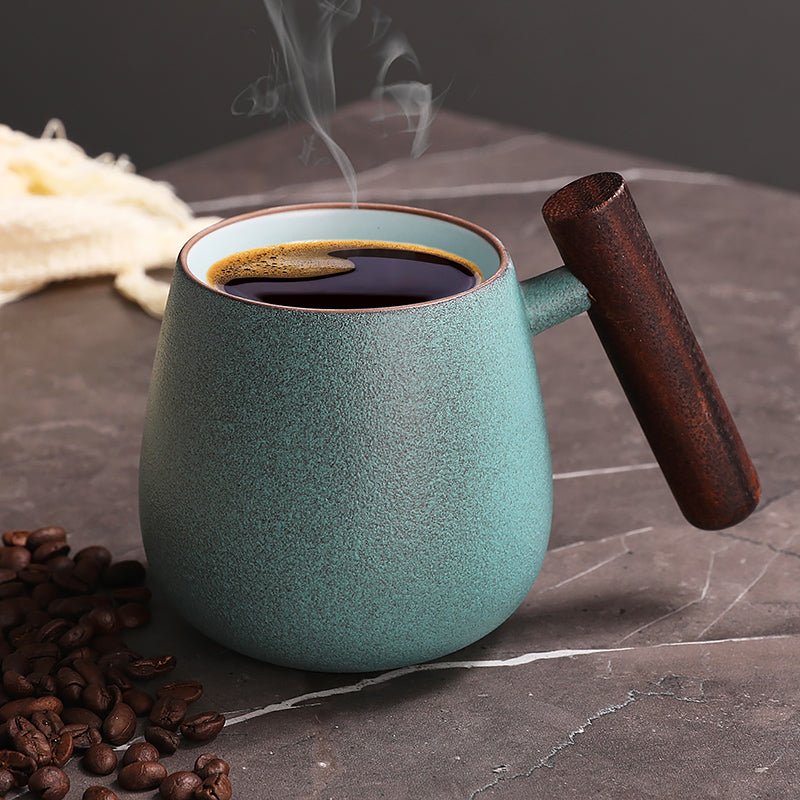
Mushroom Coffee Mug Buying Guide: Size, Fit, and Style
A mushroom coffee mug should look good, sit comfortably in the hand, and hold up to daily use. This guide breaks down size, material, care, and the trade-offs that matter before you buy.
Weiterlesen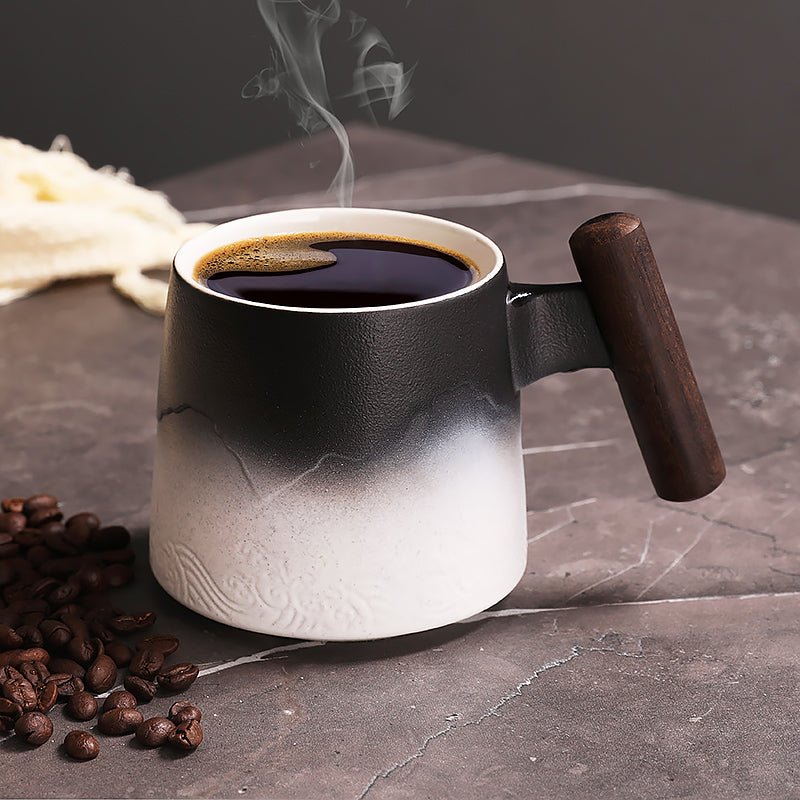
Outline of Coffee Mug: Shape, Comfort, and Buying Checks
We break down the outline of coffee mug by shape, handle clearance, base stability, and daily-use trade-offs so you can choose a mug that feels right at home, at work, or as a gift.
Weiterlesen
Hinterlasse einen Kommentar
Diese Website ist durch hCaptcha geschützt und es gelten die allgemeinen Geschäftsbedingungen und Datenschutzbestimmungen von hCaptcha.