
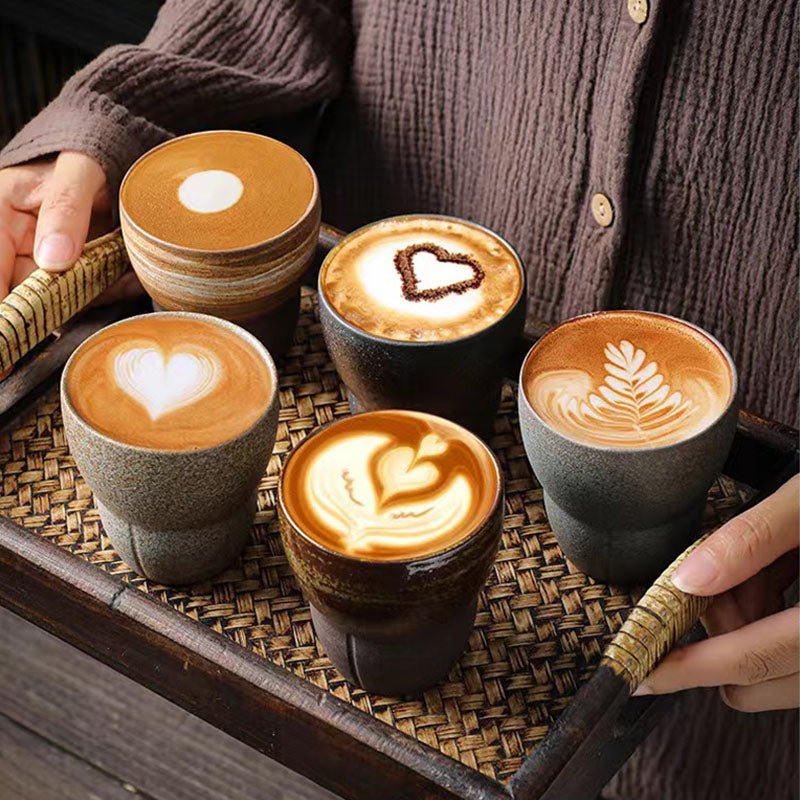
Green Tea Mug for Small Coffee Setup: Compare 170-270 ml
Reading time: about 8 minutes
A mug can fit comfortably in your hand and still be awkward in a small drink station. The handle catches the neighboring cup, the rim sits too close to the shelf above, or the mug occupies the only clear space beside the kettle. That is why choosing a green tea mug for small coffee setup starts with the space around the mug, not just its appearance.
In our store, we find that capacity and refill preference are the most useful first filters. Our current comparison includes the Retro Coffee Tea Cup at 170 ml, the Pleated Coffee Tea Cup at 200 ml, and the Emerald Coffee Tea Mug at 270 ml. You can also view these alongside other shapes in our unique coffee mugs collection. The listed capacities are verified, but capacity alone does not establish exterior dimensions, care requirements, origin, or brewing performance.
How much shelf and counter space does your mug actually get?
Start with the exact place where the mug will live. On a narrow kitchen shelf, maximum height can matter more than volume. On an office desk, the critical measurement may be the total width from the far edge of the handle to the opposite side of the cup. A compact counter setup also needs clearance for the kettle, spoon, tea container, and any drip tray you use.
Measure three points before comparing listing photos:
- Clear shelf height: Measure from the shelf surface to the shelf or cabinet above it. Leave enough room to lift the mug out without tilting it into neighboring items.
- Total storage width: Include the handle and a small finger gap. Do not measure only the bowl of the cup.
- Working footprint: Mark the area where you actually set the mug while pouring. A paper rectangle or removable tape outline makes crowded spots easy to identify.
We do not list verified exterior dimensions for these three choices here, so we would not select one based on capacity and assume it has the smallest footprint. Use the product images to compare visible shape, then check the current product page information before ordering. A 170 ml cup may hold less than a 270 ml mug, but the capacity number does not tell you the complete handle width or base size.
Which capacity fits a green tea mug for small coffee setup?
The practical range here is 170 to 270 ml. That 100 ml spread changes how often you return to the kettle and how much drink you prepare at one time. It does not tell you which mug produces a better brew. The choice is about serving size and routine.
| Current choice | Listed capacity | Reader situation | Why it may fit |
|---|---|---|---|
| Retro Coffee Tea Cup | 170 ml | You prefer a smaller serving and do not mind returning for another pour. | It has the lowest listed capacity of the three, which suits a deliberate small-cup routine. |
| Pleated Coffee Tea Cup | 200 ml | You want more than 170 ml without moving directly to the largest option. | It adds 30 ml over the Retro and sits in the middle of this comparison. |
| Emerald Coffee Tea Mug | 270 ml | You prefer a longer drink and fewer refills during work or breakfast. | It provides the highest listed capacity, 70 ml above the Pleated and 100 ml above the Retro. |
The Retro is not a strong match for someone who dislikes frequent refills. The Emerald may be more capacity than a small-serving drinker wants. The Pleated occupies the middle ground, but its 200 ml listing should not be treated as proof that its exterior footprint falls exactly between the other two. Capacity measures what the vessel holds, not every part of its visible profile.
How should visible shape affect a crowded setup?
Product photos are useful when you treat them as a shape check rather than a substitute for measurements. Look at the relationship between the body, rim, base, and handle. A handle that projects outward can affect how closely mugs sit together. A body that appears wider near the rim may need more separation from the cup beside it. A visibly taller profile can be inconvenient under a low shelf even when the capacity sounds modest.
We recommend opening all three product pages in separate tabs and comparing them at a similar image scale. Pay attention to these visible details:
- Where the handle reaches its widest point.
- Whether the body looks straight-sided, tapered, or fuller through the middle.
- How much open finger space the handle appears to provide.
- Whether the base looks narrow or broad relative to the rim.
- How the overall height appears relative to the width.
Those observations help you shortlist a shape, but they should remain observations. We do not assign unlisted dimensions from a photograph. If a millimeter-level fit matters because the mug must enter a rack, drawer, or fitted shelf, confirm current measurements on the listing or with the store before buying.
Do you prefer one larger serving or planned refills?
Refill preference is easy to overlook in a product photo. It becomes obvious during a workday. A 170 ml serving may suit someone who enjoys pausing for a fresh pour, while a 270 ml serving reduces the number of trips back to the kitchen for the same overall amount. The 200 ml option offers a smaller step between those routines.
Think through one real session rather than choosing the largest number automatically. If you normally make a modest serving and leave part of a large mug untouched, additional capacity provides little practical value. If meetings keep you at a desk for long stretches, the 170 ml Retro may interrupt your routine more often than you want. In that situation, the 270 ml Emerald is the more relevant product next step.
Do not use these capacity differences as evidence of heat retention, steeping quality, or flavor. Those outcomes depend on factors not established by the three listed capacities. We also avoid assuming that a particular visible finish establishes material, manufacturing origin, or authenticity.
What should you verify before ordering for a compact station?
A small setup leaves less tolerance for assumptions. Check the current product listing against your own shelf and routine immediately before purchase, especially if you are fitting the mug beside equipment or inside a cabinet.
- Confirm that 170 ml, 200 ml, or 270 ml matches the serving you actually pour.
- Review every product image for the handle projection and body shape.
- Check the product page for any current dimensions or care directions rather than inferring them from appearance.
- Do not assume dishwasher or microwave suitability unless the current listing explicitly states it.
- Allow lifting room above the rim and finger room around the handle.
- Decide whether a smaller serving with more refills or a larger serving with fewer refills fits your day.
If your setup includes a dedicated infuser or loose-leaf accessories, the relevant comparison extends beyond cup capacity. Our loose-leaf tea mug size and fit guide covers that more specific use case. If all three capacities here sound too small, compare the larger serving considerations in our 12 oz ceramic coffee mug guide for compact setups.
A practical three-mug shortlist
Use your refill habit to make the first cut, then use visible shape and verified measurements to make the final one:
- Choose the Retro 170 ml shortlist if you intentionally make small servings and accept more frequent refills.
- Choose the Pleated 200 ml shortlist if 170 ml feels limited but 270 ml is more drink than you usually prepare.
- Choose the Emerald 270 ml shortlist if fewer refills matter more than keeping the serving small.
None of these is automatically the best option for every small counter. A buyer with a very low shelf needs confirmed height information. Someone arranging several cups side by side needs total width, including handles. A shopper who wants a large drink may need to move beyond this capacity range altogether.
Frequently asked questions
Which green tea mug for small coffee setup should I choose if I dislike refills?
Start with the Emerald Coffee Tea Mug because its listed 270 ml capacity is the largest of these three options. It holds 100 ml more than the 170 ml Retro, but confirm its exterior fit separately because capacity does not establish counter footprint.
Is a 170 ml cup too small for green tea?
It is suitable for a shopper who prefers a small serving and does not mind refilling. It is not the best choice for someone who wants one larger drink to last through a long meeting or work session.
Does the 200 ml Pleated cup take less shelf space than the 270 ml Emerald mug?
We cannot establish that from capacity alone. Compare their visible shapes and check current product information for exterior measurements, including maximum height and total width with the handle.
Can I assume these mugs are dishwasher or microwave safe?
No. Appearance and capacity do not establish care compatibility. Follow only the current care directions stated on the relevant product page, and ask the store if a required care detail is not listed.
What is the quickest way to check mug fit before buying?
Measure the shelf height, available width, and clear pouring area, then compare those limits with current product details. Finish by choosing your preferred capacity: 170 ml for smaller servings, 200 ml for the middle option, or 270 ml for fewer refills.
Your next step is simple: mark the available space, note your usual serving size, and compare the three product pages side by side. If you are still deciding on style, use the unique coffee mugs collection to compare visible profiles without losing sight of the measurements and refill routine your setup requires.
More from our blog
Read more
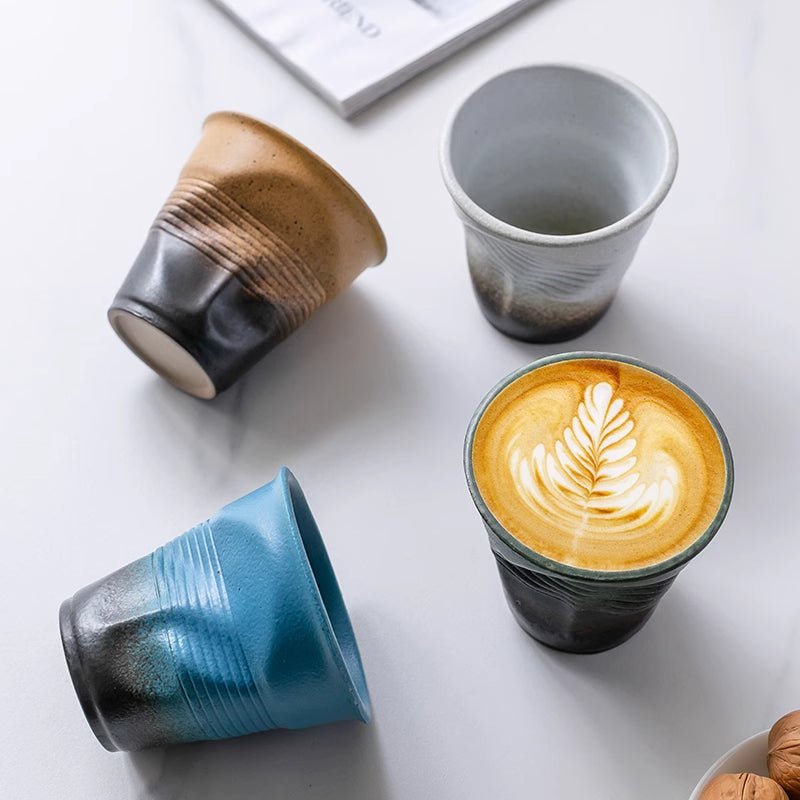
White Pottery Coffee Mugs for Desk Use: Desk Fit Guide
Compare white pottery coffee mugs for desk use by the space they occupy, how often they need refilling, handle clearance, and the product style that suits your workday. Use the product page measure...
Weiterlesen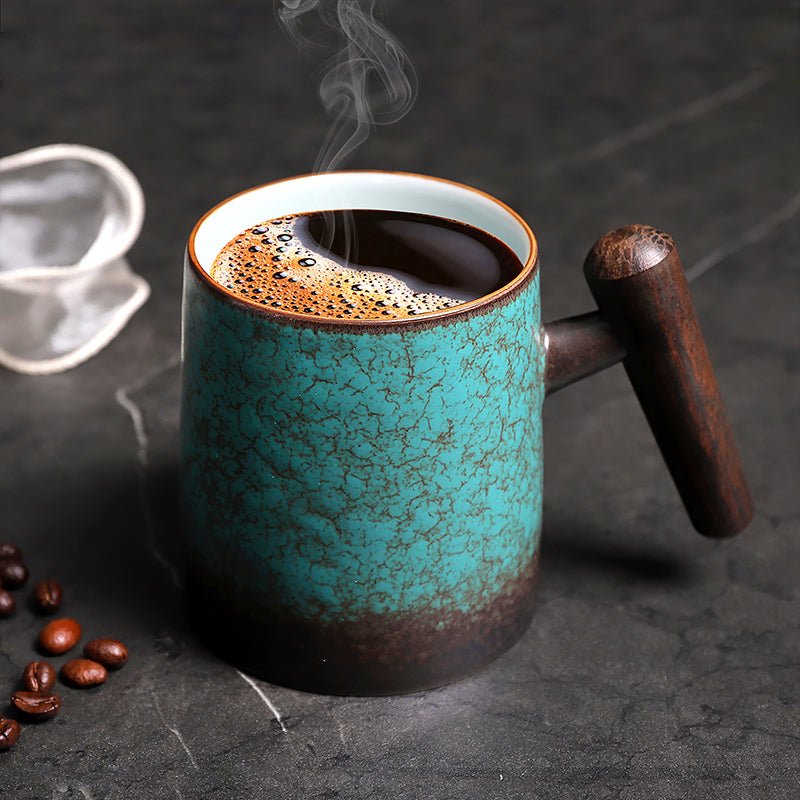
Decaf Coffee Cup for Small Coffee Setup: Compare 3 Sizes
Compare 170 ml, 200 ml, and 270 ml cups by shelf footprint, handle comfort, and serving preference. This guide shows where each size fits and what to measure before ordering.
Weiterlesen
Hinterlasse einen Kommentar
Diese Website ist durch hCaptcha geschützt und es gelten die allgemeinen Geschäftsbedingungen und Datenschutzbestimmungen von hCaptcha.