
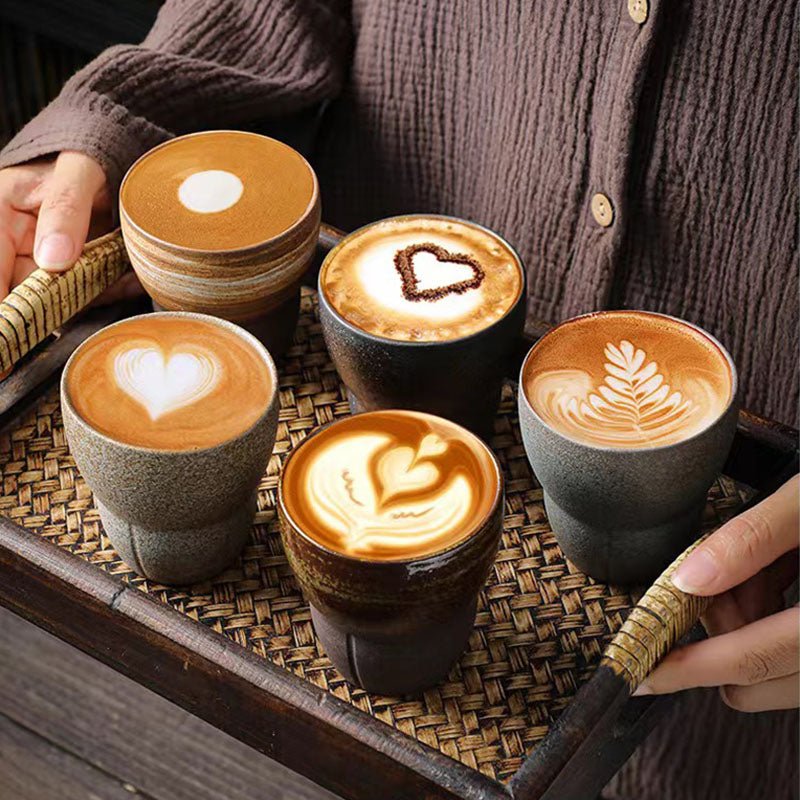
Decaf coffee cup shape and handle guide: 170, 200, or 270 ml
Reading time: about 9 minutes
A cup can look perfectly proportioned in a close-cropped product photo, then feel wrong the first time it lands beside a keyboard. The serving is smaller than expected, the handle opening is tighter than your usual grip, or the body occupies more room than the image suggested. Our decaf coffee cup shape and handle guide starts with three verified catalog facts: Retro is 170 ml, Pleated is 200 ml, and Emerald is 270 ml.
At our store, we compare capacity before styling because it is the most reliable starting point. We then look at the visible profile, the space inside the handle, the distance between the loop and cup wall, and the current product specifications. Hand size varies, so we will not call one handle universally comfortable or turn a photo estimate into an unverified dimension.
Using the decaf coffee cup shape and handle guide: what changes at 170, 200, and 270 ml?
| Current option | Verified capacity | Approximate US volume | Best starting situation | Main limitation to check |
|---|---|---|---|---|
| Retro Coffee & Tea Cup | 170 ml | About 5.7 fl oz | You prefer the smallest serving volume in this comparison. | It is not intended to fill the role of a large everyday mug. Verify its total width and handle opening. |
| Pleated Coffee & Tea Cup | 200 ml | About 6.8 fl oz | You want an intermediate capacity with a more textured visual form. | The pleated exterior is a design detail, not proof of slip resistance or handle comfort. |
| Emerald Coffee & Tea Mug | 270 ml | About 9.1 fl oz | You want the largest serving volume among these three options. | It remains below 12 oz, and greater capacity does not guarantee a larger handle opening. |
The fluid-ounce figures are rounded unit conversions, not separate catalog specifications. Listed capacity may also be greater than the amount you comfortably carry without spilling because many shoppers leave headroom below the rim. If none of these three styles suits your shelf or desk, compare the broader unique coffee mug collection before settling on a capacity.
170, 200, or 270 ml: which serving preference matches each cup?
Retro at 170 ml: the lowest-volume option
For a smaller serving on a kitchen counter, the 170 ml Retro cup is the clear starting point because it has the lowest verified capacity. It holds 30 ml less than Pleated and 100 ml less than Emerald. That does not automatically make it the narrowest cup once the handle is included, so check the current height and overall width if cabinet or desk clearance is tight.
Pleated at 200 ml: an intermediate capacity
The 200 ml Pleated cup suits a shopper who finds 170 ml restrictive but does not want the largest option. It adds 30 ml over Retro while remaining 70 ml below Emerald. Its pleated form supplies a distinct visual texture, but we would not treat that surface treatment as a performance claim; inspect the live images to judge the handle loop and exterior form for yourself.
Emerald at 270 ml: the largest current serving
For an office desk or a longer interval between refills, the 270 ml Emerald mug is the logical starting point because it offers the greatest verified volume here. It holds 70 ml more than Pleated and 100 ml more than Retro. It is still not a 12 oz mug, and its capacity alone tells us nothing definite about handle clearance or total footprint.
How can you judge handle comfort before holding the cup?
When our team handles cups, we notice where the inner edge meets the fingers and whether the knuckles press against the cup wall. A generous-looking loop can still feel tight if the opening narrows near an attachment point. A smaller loop may work well for a one-finger or two-finger grip but frustrate someone who expects to place three fingers inside.
- Measure a cup that already feels right. Record its height, rim diameter, total width including the handle, inner handle opening at the narrowest point, and clearance between the loop and cup wall. Millimetres make direct comparisons easier.
- Record your normal grip. Note whether you use a fingertip grip, place one to three fingers inside the loop, or support the base with your other hand.
- Study the attachment points. A side view should show the upper and lower handle joins, the loop shape, and whether the opening becomes narrower near the cup body.
- Read dimension labels carefully. Width can mean body diameter or full width including the handle. If a listing does not define the measurement, do not assume which one it means.
- Separate appearance from verified claims. Pleats, a glossy finish, or a thick-looking handle do not by themselves establish grip security, durability, or comfort.
For this comparison, the capacities are verified; exact external geometry should be confirmed on each current product page. We would rather leave an unlisted handle measurement unstated than estimate it from a styled photograph.
Which option makes sense on an office desk, a small counter, or at a gift unboxing?
- Office desk with room beside the keyboard: Start with Emerald if your priority is the greatest serving volume. Its 270 ml capacity explains the fit, but confirm that the listed total width leaves enough room to rotate or lift the handle without striking nearby items.
- Small kitchen counter or crowded shelf: Start with Retro if you already know that 170 ml suits your serving preference. Check the outside dimensions before ordering because lower capacity does not prove a smaller footprint, and stackability should never be assumed from a single product photo.
- Gift with unknown cup preferences: Avoid treating one capacity as universally suitable. Compare visual styles in the collection, then use our coffee mug gift shape and handle guide to think through hand fit, cabinet space, and the recipient's usual serving size.
- Shopper expecting a familiar 12 oz mug: None of these three reaches that capacity. The practical next step is our 12 oz ceramic coffee mug shape and handle comparison rather than choosing the 270 ml option and hoping it feels equivalent.
What should you inspect before first use and after dishwasher cycles?
Unbox and inspect the cup before washing it. This is especially useful with a gift order because packaging can hide the rim, base, and lower handle join until everything is removed. Care instructions also need to come from the live listing or included packaging, not from the cup's appearance.
- Check the base on a flat, dry counter. A cup should sit predictably. If it rocks noticeably, inspect the base and contact the seller before using it.
- Inspect the rim and handle joins under side light. Look for chips and hairline cracks at both attachment points. Do not use a cup with a structural crack.
- Confirm the stated material. Ceramic, glass, and metal have different care limits, so do not transfer instructions from another mug simply because the shapes look similar.
- Treat dishwasher-safe and microwave-safe as separate declarations. If dishwasher use is approved, leave clearance around the handle so it does not knock against plates or other hard items during a cycle.
- Use a nonabrasive sponge when hand washing is required. Textured and decorated surfaces can be more awkward to clean around, so follow the product-specific care directions rather than scrubbing aggressively.
- Check your practical fill level with cool water. A measuring jug can show how much you normally pour while leaving headroom. That everyday amount may be lower than the listed maximum capacity.
After an approved dishwasher cycle, a quick look at the rim and handle attachments is sensible before returning the cup to the shelf. Surface texture or a visible finish variation is different from a crack that crosses the material or catches a fingernail.
Where do these three current cup sizes stop fitting the job?
Retro, Pleated, and Emerald cover three useful capacities, but they do not cover every drinkware requirement. A different product category is the better choice in the following situations:
- You need a sealed lid, thermal insulation, or a vessel designed for travel. Do not infer those features from an open cup or mug listing.
- You regularly want more than 270 ml. The largest option in this comparison will still fall short, so move to a larger-capacity mug.
- You want a very compact cup selected around an espresso-style serving. Compare the proportions discussed in our ceramic espresso cup shape and handle guide instead of assuming that every 170 ml cup has the same form.
- You require an exact ergonomic accommodation. Choose only after confirming the inner handle opening and cup-wall clearance, or use a cup you can physically test.
Frequently asked questions
What does the decaf coffee cup shape and handle guide recommend for a small serving?
Start with the Retro cup because its verified 170 ml capacity is the smallest of the three. It is 30 ml below Pleated and 100 ml below Emerald. Check its current external dimensions and handle opening before assuming it is also the smallest in overall footprint.
Is the 200 ml Pleated cup much larger than the 170 ml Retro cup?
The listed capacity difference is 30 ml. That can matter if 170 ml regularly feels too limited, but it is a modest step compared with moving to the 270 ml Emerald mug. Capacity does not reveal the difference in height, diameter, or total width.
Does the 270 ml Emerald mug guarantee a larger or more comfortable handle?
No. The 270 ml figure confirms serving capacity, not handle size or comfort. Compare the inner opening, its narrowest point, the distance from the cup wall, and the number of fingers you normally place inside.
Are the Retro, Pleated, and Emerald options dishwasher and microwave safe?
Use the current product listing or included packaging as the source for each care claim. Do not infer dishwasher or microwave suitability from the finish, cup name, or product photo. Those are separate care declarations and may differ by item.
Which cup is easiest to choose as a gift?
If you know the recipient prefers a smaller or larger serving, use 170 ml or 270 ml as the first filter. If you do not know, compare the 200 ml Pleated option with other styles and prioritize visible form, handle shape, and cabinet fit. A gift is less likely to miss the mark when the recipient's existing cup provides a size reference.
A 30-second check before adding a cup to cart
- Choose the serving range first: 170, 200, or 270 ml.
- Compare the current listed height and total width with a cup you already own.
- Match the handle opening to your usual one-finger, two-finger, or three-finger grip.
- Confirm the stated material and separate dishwasher and microwave care instructions.
- Move to another category if you need more than 270 ml, a sealed lid, insulation, or verified stackability.
Open the matching product page once capacity is settled, then verify the current dimensions, handle photos, material, and care details. If visual style remains the deciding factor, compare the options side by side in CoffeifyMug's unique coffee mug collection.
Read more
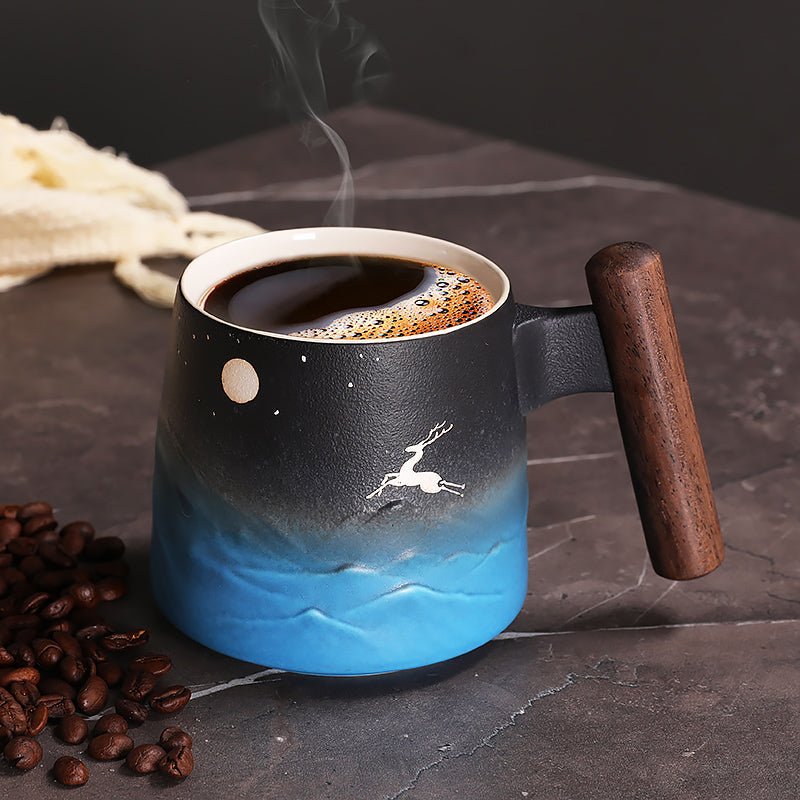
Coffee Mug Gift Ideas for Him Shape and Handle Guide: 3 Current Mugs
Compare the Mountain & Sea, The Rock, and Elk and Moon mugs by visible silhouette, handle clearance, listed capacity range, and real desk or cabinet fit. Includes trade-offs for large hands, 40...
Weiterlesen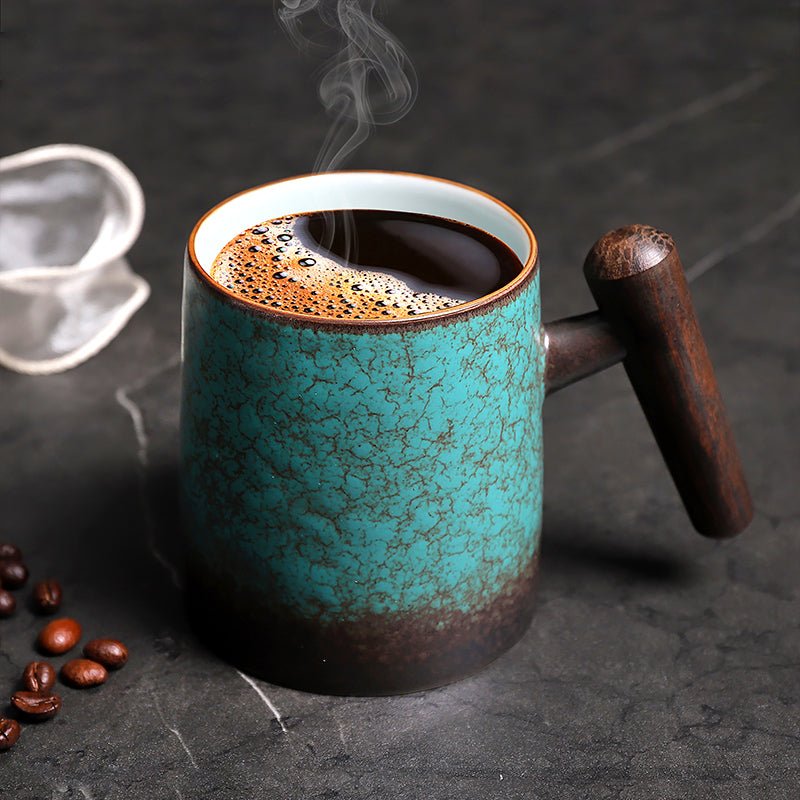
Lungo Coffee Cup Shape and Handle Guide: 170, 200, or 270 ml
Compare Retro 170 ml, Pleated 200 ml, and Emerald 270 ml by listed capacity, nominal headroom, visible profile, handle form, and dimension checks.
Weiterlesen
Hinterlasse einen Kommentar
Diese Website ist durch hCaptcha geschützt und es gelten die allgemeinen Geschäftsbedingungen und Datenschutzbestimmungen von hCaptcha.