
Corning Coffee Mugs: What to Check Before You Order
Reading time: about 9 minutes
A mug can look perfect in a product photo and still feel wrong the first time you wrap your hand around the handle. The usual problems show up fast: the rim feels sharper than expected, the cup is smaller than your morning pour, or the shape takes up more room on a desk than you planned.
That is the practical side of corning coffee mugs. The right one has to work on a kitchen counter, survive normal dishwasher cycles, and still feel comfortable on a weekday morning. In our store, we judge mugs the same way shoppers do at home: by grip, capacity, balance, and how easily they fit into real routines.
What should you check before buying corning coffee mugs?
We see the same mistake over and over: people shop by pattern or color first, then discover the mug is awkward to use. That is why we start with the parts you actually touch and clean. If a mug fails on comfort or size, the design does not matter much.
Our team looks for a few concrete things before we put a mug in front of a buyer:
- Handle clearance so two fingers fit without squeezing knuckles against the body of the mug.
- Rim comfort so the drink feels smooth instead of thin or sharp on the lips.
- Base stability so the mug sits flat on a desk, tray, or dish rack without rocking.
- Glaze coverage inside and out, because thin glaze or rough spots are where staining and wear usually show first.
- Cleanup practicality for everyday use, especially if the mug will spend time in a dishwasher or beside a sink full of other dishes.
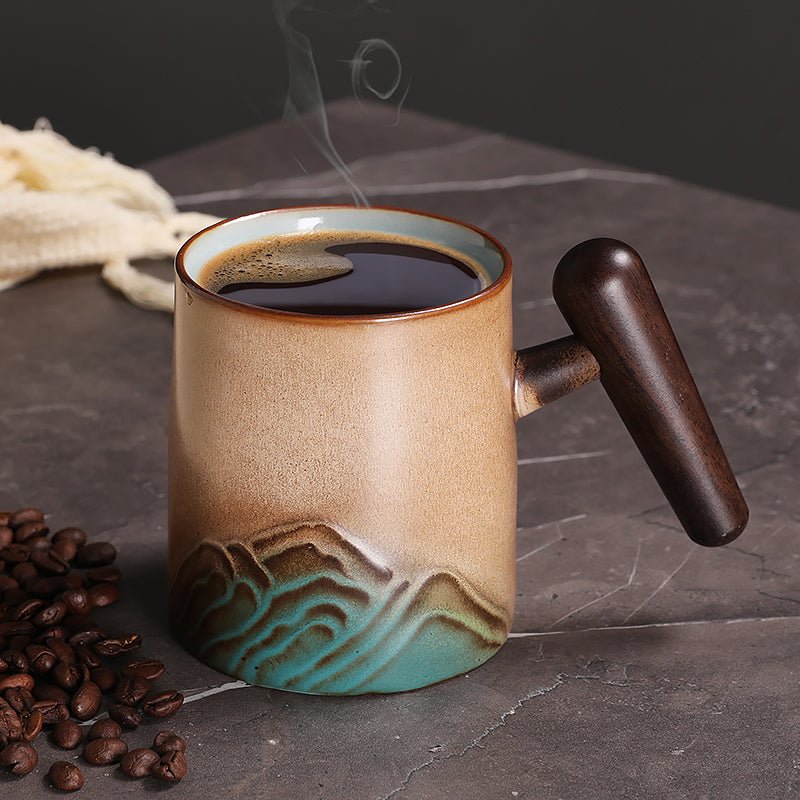
If you want to compare options quickly, start with our all coffee mugs collection. From there, you can compare the Mountain Sea Coffee Tea Mug, the Spittoon Coffee Tea Mug, and the Planet Coffee Tea Mug without guessing from one isolated product photo.
We care more about how a mug feels on day 30 than how it photographs on day one. That is usually where the real difference shows up.
Which size fits your daily coffee routine?
Size is the first thing shoppers underestimate. A cup that is great for espresso-based drinks may feel too small for a long pour-over. A larger mug can be perfect for milk-heavy coffee or tea, but it may also feel bulky if you prefer a quick black cup and a tidy cabinet.
If you are choosing between smaller and larger everyday mugs, our size guides are a useful shortcut: 12 oz Coffee Mugs: How to Choose the Right Mug for Daily Use and 16 oz Coffee Mugs: How to Choose the Right Mug for Daily Use. They help separate what looks right online from what actually fits your daily pour.
| Mug size | Best for | Trade-off |
|---|---|---|
| 12 oz | Standard drip coffee, tea, smaller servings, tighter cabinets | Less room for milk, foam, or a larger second pour |
| 14 oz | Buyers who want a little more space without moving to a large mug | Can still feel small if you add cream or use it for long sipping sessions |
| 16 oz | Big morning cups, latte-style drinks, tea that you sip over time | Takes more shelf space and can feel heavy when full |
For a lot of shoppers, the real question is not “What size is best?” but “What size will I actually reach for every morning?” If you drink coffee at a desk, a mid-size mug often feels easier to handle. If you linger over one cup while answering email, a larger mug may be the better fit. If you want a deeper sizing comparison, our 12 oz Coffee Mugs: What to Check Before You Buy guide is worth a look before you add anything to cart.
Which materials and finishes hold up best?
For mugs in this category, most shoppers are choosing between ceramic and stoneware styles, and both can work well if the construction is right. The finish matters as much as the base material. A good mug should feel balanced in the hand, not top-heavy, and it should have an even surface where coffee or tea will not cling in rough patches.
Here are the details we check in practice:
- Even glazing inside the cup helps reduce staining from dark coffee and makes cleanup easier after repeated use.
- A smooth lip matters more than many shoppers expect. You notice it every time you drink, especially with hot coffee.
- A clean foot ring gives the mug a steadier seat on a counter and helps reduce gritty residue on shelving.
- Solid handle attachment is a practical check, because many chips and cracks begin where the handle joins the body.
- Weight balance should feel predictable. A mug that is too light can feel flimsy; one that is too heavy can be tiring before you finish the cup.
There is also a trade-off worth saying plainly: a mug that is built for everyday use is not the same thing as an insulated vessel. Ceramic and stoneware keep a hot drink pleasant for a normal sitting, but they are not the best choice if you need heat retention for an hour-long commute or a long outdoor session. For that, a travel tumbler makes more sense.
Which styles make sense for a desk, kitchen, or gift?
Style is not just about the print. It changes how a mug feels in daily life. A desk mug needs to be stable and easy to grab one-handed. A kitchen mug should be simple to wash and simple to stack. A gift mug needs enough personality to feel thoughtful, but not so much that it becomes decorative-only.
That is why we recommend comparing a few options side by side instead of buying the first design that catches your eye. The Mountain Sea Coffee Tea Mug, Spittoon Coffee Tea Mug, and Planet Coffee Tea Mug are useful comparison points because they let you judge the same basics in different visual styles. The shape, the handle feel, and the cleanup matter more than the name.
Use this quick filter when you are choosing a style:
- For a work desk: choose a mug that sits low and steady, with enough handle space that your fingers do not hit the body.
- For a busy kitchen: choose a mug that is easy to rinse and easy to spot among other dishes.
- For a gift: choose a design that looks good out of the box, but still feels comfortable enough to become an everyday mug.
We like to remind buyers that a pretty mug should still earn cabinet space. If it looks great on a shelf but feels awkward every morning, it will not stay in rotation for long.
What are corning coffee mugs not good for?
Trust grows when we say what a product is not best at. Corning coffee mugs are not the right pick for every use case, and that is fine.
- They are not the best choice for commuting, car cup holders, or spill-prone situations where a lid matters.
- They are not ideal if you need insulated heat retention for extended time away from the kitchen.
- They are not a perfect fit for oversized servings, soup-like portions, or anything that needs a bowl shape more than a mug shape.
- They are not the right match if you want something ultra-light and minimal for a backpack or office tote.
If your real need is grab-and-go coffee, a travel tumbler is the better tool. If you want a mug that lives on the counter, handles daily coffee or tea, and feels good in hand, this category makes much more sense.
How do we judge a mug before we put it in our store?
We use a simple mental checklist because shoppers notice the same details we do. A mug passes if it works in normal life, not just in a styled photo. That means it has to sit well on a countertop, feel comfortable during a long sip, and survive the kind of dishwashing routine most homes actually use.
Our review process focuses on the things that usually cause buyer regret:
- We check whether the handle leaves enough room for a natural grip.
- We look closely at the rim for sharpness or uneven glazing.
- We think about how much cabinet or dish rack space the mug will use.
- We consider whether the shape makes sense for coffee, tea, or both.
- We look for any detail that would make the mug annoying to clean, chip-prone, or awkward to gift.
That is the value of shopping through a store that handles these products regularly. We are not just looking at a picture. We are thinking about the sink, the countertop, the office break area, and the unboxing experience.
Frequently asked questions
What size corning coffee mug is best for daily use?
For most buyers, the best size is the one that matches the drink you make every morning without leaving too much empty space. A 12 oz mug works well for standard coffee and tea, while a 14 oz or 16 oz mug is better if you add milk or like a longer drink. If you are unsure, compare the mug to the amount you actually pour at home rather than the size that sounds best on paper.
Are corning coffee mugs dishwasher safe?
That depends on the exact mug and finish. Many ceramic mugs can handle normal dishwasher use, but printed decoration, metallic accents, or delicate glazes may need gentler care. We recommend checking the product page instructions and inspecting the mug after the first few washes for any wear at the rim or handle join.
Can I use corning coffee mugs for tea as well as coffee?
Yes. A good mug should work for both, as long as the capacity and shape suit your drink. Tea drinkers often prefer a comfortable rim and a mug that is not overly wide, while coffee drinkers may want more room for milk or foam.
What should I avoid if I want a mug for the office?
Avoid mugs that are too tall for shelves, too heavy for one-handed use, or too decorative to clean easily. For office use, stability and comfort matter more than novelty. If it will sit beside a laptop, choose a mug with a balanced base and a handle that does not crowd your knuckles.
How do I know if a mug will feel comfortable in my hand?
Look for handle clearance, rim thickness, and overall balance. If the handle is narrow, the mug feels better on the shelf than in use. If the body is too bulky or the handle sits too close to the cup wall, your grip will feel cramped after a few sips.
If you want the fastest comparison, open our all coffee mugs collection and compare each mug against four checks: capacity, handle clearance, rim feel, and cleanup. That will tell you quickly which one belongs on your counter.
Read more
8oz Coffee Mug Buying Guide: Best Uses, Fit, and What to Check
An 8oz coffee mug is a compact, practical size for shorter pours, tea service, and desks that do not have room for oversized cups. We break down what fits, what to inspect, and how to choose betwee...
Weiterlesen
Coffee Mug Storage: Best Options for Kitchens, Offices, and Gift Sets
Coffee mug storage gets messy fast when handles collide, shelves are shallow, or a gift set needs to look neat before it is opened. Here is how we help buyers choose mugs that store cleanly and sti...
Weiterlesen
Hinterlasse einen Kommentar
Diese Website ist durch hCaptcha geschützt und es gelten die allgemeinen Geschäftsbedingungen und Datenschutzbestimmungen von hCaptcha.