
Cooling Coffee Mug Buying Guide: What Actually Helps Coffee Cool
Reading time: about 9 minutes
The coffee is too hot, the desk is already crowded, and the mug you grabbed keeps holding heat long after you wanted the first sip. That is usually the real reason people start searching for a cooling coffee mug: they do not want a gimmick, they want coffee that gets drinkable at a normal pace without burning their mouth or turning lukewarm too soon.
In our store, we see two types of buyers. One wants a mug that cools coffee a bit faster than an insulated travel cup. The other wants a mug that still feels substantial, looks good on the table, and does not become uncomfortable to hold. Those are different goals, so the right mug choice is different too.
If you are comparing options, start with the basics. Open-top ceramic mugs lose heat faster than sealed travel mugs. Taller, narrower mugs tend to hold warmth longer than wide, open mugs. A thick, heavy mug feels sturdy, but it can also delay cooling. Those trade-offs matter more than marketing language.
For shoppers who want a straightforward everyday mug rather than an insulated container, our ceramic styles are a practical fit. You can browse the full range in our collection, then narrow down by shape and size based on how you actually drink coffee at home or at work.
What makes a mug cool coffee faster?
A mug does not need electronics or a special coating to be useful. For most buyers, the cooling effect comes from simple design choices:
- Open top: More surface area means more heat escapes into the room.
- Wider mouth: A broad opening usually cools coffee faster than a narrow, tall profile.
- Material: Ceramic and porcelain are common for daily mugs and tend to feel comfortable, while metal and insulated designs hold heat differently.
- Wall thickness: Thicker walls can keep the mug itself comfortable to hold, but they may slow the coffee from cooling down.
That is why we treat a cooling coffee mug as a design choice, not a special feature. If you drink coffee immediately after brewing, a mug with an open mouth and a comfortable handle often works better than a sealed or heavily insulated cup. If you want coffee to stay hot for a long meeting, that same mug may be the wrong tool.
For a useful breakdown of fit and capacity, our older size guides are worth reading alongside this article, especially 12 Ounce Coffee Mug Buying Guide for Daily Use and Better Fit and 11 oz Coffee Mug: Size, Fit, and What to Check Before You Buy. Those posts help you match the mug to the volume you actually pour.
Which mug shape is best for everyday cooling?
Shape matters more than most buyers expect. A mug can look great in a product photo and still be awkward at the table if the opening is too narrow or the handle sits too close to the body.
For coffee that should cool at a normal pace, these are the most practical shapes:
- Standard straight-sided mug: Balanced for daily use. It gives you a stable base, an easy sip, and predictable cooling.
- Wider bowl-like mug: Better if you want the surface area to expose the coffee to air more quickly.
- Tall narrow mug: Better if you want heat to linger a bit longer, but not ideal if your priority is faster cooling.
We handle a lot of gift purchases, and shape is usually what decides whether a mug gets used or put on a shelf. A buyer may love a tall scenic mug for the artwork, but if they drink coffee in short bursts between emails, a more open shape is often the better everyday pick.
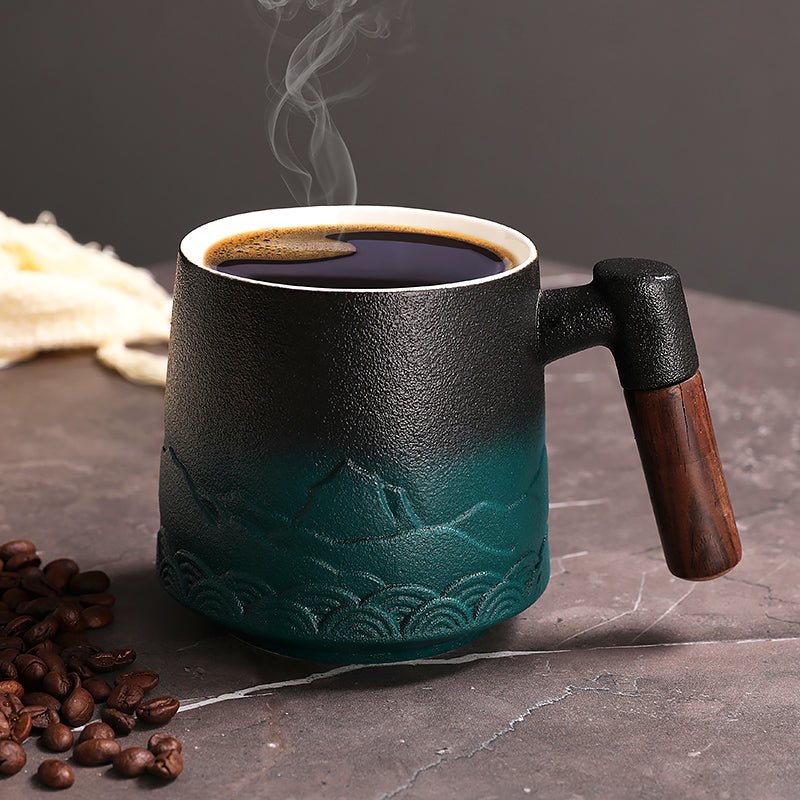
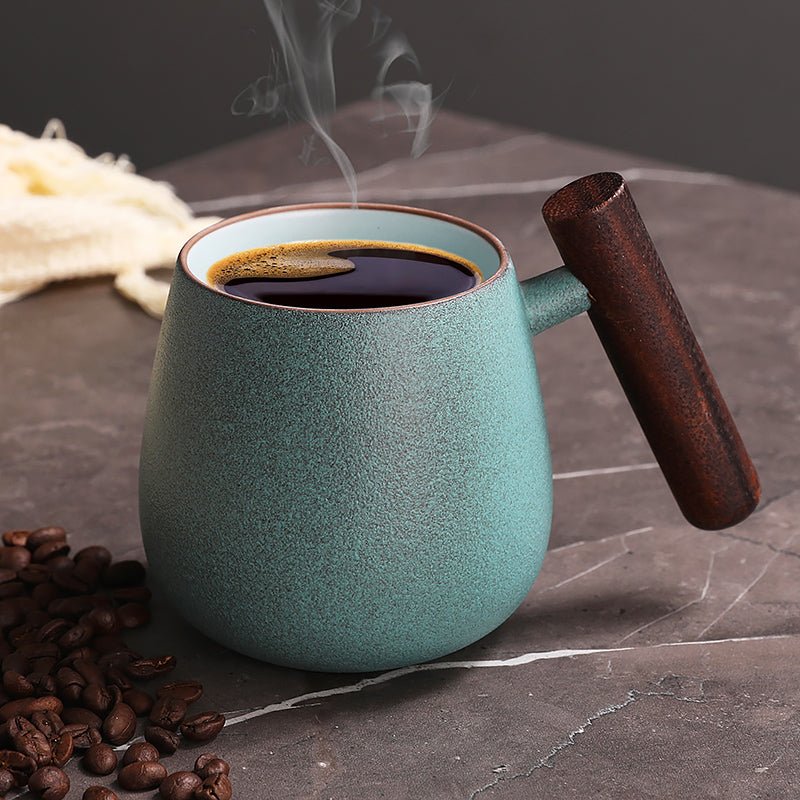
If you want a visual style without sacrificing daily usefulness, the Great Mountain Coffee Tea Mug is a good example of a mug that feels sturdy enough for home use while still being practical on a desk or kitchen counter. For a different look with the same basic everyday purpose, see the Emerald Coffee Tea Mug.
Should you choose ceramic, stainless steel, or glass?
If your goal is specifically a cooling coffee mug, the material choice should match how fast you want the drink to change temperature and how you plan to use it.
| Material | What it does well | Trade-off | Best use |
|---|---|---|---|
| Ceramic | Comfortable to hold, classic feel, stable on a table | Will not keep coffee hot as long as insulated cups | Home, office desk, casual daily use |
| Stainless steel | Durable, often insulated, good for long heat retention | Can hold heat too well if you want coffee to cool quickly | Commute, travel, long meetings |
| Glass | Lets you see the drink, usually cools fairly quickly | Can be more fragile and may feel less substantial | Light use, espresso drinks, display-oriented setups |
For most readers, ceramic is the most practical middle ground. It is the category we sell most often for home and office use because it looks good, feels familiar, and does not force a very slow cooling curve. It is also the safer choice if the mug will be washed often and used by different people in the house.
That said, ceramic is not the answer for everyone. If you want coffee to stay piping hot through a long commute, a cooling coffee mug is the wrong category. You should be looking at an insulated travel mug instead. If you want coffee to cool quickly enough to sip within a few minutes, ceramic or glass is usually the better place to start.
What sizes actually work for a cooling coffee mug?
Size changes the drinking experience more than many shoppers expect. A smaller mug can make coffee feel stronger and easier to finish, while a larger mug leaves more volume sitting hot for longer.
Here is the practical way we think about it in our store:
- 10 oz: Good for shorter pours, smaller drinks, and people who do not want a mug to sit half-full and cooling for too long.
- 11 oz: A very common everyday size. It gives enough room for standard coffee without feeling oversized.
- 12 oz: Better if you like a fuller cup, milk-based drinks, or a mug that doubles for tea and hot chocolate.
If you want a deeper size check before buying, the comparison posts 10 oz Coffee Mug: Size, Fit, and What to Check Before You Buy and 12 Ounce Coffee Mug Buying Guide for Daily Use and Better Fit cover the practical fit questions buyers ask most often.
We usually steer buyers toward the size they will actually finish. That sounds basic, but it matters. A large mug that cools half its contents while you are answering messages is less satisfying than a smaller mug that stays in rotation every morning.
What should you check before buying one online?
Photos tell you some things, but not enough. When we evaluate a mug for our own store, we look past the artwork and focus on details that affect daily use.
- Handle clearance: Your fingers should fit without pressing against the mug body.
- Rim shape: A slightly rounded rim usually feels better on the lips than a sharp edge.
- Base stability: The mug should sit flat on a desk or tray without wobbling.
- Finish consistency: Watch for glaze irregularities, tiny chips, or rough seams around the handle join.
- Cleaning comfort: If the inner curve is too tight, residue can collect at the bottom.
These are the things customers notice once the box is open. A beautiful mug that feels awkward in the hand rarely becomes the default mug. That is why we prefer mugs that are simple to rinse, stable on a surface, and comfortable enough for a second cup.
For shoppers who want a slightly taller silhouette, the Landscape Tall Coffee Tea Mug is worth comparing against a standard mug shape. A tall design can look elegant and feel good for larger pours, but it is usually not the best choice if your main goal is faster cooling.
How should you care for a daily-use mug?
Care matters because the finish and feel of a mug can change over time. Even a good ceramic mug can lose some of its appeal if it gets scratched, stained, or handled roughly in the dishwasher.
We recommend a simple routine:
- Rinse soon after use so coffee oils do not sit overnight.
- Use a non-abrasive sponge for the interior and rim.
- Dry the mug fully before stacking it with other dishes.
- If you use a dishwasher, place the mug where it will not knock into heavy items.
That is especially useful for mugs with printed or decorative surfaces. Repeated contact with other ceramics can create tiny scuffs over time. None of that makes the mug unusable, but it does affect the finish if you are rough with it.
We also think buyers should be honest about what a mug is not for. A decorative ceramic mug is not the best choice for camping, commuting, or keeping coffee hot for hours in a car cup holder. If that is your use case, a travel vessel is the better category.
Which cooling coffee mug style should you choose?
Here is the simplest way to decide:
- Choose ceramic if you want a balanced everyday mug for the kitchen, office, or gift-giving.
- Choose a wider opening if you want coffee to cool a bit faster.
- Choose 10 to 11 oz if you usually finish one cup at a time.
- Choose 12 oz if you want a fuller pour and do not mind a little extra cooling time.
- Choose a travel mug instead if your goal is heat retention, not cooling.
For a shopper comparing our designs, we would start with the product pages and then match the mug to the way the person drinks coffee. The artwork matters. The shape matters more.
If you are still deciding, the best next step is to browse our full mug collection, compare the open-top daily-use shapes, and check which size fits your normal pour before you choose a style.
Frequently asked questions
What is the best mug if I want coffee to cool faster?
A wide, open ceramic mug is usually the most practical choice. It gives the coffee more surface area to release heat than a tall, narrow cup or an insulated travel mug. If you want drinkable coffee sooner, that shape usually helps more than any marketing label.
Is ceramic better than stainless steel for a cooling coffee mug?
Yes, if your goal is faster cooling. Stainless steel often holds heat too well, especially when it is insulated. Ceramic is usually the better everyday choice because it is comfortable on a desk and does not trap heat as aggressively.
What size mug should I buy for daily coffee?
Most buyers are best served by 11 oz or 12 oz. A smaller mug can cool sooner and feel easier to finish, while a larger mug works better for milk-based drinks or long sipping sessions. The right size depends on how much you actually pour.
Can I use a cooling coffee mug for tea too?
Yes. A simple open ceramic mug works well for tea, especially if you want the drink to cool to a comfortable temperature sooner. That is one reason many buyers pick a coffee tea mug instead of a specialized cup.
What should I avoid if I do not want coffee to stay hot too long?
Avoid insulated travel mugs, double-wall cups designed for heat retention, and very tall narrow mugs. Those styles are built to keep temperature steady, which is the opposite of what most people mean by a cooling coffee mug.
Read more
Copper Coffee Mugs: What to Check Before You Buy
Copper coffee mugs look great on the shelf, but the liner, finish, and care rules decide whether they work for daily coffee or just display. We break down the trade-offs and point you to practical ...
Weiterlesen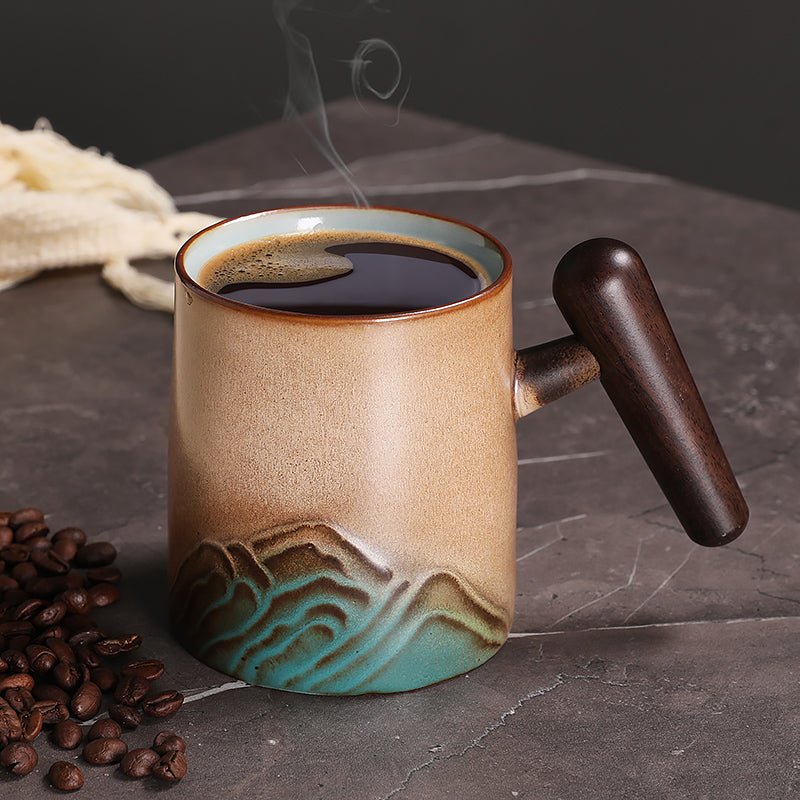
Fine Bone China Coffee Mugs: What Buyers Should Check Before Ordering
Fine bone china coffee mugs are lighter, thinner, and more refined than standard ceramic, but they are not the best pick for rough handling. Here’s how we help shoppers choose the right mug for dai...
Weiterlesen
Hinterlasse einen Kommentar
Diese Website ist durch hCaptcha geschützt und es gelten die allgemeinen Geschäftsbedingungen und Datenschutzbestimmungen von hCaptcha.