

Coffee Mugs Retro: How to Choose the Right Style, Size, and Material
Reading time: about 9 minutes
A retro mug looks simple from the outside. Then you try to use it every morning, and the details show up fast: a handle that feels cramped, a glaze that stains easily, or a shape that looks great on a shelf but tips on a busy desk. We see that all the time in our store.
If you are comparing coffee mugs retro for home, office, or gifting, the best choice is usually the one that balances style with daily use. Some vintage-inspired mugs are built for display first. Others are made to survive dishwasher cycles, handle hot coffee comfortably, and still keep the nostalgic look people want.
For a broader look at everyday mug styles, our Best Coffee Mugs for Daily Use, Gifts, and Office Desks guide is a useful companion piece.
What makes coffee mugs retro feel authentic?
Retro style is not just about a color palette. The strongest retro cues usually come from shape, finish, and small details you can feel in the hand. In practice, that means rounded silhouettes, thicker walls, speckled glaze, earthy tones, ribbed exteriors, or printed artwork inspired by earlier decades.
In our experience, shoppers often say “retro” when they mean one of three things:
- Vintage-inspired shape like a diner-style cylinder or a wider lip.
- Old-school colors such as cream, mustard, olive, brown, teal, or faded red.
- Classic material feel such as ceramic with a glossy glaze, stoneware with a heavier hand-feel, or enamel-style styling for a campy look.
The look matters, but the mug still has to pour into your morning routine without fuss. A mug can be visually retro and still be a poor daily pick if the handle is too small or the base is too narrow for a crowded counter.
Which material works best for retro-style mugs?
Most retro coffee mugs are ceramic or stoneware, and that is usually where the best balance lives. Ceramic often gives a smoother finish and a cleaner printed design. Stoneware tends to feel heavier, which some buyers love because it feels sturdy in the hand. Both can be excellent for hot drinks, but each has trade-offs.
If you want a deeper material comparison, our Ceramic Coffee Mugs: What to Look For Before You Buy article covers what we check before adding mugs to our lineup.
| Material | What it does well | Trade-off |
|---|---|---|
| Ceramic | Clean finish, easy printing, comfortable everyday feel | Can chip if knocked against sinks or counters |
| Stoneware | Heavier, sturdy feel, often suits rustic retro designs | Can feel bulky if you prefer a lighter mug |
| Enamel-style | Distinct vintage look, lightweight for travel-inspired settings | Not ideal if you want the warm, substantial feel of ceramic |
There is no single best option for everyone. If you hate heavy drinkware, a thick stoneware mug may feel clumsy. If you want a mug that stays comfortable during a long work session, thin-walled novelty mugs are usually not the answer.
What size should you buy for daily coffee?
Size changes the whole experience. A retro mug that holds too little feels like a refill machine. One that is too big can make coffee cool faster if you sip slowly. For most shoppers, the sweet spot is often somewhere in the 10 to 14 oz range, though many people prefer larger mugs for drip coffee or milk-heavy drinks.
If you regularly pour a full home-brewed mug, compare capacity before you buy. Our A buyer's guide to large capacity coffee mugs and Big Coffee Mugs for Daily Use: What to Buy and What to Skip posts are helpful if you know you want something oversized.
- 8 to 10 oz: Better for espresso drinks, small servings, and people who prefer refills.
- 11 to 14 oz: A balanced everyday size for most brewed coffee.
- 15 oz and up: Better for long work sessions, tea drinkers, or anyone who does not want a second pour.
One trade-off with larger retro mugs is weight. A full 15 oz ceramic mug can feel noticeably heavier after several sips, especially if the handle is narrow. That is not a deal-breaker, but it is a real comfort issue if you use the mug every morning.
How do you know if a retro mug is comfortable to hold?
Comfort is where pretty mugs get exposed. We always look at handle clearance, rim thickness, and balance point. A mug can look perfectly vintage and still be annoying if two fingers barely fit through the handle or if the mug feels top-heavy once filled.
Here is what we check in our store and in real use:
- Handle opening: Enough room for at least two fingers without scraping the mug wall.
- Rim shape: A smooth lip makes hot coffee easier to sip, especially if you drink black coffee.
- Base width: Wider bases sit better on office desks and kitchen counters.
- Wall thickness: Thicker walls usually feel sturdier, but they can also make the mug heavier.
That balance matters more than people expect. A cute retro mug that feels awkward in the hand often ends up on the shelf instead of in rotation.
What should you check before buying coffee mugs retro for gifts?
Gift mugs live or die on presentation and practicality. Retro style helps because it feels personal without being overly specific. The best gift picks usually have a broad appeal, a color that fits most kitchens, and packaging that does not look like an afterthought.
If you are shopping for a birthday, housewarming, or holiday set, our Christmas Coffee Mugs: How to Choose Gifts, Sets, and Everyday Favorites article is useful even outside the holiday season because the same gifting rules apply.
We also recommend thinking about use case before style:
- For a coworker: Pick a simple retro pattern or solid color rather than anything too quirky.
- For a homebody: Choose a larger mug if they actually sit with one drink for a while.
- For a collector: Look for a distinctive silhouette or glaze finish, not just a printed slogan.
Retro mugs are not the best gift if the recipient only uses travel tumblers or espresso cups. In that case, a classic mug may sit unused, even if the design is good.
Are retro mugs good for the dishwasher and microwave?
Some are, some are not. That is one of the biggest differences between a cute shelf mug and a practical kitchen mug. The safest rule is to check the finish and decoration method before assuming anything. Hand-painted details, metallic accents, and some specialty prints can be more delicate than plain glazed ceramic.
In everyday use, the common wear points we see are:
- Metallic trim that should not go in the microwave.
- Printed graphics that can fade or wear if the glaze is thin.
- Fine hairline cracks from thermal stress if a mug goes from very hot coffee to a cold sink rinse too quickly.
- Chips on rims and bases from stacked storage or a hard tap against the sink.
If you want a mug that can take a lot of routine use, choose one with a smooth glazed interior, a stable base, and care instructions you are willing to follow. For people who run mugs through the dishwasher often, plain ceramic usually ages better than heavily decorated novelty styles.
Which retro mug styles fit home, office, or display best?
The same mug does not work equally well in every setting. That is where a lot of buyers get stuck. A mug that looks perfect on a styled kitchen shelf may feel too heavy on a laptop desk. A slimmer mug may be easier to store at work but not satisfying for a slow weekend coffee.
Here is how we usually match style to setting:
- Home kitchen: Heavier ceramic or stoneware works well if you want a satisfying hand-feel.
- Office desk: A stable base matters more than a decorative shape, especially near keyboards and notebooks.
- Open shelving: Distinct glaze, ribbing, or a two-tone finish looks good even when not in use.
- Gift display: Sets and coordinated colors tend to look more polished than mismatched novelty picks.
If you are deciding between decorative and everyday options, our Amazon Coffee Mugs: How to Compare Materials, Sizes, and Everyday Use guide is a practical comparison reference, and it works well even if you are buying outside that marketplace.
Our rule of thumb: if the mug only looks good in photos, it is probably not the one we would recommend for daily coffee.
What are the common problems to avoid with retro coffee mugs?
Retro design can hide a few weaknesses. We have seen enough mugs come through our store to know the usual problem spots. The good news is that most of them are easy to spot before you buy.
- Small handles that feel cramped once the mug is full.
- Overly glossy exteriors that can feel slippery with wet hands.
- Thin bases that do not sit as securely on desk surfaces.
- Decorative finishes that look great but demand gentler care.
- Oversized shapes that are too tall for some coffee makers or cabinet shelves.
If you want the easy-going version of retro, choose a mug with a classic silhouette and a plain glaze. If you want a collector piece, accept that it may need more careful washing and storage. Those are different purchases, and mixing them up usually leads to disappointment.
Frequently asked questions
Are coffee mugs retro good for everyday use?
Yes, if the mug has a comfortable handle, a stable base, and a durable glaze. The best everyday retro mugs are ceramic or stoneware with simple finishes that can handle regular washing. Decorative pieces can still work, but they are better if you use them less often.
What size coffee mugs retro are best for drip coffee?
Most drip coffee drinkers do well with 11 to 14 oz mugs. That size gives enough room without feeling oversized on a kitchen counter or office desk. If you add milk or cream, you may prefer a larger mug.
Do retro mugs usually go in the microwave?
Many plain ceramic retro mugs do, but not all decorated mugs are microwave-safe. Metallic accents, special inks, or certain glaze finishes can be a problem. Check the care details before using the microwave.
What is better for retro style: ceramic or stoneware?
Ceramic is often smoother and lighter, while stoneware feels heavier and more rustic. If you want a cleaner printed finish, ceramic is usually the safer pick. If you want a more substantial hand-feel, stoneware may suit you better.
How do I keep retro mugs from chipping?
Do not stack them tightly, and avoid tapping the rim against sinks, counters, or other mugs. Let hot mugs cool before rinsing them with cold water. A little care goes a long way with glazed ceramic.
If you are ready to compare styles, start with our full mug collection and narrow by size, material, and how you actually drink coffee. If you want a fast shortlist, use this checklist: comfortable handle, stable base, dishwasher fit, microwave needs, and the size you reach for most mornings.
More from our blog
Read more

Mug Starbucks Coffee: What Buyers Should Check Before Ordering
A practical guide to choosing a mug Starbucks coffee fans will actually use every day. We cover size, material, care, and the trade-offs that matter before you buy.
Weiterlesen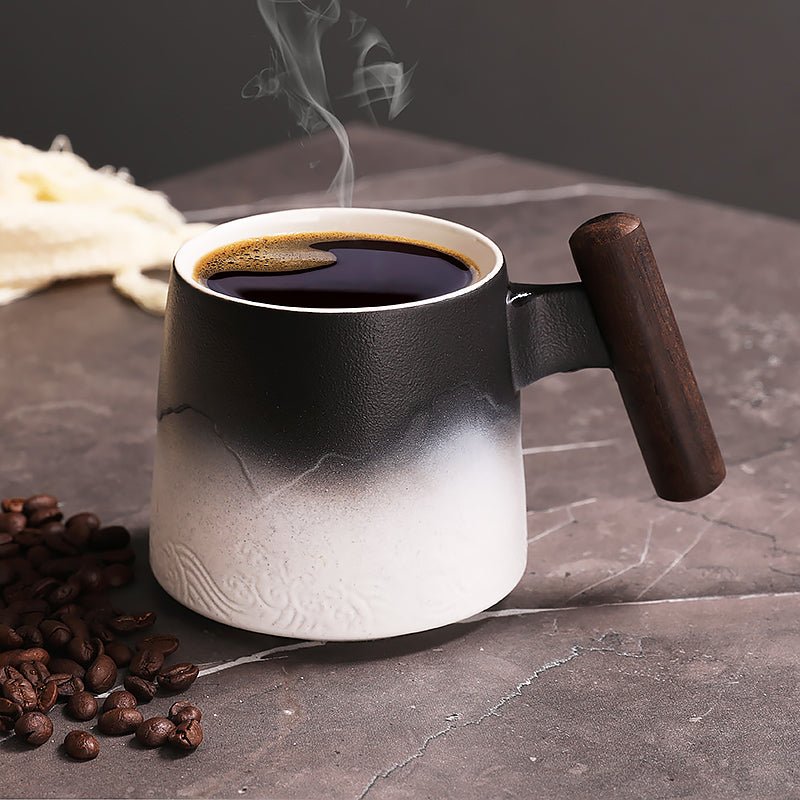
16 oz Coffee Mugs: What to Check Before You Buy
A practical guide to 16 oz coffee mugs for buyers comparing everyday comfort, material, and cleanup. We cover what fits well on a desk or kitchen counter, what to avoid, and when a different size m...
Weiterlesen
Hinterlasse einen Kommentar
Diese Website ist durch hCaptcha geschützt und es gelten die allgemeinen Geschäftsbedingungen und Datenschutzbestimmungen von hCaptcha.