
Coffee Mug Tree Holder: How to Choose the Right One for Your Counter
Reading time: about 9 minutes
A coffee station gets messy fast when mugs live beside the machine instead of on a proper holder. One oversized mug leans against a smaller one, the base gets crowded by spoons and sugar, and suddenly the easiest part of the morning takes up half the counter.
That is where a coffee mug tree holder earns its place. In our store, we see shoppers looking for two things at once: a cleaner counter and a holder that does not wobble the first time a heavy ceramic mug gets hung on it. Those are not the same problem, and that is why the details matter.
This guide focuses on the decisions that actually affect everyday use: material, stability, mug fit, and where a tree makes sense versus a stand or wall mount. If you are comparing styles, our broader guide to a Coffee Mug Holder Stand: How to Choose the Right One for Your Space is a useful companion read, especially if your counter is already tight.
What does a coffee mug tree holder do better than stacking mugs?
A mug tree keeps cups visible, dry, and easy to grab. That sounds simple, but it solves a few everyday problems at once. First, it creates vertical storage, which matters on counters where the coffee maker, grinder, and kettle already compete for space. Second, it keeps mug handles open and accessible instead of buried in a cabinet pile. Third, it turns the mugs you use every day into part of the setup instead of hidden clutter.
We usually recommend a tree when the buyer wants countertop storage without drilling into walls. It is the cleaner choice for renters, office kitchenettes, and small breakfast nooks where the coffee setup moves around. It also works well as a gift because it is easy to unbox and use right away.
A coffee mug tree holder is not the best answer for every kitchen, though. If you use very large mugs, travel tumblers, or extra-thick stoneware, a tree can feel cramped. If you need storage for more than a handful of pieces, a wall-mounted holder may make more sense. We cover that trade-off in Coffee Mug Holder Wall: How to Choose the Right Fit for Your Kitchen.
Which materials hold up best in daily use?
The material tells you a lot about how the holder will age. The two things we check first are the frame finish and the base construction. A good tree should feel solid when you lift it and should not flex when a mug is removed from one arm.
| Material | What it is good for | Trade-off |
|---|---|---|
| Powder-coated steel | Stable feel, easy wipe-down cleaning, modern look | Finish can chip if dragged across a rough counter or hit by heavy mugs |
| Stainless steel | Moisture resistance and a cleaner utility look | Can show fingerprints and may feel less decorative |
| Wood or bamboo | Warmer look for open kitchens and gift sets | Needs more care around water and can mark if left wet after washing |
Our practical preference for most kitchens is a metal frame with a weighted base. That combo handles the daily reality of ceramic mugs, quick grabs, and the occasional uneven load. A wood tree can look great on an open shelf or coffee bar, but it is not the best choice if the holder sits near the sink or under a drip-prone machine.
We also look at common defect modes that are easy to miss in product photos: loose welds, crooked arms, a base that rocks on a flat counter, or a finish that already shows rubbing marks around the hook area. Those issues tend to show up after a few days, not necessarily at first glance.
How many mugs can a tree hold without tipping?
The number on the product page is only part of the story. A tree with six hooks is not automatically better than one with four, because the real question is balance. A tall, narrow tree with a light base can feel unstable long before it reaches its rated capacity. A shorter tree with a wider, heavier base usually behaves better in real kitchens.
We look for three things:
- Base width: A wider base spreads the load and makes the tree less likely to tip when you remove a mug with one hand.
- Arm spacing: Hooks that are too close together can cause mugs to bump, which is especially annoying with larger handled cups.
- Height relative to your mugs: A tall tree may fit the mugs, but still clash with upper cabinets or a shelf above the coffee corner.
For many countertop setups, a compact tree in the roughly 6 to 8 inch base range and around 11 to 16 inches tall is easier to live with than an oversized display piece. That is not a rule, just a useful starting point when you are shopping. The mugs you own matter more than the marketing photo.
If you are choosing between sizes, our mug-fit articles can help. See 10 oz Coffee Mug: Size, Fit, and What to Check Before You Buy, 11 oz Coffee Mug: Size, Fit, and What to Check Before You Buy, and 12 Ounce Coffee Mug Buying Guide: Size, Fit, and Best Uses.
Where does a mug tree work best in a real kitchen?
A coffee mug tree holder works best where you naturally make coffee. That is usually beside the machine, on a dry section of countertop, or on a sideboard near a breakfast area. The mistake we see most often is placing it where the daily workflow is convenient for looks but not for use, such as directly beside a sink splash zone or under a cabinet with no clearance.
Good placements tend to share the same traits:
- The surface is flat and stable.
- There is enough overhead space for the tallest mug to lift off cleanly.
- The holder is close enough to the coffee machine that you actually use it.
- Water from rinsing mugs will not sit around the base.
If your counter is already crowded with a grinder, beans, and a machine, a wall option may free up more room. Our article on Wall Mounted Coffee Mug Holder Buying Guide for Real Kitchens is worth reading before you choose. If you want to compare all the current storage options we carry, browse our collection and the product pages at our products.
What should you check before buying one online?
Online photos can hide the exact things that make a mug tree pleasant or frustrating to use. We suggest checking the following before you commit:
- Base material and weight: A heavier base usually means better day-to-day stability.
- Hook shape: Rounded or slightly upward-turned hooks are gentler on handles and easier to hang mugs on.
- Finish: Powder coat, brushed metal, or sealed wood all behave differently around moisture and fingerprints.
- Clearance: Measure the height under cabinets and the width of the space beside your coffee machine.
- Cleaning: Choose a finish you can wipe dry quickly, especially if the tree sits near a sink or rinse area.
We also tell buyers to think about mug rotation. If your everyday mugs are chunky stoneware, the holder should not be chosen from a photo of slim cafe cups. A tree that looks elegant with small mugs can feel crowded with wide handles, and that is where a lot of returns start.
If you are pairing the holder with new cups, our Coffee Mug Tree: What to Check Before You Buy article goes deeper into the mug-tree fit conversation from the cup side, which is usually where sizing problems show up first.
How do you keep a mug tree looking good over time?
Maintenance is straightforward, but it matters. A powder-coated or painted metal tree should be wiped with a soft cloth and dried after any splash or condensation. A wooden or bamboo version should never sit in standing water. If the base has felt pads or rubber feet, check them occasionally, because a worn pad is one reason a tree starts to feel unstable on a smooth counter.
Three small habits make the biggest difference:
- Remove mugs by lifting straight up instead of twisting hard against the hook.
- Wipe the base after rinsing mugs nearby so moisture does not collect underneath.
- Recheck the tree after moving it, because even a slight tilt on the counter changes the balance.
That kind of care is one reason we like mug trees for everyday use. They are simple. They do not need special cleaners or complicated assembly. But they are not indestructible, and they are not a good fit for households that want to hang very heavy mugs, oversized travel cups, or cookware-style items. For those, a sturdier wall system or a broader stand is usually the better buy.
Frequently asked questions
Will a coffee mug tree holder scratch ceramic mugs?
It can if the hooks are rough, sharp, or badly finished. We look for smooth hook edges and a finish that does not feel abrasive when you run a finger over it. If your mugs have delicate glaze or hand-painted details, avoid trees with exposed weld points or chipped coating.
Can a coffee mug tree holder fit 12 oz mugs?
Sometimes, but not always. A 12 oz mug is often wider or taller than a compact everyday cup, so you need to check handle clearance and hook spacing. Our 12 oz mug guide is a good reference if you are pairing the holder with larger cups.
Is a mug tree better than a wall-mounted holder?
Only if you want a no-drill countertop option. A tree is easier to move and usually better for renters, but it takes up counter space. A wall-mounted holder works better if your counter is already crowded and you want the mugs off the work surface.
How do I clean a metal coffee mug tree holder?
Use a soft damp cloth, then dry it right away. Avoid soaking it or scrubbing with abrasive pads, because that can dull the finish or expose bare metal at stress points. If you notice water collecting around the base, move the holder to a drier spot.
What is the biggest mistake people make when buying one?
They choose by style alone and ignore mug size and base stability. A tree can look perfect in photos and still fail in a real kitchen if the arms are too close together or the base rocks on the counter. Measure first, then choose the finish you actually want to maintain.
If you already know your mug count and counter space, compare the current options in our products and cross-check them against the full collection. The fastest way to pick the right coffee mug tree holder is to match the holder to the mugs you use every morning, not the ones that look best in a staged photo.
More from our blog
Read more
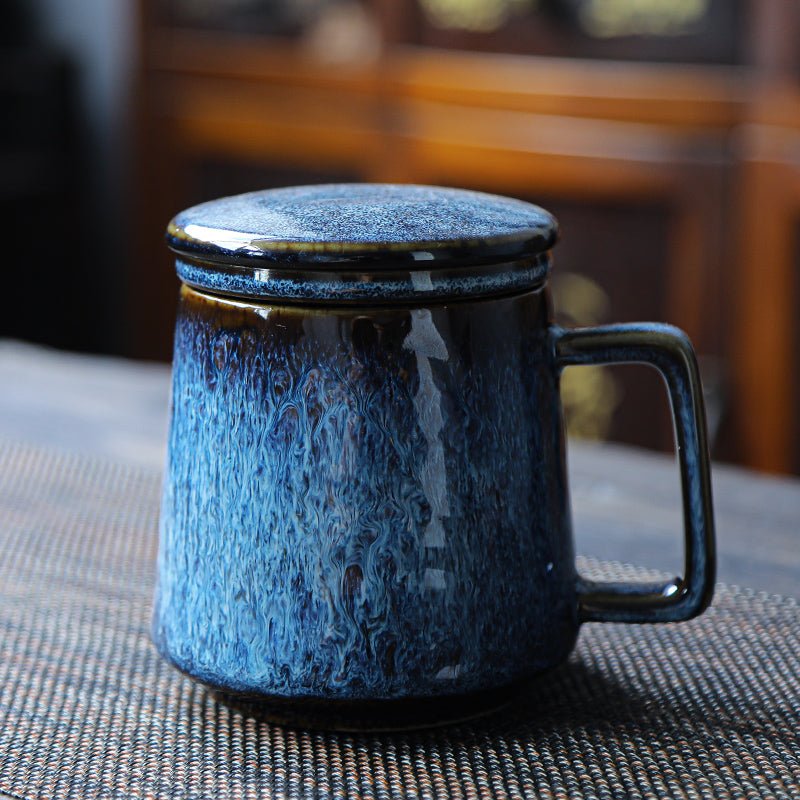
Coffee Mug Rack Countertop Guide: Fit, Materials, and Real Trade-Offs
A countertop mug rack solves the cabinet shuffle, but only if the footprint, handle clearance, and material match your mugs and prep space. We break down what fits, what lasts, and when a wall or u...
Weiterlesen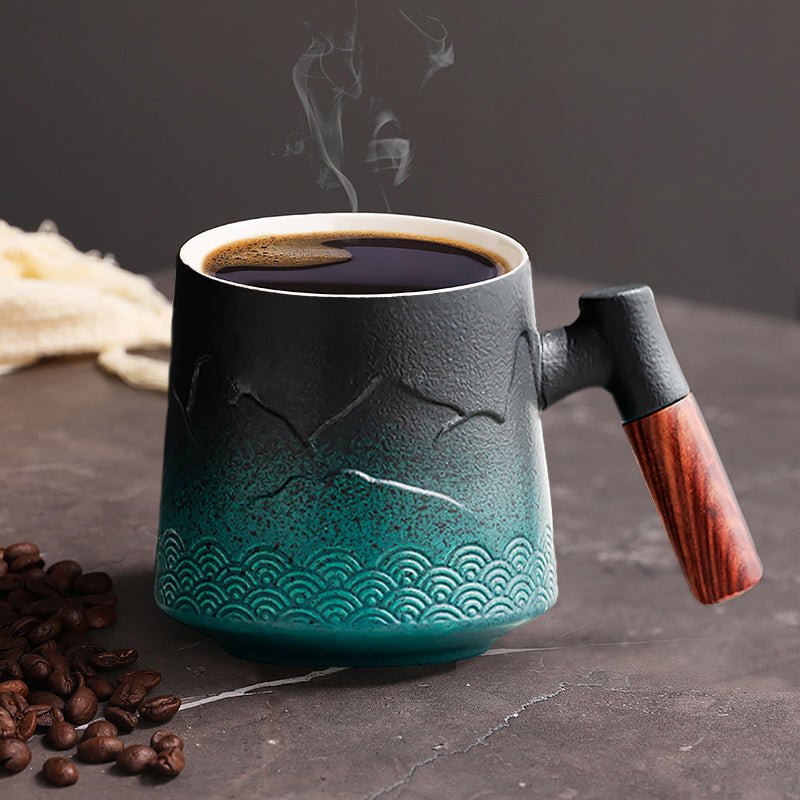
Coffee Mugs with Logos: How to Choose the Right One
Coffee mugs with logos do more than carry a brand mark. The right mug has to feel balanced in the hand, hold up through daily washing, and keep the logo readable after real use.
Weiterlesen
Hinterlasse einen Kommentar
Diese Website ist durch hCaptcha geschützt und es gelten die allgemeinen Geschäftsbedingungen und Datenschutzbestimmungen von hCaptcha.