

Coffee Mug Sizes Oz: How to Choose the Right Mug for Daily Use
Reading time: about 10 minutes
A mug that looks perfect online can feel completely different once it’s on your kitchen counter. A 10 oz cup may be ideal for black coffee, but it can feel small if you routinely add milk, use a pod brewer with a large pour, or like room for tea without topping off.
We handle this category every day in our store, and the biggest sizing mistake we see is simple: shoppers buy by appearance, not by how much they actually pour. This guide breaks down coffee mug sizes oz in a way that helps you choose a mug that fits your routine, your machine, and your shelf space.
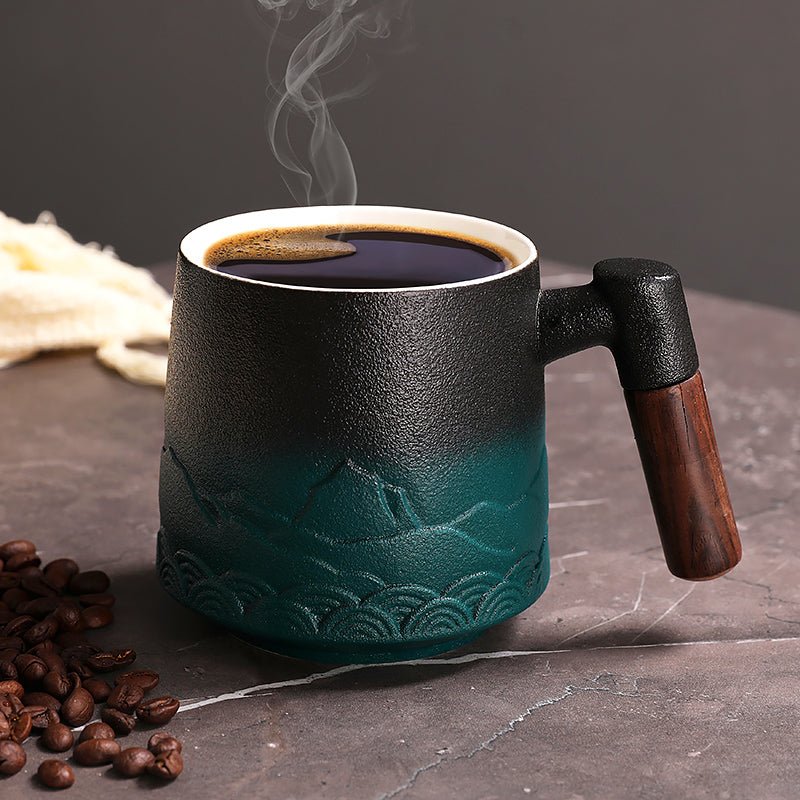
If you want to compare our current styles while you read, start with our full mug collection. For shoppers who want a slightly more giftable, everyday ceramic shape, the Mountain Sea Coffee Tea Mug is a good reference point for a balanced daily mug. If you prefer a more distinctive silhouette, the Spittoon Coffee Tea Mug and Planet Coffee Tea Mug show how shape changes the feel even before capacity does.
What do coffee mug sizes oz actually mean at the counter?
Oz on a mug usually refers to the usable capacity, but real life is messier than the label. A mug may be listed as 12 oz and still not feel like a full 12 oz in use because the inner curve, lip thickness, and fill line all affect how much liquid you can comfortably pour.
Here’s the practical part: most shoppers care about three things, not just the printed number.
- Usable fill: how much coffee fits without sloshing over when you walk from the kitchen to your desk.
- Hand feel: whether the mug feels balanced or awkward once it’s full.
- Drink style: whether you drink straight coffee, add milk, or use the mug for tea or cocoa too.
We also see a lot of confusion between “coffee mug size” and “cup size.” A coffee cup might hold less than a mug, while a large novelty mug can hold much more but be too heavy for everyday use. That difference matters if the mug sits in a dishwasher rack, under an espresso machine spout, or on a crowded office desk.
Which coffee mug size works best for your daily drink?
The right size depends on what you pour and how you drink it. A mug that works for one person can be annoying for another. We’ve seen that play out countless times in gift orders and kitchen restocks.
| Common mug size | Best for | Trade-off |
|---|---|---|
| 8 oz | Smaller coffee servings, espresso-based drinks, tea | Can feel too small for drip coffee with milk |
| 10 oz | Everyday black coffee, controlled portions, office use | Limited room for add-ins or larger pours |
| 12 oz | Standard home coffee, lattes, mixed drinks | Can be too tall for some compact brewers or cabinet shelves |
| 14–16 oz | Long sipping sessions, bigger pours, hot cocoa | Heavier when full and easier to overfill |
For shoppers comparing actual products, we often suggest starting with the style you’ll use most mornings. Our how many oz is a coffee mug guide and the related real sizes and what fits best article both help if you’re still deciding between common capacities.
In our experience, 10 to 12 oz is the sweet spot for most everyday buyers. It’s large enough for a normal pour, but not so large that coffee cools slowly on a desk for half the morning. If you like room for milk foam, flavored creamer, or a bit of oat milk, 12 oz is usually more forgiving.
Is a smaller mug better for coffee, tea, or both?
A smaller mug is not a downgrade. For some drinks, it’s the better tool. A tighter capacity keeps the drink hotter, reduces waste, and makes portioning easier.
That said, smaller mugs are not ideal if you routinely make a large drip coffee and want one vessel from start to finish. They’re also less convenient for people who stir in sugar, milk, or cocoa powder after pouring. You’ll feel that limitation quickly.
Here’s where smaller coffee mug sizes oz usually make sense:
- Espresso drinks: cappuccino, flat white, and smaller latte servings.
- Tea: many tea drinkers prefer a compact cup that stays comfortable to hold.
- Desk use: if your coffee sits near a laptop, a smaller fill can be less risky.
For a deeper look at smaller capacities, our 10 oz coffee mug size and fit guide breaks down the practical side. We also cover the “what fits and what doesn’t” question in our 10 oz coffee mug article, which is useful if you’re choosing for a gift or for a specific brewer.
What size should you buy if you use milk, creamer, or foam?
If you add anything to your coffee, size matters more than most shoppers expect. A mug that seems adequate for black coffee can turn cramped once you add milk or foam. That’s why we usually steer buyers toward a little more room than they think they need.
Practical rule from our own handling and packing experience:
- Black coffee only: 8–10 oz is often enough.
- Coffee with milk or creamer: 10–12 oz gives you breathing room.
- Foamy drinks or cocoa: 12–16 oz is easier to live with.
A deeper mug can help prevent spills, but there’s a trade-off. A very tall mug may feel top-heavy, especially with a broad handle and a full pour. It may also be less comfortable under some pod coffee machines or lower cabinets. That’s the kind of thing you notice at home, not in a product photo.
If you’re comparing mugs as gifts or for a matching set, it helps to browse the whole assortment in our collection and match the size to the drink habits of the person receiving it. A mug that looks decorative but holds the wrong amount is one of the most common gift misses we see during unboxing.
What details should you check beyond the ounce number?
The ounce rating is only one part of the buying decision. We inspect mugs for the details shoppers usually only notice after the first week of use.
- Material: Most everyday coffee mugs are ceramic, which helps retain heat and feels solid in hand. The trade-off is weight; a thicker ceramic mug feels sturdy but can be heavier when full.
- Rim and lip shape: A thinner lip tends to drink more comfortably. A thicker rim can feel sturdy but sometimes changes how the coffee lands on the tongue.
- Handle clearance: If you have larger hands or like a two-finger grip, the handle opening matters as much as capacity.
- Care: Check whether the mug is dishwasher-safe and microwave-safe if you plan to use it daily. Repeated dishwasher cycles can eventually reveal glaze wear, metallic detailing issues, or faint crazing on lower-quality ceramics.
- Base stability: A mug with a broad, flat base is less likely to wobble on a desk or drying rack.
Those small details are why one 12 oz mug can feel great and another can feel awkward. Capacity gets the attention, but balance and comfort decide whether you keep reaching for it.
Which coffee mug sizes oz are best for home, office, and gifting?
Different settings call for different mugs. We sell to shoppers furnishing a kitchen, stocking an office shelf, and sending a gift directly to someone else’s door. Each case has its own sizing logic.
For home: 10–12 oz is the safest everyday choice. It handles most coffee routines without taking up too much cabinet space.
For office desks: 8–10 oz can be better if you want a mug that stays manageable during meetings and doesn’t dominate a crowded workspace. If your coffee sits out for a long time, though, a slightly larger mug may be useful.
For gifting: 12 oz is often the easiest middle ground. It feels substantial, works for coffee or tea, and doesn’t force the recipient into a tiny serving.
That said, larger mugs are not automatically better gifts. A 16 oz mug can be too bulky for someone with limited cabinet space or a compact dishwasher. On the other end, a very small mug can disappoint a person who drinks a full mug of coffee every morning. If you want more shopping context, our article on how many oz is a regular coffee mug is a useful companion read.
Our practical rule: if you do not know the buyer’s habits, choose the size that gives a little extra room without becoming oversized. That usually means 10 to 12 oz for most daily drinkers.
What problems do shoppers run into with oversized mugs?
Oversized mugs are popular because they look generous, but they come with real trade-offs. We’ve seen them arrive looking great, then end up shelved because they’re just not convenient enough for daily use.
Common issues include:
- Heat loss: a large volume of coffee can still cool over time, but if you like to sip slowly, the final half may go lukewarm before you finish.
- Weight: extra capacity means extra ceramic and extra liquid weight. That matters on long workdays or for anyone sensitive to hand fatigue.
- Storage: oversized handles and wide bodies can crowd standard cabinets and dish racks.
- Spill risk: a mug that’s filled near the top is harder to move safely between counters.
Oversized mugs are not a bad choice. They’re just a specific one. If you want a novelty feel, a large tea mug, or a mug that also works as a desk vessel for cocoa, they can be the right fit. If you want a predictable daily coffee tool, smaller is often smarter.
How do our ceramic mugs fit into these size choices?
We design and select mugs for real use, not just shelf appeal. In our store, the question is rarely “What looks biggest?” It’s “What will someone actually grab tomorrow morning?” That is why we pay attention to shape, weight, and daily handling as much as the oz rating.
The Mountain Sea Coffee Tea Mug, Spittoon Coffee Tea Mug, and Planet Coffee Tea Mug each show a different balance of capacity and feel. A more rounded bowl shape may seem roomier than a straighter-sided mug even when the ounce count is similar. A taller profile may fit a certain aesthetic but require a more careful pour. A wide mouth can be pleasant for tea and cocoa, but it can also cool a drink faster.
If you want to browse by style and not just by size, start with our all mugs collection. That gives you a better chance of matching the mug to the drink, the cabinet, and the hand that will use it every day.
Frequently asked questions
How many oz is a normal coffee mug?
A normal coffee mug is often around 10 to 12 oz, though you’ll see smaller and larger options depending on style. For most daily drinkers, that range is the best balance between comfort and capacity.
Is a 12 oz mug too big for everyday coffee?
Usually no. A 12 oz mug is a practical everyday size if you drink drip coffee, use milk or creamer, or want a little extra room for stirring. It may feel a bit large if you only drink small black coffees or espresso-based drinks.
What size mug should I buy for a coffee gift?
We usually recommend 10 to 12 oz for gifting because it works for both coffee and tea and tends to feel versatile. If the person likes oversized mugs or big morning pours, you can go larger, but it’s safer to avoid anything too small unless you know their routine.
Do mug sizes include the brim or the usable fill?
Most listed mug sizes refer to capacity, but the usable fill can feel slightly different because of the shape and lip. A mug can be technically 12 oz and still feel fuller or emptier depending on its taper, wall thickness, and handle design.
Are ceramic mugs safe for microwave and dishwasher use?
Many ceramic mugs are, but you should always check the product details for each mug. Decorative finishes, metallic accents, or unusual glazes can change care requirements, and repeated dishwasher cycles can be harder on lower-quality pieces.
If you’re still deciding, compare your daily pour to the checklist above, then browse our full collection with that number in mind. The best coffee mug sizes oz are the ones that fit your actual morning, not just the photo.
Read more
Coffee Mug Puns: Funny Gift Ideas, Best Styles, and What to Buy
Coffee mug puns work best when the mug is actually comfortable to hold, easy to clean, and sized for the person using it every day. Here’s how we choose pun mugs that get a laugh without becoming c...
Weiterlesen
Fire Department Coffee Mugs: Practical Gift and Daily Use Guide
A practical guide to fire department coffee mugs with real buying trade-offs, size tips, and gift ideas for station use, desk use, and everyday coffee breaks.
Weiterlesen
Hinterlasse einen Kommentar
Diese Website ist durch hCaptcha geschützt und es gelten die allgemeinen Geschäftsbedingungen und Datenschutzbestimmungen von hCaptcha.