
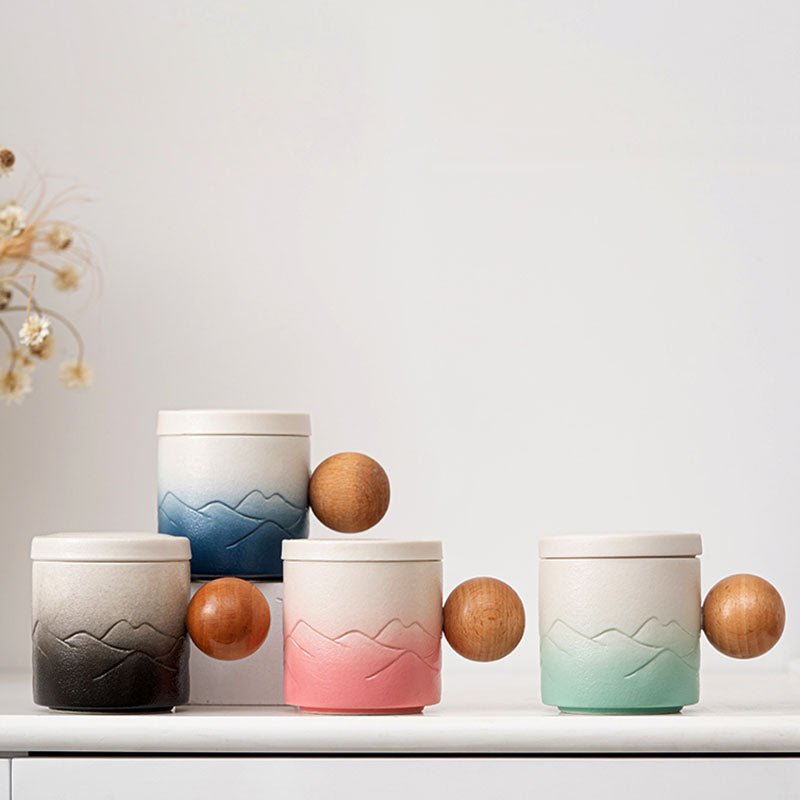
Coffee Mug Shelves: What to Check for Fit, Strength, and Daily Use
Reading time: about 8 minutes
A shelf looks fine in the product photo, then the first oversized handle bumps the wall and the front row blocks the back row. We see that problem a lot in our store: people buy coffee mug shelves for a kitchen counter, then discover the shelf depth, weight support, and mug shape all matter at once.
That is why we treat shelf buying as a fit question, not just a storage question. If you are also choosing mugs to display, our The Cloud Coffee Tea Mug Wooden Handle, The Rock Coffee Tea Mug, and Morning Night Coffee Tea Mug show three different silhouettes that can stress-test a shelf layout. You can also browse our collection of all mugs if you want to compare shapes before you decide on spacing.
If you want the shortest buying checklist first, our Coffee Mug Shelves: What to Check Before You Buy covers the same fit questions from a shelf-first angle.
What should coffee mug shelves actually solve?
The best shelf keeps cups visible, reachable, and stable. In our experience, the winning setup usually does four things well: it fits the mug body and handle, it leaves enough front clearance to lift a cup without scraping the edge, it supports the real weight of ceramic or stoneware, and it stays easy to wipe down after steam, dust, or coffee drips.
If the shelf is purely decorative, you can be looser. If it lives above a coffee machine, function should win. A pretty shelf that makes daily use annoying is the wrong shelf.
- Choose a shelf depth that matches the widest mug in your set, not the smallest one.
- Leave enough room for a hand to reach in without knocking the next cup forward.
- Check the mounting surface before you choose hardware. Drywall, tile, and wood studs are not the same job.
- Think about cleaning access. Open shelves near a coffee station collect a film faster than most people expect.
- Plan for the mugs you use every day, not the nicest mugs you own.
We see the biggest regret when people shop for a look first and a measurement second. A shelf can be beautiful and still fail if the mugs sit too close to the wall or if the front edge sits in the path of the handle.
How do mug size and shelf depth work together?
Most buyers start with the shelf and only later discover the mugs do not fit cleanly. That is backwards. We get fewer complaints when shoppers measure the mug first, then choose shelving around it.
For mug sizing, our guides on 10 oz coffee mug size and fit and 12 ounce coffee mug buying guide are useful because cup volume often tracks with footprint, handle reach, and cabinet clearance. A compact 10 oz mug may slide neatly onto a shallow ledge, while a wider 12 oz shape may need more depth or a single front row. The point is not the number on the mug. The point is the shape that number usually produces.
A simple check helps:
- Measure the shelf depth from the wall to the front edge.
- Measure the mug from the back of the cup to the farthest point of the handle.
- Leave a little room so the mug can be lifted straight up without scraping the shelf above or the backsplash behind it.
For standard kitchen use, a shallow ledge can work if you only display a few daily mugs. It is not a good fit for oversized handles, thick stoneware, or mixed collections with very different footprints. If your shelf is meant for a breakfast bar, an office nook, or a coffee corner that gets used every morning, measure the mug you actually grab first.
Which coffee mug shelf style works best in your space?
We see the best results when shoppers match the shelf style to the room, not to a mood board. A kitchen with kids needs different hardware than a quiet office nook. The same is true for a shelf over a coffee machine versus a display shelf in a dining room.
| Shelf style | Best for | Watch out for |
|---|---|---|
| Floating wall shelf | Clean look over a coffee station | Needs solid anchors and enough depth for handles |
| Open cubby shelf | Grouped mugs and matching sets | Can look crowded fast if mug sizes vary |
| Tiered riser | Countertop displays and small collections | Not ideal if you want to keep the counter clear |
| Metal rack with hooks | Mugs with sturdy handles and frequent use | Hook spacing can tangle handles and chip rims |
| Corner shelf | Tight kitchens or awkward wall space | Usually fits fewer mugs and can be hard to clean |
If your shelf is going on drywall, the installation matters as much as the style. A long shelf with weak anchors will sag in the middle, which is the failure mode we hear about most. Another common problem is a pretty shelf with a finished front edge that chips the first time someone bumps a mug into it.
That is why we tell customers to choose the mounting method first if the wall is the limiting factor. A shelf that looks light in the listing may still need proper studs, toggle anchors, or a different layout entirely.
What materials hold up best near coffee?
Near a coffee maker, surfaces get warm, damp, and sticky faster than most people expect. Steam, splashback, and the occasional syrup drip are normal. That is why the finish matters as much as the base material.
We usually think about three common shelf builds:
- Sealed wood - warm-looking and easy to match with a kitchen, but it needs a real finish or it can stain and swell near moisture.
- Powder-coated metal - easy to wipe and usually good for a more industrial look, but it can show scratches if mugs rub against the front edge.
- Laminated board or engineered wood - often budget-friendly, but edge wear and sagging are the trade-offs if the span is long or the hardware is light.
If you are buying for a breakfast nook or office desk, sealed wood usually feels more inviting. If the shelf sits close to a sink or espresso machine, an easy-to-wipe surface may be the safer pick. Open shelving is not the best choice if you want hidden storage or if the area collects grease from cooking.
We also watch for finish issues that are easy to miss in photos: rough edges under the front lip, back splinters on unfinished wood, and mounting holes that do not line up cleanly with common stud spacing. Those details matter after the box is opened. The shelf should feel like a tool, not just a display prop.
How should you style mug shelves without making them hard to use?
Good coffee mug shelves do not need to look full. They need to look organized and stay practical on a Tuesday morning.
Our rule is simple: leave enough space for a hand, not just a mug. If you pack shelves edge to edge, the display looks busy and daily grab-and-go use gets annoying. That is especially true for mugs with wide handles or thicker rims.
- Group by size first, then by color or finish.
- Keep the mugs you use every day on the easiest-to-reach shelf.
- Place heavier stoneware or larger mugs on the lower level when possible.
- Leave empty space at one end so the shelf can breathe and cleaning is easier.
- If you mix mug shapes, put the widest handles on the outer edges where they will not collide.
That approach works especially well if you are building a coffee corner around a few standout mugs instead of a large matching set. For example, a more sculpted mug like The Rock Coffee Tea Mug can anchor a display, while a lighter visual shape like Morning Night Coffee Tea Mug reads better in a minimal shelf setup. If you want to compare the full range first, our all mugs collection makes that easier than jumping between individual product pages.
We use the same logic when helping shoppers plan a gift shelf in a kitchen or office. The display should feel intentional the moment the box is opened, but it still needs to survive daily use, dishwasher cycles, and quick morning grabs without turning into clutter.
Frequently asked questions
How deep should coffee mug shelves be?
For most standard mugs, a shelf around 8 to 10 inches deep works well, but measure your widest handle and leave room to lift the mug straight up. If your collection skews oversized or chunky, go deeper or use a single front row.
Are floating shelves strong enough for ceramic mugs?
Yes, if they are anchored properly and the span is not overloaded. Ceramic and stoneware add up quickly, so long spans without studs are where sagging usually starts. If the shelf is only held by light-duty hardware, it is better for display than for daily grab-and-go use.
What shelf material is easiest to keep clean near a coffee maker?
Powder-coated metal or a properly sealed wood finish are easiest to wipe down after steam and drips. Bare wood and rough unfinished edges stain faster, especially if the shelf sits directly above a machine or beside a sink.
Should I use coffee mug shelves or a cabinet?
Use shelves if you want quick access, visible display, and easy rotation of daily mugs. Choose a cabinet if you need dust protection, hidden storage, or a place for mismatched extras that do not belong on display.
How many mugs should I put on one shelf?
Start with fewer than the shelf can physically hold. Leaving space makes it easier to grab a mug without knocking the ones beside it, and it usually looks better in a kitchen or office nook. If the shelf starts feeling crowded, move the least-used mugs off the display.
If you are narrowing your setup now, measure the deepest mug you want to store, confirm the wall support, and compare the shape against our all mugs collection before you buy shelf hardware. That gives you a better fit on day one and fewer surprises after the box is open.
Read more
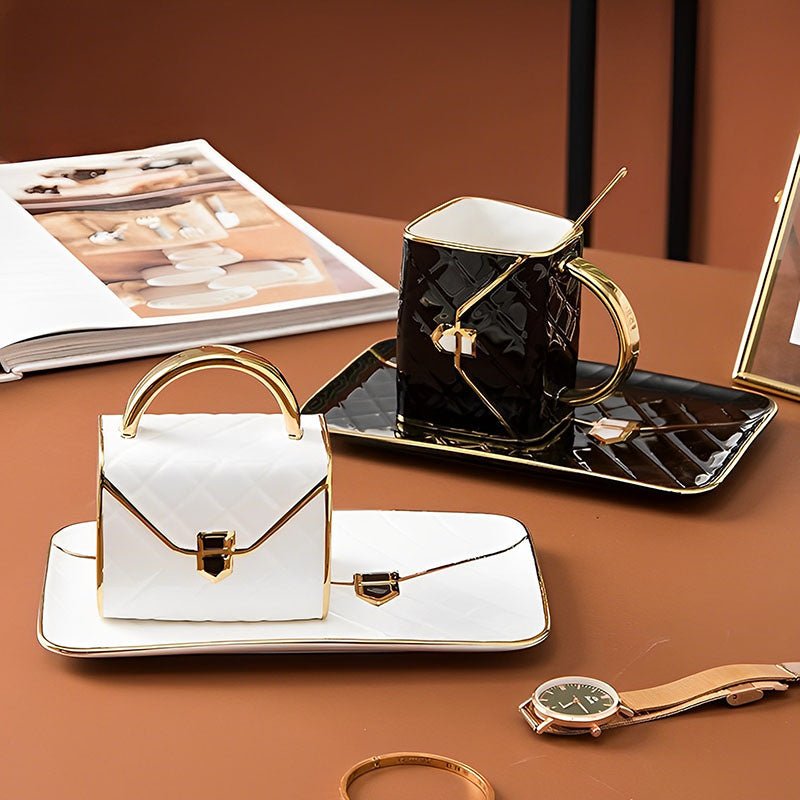
Coffee Mug Storage Ideas That Keep Cabinets Clear and Mugs Reachable
Practical coffee mug storage ideas for kitchens, offices, and small spaces, with real trade-offs between cabinets, racks, shelves, and display storage. We also point out which mug styles are easier...
Weiterlesen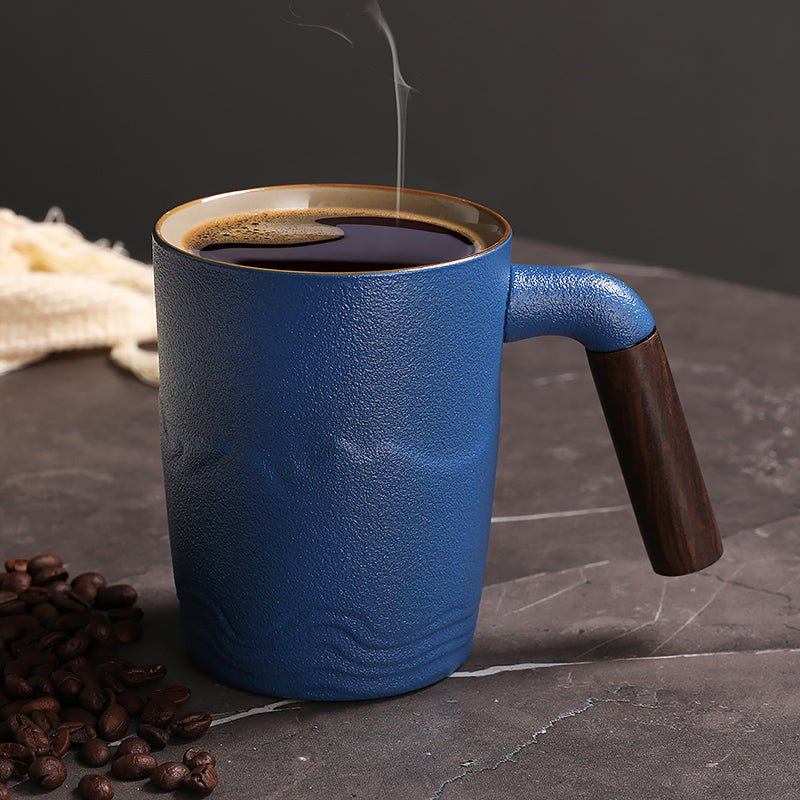
Wake & Bake Coffee Mug: A Practical Buyer’s Guide
We see the same buying mistakes over and over: the mug looks good, but the handle feels cramped, the base wobbles, or the finish ages badly. This guide focuses on the details that matter for daily ...
Weiterlesen
Hinterlasse einen Kommentar
Diese Website ist durch hCaptcha geschützt und es gelten die allgemeinen Geschäftsbedingungen und Datenschutzbestimmungen von hCaptcha.