
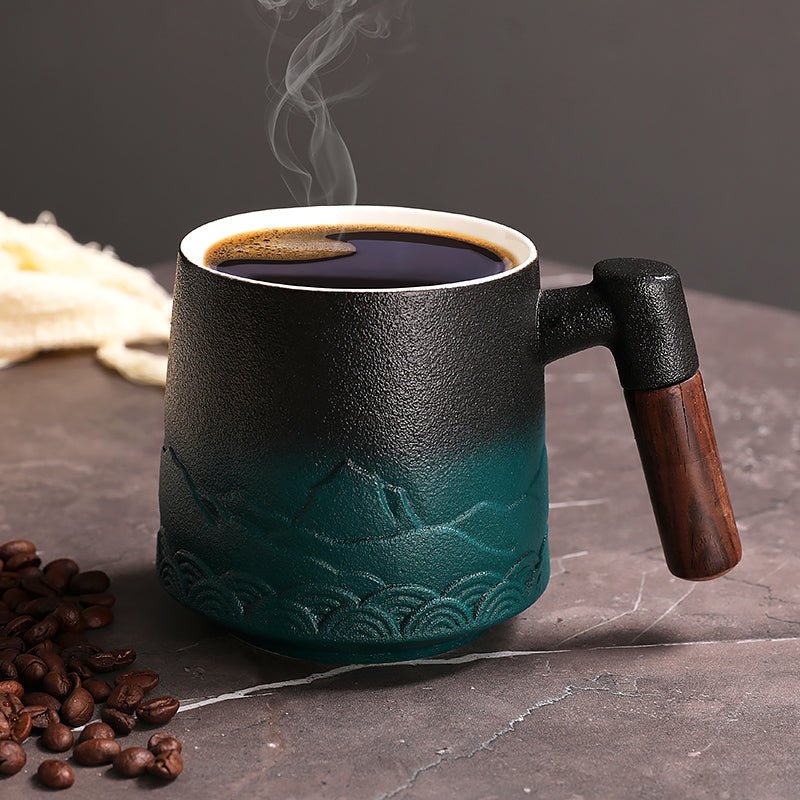
Coffee Mug Shelf Display: Fit, Style, and Buying Tips
Reading time: about 10 minutes
A shelf above the coffee maker looks finished for about five minutes. Then the mugs start bumping into each other, the handles catch on the edge, and the display that looked clean in the cart starts reading as clutter in the kitchen.
That is the gap we see most often in a coffee mug shelf display: people choose mugs for the print first and only later discover the shelf does not suit the shape, the height, or the way they actually grab coffee on a weekday. In our store, we look at the shelf and the mug together, because one without the other rarely works well for long.
If you want a display that still feels practical after the novelty wears off, start with a mug that fits the shelf and the way you use the kitchen. A good example is our White Golden Waves Tall Coffee Tea Mug, which reads clean on an open shelf because the profile is tall and simple rather than bulky.
What makes a coffee mug shelf display work in a real kitchen?
A good display does three jobs at once. It looks intentional from across the room, it stays easy to grab in the morning, and it does not create extra cleaning or breakage risk. If any one of those fails, the shelf becomes storage, not display.
The first thing we check is how the mug sits on the shelf. A mug with a wide base and a comfortable handle is easier to line up than a novelty shape that leans or crowds the next cup. The second check is whether the shelf can handle the mug without making the rim feel exposed. A shelf that is too shallow forces the mug too close to the edge, which increases chip risk every time someone reaches for a coffee pod or wipes the counter.
We also look at the kitchen around the shelf. A display beside the coffee maker behaves differently from one above the sink or near the stove. Steam, grease, and daily handling matter. A shelf that looks perfect in a dry dining nook may need more spacing and fewer pieces if it sits in an active cooking zone.
Our rule is simple: if the shelf makes the mugs harder to use, it is too ambitious for everyday kitchen life.
For shoppers who want to browse different shapes before settling on a theme, our full collection is the fastest way to compare daily-use mugs, giftable pieces, and seasonal options side by side.
Which mug shapes look best on open shelves?
Open shelves usually reward cleaner silhouettes. Tall mugs, straight-sided mugs, and mugs with a balanced handle tend to read better than very wide or heavily sculpted pieces. The visual reason is simple: the shelf line stays calm, and the mug does not fight the cabinet or the wall behind it.
Here is how we think about common display choices in a real kitchen:
| Mug type | How it displays | What to watch for |
|---|---|---|
| Tall everyday mug | Clean, easy to line up, good for a row of similar pieces | Needs enough vertical clearance so the shelf above does not crowd the rim |
| Wide novelty mug | Creates a focal point and can break up a plain shelf | Can look crowded fast and may be awkward on shallow shelving |
| Seasonal mug | Works well as one accent piece in a larger display | Best when paired with simpler mugs so the shelf does not feel themed to the point of being busy |
| Heavy stoneware-style mug | Feels sturdy and grounded | Better on a solid shelf than a lightweight ledge that flexes |
For shoppers who want a mountain-inspired look that still feels practical, the Mountain Tall Coffee Tea Mug is a good example of a mug that can sit in a display without looking fussy. It has enough visual character to stand out, but it still behaves like a regular cup on an open shelf.
Seasonal pieces work too, but they are best used with restraint. The Christmas Coffee Tea Mug is the sort of piece that makes sense when you want one shelf section to change through the year rather than replacing the whole setup every season.
If you want more layout examples, our article on Coffee Mug Shelf Display Ideas for Real Kitchens and Small Spaces is a useful next read. For a more technical breakdown of fit, our Coffee Mug Shelf Guide: Fit, Materials, and Display Tips covers the same topic from the shelf side.
How much shelf space do you actually need?
The answer depends less on the number of mugs and more on how much breathing room each mug gets. A shelf packed edge to edge may hold more cups, but it usually looks cheaper and is harder to clean. A more open layout feels calmer, and it is easier to maintain when you use the shelf every day.
We use a few practical checks before deciding a shelf is ready for mugs:
- The front of the mug should sit safely inside the shelf line, not hang over it.
- The handle should clear the wall or backsplash so it does not scrape when the mug is lifted.
- The rim should not press against the shelf above it.
- You should be able to wipe dust from the shelf without moving every cup.
- If you plan to grab one mug every morning, the front row should be the easiest row to reach.
That last point matters more than people expect. A shelf can look neat in a photo and still fail in daily use if the best mug is tucked behind three others. If your shelf is shallow, use fewer pieces and let the negative space do some of the visual work. If the shelf is deep and sturdy, a second row can work, but only if the back row is not blocking the front row or collecting dust you will never want to clean.
For small kitchens, a single row often looks better than a full lineup. For larger kitchens, a mix of one or two rows can work if the mugs share a common color family or shape.
How do you style the shelf so it looks curated instead of cluttered?
The difference between curated and crowded is usually repetition. When too many colors, heights, and handle styles compete, the eye has nowhere to rest. A stronger shelf display usually repeats one or two design choices and lets a single accent mug break the pattern.
We like to build the shelf around a simple structure:
- Choose one dominant mug shape, such as tall mugs or straight-sided mugs.
- Add one secondary mug or seasonal piece for contrast.
- Keep the color palette tight, especially if the shelf sits in view of the dining area.
- Leave at least one small gap so the display does not read as a storage rack.
That structure is why a white or neutral mug often works so well near a printed accent piece. The eye sees the clean shape first and the graphic detail second. A shelf built from all bold prints can become noisy very quickly, especially in a kitchen that already has patterned tile, open spice racks, or visible small appliances.
If you are comparing more layouts, the ideas in Coffee Mug Display Guide for Kitchens, Offices, and Small Spaces are especially helpful for shoppers who want one setup that can work in more than one room.
One practical trick we use in real kitchens is to group by use, not just by color. Put the everyday mugs in the easiest reach zone. Put the seasonal mugs slightly off to one side. Keep the most decorative piece where it can be seen, but not where it has to be moved every morning.
Which materials and finishes hold up to daily use?
For a coffee mug shelf display, the mug surface matters as much as the shape. A glossy glaze can look sharper under kitchen light, while a matte finish can feel softer and more relaxed. Printed mugs need clean glazing and durable decoration so they still look good after repeated wash-and-dry cycles. Shelf material matters too, because a beautiful mug on a weak or chipped shelf still reads as a problem.
These are the details we pay attention to in practice:
- Glaze quality: Look for even coverage with no rough spots around the rim or handle.
- Rim condition: Small chips show quickly on open shelves, especially at eye level.
- Handle stability: A handle should feel balanced, not thin or sharp at the attachment points.
- Shelf finish: Painted or coated shelves should resist obvious scuffs where mugs are set down.
- Cleaning routine: Dust the shelf regularly and let mugs dry fully before returning them to display.
Dishwasher use deserves a plain answer. If a mug is meant for daily coffee, it should be easy to wash without extra fuss. If a printed mug is more of a display piece, gentle washing and careful drying help preserve the finish. We would not choose a highly delicate decorative mug for the same job as a breakfast mug that gets used and washed every morning. Those are different tools.
Common failure points show up fast on open shelves: glaze crazing that becomes visible in strong light, tiny rim chips from hurried handling, shelf sag on thin boards, and printed designs that look dull when the mug is always near steam or grease. None of that means open shelving is a bad choice. It just means the shelf should match the mug category, not fight it.
Is a coffee mug shelf display the right choice for your home?
It is a strong choice if you want your mugs to pull double duty as storage and decor. It is also a good fit if you only use a handful of mugs daily and want those mugs within easy reach of the coffee maker. In those cases, the display becomes part of the kitchen routine instead of an extra project.
It is not the best choice if the shelf sits near heavy cooking grease, if you have very little time for dusting, or if the kitchen gets so much daily traffic that mugs are constantly being bumped. In those homes, a closed cabinet or a more compact wall-mounted storage setup may work better. Open shelves are also not ideal for very delicate mugs you do not want handled often.
The trade-off is visibility. Open display looks better when the pieces are kept edited. It looks worse when everything is out at once. That is why we usually recommend starting with a small set: a few everyday mugs, one accent mug, and one seasonal piece if you want the shelf to feel alive without becoming cluttered.
If your goal is a shelf that changes through the year, a seasonal piece like the Christmas Coffee Tea Mug can carry that job without forcing you to rebuild the whole display.
Frequently asked questions
How many mugs should I put on one shelf?
Use as many as the shelf can hold without crowding the handles or forcing the front row over the edge. For most kitchens, fewer mugs look better than a full shelf, especially if the shelf is visible from the dining area. Leave at least a small gap so the display still feels intentional.
Should coffee mugs face front or sit with the handles out?
For a shelf display, we usually recommend showing the handles in a consistent direction. That keeps the row clean and makes it easier to grab the mug without twisting your wrist around other cups. If the mug has a strong printed design, you can angle one or two pieces so the artwork still shows.
Are tall mugs harder to display?
Not usually, but they do need better vertical clearance than shorter cups. Tall mugs look especially good on open shelves because they create a neater line, yet they can feel cramped if another shelf sits too close above them. If your shelf is shallow or low, measure before you buy.
How do I keep a mug shelf from looking cluttered?
Stick to one dominant shape, limit the color palette, and leave some open space on the shelf. Use one accent mug instead of mixing many different graphics. In a real kitchen, the shelf looks better when it reads as a small collection rather than a full storage system.
What should I buy if I want a shelf display that changes with the season?
Start with a simple everyday mug set and add one seasonal piece that can rotate in and out. That keeps the shelf useful year-round while still letting you change the mood for holidays or colder months. The seasonal mug should complement the rest of the row instead of competing with it.
If you are ready to narrow the choices, start with three checks: shelf depth, mug height, and how often you want to swap the display. Then browse our collection and compare a few tall everyday mugs with one accent piece before you commit to a full set.
Read more
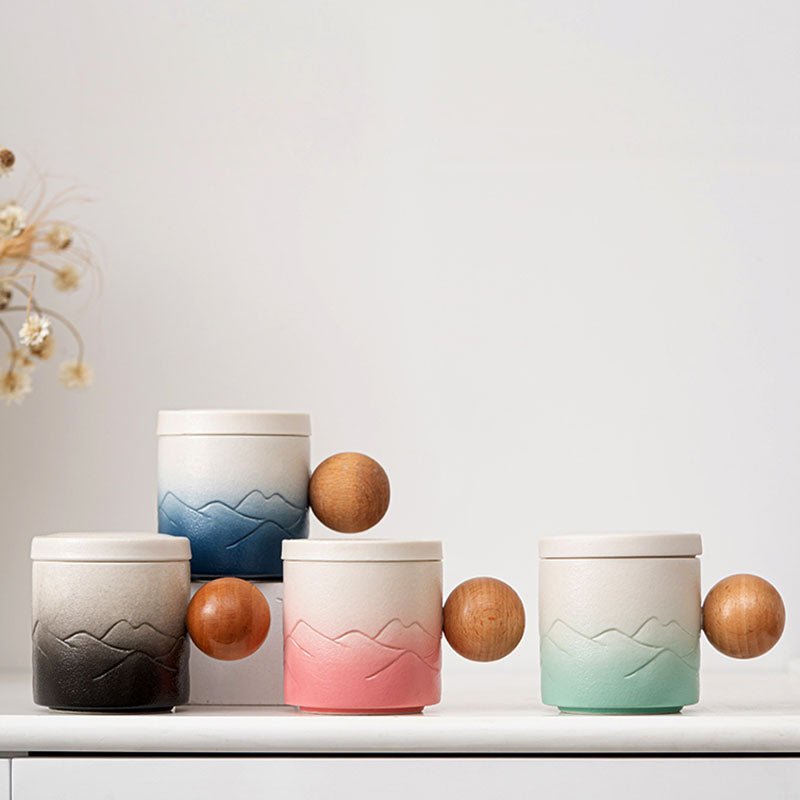
8oz Coffee Mug Buying Guide for Daily Use and Fit
An 8oz coffee mug is a practical choice for smaller pours, espresso drinks, tea, and tighter cabinet storage. This guide shows what to check before you buy, what it fits well, and where a larger mu...
Weiterlesen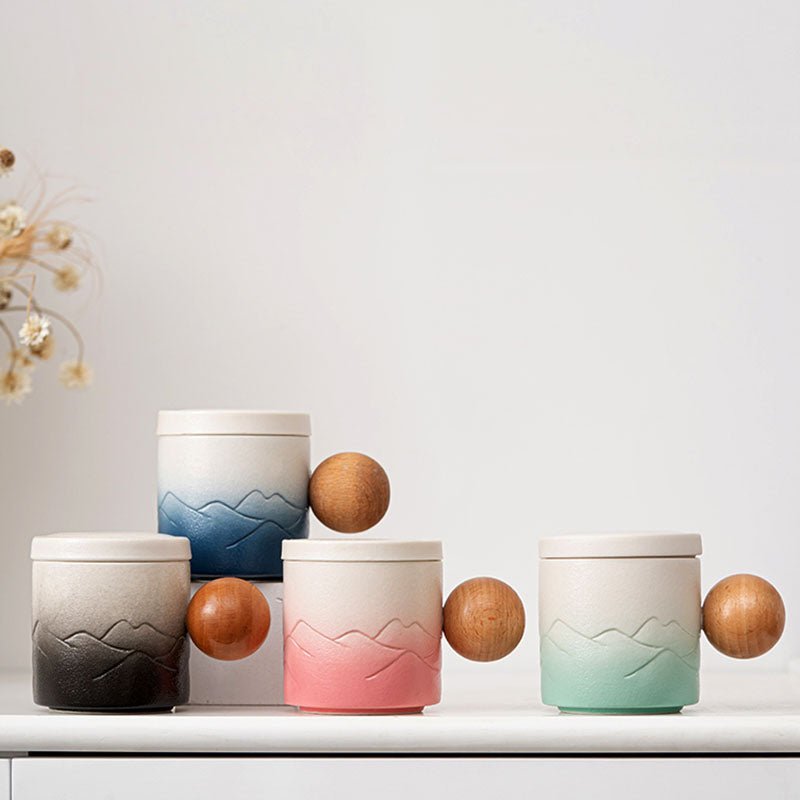
Coffee Mug Gift Ideas for People Who Actually Use Their Mugs
Practical coffee mug gift ideas for shoppers who want a mug that gets used, not stored. Compare styles, check the details that matter, and pick a gift with fewer guesswork mistakes.
Weiterlesen
Hinterlasse einen Kommentar
Diese Website ist durch hCaptcha geschützt und es gelten die allgemeinen Geschäftsbedingungen und Datenschutzbestimmungen von hCaptcha.