
Coffee Mug Measurement: How to Check Size Before You Buy
Reading time: about 8 minutes
A mug can look right in a product photo and still fail in a real kitchen. The handle may crowd your fingers, the mug may not clear an espresso machine, or the top shelf of the dishwasher may be too low for the rim.
That is why coffee mug measurement matters before you buy. We handle these products daily in our store, and the checks that save the most headaches are usually simple: capacity, height, rim width, and handle clearance.
What should you measure on a coffee mug before buying?
The safest way to compare mugs is to measure more than one dimension. Capacity tells you how much coffee fits. Physical size tells you whether the mug works in your cabinet, under a brewer, or in a bag for the commute.
We recommend checking these four points first:
- Usable capacity: the fill amount you actually drink, not the overflow number.
- Height: needed for shelves, machine spouts, and dishwasher racks.
- Rim diameter: useful for drinking comfort and spoon fit.
- Handle clearance: how much room your fingers have inside the handle.
That last point is the one people forget most often. A mug can be labeled as the right size on paper and still feel cramped if the handle opening is narrow or the mug body sits too close to it.
How do you measure coffee mug capacity correctly?
Capacity is the number most shoppers search first, but it is also the easiest to misread. A mug marked 11 oz does not usually mean you should fill it to the brim and call that a serving. Most people leave some headspace so the drink does not slosh when carried from counter to desk.
The practical way to check capacity is simple:
- Set the empty mug on a level counter.
- Fill it with water to the level you would realistically drink from.
- Pour that water into a measuring cup.
- Note whether the mug feels right with cream, milk, or foam added.
That last step matters. A mug that looks fine for black coffee may run small once you add milk, a long pull of espresso, or a tea bag that displaces liquid. For shoppers comparing common everyday sizes, our related guides on the 10 oz Coffee Mug: Size, Fit, and What to Check Before You Buy and the 11 oz Coffee Mug: Size, Fit, and What to Check Before You Buy cover the most common buying decisions in more detail.
Why does mug height matter more than most buyers expect?
Height affects daily use more than a spec sheet suggests. A tall mug may not fit under a single-serve brewer or cabinet shelf. A shorter mug can be easier to store, easier to wash by hand, and less likely to tip on a crowded office desk.
Here is how we think about height in practice:
- Kitchen cabinets: check the distance from shelf to shelf, especially if the mug will live near the coffee station.
- Coffee makers: some brewers have limited clearance under the brew head, which can rule out taller mugs.
- Dishwashers: tall mugs can hit the upper rack arm or block spray.
We see this most with shoppers who want a roomy mug but also want a low-profile cup for a crowded kitchen. If your storage space is tight, a slightly wider mug can be more forgiving than a tall one.
How wide should a coffee mug be for comfortable drinking?
Rim width changes the feel of the drink more than many people expect. A wider mouth cools coffee faster and makes it easier to sip without tilting the mug too far. A narrower rim can help keep heat in longer, but some drinkers find it less comfortable if they like a broader opening.
There is a trade-off here. Wider mugs can be less travel-friendly, and very narrow mugs can feel restrictive. If a mug is mainly for a desk, couch, or breakfast table, rim width becomes a comfort choice. If it is for moving around the kitchen or bringing from room to room, a balanced shape usually works better.
For buyers who are comparing styles before choosing a gift or a daily-use piece, our collection at All Products is a practical starting point because you can compare shapes side by side instead of guessing from one photo.
What mug measurements matter for fit, not just looks?
Fit is where coffee mug measurement becomes useful. A mug can pass the eye test and still be wrong for your space or routine. In our experience, the fit issues that create the most regret are predictable.
- Handle clearance: if your fingers are large or you like a full grip, a tight handle opening gets annoying fast.
- Base diameter: important for cup holders, narrow trays, and some coffee carts.
- Wall thickness: thicker walls can help the mug feel sturdy, but they reduce internal volume at the same external size.
- Weight when full: a larger ceramic mug can feel much heavier once filled than buyers expect.
These are the details that usually separate a mug that gets used every day from one that sits in the cabinet.
Our team usually asks one practical question before recommending a mug: will this still feel right after the third refill, on a rushed Monday, with one hand on the phone? That is the real test.
Which coffee mug measurement works best for office desks and home kitchens?
The best measurement depends on where the mug lives. Office desks often favor stability and moderate capacity. Home kitchens usually need better storage fit and easier washing. A mug for gifting should also be easy to wrap, display, and use without extra instructions.
For a desk setup, a mug with a moderate footprint and comfortable handle is usually the safest pick. For a kitchen cabinet, height and stackability matter more. For a gift, design matters, but the dimensions still decide whether the mug feels thoughtful or awkward.
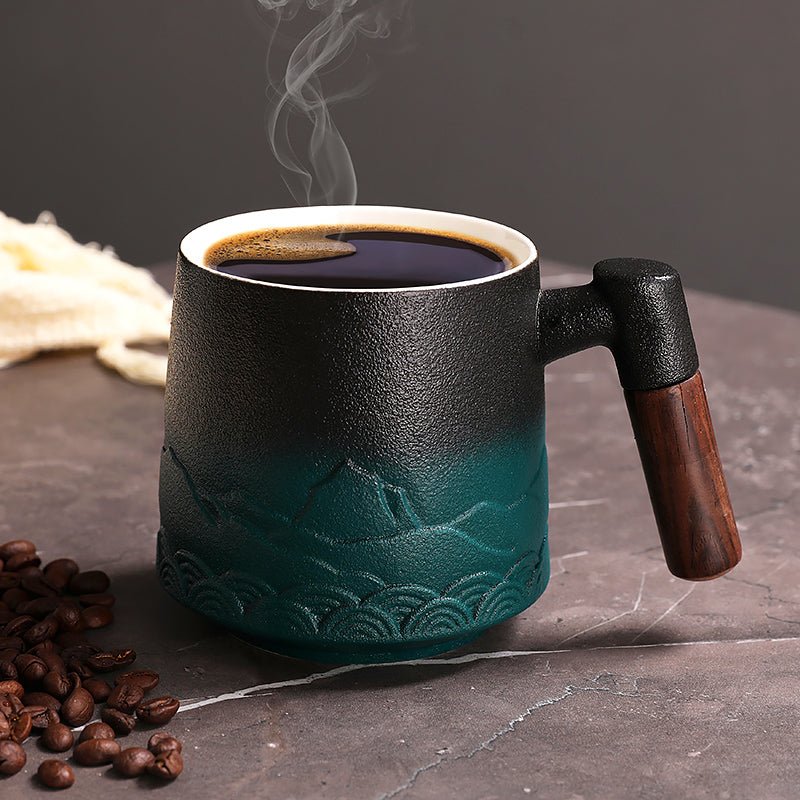
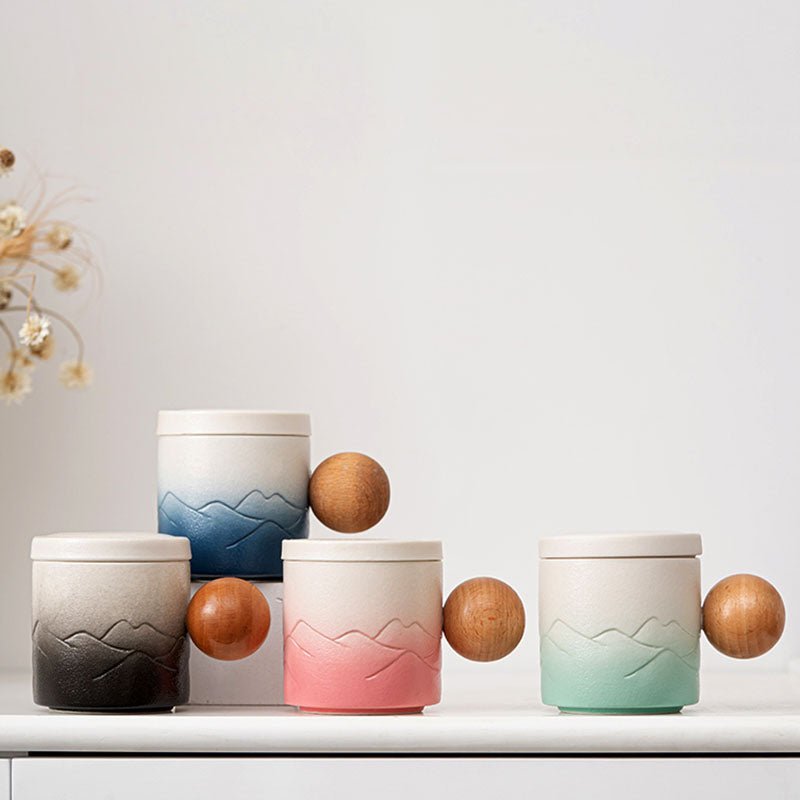
If you want to compare real products while keeping those trade-offs in mind, the Christmas Coffee Tea Mug is a useful seasonal option, while the Green Waves Coffee Tea Mug and the Mountain Sea II Coffee Tea Mug with Wooden Handle show how different handle and body styles can change the way a mug feels in the hand.
What are the common mistakes people make when checking mug size?
Most buying mistakes come from checking only one measurement. A mug can be the right ounce size and still be wrong for the shelf, the brewer, or the person holding it.
The common mistakes we see are:
- Buying by volume alone and ignoring height.
- Forgetting that whipped milk, tea bags, and ice reduce usable space.
- Assuming the handle opening will fit every hand comfortably.
- Not checking whether the mug can go in the dishwasher without rubbing against other items.
Another issue is finish and care. A glossy surface may show utensil marks more clearly. A handled mug with decorative details may need a gentler wash if the finish is part of the design. If you want more size-specific reading before you choose, our 12 Ounce Coffee Mug Buying Guide for Daily Use and Better Fit is a good next comparison point.
How do you compare mug measurements across 10 oz, 11 oz, and 12 oz sizes?
These sizes look close on paper, but in use they can feel different. A 10 oz mug often feels compact and easy to store. An 11 oz mug is a common everyday size because it gives a little more room without becoming bulky. A 12 oz mug is better for buyers who want extra headroom for milk, tea, or a larger pour.
| Size | Best for | Trade-off |
|---|---|---|
| 10 oz | Smaller servings, tighter cabinets, simpler desk use | Less room for additives or a larger pour |
| 11 oz | Daily coffee, balanced hand feel, common gifting size | Can still feel small for larger drinks |
| 12 oz | Milk drinks, tea, fuller pours | May be taller or bulkier on the shelf |
If you are unsure where to start, the 11 oz range is often the easiest middle ground. If your routine includes a lot of milk or tea, 12 oz may be the better fit. If you want a more compact mug for a smaller cabinet or a neater office setup, 10 oz can be the smarter choice.
Frequently asked questions
How do I measure a coffee mug for cabinet clearance?
Measure from the shelf surface to the underside of the next shelf, then leave a little room above the mug so it is easy to slide in and out. Also check the mug's widest point, not just the top, because some mugs flare outward near the base or shoulder.
What size coffee mug fits under most coffee makers?
There is no universal fit, because brewer clearance varies. A shorter mug is usually safer if you use a pod machine or a low-clearance drip machine. Measure from the drip tray to the brew head area before buying if that mug will live by the machine.
Is an 11 oz mug too small for daily coffee?
For many buyers, no. It is a practical everyday size because it balances hand feel, storage, and serving capacity. If you add a lot of milk or want a larger morning pour, a 12 oz mug may be the better fit.
What should I check besides ounces when buying a mug?
Check height, rim width, handle opening, and base width. Those details decide whether the mug fits your shelf, your hand, and your coffee setup. Ounces alone do not tell you how a mug will feel in real use.
Are wooden handles better for mug measurement or fit?
A wooden handle changes the grip feel, but it also affects care and the way the mug sits in a stack or dishwasher. It can be more comfortable for some hands, though it is not the best choice if you want the simplest wash-and-go routine.
If you are buying now, start with a quick checklist: measure your shelf, check your brewer clearance, compare 10 oz versus 11 oz versus 12 oz, and decide whether you care more about compact storage or a roomier pour. Then browse our all collection and pick the mug that matches your actual counter, cabinet, and hand size.
Read more
16 Ounce Ceramic Coffee Mugs for Daily Use and Easy Comparison
A practical guide to 16 ounce ceramic coffee mugs, with size, shape, care, and buying trade-offs explained from a seller’s point of view. See which styles work best for coffee, tea, desk use, and g...
Weiterlesen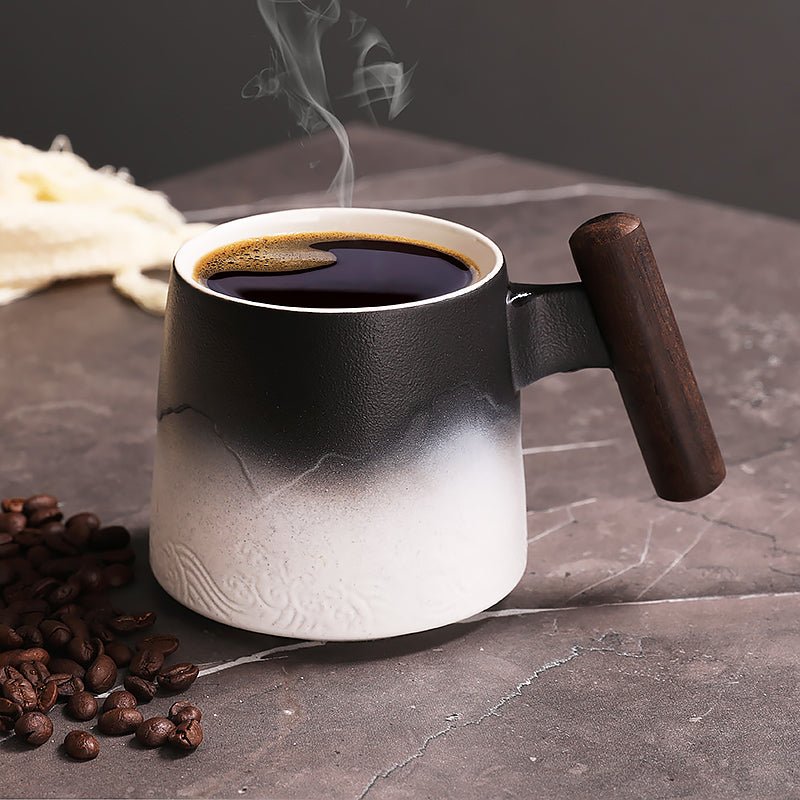
Georgia Bulldogs Coffee Mug: What to Check Before You Buy
A practical guide to choosing a Georgia Bulldogs coffee mug that fits your desk, cabinet, and daily routine. We cover size, handle comfort, care, and which styles make the best gifts.
Weiterlesen
Hinterlasse einen Kommentar
Diese Website ist durch hCaptcha geschützt und es gelten die allgemeinen Geschäftsbedingungen und Datenschutzbestimmungen von hCaptcha.