
Coffee Mug Hooks: How to Choose the Right Fit for Your Kitchen
Reading time: about 8 minutes
A mug on the counter takes up very little space until you own six of them and the cabinet door keeps tapping the handles every morning. That is the point where coffee mug hooks stop being a nice idea and start being practical storage.
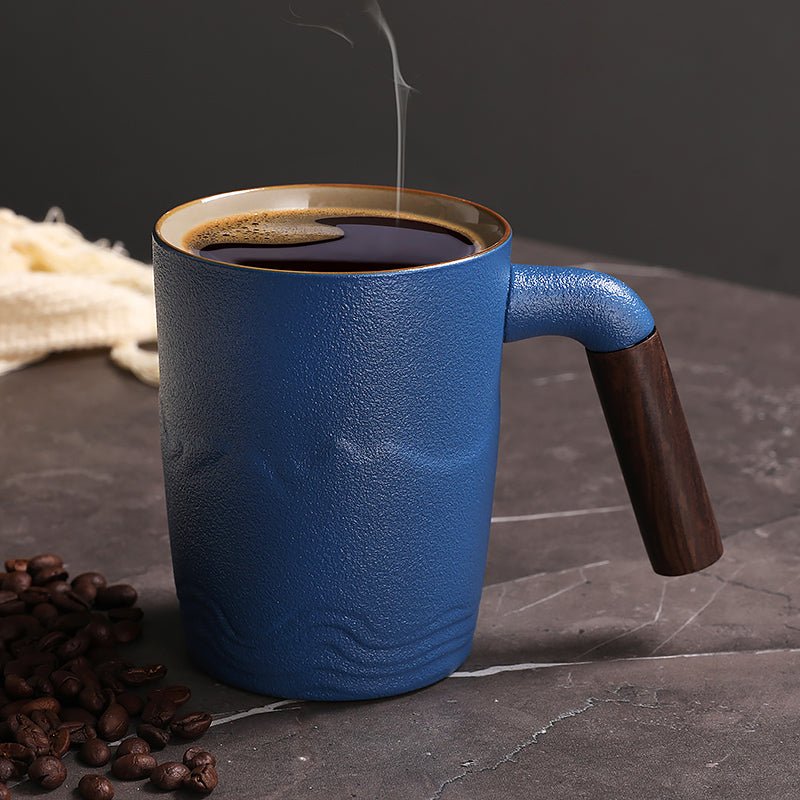
We see this in our store all the time: the mug itself is usually not the problem, the handle shape is. In our experience, shoppers get the best results when they match the hook to the mug first, then to the cabinet or wall. If you are still choosing mugs, our full mug collection is the easiest place to compare shapes, and a handle-forward option like Mountain Sea II Coffee Tea Mug with Wooden Handle shows why handle clearance matters. For a giftable seasonal style, Christmas Coffee Tea Mug and Green Waves Coffee Tea Mug are also useful examples of the kinds of mugs customers actually hang.
What are coffee mug hooks actually good for?
Coffee mug hooks are best when you want daily mugs within reach without giving up shelf space. They work well next to a coffee maker, under a cabinet, on the side of a pantry, or on a wall by a breakfast station. The appeal is simple: the mug hangs by its handle, the rim stays protected, and your cabinet stops feeling crowded.
They are not the answer for every kitchen. Oversized mugs, mugs with very bulky handles, and anything you need to stack for a large household can become awkward fast. If the hook forces the mug to lean into a cabinet door or swing into another cup, the setup will annoy you more than it helps.
For buyers comparing options, we usually treat coffee mug hooks as a fit problem first and a style choice second. That is why our under-cabinet articles, including Coffee Mug Hooks Under Cabinet: Fit, Materials, and Buyer's Guide, start with measurements before they talk about finish or color.
What fit details should you check before you buy?
The main mistake is assuming every hook will hold every mug. It will not. A hook can look sturdy in a photo and still be too shallow for a thick handle, too short for a deep cabinet lip, or too close to the surface for the mug to hang cleanly.
We check these points before we recommend a setup:
- Handle opening: the hook needs enough space to pass through the mug handle without scraping the glaze or wood.
- Hook depth: the mug should hang freely instead of resting against the cabinet face or wall.
- Clearance below the mount: leave room for your fingers so you can lift the mug off without twisting it.
- Row spacing: if you are hanging several mugs side by side, the handles should not knock into each other.
That last point is easy to miss. A row of hooks can look neat while empty, then turn into a slow-motion collision once you hang real mugs on it. If you want a more detailed measurement checklist, Coffee Mug Hooks Under Cabinet: What to Check Before You Buy is the guide we would send someone before a first purchase.
Which hook materials hold up best near a sink and coffee maker?
Material matters because coffee stations live in a messy part of the kitchen. Steam, splashes, and constant hand contact expose weak finishes quickly. A hook can start out looking polished and end up with rust spots, chipped coating, or a bend that slowly sags under repeated use.
| Hook material | What it does well | Trade-off |
|---|---|---|
| Stainless steel | Handles moisture well and usually wipes clean easily | Can show fingerprints and may still have rough edges if the finish is poor |
| Powder-coated steel | Often looks tidy and hides visual wear better than bare metal | The coating can chip at sharp bends or around mounting points |
| Adhesive hooks | Useful when you cannot drill into cabinets | Not our first choice for heavier ceramic mugs or humid spots |
| Screw-mounted hooks | Usually the most secure for everyday use | Requires a solid surface and leaves holes if you move them |
The finish is only half the story. We also look for smooth hook tips and clean welds or bends, because that is where scratches and snags usually start. Sharp burrs are a common defect mode in cheaper hardware, and you often do not notice them until the first mug chip shows up.
If you want a deeper hardware breakdown, Coffee Mug Hooks Under Cabinet: Fit, Materials, and Buyer's Guide is the one to read after you have ruled out the wrong mounting style.
Which mug shapes hang cleanly and which ones fight the hook?
A mug with a simple handle and a balanced body usually hangs better than a mug with a thick, decorative grip. That is why we pay attention to the handle before we talk about color or print. A handle that looks nice in hand can still be a poor match for a narrow hook.
In practical terms, these mugs tend to work best with coffee mug hooks:
- Standard ceramic mugs with a clean, open handle.
- Medium-weight mugs that do not swing aggressively when lifted.
- Mugs you use every day and wash often, because hanging storage makes grabbing them easier.
These are the mugs that cause trouble:
- Oversized camp-style mugs with very thick handles.
- Mugs with wooden handles, unless the hook has enough room and a smooth finish.
- Anything with a handle so tight that your fingers have to twist to remove it.
That is why a piece like Mountain Sea II Coffee Tea Mug with Wooden Handle needs more care in selection than a standard straight-sided mug. Wood adds warmth, but it also adds a different care routine: do not leave the handle soaking, and dry it promptly after washing. For customers who want a less fussy everyday mug, Green Waves Coffee Tea Mug is the kind of profile that usually feels easier to hang and remove.
If you are comparing hook styles specifically, our article Coffee Mug Hooks: What to Check Before You Buy keeps the decision focused on fit instead of decoration.
Where should you install coffee mug hooks in a real kitchen?
The best spot is usually wherever you make coffee most often. That might be under the upper cabinets beside the coffee maker, on the side of a pantry, or on a wall near the breakfast area. The goal is to shorten the motion between grab, brew, and rinse.
Some placements are better than others:
- Under a solid cabinet: best for a clean look and easy access, as long as the cabinet board is sturdy.
- On a wall near a coffee station: good when you want mugs visible and easy to reach.
- Inside a pantry or side panel: useful when you want the mugs out of sight.
Some placements are not worth the trouble. We would avoid mounting hooks where steam from a kettle hits them every day, above a sink where splashes are constant, or on a weak surface that flexes when you pull a mug down. Adhesive hooks can work in light-duty setups, but they are not our first choice for a heavy ceramic mug that gets used every morning.
If you are deciding between installation styles, the under-cabinet buyers guide on what to check before you buy gives the clearest order of operations: surface, spacing, then finish.
What mistakes lead to sagging, scratches, or returns?
The biggest returns we see around coffee mug hooks come from three things: bad fit, weak mounting, and rough hardware. None of those problems are glamorous, but all of them show up fast once you start using the hooks daily.
Watch for these red flags before you buy:
- Sharp hook edges that can chip glaze or catch on a wooden handle.
- Loose mounting screws that let the rail shift when you remove a mug.
- Thin plating that starts to wear at bends and joints.
- Hooks spaced too closely for real mugs, which causes handles to clash.
- Adhesive backs on surfaces that are textured, dusty, or slightly uneven.
These are not small issues. If a mug has to be lifted and twisted every morning, the hardware stops feeling convenient. And if the hook can only hold the cup when it is empty, it is not a good everyday storage solution.
That is why we recommend reading the buying checklist in Coffee Mug Hooks: What to Check Before You Buy before you commit to a style that looks good in photos but does not match your cabinet, wall, or mug shape.
Frequently asked questions
How many coffee mugs can one hook hold?
That depends on the hook style, the mounting surface, and the weight of the mugs. For everyday use, one mug per hook is the most reliable setup because it keeps the handle easy to grab and reduces swinging. If a hook looks cramped with one mug, it is not the right size for a second one.
Are adhesive coffee mug hooks reliable for heavy ceramic mugs?
Sometimes, but we do not treat them as the best option for a busy coffee station. Adhesive hooks are more sensitive to surface prep, humidity, and repeated pulling. If the mug is heavy or the cabinet gets steam and splashes, a screw-mounted hook is usually the safer buy.
Will coffee mug hooks scratch glazed mugs?
They can if the hook has a rough finish, a sharp edge, or a poorly formed bend. A smooth tip and enough clearance reduce the risk a lot. We always tell shoppers to avoid hardware that feels gritty to the touch or has visible burrs.
What mugs should not be hung on hooks?
Very bulky mugs, mugs with oversized handles, and pieces with fragile decorative handles are poor candidates. If the mug has to be forced onto the hook or removed with a twist, it is better stored on a shelf. Wooden handles also need a little more care and usually work best with a hook that has extra room.
Do I need under-cabinet or wall-mounted coffee mug hooks?
Use under-cabinet hooks if you want the mugs near the coffee maker and out of the way. Use wall-mounted hooks if you have open wall space and want the mugs to stay visible. The better choice is the one that matches your kitchen traffic and the actual shape of your mugs.
If you want the simplest next step, start with the mug shape and compare it against the hook depth you measured. Then browse our full mug collection and check a handle-forward option like Mountain Sea II Coffee Tea Mug with Wooden Handle against your hardware plan before you buy.
Read more
Western Themed Coffee Mugs for Daily Use, Gifts, and Display
We break down which western themed coffee mugs work for daily coffee, office desks, and gifts, plus what to check for size, finish, and cleaning before you order.
WeiterlesenWestern Themed Coffee Mugs for Daily Use, Gifts, and Display
We break down which western themed coffee mugs work for daily coffee, office desks, and gifts, plus what to check for size, finish, and cleaning before you order.
Weiterlesen
Hinterlasse einen Kommentar
Diese Website ist durch hCaptcha geschützt und es gelten die allgemeinen Geschäftsbedingungen und Datenschutzbestimmungen von hCaptcha.