
Coffee Mug Draw: What to Notice Before You Buy or Sketch
Reading time: about 10 minutes
A mug can look right in a photo and still feel wrong in your hand. We see that all the time in our store: a customer likes the shape, then realizes the handle pinches their fingers, or the cup is taller than their espresso machine clearance, or the rim feels too narrow for a quick morning pour.
That is why a coffee mug draw is worth a closer look before you buy. If you are comparing mugs for daily use, a gift, or a desk setup, the details matter more than the broad silhouette. In our experience, the best choice usually comes down to three things: how the body is proportioned, how the handle fits your grip, and how the mug behaves after a few dishwasher cycles.
If you want to compare styles while you read, start with our full mug collection. And if you want to see how shape affects daily use, our guide on how to draw a coffee mug: shapes, handles, and real proportions is a useful companion piece.
What does a coffee mug draw actually mean for a buyer?
People usually use “coffee mug draw” to mean the visual profile of a mug: the body shape, the handle arc, the rim thickness, and the way the mug looks from the front and side. That might sound like a sketching term, but it matters for shoppers too. The same profile that looks balanced on a product page also affects comfort, stability, and how the mug sits on a saucer or keyboard tray.
We pay attention to the draw because it tells you more than a styled photo does. A mug with a wide base and modest height usually feels steadier on a cluttered desk. A taller cylinder can hold more liquid, but it may feel top-heavy in a small hand. A handle that is drawn too close to the body can be visually tidy and still be awkward for larger fingers.
Good mug design is not just about appearance. It is about whether the shape works at 7 a.m., at a desk, and after the third wash of the week.
Which mug shapes are easiest to use every day?
For daily use, the most forgiving shapes are usually the ones with a stable base, a comfortable lip, and enough clearance between the handle and the mug wall. That is why simple tapered mugs remain popular. They are easy to hold, easy to rinse, and they fit most coffee makers and dish racks without fuss.
Here is how the common shapes compare in real use:
- Straight-sided mugs: Good for a clean look and straightforward stacking. They can feel a little formal and sometimes run hotter in the hand if the wall is thick.
- Tapered mugs: Often the most balanced choice for coffee and tea. The curve helps the mug feel less bulky, but very steep tapers can reduce stability if the base is narrow.
- Bowl-like mugs: Nice for tea and larger pours. They are less ideal if you want to sip while walking between rooms because the open top cools faster.
- Oversized novelty shapes: Fun for gifts, not always practical for office desks or small dishwashers.
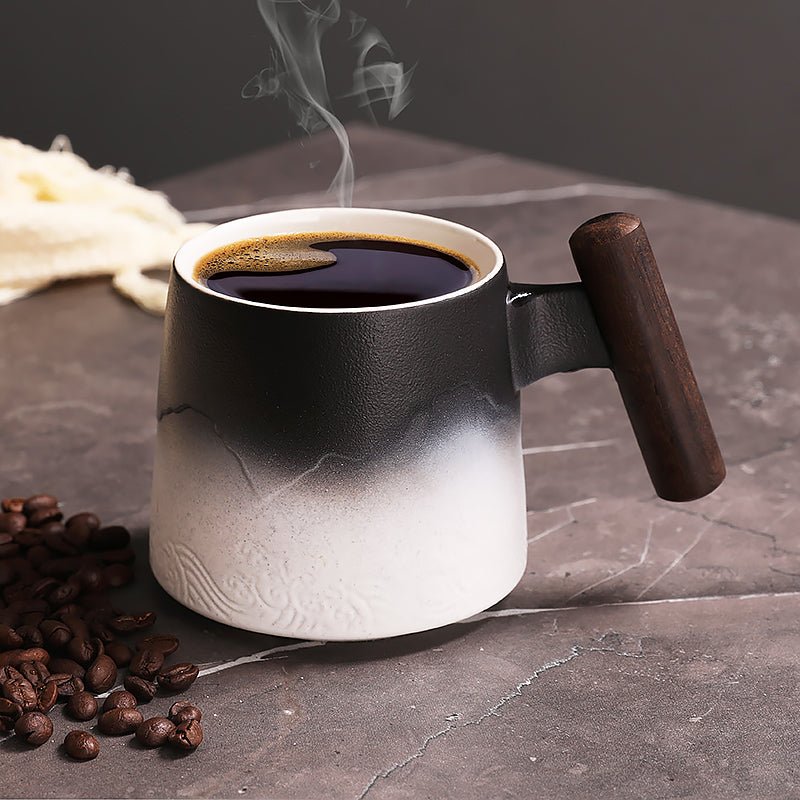
If you want a mug with a clean silhouette and a practical feel, the Flow Coffee Tea Mug is the kind of shape we often recommend for everyday counters and work-from-home setups. It reads as simple, but the profile is more usable than a purely decorative piece.
How do handle shape and balance affect comfort?
The handle is where a lot of mug complaints start. A handle can look fine on screen and still be too narrow, too flat, or set too close to the mug wall. In our hands-on checking, we look for three things: finger clearance, knuckle space, and whether the mug balances when lifted with a full pour.
Here are the details that usually separate a good mug from a frustrating one:
- Finger clearance: If the gap between handle and body is too tight, larger fingers have to squeeze in at an angle.
- Knuckle space: A handle that is too small may force your knuckles into the mug wall, especially with thicker grips.
- Center of gravity: A mug that feels stable on the table can still tip awkwardly if the handle is high and the body is narrow.
We have seen people choose a mug for the artwork and return to buy a second one because the first handle was not comfortable after a week of use. That is the trade-off. A more sculptural draw can look better in a listing photo, but a plainer handle often wins for real-world coffee drinking.
If handle comfort is a priority, compare the silhouette of the Mountain Sea Coffee Tea Mug. Its shape is more expressive, which makes it appealing as a gift, but it is still worth checking how the handle sits if you tend to use a two-finger grip.
What size and capacity should you choose?
Size is where buyers often overestimate what they need. A mug that looks “normal” in a photo can behave very differently once filled. The right size depends on how you drink, not just what you drink. Black coffee, milky coffee, loose-leaf tea, and office desk refills all ask for slightly different proportions.
These practical checks help more than guessing from the picture alone:
| What to check | Why it matters | Common mistake |
|---|---|---|
| Rim diameter | A wider opening cools faster and is easier for tea bags and milk additions | Buying a mug that feels too open for slow sipping |
| Overall height | Important for coffee machines, shelves, and cup holders | Choosing a mug that does not clear the machine tray |
| Base width | A wider base usually feels steadier on crowded counters | Assuming all tall mugs are stable enough for a desk |
| Wall thickness | Affects heat retention and hand comfort | Expecting a thin mug to keep drinks hot for long stretches |
If you are comparing by capacity, our related guides on 10 oz coffee mug size, fit, and what to check before you buy and 11 oz coffee mug size, fit, and what to check before you buy are useful for understanding what those numbers feel like in real use.
For shoppers who want a more distinctive tabletop look, the Spittoon Coffee Tea Mug is a good reminder that shape affects both style and function. It has a more pronounced personality than a standard office mug, so it suits a gift shelf or a kitchen with room for a statement piece. It is not the first pick for someone who wants a minimal stackable cup.
What materials and finishes hold up best?
Most everyday coffee mugs are ceramic, stoneware, or porcelain, and each one behaves a little differently. We do not treat material as an afterthought in our store because it changes the feel in hand and how the mug wears over time.
Ceramic is the broad category most shoppers know. It is versatile and often affordable, but glaze quality matters. A smooth, even glaze is less likely to show streaking from coffee oils. Stoneware tends to feel heavier and more substantial. It usually has a more grounded, handmade feel, which some buyers love and others find bulky. Porcelain is typically lighter and more refined, but it can feel delicate if you prefer a thicker rim.
Finish also affects cleanup. Matte finishes can look rich, but they sometimes show utensil marks or coffee residue more easily than glossy glaze. Glossy surfaces are usually easier to wipe down, though a highly reflective finish can make tiny glaze inconsistencies more visible if the mug is hand-finished.
We try to be honest about trade-offs: a thicker mug feels sturdy and keeps heat a bit longer, but it is not always the best choice for someone who wants a lighter cup for one-handed desk use. If you drink espresso-style pours or often refill quickly, a slim profile may suit you better than a heavyweight mug.
How should you care for a mug so it lasts?
Most mug problems we see are not dramatic. They are small and cumulative: faint discoloration at the bottom, micro-chips on the rim from clinking against a sink, or handle wear after repeated dishwasher cycles. Good care is simple, but it helps to be consistent.
- Rinse coffee and tea residue before it dries, especially on light-colored glaze.
- Do not stack mugs too tightly if the rims are thin or hand-finished.
- Keep hard metal utensils from scraping the inside if the finish is matte or textured.
- Let a hot mug cool before placing it into cold water, which can stress some ceramic bodies.
- If the mug is dishwasher-safe, still load it so the handle does not bang into another item.
We handle enough mugs to know that the first chip often appears where the rim meets the sink or dishwasher rack, not in the center of the cup. That is why shape and thickness matter as much as the artwork. A pretty mug that chips fast is not a good buy.
Which coffee mug draw works best for a gift?
For gifting, the best mug is usually the one that looks intentional without being too specific. You want character, but not something so unusual that the recipient only uses it once. A gift mug should feel easy to adopt into a normal routine.
We usually recommend thinking in three buckets:
- Safe and versatile: Simple, balanced shapes that work in most kitchens.
- Design-forward: More distinctive profiles that still remain practical for daily coffee or tea.
- Collector-style: The most expressive shapes, best for people who enjoy display pieces or themed drinkware.
If you are gifting and want something with a little personality, the Mountain Sea Coffee Tea Mug is a stronger statement than a plain diner-style mug. If the recipient values clean lines and everyday ease, the Flow mug is the safer bet. That is the kind of trade-off we talk shoppers through all the time: personality versus long-term use.
For people who want to buy by style rather than category, the full collection is the fastest place to compare a few looks side by side before choosing.
What should you check before clicking buy?
Before you buy, we recommend checking the mug the same way we do when we add one to our store: not just by appearance, but by fit and function. A good coffee mug draw should answer the basic questions quickly.
- Does the handle look usable for your hand size? Not just decorative.
- Will the height fit your coffee machine or shelf? Measure the space if you are unsure.
- Do you want a wide opening or a more closed top? This changes cooling and sipping comfort.
- Is the finish easy to clean? Glossy is usually easier; matte can need more attention.
- Will the mug be for daily use or display? That one decision filters out a lot of mismatches.
If you like to compare drawing principles and real product proportions, our article on how to draw a coffee mug: simple shapes, proportions, and shading gives a clear breakdown of what a balanced silhouette looks like. It is useful even if you are not sketching, because the same proportion rules guide comfortable mug design.
Frequently asked questions
What does coffee mug draw mean on a product page?
It usually refers to the mug’s overall visual shape and proportions: body, handle, rim, and base. Shoppers use it to judge whether a mug looks balanced and practical, not just decorative. A good draw often hints at better daily comfort.
How do I know if a mug handle will be comfortable?
Check the gap between the handle and the mug wall, and look at how thick the handle appears from the side. If you use two fingers through the handle, you want enough clearance for your knuckles not to press against the body. Larger hands usually need a wider handle arc.
Is a bigger coffee mug always better?
No. Bigger mugs can be useful for long work sessions or milk-heavy drinks, but they are not always easier to hold or store. A mug that is too large may feel heavy, cool too quickly, or fail to fit under your coffee machine.
Are matte mugs harder to clean than glossy mugs?
Usually, yes. Matte finishes can show coffee residue, utensil marks, and water spots more easily than glossy glaze. They are still a good choice if you want a softer look, but they may need a little more care.
Which mug style is best for an office desk?
A stable, medium-height mug with a comfortable handle and a base that does not take up too much space is usually best. Very wide novelty mugs can crowd a desk, and very tall mugs can feel awkward near keyboards. A simple tapered profile is often the easiest day-to-day choice.
If you are ready to compare styles, open our mug collection, then shortlist one practical everyday mug and one more expressive gift-style option. That side-by-side check usually makes the right choice obvious fast.
Read more
Coffee Mug Animated: Best Styles, Sizes, and What to Buy
A coffee mug animated style should look good on a desk and still feel comfortable in the hand. We compare sizes, giftability, care, and the details that matter before you buy.
Weiterlesen
Coffee Mug Tattoo: What It Means, How to Choose One, and What to Buy
A coffee mug tattoo can mean a lot of different things, from caffeine obsession to a specific style statement. This guide explains the usual interpretations, what to look for in a mug design, and w...
Weiterlesen
Hinterlasse einen Kommentar
Diese Website ist durch hCaptcha geschützt und es gelten die allgemeinen Geschäftsbedingungen und Datenschutzbestimmungen von hCaptcha.