
Coffee Mug Ceramic: What to Check Before You Buy
Reading time: about 9 minutes
A coffee mug ceramic can feel right on the first sip or annoying by the second. The difference usually comes down to the small details: how the handle fits your fingers, how thick the rim feels, and whether the mug sits steady on a desk that already has too much on it.
We see this every day in our store. Some buyers want a mug that looks good on the counter and handles weekday drip coffee without fuss. Others want something giftable, with a shape that feels a little more deliberate than a basic diner mug. A good ceramic mug can do both, but only if you choose the right style for the way you drink.
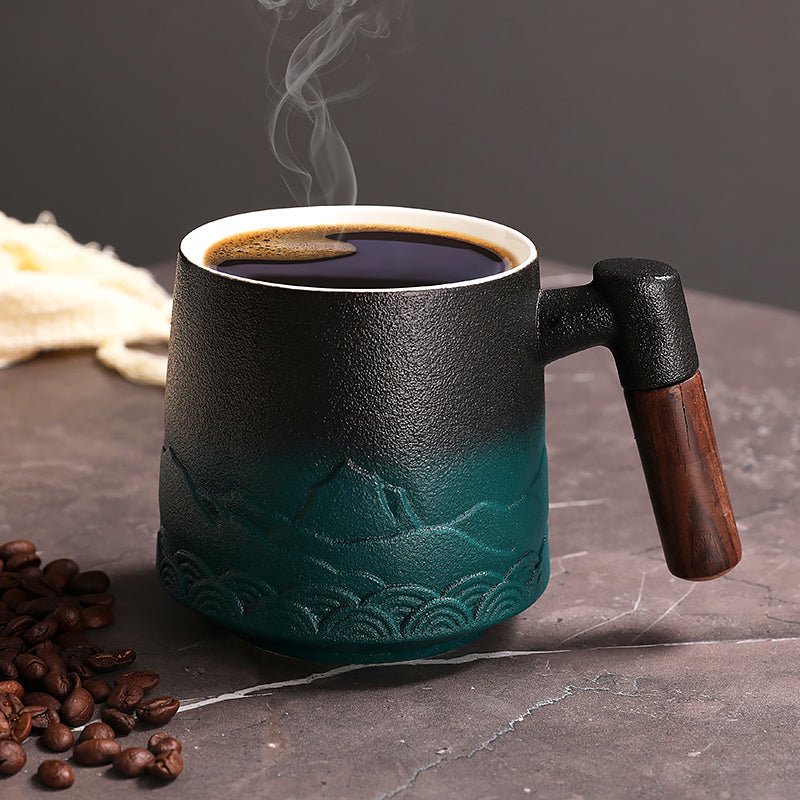
If you want to compare our current range early, start with the full CoffeifyMug collection. For specific styles, look at the Pleated Coffee Tea Cup, the The Flow Coffee Tea Mug, and the Mountain Sea Coffee Tea Mug.
What should you check first in a coffee mug ceramic?
The first thing we check is not the print or the color. It is the feel in the hand. A ceramic mug should balance weight, grip, and rim comfort well enough that you stop noticing it after a few minutes. If the handle is too narrow, the mug can feel awkward even when the shape looks great online.
Three details matter most:
- Rim comfort: A smooth, even rim makes hot coffee feel cleaner and less sharp on the lip.
- Handle clearance: Your fingers should fit without scraping the mug body, especially if you have larger hands or use a mug sleeve less often.
- Base stability: A flat foot ring and a solid base help the mug sit well on a desk, tray, or kitchen counter.
Ceramic also has trade-offs. It is not the best choice for commuting, since it is heavier and breakable. It is also not ideal for a car cup holder unless the shape is specifically built for it. What it does well is deliver a stable, familiar drinking experience at home or at work.
When we inspect mugs, we also look for common defect modes buyers should know about: tiny glaze pinholes, uneven glaze pooling near the base, hairline crazing, and small chips around the rim or handle edge. Those do not always make a mug unusable, but they do affect how long it stays looking clean and presentable.
Which ceramic mug shape fits your routine?
Shape changes the whole experience. A mug that feels perfect for a slow morning pour-over can be the wrong pick for a quick office refill. The right ceramic mug is usually the one that matches your routine more than your mood board.
| Shape style | Best for | Main trade-off |
|---|---|---|
| Rounded everyday mug | Daily drip coffee, tea, and general use | Can feel plain if you want more visual character |
| Sculpted or textured mug | Gift giving, display on open shelving, slower coffee moments | Texture can add visual interest but may be less stack-friendly |
| Wide mouth mug | Lattes, hot chocolate, drinks you sip slowly | Heat can disperse faster than in a narrower cup |
Our experience is that buyers often underestimate how much the silhouette matters on a desk. A wider base can feel more stable next to a laptop. A taller, narrower mug often feels tidier on a small kitchen shelf. If your coffee setup is compact, this is worth thinking through before you buy.
For buyers comparing size and comfort across different capacities, our 16 oz Ceramic Coffee Mug Buying Guide for Daily Use and 20 oz Ceramic Coffee Mug Buying Guide: Fit, Heat, and Care go deeper into how a mug actually feels once it is filled.
Which of our mugs makes sense for different buyers?
If you want to choose quickly, think in use cases rather than just appearance. That is usually the fastest way to avoid buying a mug that looks nice in photos but never becomes the one you reach for.
- Pleated Coffee Tea Cup: A better fit if you want visible texture and a more decorative profile without moving into a fragile, display-only piece.
- The Flow Coffee Tea Mug: A good pick if you want a smoother, calmer silhouette for everyday kitchen or desk use.
- Mountain Sea Coffee Tea Mug: A strong option for buyers who want a mug with a more artistic presence and gift-ready feel.
Those are different buying jobs. The Pleated style leans into surface detail. The Flow mug is the quieter option, which can make it easier to live with every day. The Mountain Sea mug feels more like a small object you are happy to leave on the counter instead of hiding in a cabinet.
If you want to browse beyond these three, the full collection is the fastest way to compare finishes and styles side by side. That is usually better than jumping straight to a single mug if you are buying for a gift or trying to match an existing kitchen setup.
We also suggest using our own product pages as a reality check: look closely at the handle shape, the profile of the rim, and how much visual weight the mug brings to the table. Those are the details that matter once the mug is out of the box and actually in your hands.
How do you judge durability and care before ordering?
Ceramic mugs are durable enough for daily use, but they are not indestructible. The weak points are usually the rim, the handle joint, and the base edge. Those are the areas most likely to chip if a mug is knocked against a sink, stacked carelessly, or dropped onto a hard floor.
Before you buy, check these points:
- Glaze quality: Look for an even finish with no obvious pinholes, rough spots, or glaze buildup that feels gritty.
- Handle attachment: The handle should look cleanly joined to the body, with no visible stress marks or thin spots.
- Foot ring: A neat base helps the mug sit flat and reduces wobble on smooth surfaces.
- Care instructions: If the listing mentions dishwasher or microwave compatibility, follow the product page rather than assuming every ceramic mug behaves the same.
For everyday buyers, the practical question is simple: how much maintenance do you want? A plain glazed mug is easier to keep looking fresh than a highly textured piece that catches coffee residue in creases. That does not make textured mugs bad. It just means they suit people who do not mind a little extra attention at wash time.
If you are comparing more classic sizes for daily use, our blog posts Ceramic Coffee Mug Buying Guide for Everyday Buyers and Ceramic Coffee Mug Buying Guide: What to Check Before You Buy are useful follow-ups. They cover the same buying decision from a broader angle, which helps if you are still deciding between everyday utility and a more style-led purchase.
One limitation to keep in mind: ceramic is not the best material if you regularly drop mugs, pack them for commuting, or want to keep coffee hot for a long time without reheating. That is where insulated travel drinkware is the better fit.
Is a coffee mug ceramic a good gift?
Usually, yes, as long as the recipient drinks coffee or tea at home or at work. Ceramic works well for gifting because it is easy to understand, looks good on a shelf, and has a tactile quality that reads as thoughtful without needing extra explanation.
The key is to match the mug to the person, not to the occasion.
- If they keep a clean desk and want something neat next to a keyboard, choose a simpler profile.
- If they like objects with more character, a textured or sculpted mug feels more personal.
- If they are very particular about handle size, prioritize comfort over decoration.
We have seen enough gift unboxings to know that presentation matters, but usability matters more after the first week. A decorative mug that is uncomfortable to hold usually ends up on a shelf. A plain mug that fits the hand well gets used every morning. That is the real test.
There are cases where ceramic is not the right gift. If the person drinks coffee in the car, works in a place where spills are a constant risk, or wants a mug that keeps drinks hot for a long commute, a travel tumbler is a better fit. Ceramic is best for the desk, kitchen, and slow drinker.
What should you compare before you add one to cart?
If you want a fast, practical comparison method, use the same checklist we use when we look at new inventory:
- Use case: Daily coffee, tea, gift, office desk, or display.
- Shape: Rounded, wide, textured, or sculpted.
- Handle comfort: Enough space for your fingers without a tight squeeze.
- Care: Confirm the cleaning instructions on the product page.
- Durability risks: Check for rim chips, handle stress, or uneven glazing in the photos.
- Storage: Make sure the mug fits your cabinet, shelf, or dish rack.
That checklist keeps the decision grounded. It also prevents the most common mistake we see: buyers choosing a mug based on a single photo and then realizing it is too narrow, too bulky, or too decorative for regular use.
If you are still undecided, start by comparing the The Flow Coffee Tea Mug for a cleaner everyday look against the Pleated Coffee Tea Cup for a more textured feel. If you want something more artful, the Mountain Sea Coffee Tea Mug gives you a different visual direction without leaving the ceramic category.
Frequently asked questions
Is a ceramic coffee mug better than glass or stainless steel?
For home and office use, ceramic is often the most comfortable and familiar option. It usually feels better in the hand than stainless steel and is less likely to taste like anything other than your coffee. Glass shows the drink nicely, but it can feel more delicate and is not always as forgiving with daily handling.
What size ceramic mug is best for daily coffee?
The best size depends on how you drink. A smaller mug works well for straight espresso-based drinks or short pours, while a larger mug is better if you usually make drip coffee and want room for milk. If you are unsure, our size-focused guides linked above are a useful place to start.
Can I put a ceramic coffee mug in the dishwasher or microwave?
Many ceramic mugs can handle one or both, but not every mug is finished the same way. Always follow the care notes on the product page, especially if the mug has special glazing, texture, or decorative detailing. If you want a mug to live on repeat use, checking that upfront saves disappointment later.
Why do ceramic mugs chip around the rim?
The rim is one of the most exposed points on the mug, so it takes damage easily when it knocks against a sink, another mug, or a hard countertop. Chips can also happen from stacking mugs too tightly. A smooth wash routine and careful storage matter more than people expect.
What is the biggest downside of a coffee mug ceramic?
It is breakability. Ceramic is sturdy for everyday drinking, but it is not built for drops, travel, or rough transport. If your priority is portability or heat retention on the move, a travel mug or insulated tumbler is the better category.
If you want the shortest path to a good choice, compare handle comfort, rim feel, and how the mug will live on your counter or desk. Then start with our full collection and narrow down to the shape that actually fits your routine.
Read more
32 oz Coffee Mug Buying Guide: Size, Fit, and Best Uses
A 32 oz coffee mug holds about four cups, which is great for long desk sessions and bigger pours, but it also brings real trade-offs in weight, fit, and cabinet space. Here’s how to choose the righ...
Weiterlesen
Holiday Coffee Mugs: How to Choose Gifts That Get Used
Holiday coffee mugs work best when they feel good in the hand, fit the drink, and still look right on a counter after December. This guide compares shapes, sizes, care, and the trade-offs we see mo...
Weiterlesen
Hinterlasse einen Kommentar
Diese Website ist durch hCaptcha geschützt und es gelten die allgemeinen Geschäftsbedingungen und Datenschutzbestimmungen von hCaptcha.