
Ceramic Espresso Cup for Small Coffee Setup: Compare Before Buying
Reading time: about 9 minutes
The last free section of a kitchen shelf is where cup choices become very practical. A cup can look compact in a product photo yet be awkward to store beside jars, a coffee tray, or the few everyday pieces already on your counter. A ceramic espresso cup for small coffee setup should work with the amount you actually pour, but it also needs a place to live between brews.
In our store, we see shoppers use the word espresso cup for several different needs: a neat cup for a short coffee, a small vessel for espresso with milk or hot water added, or a visually distinctive cup that does not take over an office desk. Those are different jobs. The useful comparison starts with listed capacity and visible form, then moves to the storage space you can verify at home.
Why does listed capacity matter more than calling a cup small?
Small is a relative description, while capacity gives you a real starting point. The three ceramic options in this compact cup group are listed at 170 ml, 200 ml, and 250 ml. Those capacities may be larger than a traditional single-shot demitasse, so shoppers looking for a very small, shot-only vessel should not assume that any of them has classic demitasse volume.
For a coffee cup for espresso, capacity affects how much empty space remains after pouring and whether you expect to add another ingredient. It does not tell you the external width, height, base diameter, or exact shelf footprint. A 170 ml cup is not automatically the smallest item on the shelf, because wall thickness, handle shape, and overall form also affect its outside dimensions.
| Option | Listed capacity | Visible form to compare | Useful buying question |
|---|---|---|---|
| Retro Coffee & Tea Cup | 170 ml | Retro style | Is the lowest listed capacity in this group enough for your usual pour? |
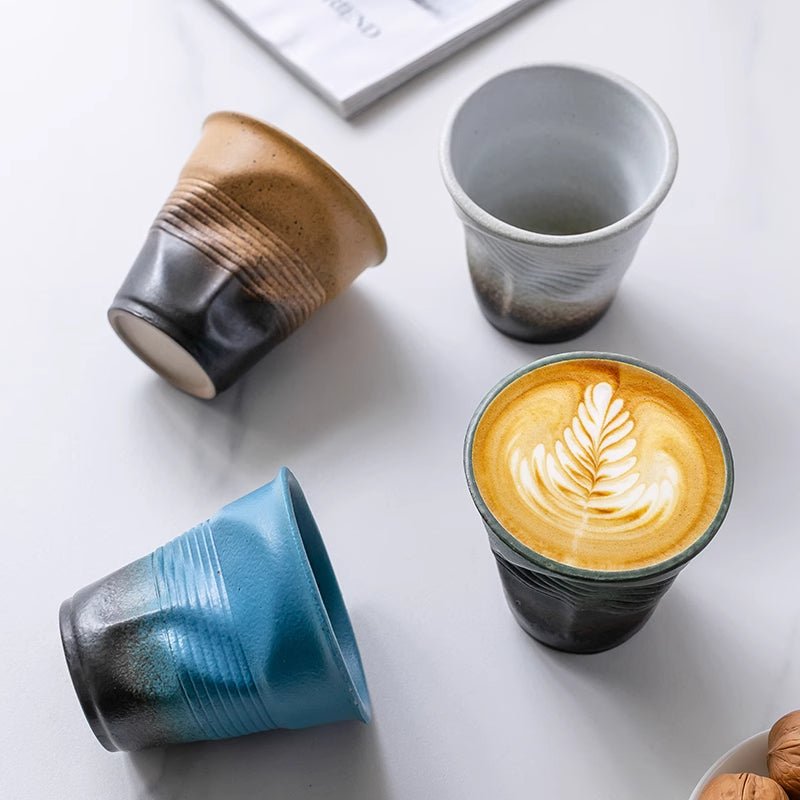
| Pleated Coffee & Tea Cup | 200 ml | Pleated form | Do you prefer a middle capacity with a more structured exterior? |
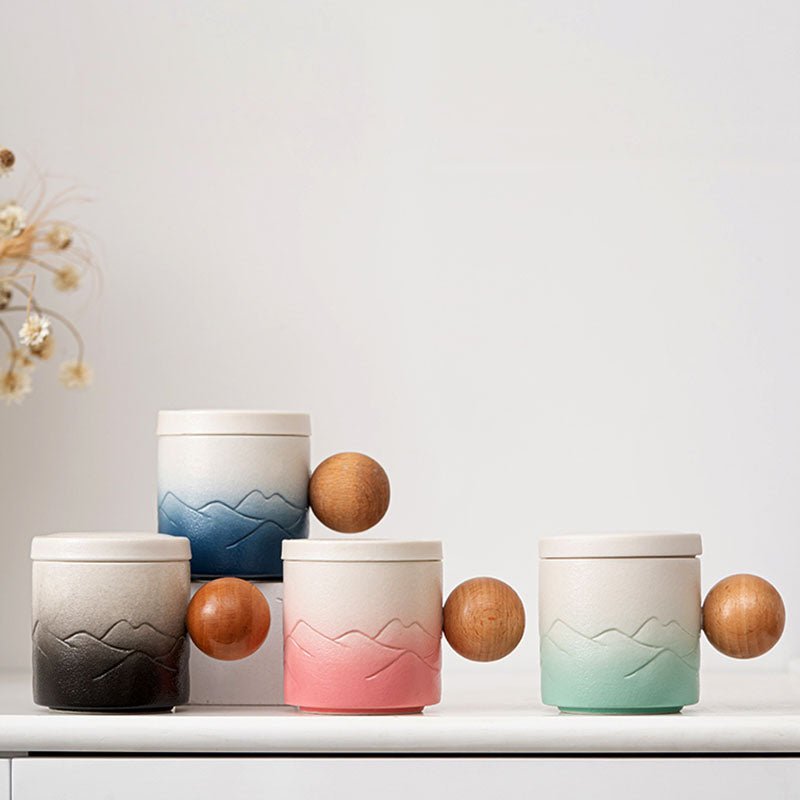
| Ball Handled Coffee & Tea Mug | 250 ml | Ball-handled form | Do you need the largest listed capacity and a distinct handle profile? |
That distinction prevents a common online-shopping mistake: buying by a label such as small espresso cup, then finding that the cup is better suited to an espresso-based drink with room above it than to a minimal single shot.
170 ml, 200 ml, or 250 ml: which capacity suits your usual espresso?
Start with the drink in your hand, not the name of the cup. A short espresso served on its own makes the 170 ml, 200 ml, and 250 ml capacities feel relatively generous. That can be appealing if you dislike filling a cup close to the rim, but it may not create the compact demitasse look some buyers expect.
- Choose the 170 ml Retro Coffee & Tea Cup if you want the lowest listed capacity of the three for a short coffee with some open space at the top. Its retro visible form is the relevant style trade-off. See the 170 ml Retro Coffee & Tea Cup next if that is the balance you want.
- Choose the 200 ml Pleated Coffee & Tea Cup if your preferred middle ground is a 200 ml ceramic vessel with a pleated exterior. This is for a shopper who wants a particular surface form as much as a specific volume. Compare the listing for the 200 ml Pleated Coffee & Tea Cup.
- Choose the 250 ml Ball Handled Coffee & Tea Mug if the largest listed capacity is more useful to you and you like the visible ball-handled profile. It is the better fit for someone who expects more volume than a short espresso alone, not for someone trying to minimize every milliliter of unused cup space. View the 250 ml Ball Handled Coffee & Tea Mug for the current product details.
None of these listed capacities should be treated as verified traditional single-shot demitasse capacity. If your priority is a very small cup that closely matches a bare espresso pour, seek a product with a specifically listed smaller capacity instead of relying on a style label.
Where will a ceramic espresso cup for small coffee setup live between brews?
A compact setup is usually constrained by a real surface: the strip of counter beside your brewer, an apartment shelf, a desk drawer area, or a guest tray. We recommend measuring that space before choosing a ceramic cup, particularly because the catalog facts here provide capacity and form rather than external dimensions.
- Measure the usable shelf width, depth, and vertical clearance, not just the shelf itself. Door hinges, under-cabinet edges, and stacked saucers can reduce the space available.
- Leave room to pick up the cup. A handle needs finger clearance, and a cup stored tightly against a wall can be less convenient than one that uses a little more shelf width.
- Count the number of cups you will store. One distinctive cup may suit a personal counter; several matching or coordinating cups need a more deliberate shelf plan.
- Keep the cup zone separate from the area where you prepare coffee. This helps avoid bumping ceramic against a grinder, kettle, or other hard items during a rushed morning.
For a broader look at the relationship between small cup style and everyday storage, our small ceramic coffee cup size and shape comparison is useful. Once you have measured your space, browse the unique coffee mugs collection to compare current ceramic forms without assuming capacity alone determines footprint.
Which cup form works on a kitchen counter, office desk, or gift shelf?
Visible form changes the buying decision even where volume does not. The Retro option brings a retro profile to a small coffee station. The Pleated option puts a pleated exterior at the center of the look. The Ball Handled option makes its handle form part of the visual decision. These are legitimate reasons to choose one ceramic vessel over another, especially if it will remain in view on an open shelf.
For an office desk, prioritize the cup you will be comfortable storing and reaching around rather than the most decorative silhouette in isolation. For a gift, think about the recipient's usual drink size and existing kitchen style. Gift unboxings often reveal the same issue we hear from customers afterward: a visually right cup may still be the wrong capacity for the person's everyday coffee.
The pleated style deserves a closer look if texture is the deciding factor; our guide on choosing a pleated ceramic coffee cup at 200 ml focuses on that specific comparison. For a retro-led setup, see our discussion of what to compare in a vintage retro small coffee cup.
What are these ceramic cups not the best choice for?
A 170 ml, 200 ml, or 250 ml ceramic cup is not a replacement for a large breakfast mug, and it is not automatically an ideal vessel for a large iced drink. Ice reduces the remaining liquid room quickly, so the listed capacity should be evaluated against the full drink you plan to serve, not the name of the drink alone.
They are also not automatically space-saving just because they have modest capacities. Without listed external dimensions, we cannot responsibly claim which option takes up the least shelf or counter area. Buyers who need a precise fit under a cabinet, inside a drawer, on a particular tray, or alongside a specific machine should measure their available space and review the current product presentation before ordering.
How should ceramic cups be handled in a busy daily routine?
Ceramic drinkware benefits from a simple routine. After coffee, rinse the cup before residue has time to dry around the rim. For hand washing, use mild dish soap and a soft sponge rather than abrasive scouring materials that can mark a glazed surface. Let a hot cup cool before exposing it to very cold water, since abrupt temperature changes are best avoided with ceramic vessels.
We also suggest checking the rim and handle area after an accidental knock. Hairline cracking and glaze crazing are different issues: a crack affects the ceramic body, while crazing appears as fine lines in the glaze. If you see a crack or find a cup damaged, stop using it for hot drinks and assess it carefully.
Do not assume dishwasher suitability from the material alone. The listed facts for these products confirm ceramic material, capacity, and visible form, but they do not establish dishwasher compatibility. Check the current product care information before making dishwasher cycles part of the routine.
Frequently asked questions
Is a ceramic espresso cup for small coffee setup too large for a single shot?
It can be, depending on the cup and the look you want. The listed 170 ml, 200 ml, and 250 ml capacities may be larger than a traditional single-shot demitasse, so a single espresso may leave substantial open room. That is useful for some espresso-based drinks but less suitable for shoppers seeking a minimal shot-only vessel.
Which listed option has the smallest capacity?
The Retro Coffee & Tea Cup is listed at 170 ml, followed by the Pleated Coffee & Tea Cup at 200 ml and the Ball Handled Coffee & Tea Mug at 250 ml. Capacity is not an external measurement, so it does not confirm which cup has the smallest physical footprint.
Can these ceramic cups go in the dishwasher?
Dishwasher compatibility is not established by the supplied catalog facts, so it should not be assumed. Review current product care information before regular dishwasher use. For hand washing, a soft sponge and mild dish soap are a sensible everyday approach for ceramic drinkware.
Is a 250 ml cup suitable for iced coffee?
A 250 ml listed capacity provides more volume than the 170 ml and 200 ml options, but ice occupies part of that volume. It may not suit a large iced coffee, especially if you prefer plenty of ice and added milk. Choose based on the complete drink you serve rather than capacity alone.
Use this five-point check before placing your order
- Match the listed 170 ml, 200 ml, or 250 ml capacity to your usual espresso-based drink.
- Decide whether a retro, pleated, or ball-handled visible form fits your counter or shelf style.
- Measure the actual storage area and allow room to grasp the cup.
- Do not use capacity as a substitute for external dimensions or equipment-fit information.
- Confirm current care details before planning for routine dishwasher use.
With those answers in hand, compare the current options in our unique coffee mugs collection and select the ceramic vessel whose listed capacity and visible form best match your limited space and daily coffee habit.
Read more
Flat White Cup for Small Coffee Setup: Compare Before Buying
Compare 200 ml, 250 ml, and 270 ml flat white cup options with small shelves, limited counter space, drink headroom, daily cleanup, and gifting in mind. See which current CoffeifyMug style fits you...
Weiterlesen
Thick Ceramic Coffee Mugs for Desk Use: Capacity and Fit
Compare thick ceramic coffee mugs for a real desk setup by measuring the full footprint, planning for refills, and checking handle clearance. Use the current CoffeifyMug product pages to match the ...
Weiterlesen
Hinterlasse einen Kommentar
Diese Website ist durch hCaptcha geschützt und es gelten die allgemeinen Geschäftsbedingungen und Datenschutzbestimmungen von hCaptcha.