
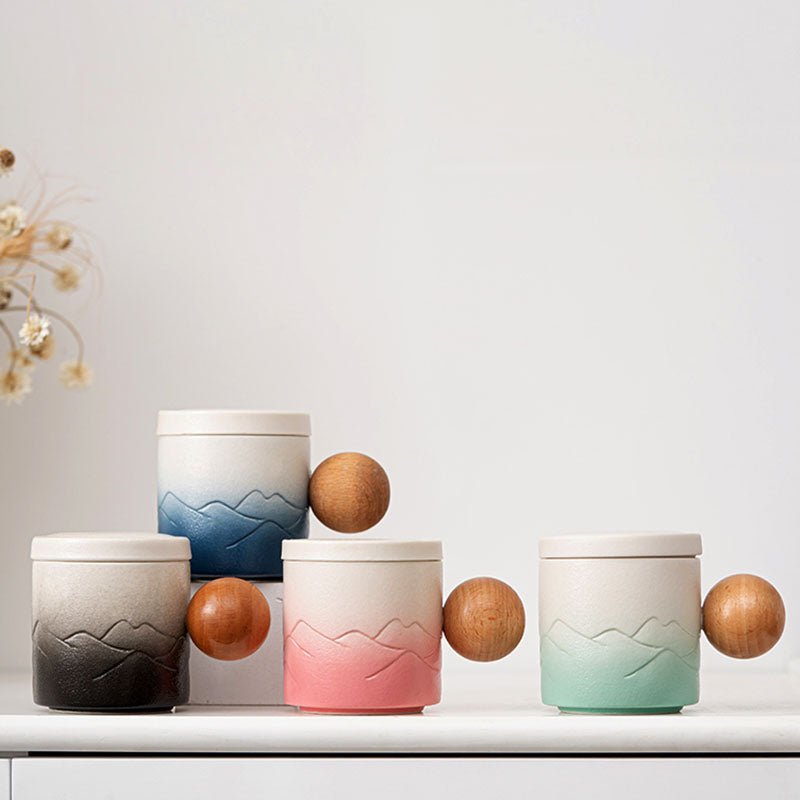
Ceramic Espresso Cup Capacity Guide: 170, 200, or 250 ml?
Reading time: about 9 minutes
A measured 60 ml coffee can sit comfortably inside several cup sizes, yet the experience changes once that cup moves from the kitchen counter to an office desk. A large vessel leaves more open space around a short pour, while a cup filled close to its listed capacity gives little room for carrying, stirring, or adding milk.
This ceramic espresso cup capacity guide compares the three capacities currently listed in our compact espresso-style range: 170 ml, 200 ml, and 250 ml. We are treating those figures as catalog comparison values, not as tested working fill lines. The practical choice depends on the final volume you actually pour and how much empty space you prefer above it.
In our store, we start capacity conversations with the customer's complete drink rather than the espresso portion alone. Milk, water, foam, sweetener, and the space needed to move the cup all affect daily fit.
Ceramic espresso cup capacity guide: what changes at 170, 200, and 250 ml?
All three current options are ceramic vessels, but their listed capacities differ by useful increments. The 200 ml option adds 30 ml over the 170 ml cup. The 250 ml option adds 50 ml over the 200 ml cup and 80 ml over the 170 ml cup. Those differences matter most when a recipe is close to the smaller cup's stated limit.
| Current vessel | Listed capacity | Capacity difference | Practical starting point | Main limitation |
|---|---|---|---|---|
| Retro Coffee Tea Cup | 170 ml | Smallest current option | Compact, measured serving routines | Limited margin for a drink near 170 ml |
| Pleated Coffee Tea Cup | 200 ml | 30 ml more than Retro | Short coffee with added milk or water | May still feel large for a bare espresso |
| Ball Handled Coffee Tea Mug | 250 ml | 80 ml more than Retro | Larger mixed drinks and fewer refills | Not a close-fitting demitasse |
These capacities may all be larger than a traditional single-shot demitasse. If your priority is a close visual fit around one short espresso, even 170 ml can leave substantial empty space. Shoppers who are still comparing forms beyond these three can view our unique ceramic coffee mug collection before settling on a capacity.
Is the 170 ml Retro cup the closest fit for a short serving?
The 170 ml Retro is the smallest current choice, so it is the logical starting point for someone who wants a small espresso cup but also adds a modest amount of milk or water. A measured 120 ml drink leaves a nominal 50 ml difference between the recipe and the listed capacity. At 150 ml, that difference falls to only 20 ml, which may be too tight for someone who carries the cup between rooms or stirs vigorously.
Choose the 170 ml Retro ceramic cup when your final measured drink stays clearly below 170 ml and you want the smallest of these three vessels. It is not the best option for a recipe that regularly approaches 170 ml, nor is it a true substitute for a very small demitasse if close proportions around a single shot are the goal.
Where does the 200 ml Pleated cup's extra 30 ml help?
The Pleated cup makes sense when a familiar recipe feels crowded in a 170 ml vessel but does not call for the full scale of a 250 ml mug. For example, a measured 150 ml drink has a nominal 50 ml difference below the 200 ml listing, compared with 20 ml below the 170 ml listing. That extra room can suit an office serving that includes espresso plus a measured addition without moving to the largest option.
The 200 ml Pleated ceramic cup also provides a visibly pleated form for shoppers choosing by appearance. We do not infer insulation, grip, or drink-specific performance from that form. If your usual recipe is closer to a cortado, our ceramic cortado cup size and headroom guide offers a more focused comparison.
When does the 250 ml Ball Handle cup fit better?
The 250 ml option is the strongest match among these three for a larger milk-added coffee, a lengthened espresso, or a routine designed around fewer trips back to the kitchen. A 190 ml drink exceeds the 170 ml listing and leaves only a nominal 10 ml below the 200 ml listing. The same recipe leaves a 60 ml difference below the 250 ml listing.
Choose the 250 ml Ball Handled ceramic mug when the larger serving is intentional and the visible ball handle suits your preference. The form does not establish ergonomic fit, so assess the product images rather than assuming how it will feel in your hand. This is not a good choice for someone seeking traditional demitasse proportions; a short espresso will occupy only a small part of the vessel. For a milk-forward routine, compare the recipe guidance in our cappuccino ceramic cup size guide.
How much nominal headroom does each capacity leave?
Use your complete drink volume, not the name printed on a cafe menu. Headroom in the table below is simple arithmetic: listed cup capacity minus measured recipe volume. It is not a promise of comfortable usable space, because the catalog capacity does not establish your preferred fill line.
- Record the espresso, milk, water, or other additions used in your normal serving.
- Add those amounts to find the final drink volume before foam.
- Subtract that volume from 170 ml, 200 ml, and 250 ml, then reject any negative result.
- Favor a larger difference if you stir, carry the drink to a desk, or need room above foam.
| Measured drink | 170 ml difference | 200 ml difference | 250 ml difference | Capacity reading |
|---|---|---|---|---|
| 80 ml | 90 ml | 120 ml | 170 ml | All three exceed the recipe; 170 ml is the closest current size |
| 150 ml | 20 ml | 50 ml | 100 ml | 200 ml offers a middle position |
| 190 ml | Recipe exceeds listing by 20 ml | 10 ml | 60 ml | 250 ml provides the clearest listed margin |
| 220 ml | Recipe exceeds listing by 50 ml | Recipe exceeds listing by 20 ml | 30 ml | 250 ml is the only current candidate, but the margin may still feel tight |
Refill patterns can be calculated the same way. Someone drinking 360 ml across three 120 ml pours can use any of the listed capacities. Splitting that total into two 180 ml servings rules out the 170 ml cup by its listed capacity; the 200 ml cup leaves a nominal 20 ml per serving, while the 250 ml cup leaves 70 ml. A larger cup only reduces refills if you actually increase each serving.
Can capacity confirm fit under an espresso machine?
No. Milliliters describe internal volume, not exterior clearance. Machine fit depends on details such as cup height, maximum body diameter, foot width, and how far the handle projects. Those dimensions are not established by the three capacity figures in this comparison.
Measure the vertical distance between your drip tray and brew outlet, then compare it with dimensions stated on the relevant product page. If the needed measurement is not listed, ask before ordering. Do not assume equipment fit, an included saucer, or another accessory from the vessel name or styled product images. Our broader ceramic espresso cup buying guide covers these non-capacity checks in more detail.
What should shoppers check with a ceramic cup after delivery?
Ceramic identifies the material, but it does not by itself confirm a particular dishwasher, microwave, or thermal-shock rating. We advise checking the current product instructions or packaging instead of transferring care assumptions from another ceramic cup.
- Inspect the rim and body: During an everyday or gift unboxing, look under direct light for chips or hairline cracks before the first hot drink.
- Check the handle attachment: Examine both points where the handle meets the body and make sure the cup feels secure before filling it.
- Follow stated appliance guidance: Do not assume dishwasher or microwave suitability unless the current product information confirms it.
- Use conservative hand care when uncertain: Let the cup cool before washing and use a soft sponge. On the Pleated cup, move the sponge through the visible exterior recesses; on the Ball Handle cup, clean and dry around the handle joints.
These checks apply to ceramic drinkware generally and are not claims that a defect will be present. A damaged ceramic vessel should not be used for a hot drink.
Which current size matches your daily routine?
- Short, measured serving: Start with the 170 ml Retro because it is the smallest current capacity, while accepting that a single espresso may still look small inside it.
- Recipe around 140 to 170 ml: Consider the 200 ml Pleated cup because its extra 30 ml creates more nominal room than the Retro.
- Recipe around 180 to 220 ml: Consider the 250 ml Ball Handle mug because the two smaller listings offer little or no remaining capacity.
- Recipe approaching 250 ml: Do not assume the 250 ml listing provides a comfortable fill. A larger vessel from the current coffee mug collection may suit the routine better.
Appearance should break a tie after the volume calculation, not replace it. Retro, pleated, and ball-handle forms are visibly different, but none of those names changes the listed capacity or guarantees drink-specific performance.
Frequently asked questions
Which size does this ceramic espresso cup capacity guide suggest for a single shot?
The 170 ml Retro is the smallest current option, but it may still be larger than a traditional single-shot demitasse. Choose it only if you are comfortable with visible empty space or normally add milk or water. For close demitasse proportions, look for a smaller style.
Is a 170 ml ceramic cup too large for espresso?
It depends on the complete serving and the look you prefer. A bare espresso will occupy a relatively small part of a 170 ml vessel, while a short mixed drink may use the capacity more naturally. Measure your normal pour before deciding.
Should I choose 200 ml or 250 ml for espresso with milk?
Use the 200 ml Pleated cup if the complete measured recipe stays comfortably below 200 ml and you want the middle size. Choose the 250 ml Ball Handle mug when the recipe is larger or you want more nominal room for carrying and stirring. Neither vessel is certified here for a specific coffee recipe.
Are these ceramic cups dishwasher and microwave safe?
Ceramic material alone does not establish dishwasher or microwave suitability. Check the current product page, packaging, or care instructions for the specific vessel before using either appliance. Use conservative handwashing if that guidance is unavailable.
What should I measure before ordering an espresso cup online?
Measure the final volume of your usual drink and the vertical clearance beneath your espresso machine. Then compare the drink against the listed 170 ml, 200 ml, and 250 ml capacities, leaving room for how you carry or stir it. Once those checks are complete, use the CoffeifyMug collection to compare the current visible forms and select the capacity that fits your routine.
Read more
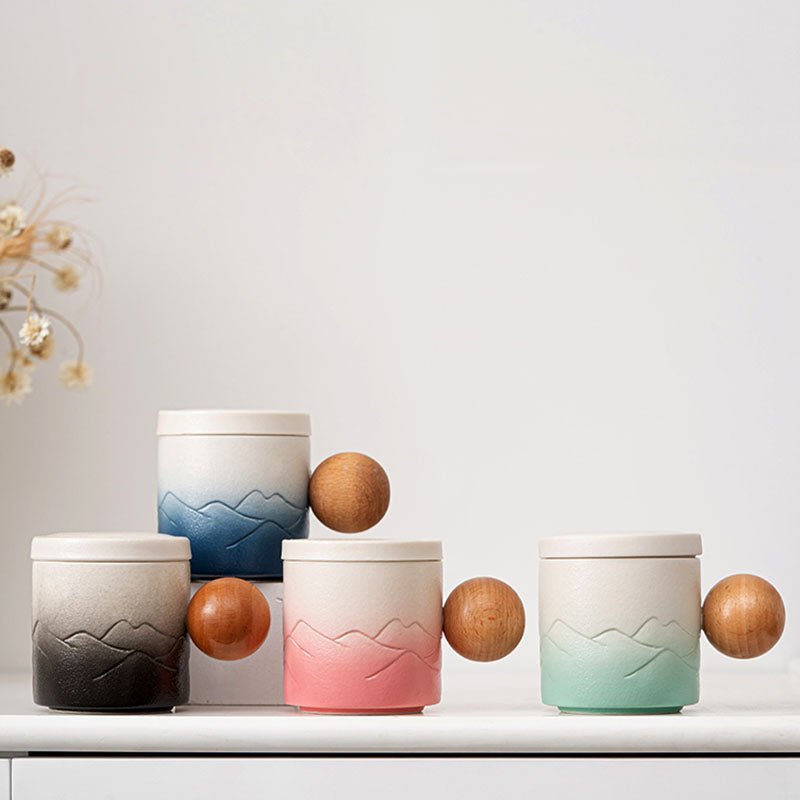
Flat White Cup Capacity Guide: 200 ml, 250 ml, or 270 ml?
Compare CoffeifyMug's listed 200 ml, 250 ml, and 270 ml cups using your usual serving, desired capacity margin, and refill routine. See where each compact option fits and when a larger cup makes mo...
Weiterlesen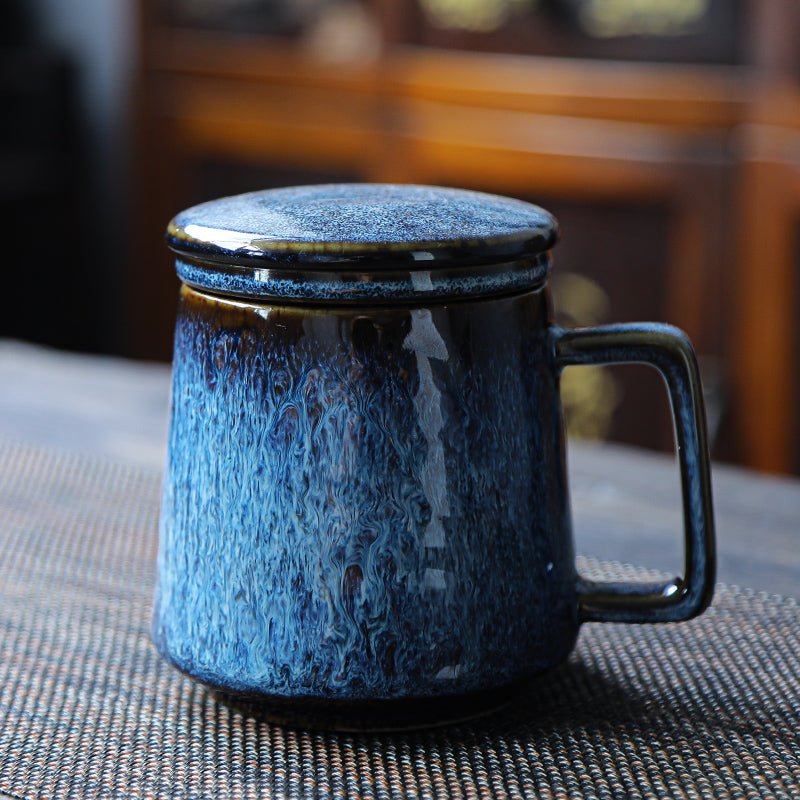
Mocha Mug Capacity Guide: 400 ml, 440 ml, or 480 ml?
Compare The Flow 400 ml, Morning and Night 440 ml, and The Rock 480 ml by serving volume, headspace, and refill routine. See where each capacity fits and what size alone cannot tell you.
Weiterlesen
Hinterlasse einen Kommentar
Diese Website ist durch hCaptcha geschützt und es gelten die allgemeinen Geschäftsbedingungen und Datenschutzbestimmungen von hCaptcha.