
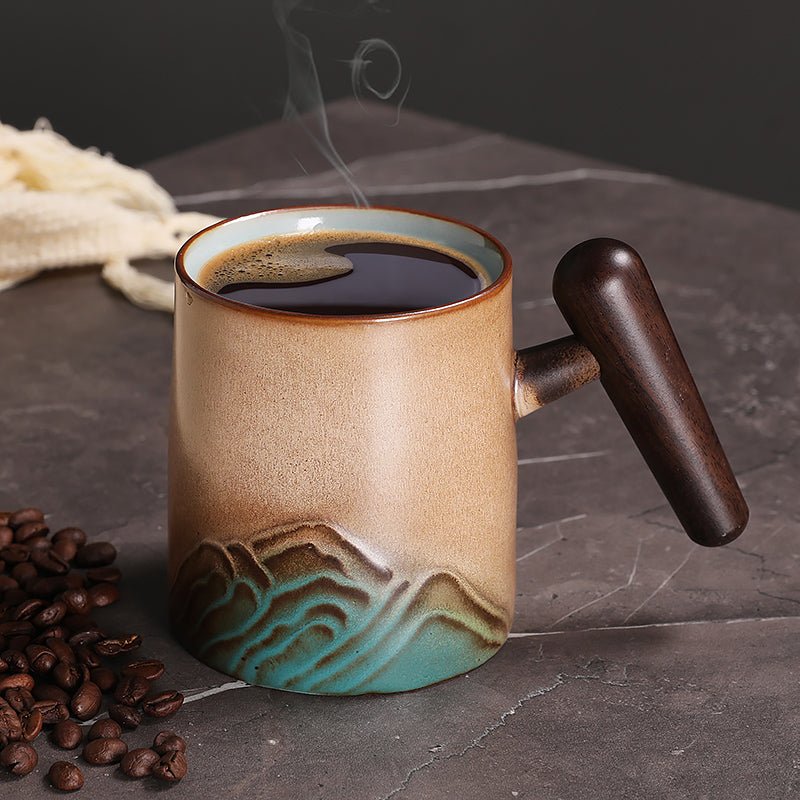
Big Mug of Coffee: How to Choose the Right Large Mug for Daily Use
Reading time: about 8 minutes
A big mug of coffee solves a simple problem: the first cup disappears before the workday really starts. In our store, we see buyers choose larger mugs because they want fewer refills, more room for milk, or a cup that stays comfortable while they answer email. If you want to compare what we carry, start with our all mugs collection. If you already know you want a straightforward everyday pick, look at The Rock Coffee Tea Mug.
We handle this category differently from novelty gift shops. We look at how a mug sits on a counter, how the handle feels after a full pour, and how it survives real use: dishwasher cycles, office desks, and the occasional hard bump against the sink.
We judge a large mug by three things first: the way the handle fits, the way the base sits flat, and the way the rim feels when the cup is full.
What actually makes a big mug worth buying?
A good big mug of coffee is not just oversized. It needs the right balance of capacity, shape, and stability. A mug that holds more liquid but tips easily or feels awkward at the lip is not a better mug. It is just a heavier inconvenience.
In practice, the best large mugs do three things well:
- They hold enough coffee for your actual routine, usually in the 16 oz to 20 oz range for daily use.
- They leave enough room at the top so you can carry the mug without sloshing a full pour onto the counter.
- They feel secure in the hand, with a handle that gives your fingers real clearance instead of forcing a tight grip.
That is why we tell shoppers to think past the photo. A mug can look generous online and still be poor for daily use if the handle is too small, the wall is too thin, or the base feels wobbly on a flat desk.
If you want a broader buying framework, our guide on Big Coffee Cups: How to Choose the Right Large Mug for Daily Use covers the basics in more detail.
Which size should you buy for daily use?
Size is where most people overbuy or undershoot. A big mug of coffee that is too small becomes a refill machine. One that is too large can feel clumsy, especially on a crowded desk or in smaller hands.
| Size range | Best for | Trade-off |
|---|---|---|
| 12 oz to 14 oz | People who want a slightly fuller cup without changing their habits | Not really a large mug; may still need a refill |
| 16 oz to 18 oz | Most daily coffee drinkers, including milk-based drinks | Still comfortable for most hands, but not oversized enough for all-day sipping |
| 20 oz to 24 oz | Long mornings, tea drinkers, and people who want one big pour | Heavier when full and less suitable for small desks or compact storage |
For most shoppers, 16 oz to 18 oz is the sweet spot. It gives enough room for drip coffee plus milk, or tea with a little extra space, without turning the mug into a bowl. Go bigger only if you truly use the volume. A huge mug that stays half full most days is just taking up cabinet space.
For a tighter checklist before checkout, our article on Big Coffee Cups: What to Check Before You Buy a Large Mug is the same framework we use internally.
Which material feels best for a big mug of coffee?
Material changes the feel more than most shoppers expect. Two mugs can hold the same amount and still behave very differently on a kitchen counter or in an office kitchen.
| Material | What it does well | Where it falls short |
|---|---|---|
| Stoneware | Feels sturdy and usually holds heat well | Heavier in the hand, especially at larger sizes |
| Porcelain | Lighter feel and a cleaner, thinner rim | Can feel less rugged if you move it around a lot |
| Glass | Shows the drink and looks clean on a desk | Cools faster and can feel less forgiving for daily use |
| Thick ceramic | Good balance of heat retention and everyday durability | Varies a lot by glaze, wall thickness, and handle shape |
In our experience, buyers usually care about three concrete details more than the label on the box: wall thickness, rim shape, and handle clearance. A thick wall can help the mug hold heat, but it also adds weight. A thin rim can feel nicer at the lip, but it may be less forgiving if the mug gets knocked around. And a handle that only fits one finger is a daily annoyance, not a detail.
If you want a more detailed size-and-comfort breakdown, see Big Coffee Mug Buyer’s Guide: Size, Comfort, and Daily Use.
What should you inspect before you buy?
This is the part shoppers usually skip, and it is the part that matters once the mug is in your kitchen. We check the same things when a product arrives in our store, because the issues show up fast in normal use.
- Handle clearance: Make sure your fingers fit without rubbing the mug body. Two to three fingers is comfortable for most people.
- Base stability: Set the mug on a flat counter and see if it rocks. A slightly uneven foot ring becomes annoying every day.
- Rim comfort: A smooth rim matters more than decoration. You feel it every sip.
- Glaze consistency: Look for pinholes, rough spots, or uneven finish around the handle join and the foot.
- Chip-prone points: Check the rim and handle edges. Those are the spots that usually show wear first after repeated washing.
Dishwasher use is another practical check. If a mug is listed as dishwasher-safe, we still treat the top rack as the gentlest default. If it is not dishwasher-safe, hand-washing is not optional. We also avoid sudden temperature swings, because that is where hairline cracks can show up first, especially near the rim or handle join.
A big mug is not the best choice if you want a travel cup, a car cup holder fit, or something ultralight for carrying around the house. It is a better choice for a desk, a breakfast table, or a slow evening cup where volume matters more than portability.
Which big mug fits your routine best?
The right mug depends on how you drink, not just what you like in the product photo. We think of it in practical use cases.
- For office desks: Pick a stable mug with a balanced base and enough handle space that you can lift it without rearranging your keyboard.
- For home mornings: A heavier stoneware or thick ceramic mug can feel right because it keeps heat in and sits calmly on the counter.
- For tea drinkers: A larger mug works well if you steep loose leaf or want one long pour without refilling.
- For gift buyers: Choose a shape that looks good unboxed and still feels useful after the novelty fades.
If you are choosing for someone else, a simple design is safer than an elaborate shape. The mug should be easy to wash, easy to hold, and easy to store. Big mugs that are too wide can hog shelf space. Very tall mugs can be awkward under cabinets. These are small trade-offs, but they matter once the mug becomes part of a daily routine.
For shoppers who want a dependable starting point, The Rock Coffee Tea Mug is the kind of everyday large mug we point to when someone wants function first. If you want to compare more options around it, keep the all mugs collection open while you decide.
Is a big mug of coffee always the right choice?
No. If you drink espresso, short Americanos, or small pour-over servings, a big mug can work against the drink. It cools faster in a wider vessel, and the proportions can feel off. A smaller cup usually makes more sense for concentrated coffee.
The same is true if you have limited cabinet space or you prefer very light drinkware. A large mug is a commitment. It takes more room in the dishwasher and more room on the shelf. That is fine if you use it every day. It is wasted space if you only reach for it once a week.
That is why our advice stays simple: buy the size you will actually fill, not the largest size you think you might need someday.
Frequently asked questions
How many ounces should a big mug of coffee be for daily use?
For most people, 16 oz to 18 oz is the practical range. It is large enough for a full coffee serving with room for milk, but not so big that the mug becomes hard to handle or store. Go up to 20 oz or more only if you regularly drink a larger pour.
Is a heavy mug better than a lighter one?
Not always. A heavier mug often feels more stable and can hold heat well, but it can also be tiring if you drink from it all morning. A lighter mug is easier to lift and move, but it may feel less solid on the desk.
Can a big mug go in the dishwasher?
Only if the listing says it can. If it is dishwasher-safe, the top rack is usually the gentlest option. We also recommend checking the rim, handle join, and glaze after a few cycles so you can catch wear early.
What should I avoid in a large coffee mug?
Avoid a handle that feels cramped, a base that rocks, and rough glaze near the rim. Those issues sound minor until you use the mug every day. If the mug is uncomfortable empty, it will be worse when it is full.
Is a big mug good for tea as well as coffee?
Yes, if you actually like a larger serving. Tea drinkers often appreciate the extra volume, especially for long steeping sessions or herbal blends. If you prefer smaller, hotter servings, a medium mug may suit you better.
If you are narrowing your options now, compare three things first: stated capacity, handle clearance, and base stability. Then browse our all mugs collection and choose the mug that matches your daily pour, not just the photo.
Read more
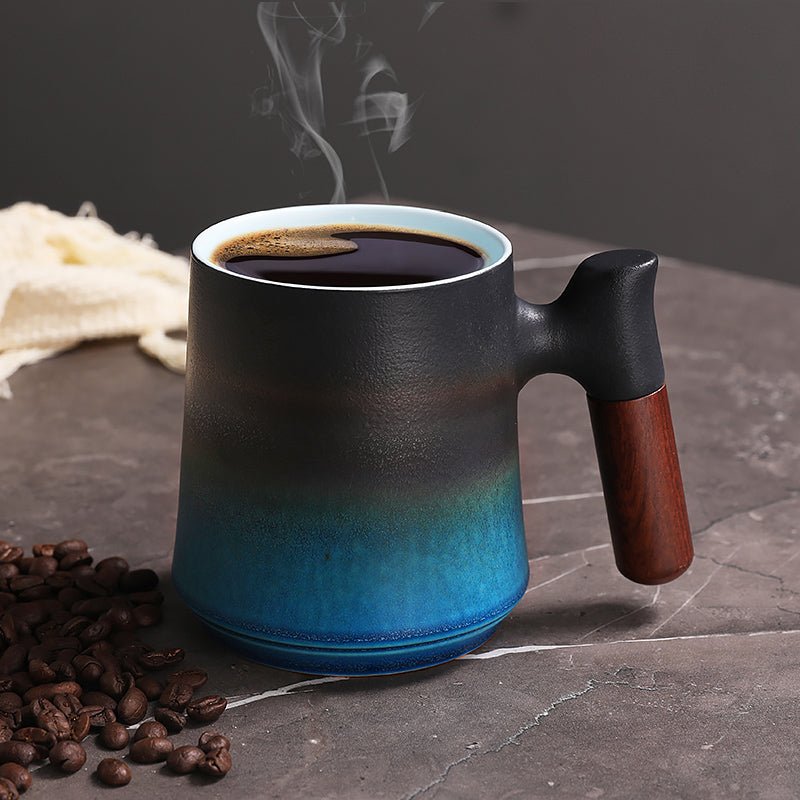
Ceramic Coffee Mugs 20 oz: What to Check Before You Buy
Compare ceramic coffee mugs 20 oz by handle comfort, heat retention, glaze quality, and day-to-day care. This guide helps you pick a mug that works at the desk, at breakfast, and after repeated was...
Weiterlesen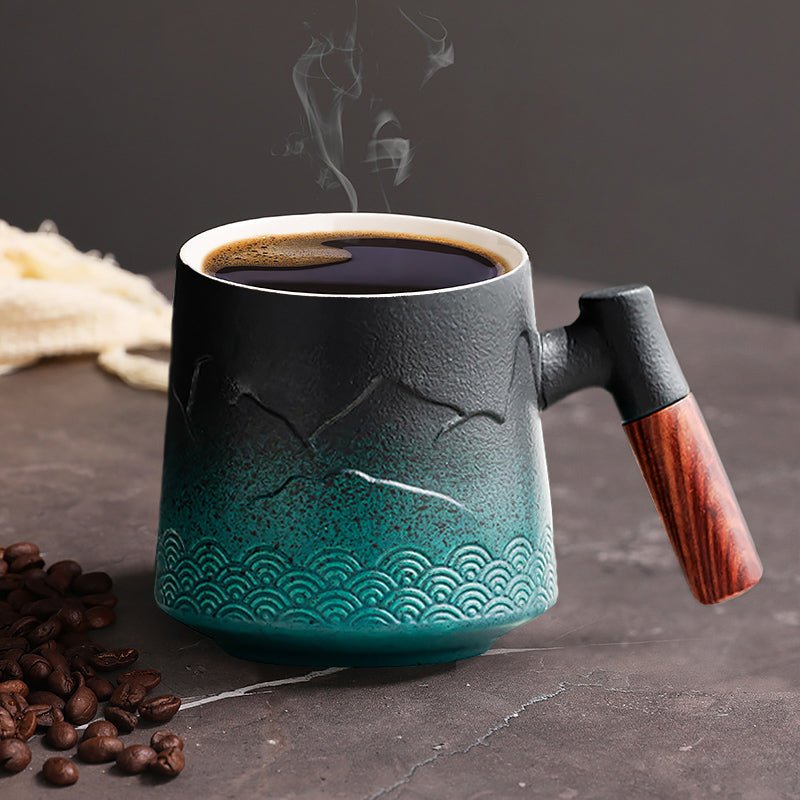
Coffee Mugs with Logos: Practical Buying Guide
Coffee mugs with logos need to do more than display a mark. We compare shapes, sizes, care, and real-world trade-offs so you can pick one that looks good on a desk and holds up in daily use.
Weiterlesen
Hinterlasse einen Kommentar
Diese Website ist durch hCaptcha geschützt und es gelten die allgemeinen Geschäftsbedingungen und Datenschutzbestimmungen von hCaptcha.