
Apple Cider Mug Capacity Guide: 400 ml vs 480 ml
Reading time: about 9 minutes
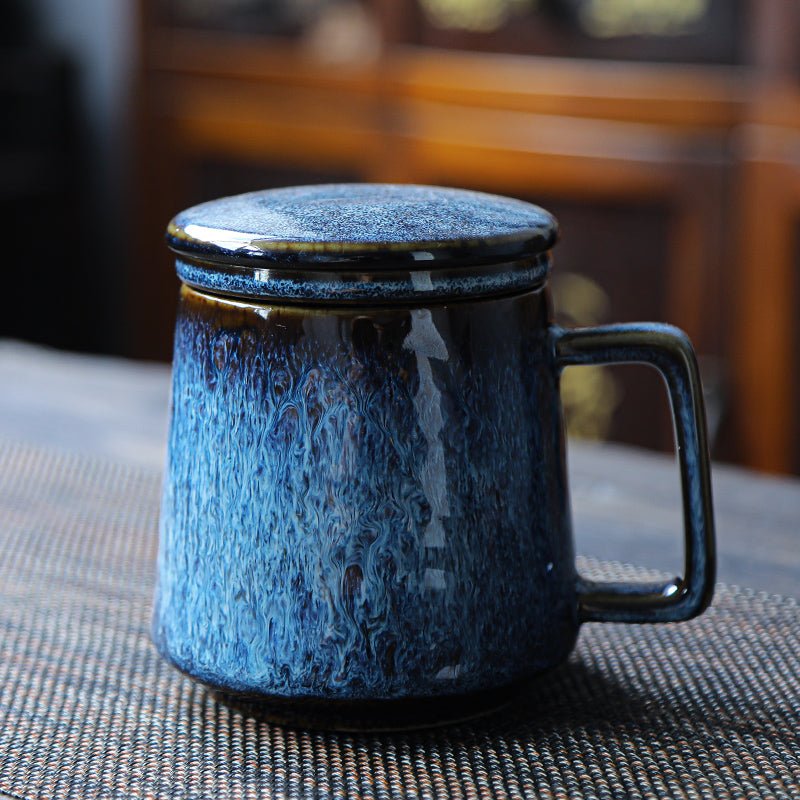
A mug that looks generous on a product page can feel quite different after the first pour. Fill it close to the rim and carrying it from the kitchen counter becomes awkward; leave practical headroom and the serving may be smaller than expected. Our apple cider mug capacity guide keeps the comparison narrow: the Gradient Coffee & Tea Mug and Flow Coffee & Tea Mug are each listed at 400 ml, while Rock Coffee & Tea Mug is listed at 480 ml.
That 80 ml gap is the key buying variable. It can mean a slightly longer serving or more room below the rim, but it also creates a larger mug to hold, place, wash, and store. We sell these as everyday ceramic mugs, so this guide does not assume specialized heat retention, included cider ingredients, a lid, or bundled serving accessories. Shoppers who want to compare the broader visual range can also browse our unique coffee mug collection.
Apple cider mug capacity guide: 400 ml or 480 ml?
The best capacity depends less on the maximum amount you can pour and more on how you actually drink cider. A listed capacity is a useful comparison figure, but a comfortable working pour normally leaves space below the rim. That space matters if you carry the mug across a room, stir the drink, or add anything after pouring.
| Current mug | Listed capacity | Best daily fit | Main trade-off |
|---|---|---|---|
| Gradient | 400 ml | Moderate serving and regular refills | Less spare volume than the 480 ml option |
| Flow | 400 ml | Moderate serving with style and handle fit deciding the choice | No capacity advantage over Gradient |
| Rock | 480 ml | Longer serving or more room below the rim | Larger volume to lift, wash, and store |
For a shopper who finishes a serving before it sits for long, 400 ml is often the more straightforward daily size. For someone who dislikes returning to the kitchen or wants extra headroom, 480 ml has the clearer advantage. The larger number does not automatically make the mug better: a bigger ceramic mug may feel less convenient on a compact desk or in a shallow cupboard.
How does a 400 ml mug fit kitchen and office routines?
Both Gradient and Flow occupy the same position in this capacity comparison. We would point a shopper toward 400 ml when the routine involves a measured pour, a mid-session refill, or limited surface space. On an office desk, a moderate mug is generally easier to position beside a keyboard, notebook, and phone than a mug selected mainly for maximum volume.
- Choose Gradient at 400 ml if you want a moderate cider serving and its appearance and handle presentation suit your grip. Review the product images before ordering, especially if you use three or four fingers inside a handle rather than holding it with two.
- Choose Flow at 400 ml for the same serving volume when its overall design is the better match for your kitchen, desk, or gift recipient. Since capacity is equal, the decision should move to handle clearance, visual style, and storage fit.
- Skip both 400 ml options if your main frustration is frequent refilling. The 480 ml Rock is the direct step up in the current group.
The equal capacity is useful because it prevents style from being confused with serving size. Gradient and Flow do not offer different refill patterns on the strength of volume alone. If you also use the mug for another seasonal drink, our hot cocoa mug capacity comparison applies the same 400 ml versus 480 ml distinction to a different serving routine.
Who gets practical value from the Rock's 480 ml capacity?
The Rock's listed 480 ml capacity adds 80 ml over Gradient and Flow. We see the strongest fit for someone who pours once, settles at a desk or sofa, and would rather not interrupt that routine for an early refill. It also gives the buyer more flexibility to stop below the rim while still retaining a comparatively generous serving.
The trade-off is physical. More liquid adds carrying weight, and the ceramic vessel itself still needs room in the cupboard and dishwasher rack. The Rock is not the best default for a shopper with limited grip comfort, a tightly packed desk, or a preference for small, frequently refreshed servings. In those situations, one of the 400 ml mugs is the more practical option even though it holds less.
Our rule in the store is simple: buy 480 ml because you will use the extra room, not because the larger number sounds more substantial.
A similar decision appears with other warm drinks. The 400 ml and 480 ml hot toddy mug guide is useful for shoppers comparing occasional evening servings with longer, slower sipping.
How should handle shape affect a capacity decision?
Capacity describes the vessel, not the grip. Two mugs with the same 400 ml listing can feel different because the handle opening, curve, and distance from the mug body affect finger clearance and leverage. We do not treat a handle as decorative when helping someone compare mugs; it is one of the parts handled most often and one of the common impact points during washing and storage.
Use the product photographs to check three details before choosing:
- Finger clearance: Look at the open space inside the handle and consider how many fingers you normally use. A buyer with larger hands should not assume every 400 ml mug provides the same grip.
- Handle position: Check where the handle joins the ceramic body. The visual placement helps you judge how the mug may balance as the serving level drops.
- Storage exposure: A handle that extends farther from the body needs more shelf width and is easier to knock against neighboring mugs. Avoid forcing ceramic handles into an overcrowded cupboard.
We cannot reduce those preferences to one universal winner. Gradient and Flow share a capacity, so handle presentation and design are legitimate deciding factors between them. Rock provides more volume, but shoppers should still confirm that its pictured grip suits the way they lift a fuller mug.
What does everyday ceramic care add to the comparison?
Ceramic is well suited to ordinary kitchen and desk use, but it is not impact-proof. Rim chips, handle knocks, and abrupt temperature changes are practical concerns that capacity charts do not show. Larger mugs also require more clearance during washing, particularly around the handle and rim.
- Check the individual product page for current care instructions before placing any mug through repeated dishwasher cycles. Do not assume care compatibility from capacity alone.
- Avoid moving a hot ceramic mug directly into very cold water. Sudden temperature changes can place unnecessary stress on ceramic.
- Leave enough room around the handle in a dishwasher rack or drying area so it does not strike another item.
- Inspect the rim and handle attachment if the mug has taken a hard knock. A chipped drinking rim or damaged handle is a reason to stop using it.
- Store mugs without wedging their handles together. Crowded storage can turn routine removal into repeated ceramic-on-ceramic contact.
None of these current options should be mistaken for a lidded commuter cup or a specialized insulated vessel. If your cider routine involves a car journey, a long outdoor session, or leak resistance inside a bag, a different product category would suit you better. These mugs are a fit for ordinary ceramic use at home, at a desk, or in a break room.
Which refill pattern matches each current mug?
Think through one normal serving rather than an idealized special occasion. In our experience, that produces a more useful answer than choosing by the largest listed capacity.
- One moderate pour, then a planned refill: Choose the 400 ml Gradient or Flow. Select between them by handle presentation and design preference.
- One longer pour with fewer trips back to the kitchen: Choose the 480 ml Rock. Its additional 80 ml is the only capacity increase in this current comparison.
- You fill close to the rim and often spill while walking: Consider the 480 ml option but use the extra capacity as headroom rather than automatically adding more cider.
- You stop drinking before a large serving is finished: Stay with 400 ml. More capacity will not solve a pacing problem and may simply leave more drink sitting.
- You are buying a gift without knowing the recipient's habits: A 400 ml mug is the moderate choice; 480 ml is better only when you know they prefer larger servings. Our coffee mug gift capacity guide covers that decision in more detail.
Frequently asked questions
Is a 400 ml or 480 ml mug better for apple cider?
A 400 ml mug fits moderate servings and shoppers who do not mind refilling. A 480 ml mug is better for a longer pour or for leaving more room below the rim, but it also takes up more space and holds more weight when full.
How much larger is the Rock than Gradient and Flow?
The Rock is listed at 480 ml, while Gradient and Flow are each listed at 400 ml. The difference is 80 ml. That is enough to affect refill timing and headroom, but it does not make the larger mug the right fit for every grip, shelf, or desk.
Does this apple cider mug capacity guide assume a brim-full pour?
No. The listed capacities are the cleanest way to compare the mugs, but a practical serving should account for room below the rim. Leave more space if you will stir the drink or carry the mug from one room to another.
Are cider ingredients, lids, or insulation included with these mugs?
This comparison covers ceramic mug capacity only and does not imply included cider ingredients, lids, bundled accessories, or specialized temperature performance. Check each product page for the exact current product details before ordering.
Can I choose between Gradient and Flow by capacity?
No, because both are listed at 400 ml. Compare their product images, handle presentation, and overall appearance instead. If capacity is the deciding factor and you want more room, move to the 480 ml Rock.
Use this checklist before placing your order
- Pick 400 ml for a moderate serving and normal refill routine.
- Pick 480 ml for a longer serving or additional space below the rim.
- Compare handle clearance in the product images, especially for larger hands.
- Confirm that the mug will fit your usual shelf, desk, and washing setup.
- Choose by actual daily use, not by the largest capacity number.
Start with the current unique coffee mugs, then compare Gradient, Flow, and Rock against this checklist. The useful decision is not simply 400 ml versus 480 ml; it is which capacity and handle fit you will reach for during an ordinary cider break.
Read more
Dandelion Coffee Mug Capacity Guide: 400 ml vs 480 ml
Compare the 400 ml Gradient and Flow mugs with the 480 ml Rock. See how the 80 ml difference affects refills, desk use, handle comfort, tea, and gifting.
Weiterlesen
Clay Pottery Coffee Mugs Capacity Guide: 200, 270 & 350 ml
Compare 200, 270, and 350 ml clay pottery coffee mugs by practical fill, refill frequency, drink style, and daily setting. See which current mug best matches a compact pour, standard coffee, or lon...
Weiterlesen
Hinterlasse einen Kommentar
Diese Website ist durch hCaptcha geschützt und es gelten die allgemeinen Geschäftsbedingungen und Datenschutzbestimmungen von hCaptcha.