
Antique Coffee Mug Buying Guide: What to Check Before You Buy
Reading time: about 9 minutes
An antique coffee mug looks simple on a shelf. In use, it is a different story. The rim has to feel comfortable, the handle has to clear your fingers, and the glaze has to survive real life on a kitchen counter, office desk, or gift table without becoming a chip magnet after a few dishwasher cycles.
We handle mugs for buyers who want the charm of a vintage look without the hassle of a fragile collector's piece. That is the frame we use here: what makes an antique coffee mug worth buying, what to check before you order, and when a more modern mug is the better choice.
What should you check first in an antique coffee mug?
Start with the parts you touch every day. A mug can look beautiful in photos and still be awkward in the hand. We look at the rim, handle, base, and glaze before anything else.
The most common issues we see in this category are not dramatic. They are small, practical defects that matter after a week of use: a handle that pinches two fingers, a rim that feels rough, a base that wobbles on a desk, or a glaze that shows visible crazing. Those details are easy to miss online and annoying to live with.
- Rim comfort: A thin, even rim usually drinks better than a thick, uneven one.
- Handle clearance: Make sure you can fit at least two fingers through the handle without scraping the cup wall.
- Base stability: A flat, well-finished foot ring matters more than people expect on a mug used at work.
- Glaze condition: Look for smooth coverage inside and out, with no rough spots where coffee residue can build up.
If you are comparing sizes at the same time, our 11 oz Coffee Mug: Size, Fit, and What to Check Before You Buy guide is a useful companion. Size affects comfort more than most shoppers expect, especially if you drink at a slower pace.
Is an antique coffee mug good for everyday use or just display?
Some antique-style mugs are clearly meant for display. Others are made to live on a counter and be washed every day. The difference usually shows up in the finish, thickness, and how the handle is built.
For daily use, we want a mug that feels sturdy without being bulky. A little weight is fine. Too much weight, and the mug becomes tiring for office use or for people who like to drink one-handed while typing, reading, or moving around the kitchen. Thin decorative mugs can look elegant, but they are often not the right fit if you want something that survives regular dishwasher cycles and constant handling.
We generally see three use cases:
- Daily coffee: Best for people who want a dependable mug that feels comfortable and easy to clean.
- Desk mug: Best if the base is stable and the handle stays clear of the mug body.
- Display or gifting: Best if the shape and finish matter more than hard-wearing utility.
An antique coffee mug is not the best choice if you want ultra-light travel convenience, a sealed lid, or double-wall insulation. For that, another mug style or a travel cup makes more sense.
What materials and finishes hold up best?
In this category, ceramic and stoneware are the most common materials we see. Porcelain tends to look more delicate and refined. Stoneware usually feels heavier and more grounded in the hand. Ceramic mugs sit somewhere in the middle depending on thickness and glaze.
The finish matters just as much as the body. A glossy glaze is easier to wipe clean and usually shows stains less readily than a more porous or matte finish. On the other hand, some buyers prefer a matte surface because it looks more antique or earthy. That is a style choice, but it comes with trade-offs: matte finishes can show utensil marks, fingerprints, or tea staining more easily.
We also pay attention to the inside of the cup. A fully glazed interior is easier to rinse after coffee, tea, or cocoa. If the inside has texture, ridges, or an intentionally rustic surface, it may look interesting but it is less forgiving with daily cleaning.
For readers who are comparing practical sizes and use cases, our 12 Ounce Coffee Mug Buying Guide for Daily Use and Better Fit breaks down how capacity affects what actually feels usable at the table or desk.
Which mug shape feels best in the hand?
Shape changes the buying decision more than most shoppers realize. A tall mug feels elegant and can suit black coffee, pour-over, or tea. A wider mug can be easier to clean and may feel more stable, but it can also cool drinks faster because of the larger surface area.
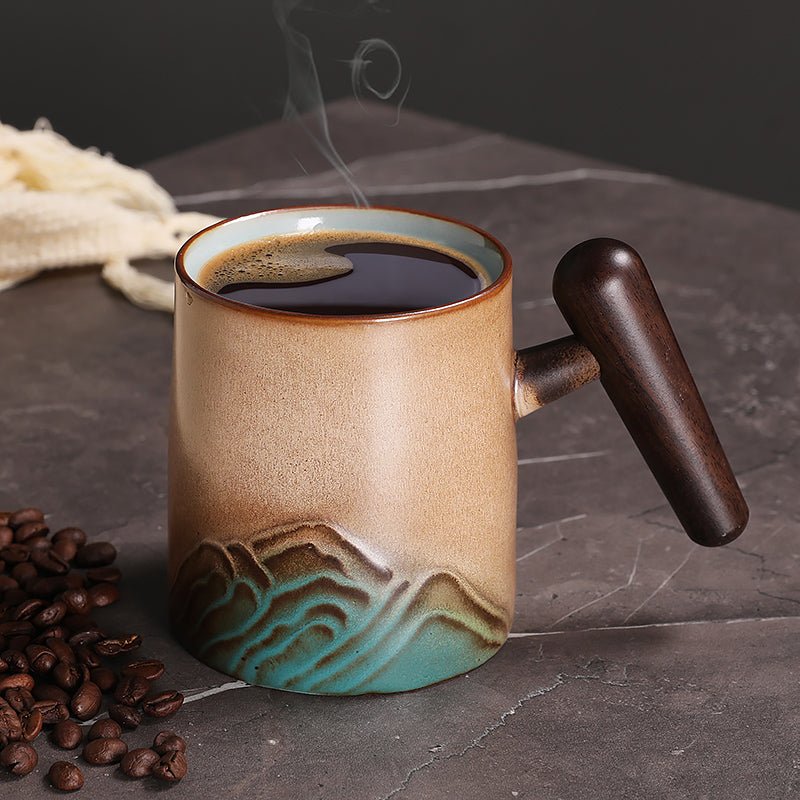
If you like a vintage look with a slightly taller profile, the Landscape Tall Coffee Tea Mug is the sort of silhouette that works well for a shelf, a breakfast table, or a desk where you want a cleaner vertical line. If you want a more grounded everyday shape, the Great Mountain Coffee Tea Mug leans into a sturdier, classic feel.
There is no single best shape. The right choice depends on what you value most:
- Taller profile: More elegant, often better for sipping slowly.
- Wider profile: Easier to rinse and usually feels more casual.
- Heavier base: More stable on a desk or side table.
- Balanced handle: Better for people who carry their mug around the house.
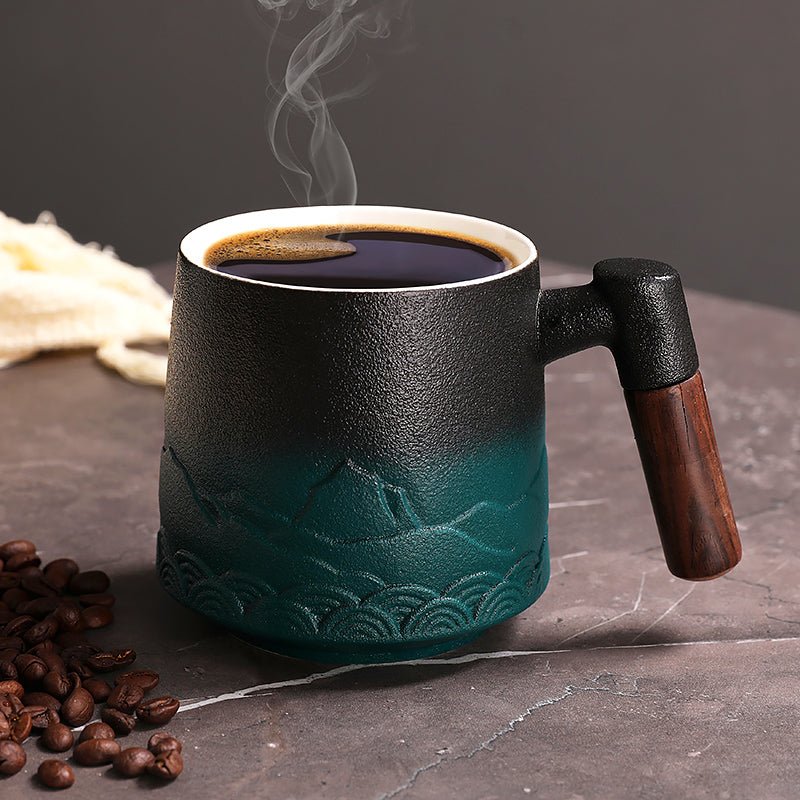
If you are shopping for color as much as form, the Emerald Coffee Tea Mug is the kind of finish that can carry the antique look without needing a fully distressed design. In our experience, rich glaze colors often read as more premium in person than they do in a product thumbnail.
How do you tell a good gift mug from a good personal-use mug?
Those are not always the same thing. A gift mug needs instant visual appeal. A personal-use mug needs comfort and durability. If you are buying for someone else, the safest route is to choose a shape that looks special but still works in a normal dishwasher and on a normal mug shelf.
When we help shoppers choose a gift, we usually ask three questions:
- Will this person use it every morning, or mostly display it?
- Do they prefer a lighter cup or something with more weight?
- Do they drink coffee, tea, or both?
An antique coffee mug makes a strong gift when the finish feels thoughtful, the handle is comfortable, and the design does not force the recipient into babying it. If the mug is too ornate, too fragile, or too narrow to clean easily, it may look better unboxed than it performs on day three.
For shoppers comparing multiple styles, our full collection is the fastest way to compare shape and finish across our current range before committing to one piece.
What should you avoid if you want the mug to last?
A few warning signs are worth watching for. None of these automatically make a mug bad, but they are common failure points.
- Rough glaze at the rim: It can feel scratchy against the lips and may chip more easily.
- Hairline crazing: Fine surface cracking in the glaze can be decorative, but it can also collect stains and make cleaning harder.
- Sharp handle edges: A handle that looks artistic but feels harsh in the hand is a poor daily-use choice.
- Unfinished base: A rough foot ring can scuff a tabletop or leave dust on shelves.
- Overly thin walls: These can look elegant, but they may feel fragile and cool down too quickly.
We also avoid pretending that every antique coffee mug is microwave-safe or dishwasher-safe by default. Some are, some are not, and the finish and construction matter. If the product details are unclear, treat that as a signal to slow down rather than guess.
We think the best antique coffee mug is the one that still feels good after the novelty wears off: comfortable to hold, easy to clean, and attractive enough that you do not mind seeing it on the counter every day.
How does an antique coffee mug compare to a modern everyday mug?
A modern mug usually wins on consistency. An antique-style mug usually wins on character. The right call depends on what you are trying to solve.
| What matters | Antique coffee mug | Modern everyday mug |
|---|---|---|
| Look | More character, more visual warmth | Cleaner, simpler, more uniform |
| Hand feel | Can vary more by shape and glaze | Usually more predictable |
| Cleaning | Depends on glaze and finish | Usually easier if the surface is plain |
| Gift appeal | Strong when the finish is distinctive | Safer if the recipient prefers minimalism |
| Best use | Home coffee, tea, display, gifting | Routine desk use, bulk replacement, simple setups |
If you want something that feels more personal than a standard white mug but still practical enough for weekday use, that is exactly where antique-style designs work best. If you need a mug for rough treatment, tight cabinet storage, or heavy travel use, a simpler modern design is probably the better fit.
Frequently asked questions
Is an antique coffee mug safe for daily coffee use?
Usually yes, if the mug is built for everyday drinkware and the glaze is smooth and intact. We would avoid using any mug with interior cracks, rough chips, or an unsealed surface that stains quickly. If care instructions are unclear, treat it as a display-first piece until you confirm otherwise.
What size antique coffee mug is best for most people?
A mid-size mug is usually the safest choice for daily use because it balances comfort, capacity, and weight. If you drink small servings or tea, a slimmer mug can feel better. If you like a larger morning pour, check our size-focused guides before choosing a shape.
Can an antique coffee mug go in the dishwasher?
Some can, but not all. Painted details, metallic accents, and delicate glazes may need hand washing to stay in good shape. We recommend checking the care notes before using a dishwasher cycle, especially if the mug has a finish that looks handmade or heavily decorative.
What makes an antique coffee mug a bad buy?
Uneven glaze, a rough drinking edge, a handle that does not fit your fingers, and a base that rocks on the table are all reasons to pass. A mug can look beautiful and still be frustrating if it does not feel stable or easy to clean. The best one balances appearance with practical comfort.
Is an antique coffee mug a good gift?
Yes, if the design feels special without being impractical. A mug that is attractive, sturdy, and easy to use usually lands better than one that looks fragile or overly decorative. For gifting, we prefer a shape that works for both coffee and tea so the recipient is not boxed into one habit.
If you are ready to compare actual shapes and finishes, start with the full collection, then compare the Great Mountain Coffee Tea Mug, Emerald Coffee Tea Mug, and Landscape Tall Coffee Tea Mug against the checklist above: rim comfort, handle clearance, base stability, and glaze finish.
More from our blog
Read more
18 oz Coffee Mugs: What to Check Before You Buy
18 oz coffee mugs give you real room for a full pour, milk, and a little breathing space at the top. Here’s how we compare shape, comfort, and daily-use trade-offs before recommending one.
Weiterlesen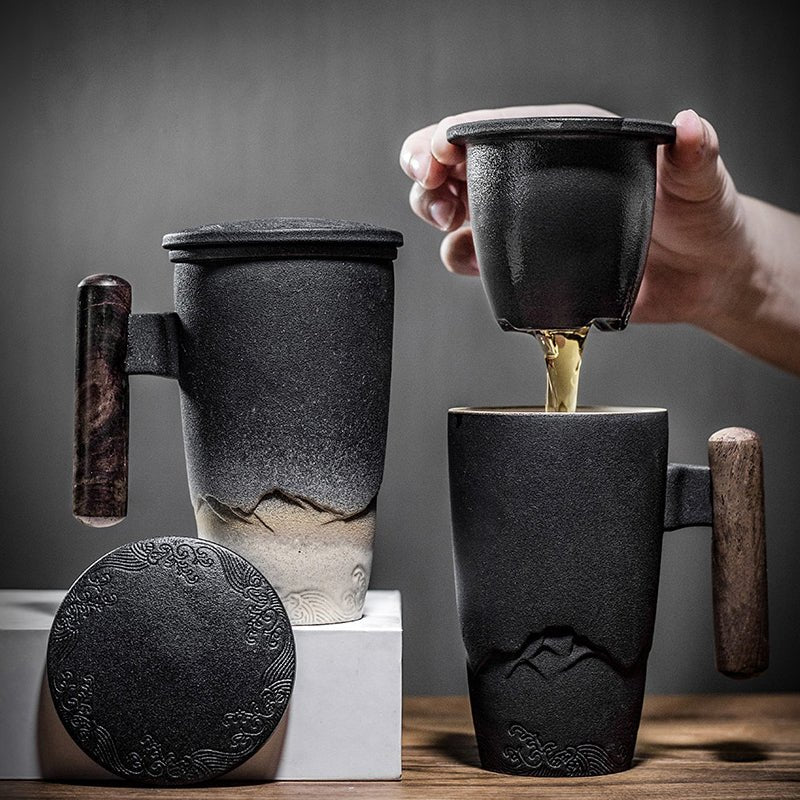
Best Coffee Mug for Desk Use: Round vs Tall vs Pleated
A desk mug needs to clear a keyboard, sit stable beside a laptop, and still feel good in the hand. This comparison breaks down round, tall, and pleated options by footprint, capacity, and handle co...
Weiterlesen
Hinterlasse einen Kommentar
Diese Website ist durch hCaptcha geschützt und es gelten die allgemeinen Geschäftsbedingungen und Datenschutzbestimmungen von hCaptcha.