
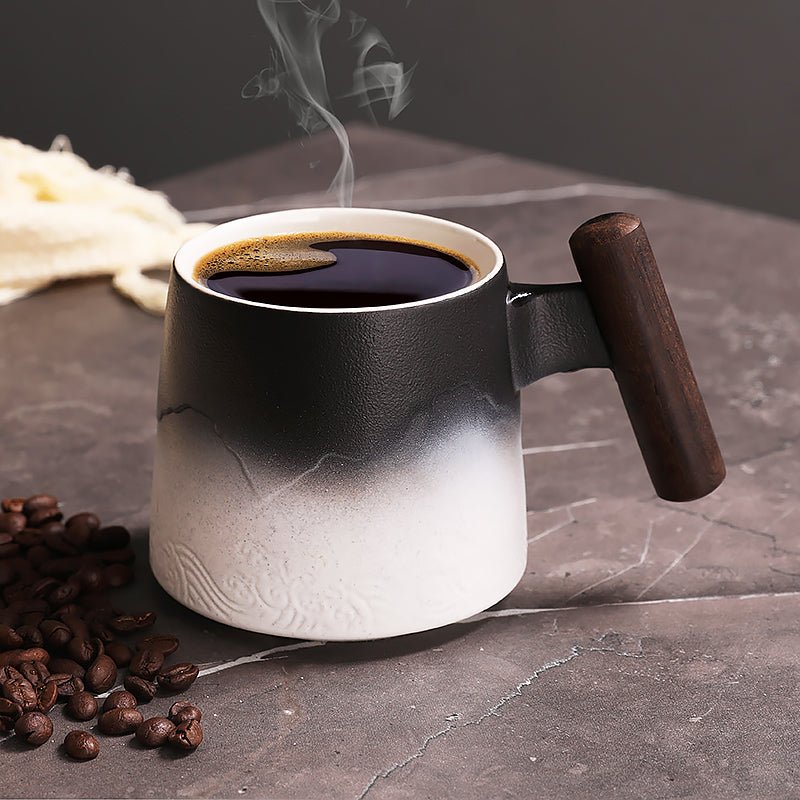
Pat's Coffee Mug: What to Check Before You Buy or Replace One
Reading time: about 10 minutes
A mug can look right on a product page and still feel wrong on a kitchen counter. That is usually how pat's coffee mug gets chosen too fast: the size is a little off, the handle is tight, or the finish looks nice but does not hold up to a real dishwasher cycle.
In our store, we see the same pattern over and over. Buyers are not really looking for a mug in the abstract. They are trying to solve a daily routine problem: a desk mug that keeps coffee comfortable, a gift that feels personal, or a replacement for a favorite cup that finally chipped. This guide is built around those real use cases, not around vague product language.
If you already know you want to compare current options, our products page is the fastest place to look at what we carry right now, and our full collection is useful if you want to compare shapes and finishes side by side.
What is pat's coffee mug supposed to do every day?
Start with the actual routine, not the photo. A mug for a quick morning pour is different from a mug that sits next to a laptop for two hours. If pat's coffee mug is mostly for drip coffee at home, a standard mug size and a comfortable handle matter more than an oversized capacity. If it is for tea, cocoa, or a second refill later in the day, heat retention and a wider opening may matter more.
We usually break the decision into three everyday scenarios:
- Kitchen counter use: the mug needs to sit flat, rinse easily, and fit under a home coffee maker.
- Office desk use: the mug should feel balanced, not top-heavy, and the handle should not crowd a notebook or keyboard.
- Gift use: the mug should feel easy to use right away, without requiring special care or a very specific drink size.
A mug that is perfect for one of those settings can be annoying in the others. A very large cup is not great if Pat likes smaller pours. A compact mug is not great if Pat pours a full travel tumbler refill into a ceramic cup. That trade-off is normal, and it is why we ask how the mug will actually be used before we recommend one.
What size fits Pat's coffee routine?
Size is the first thing to get right because it changes everything else: heat loss, handle feel, and how often the mug gets refilled. If you want a deeper comparison, our size guides for 11 oz Coffee Mug: Size, Fit, and What to Check Before You Buy, 16 Ounce Coffee Mug Buyer’s Guide: Size, Material, and Fit, and 20 oz Coffee Mug: What to Check Before You Buy cover those sizes in more detail. For larger everyday cups, the 24 Ounce Coffee Mug Buyer’s Guide: Size, Fit, and What to Check is also useful.
| Capacity | Best for | Trade-off to watch |
|---|---|---|
| 10 oz | Smaller pours, espresso drinks, compact desks | Less room for milk or a larger coffee pour |
| 11 oz | Standard everyday coffee | Can feel small if Pat drinks a long, slow cup |
| 12 oz | Balanced daily use and a little extra room | Still not ideal for someone who wants a big refill-sized mug |
| 15 oz | Longer sipping sessions and bigger home pours | Heavier when full and takes more cabinet space |
| 16 oz | People who want a fuller mug without jumping to oversized | Can be too much for a small morning serving |
| 20 oz | Big coffee drinkers and long desk sessions | Not the best pick if Pat prefers a lighter cup |
| 24 oz | Very large pours or shared kitchen settings | Bulky, heavier, and not the best everyday choice for everyone |
If Pat drinks one standard mug and is done, 11 oz or 12 oz is usually the cleanest fit. If Pat routinely pours a second splash of coffee or likes a mug that doubles as a small bowl of tea, 15 oz or 16 oz makes more sense. Large sizes can be useful, but they are not automatically better. Bigger mugs are harder to store, slower to warm, and more likely to feel awkward in one hand.
Which material and finish should you choose?
Most buyers focus on the print or color first. We look at the body of the mug. Ceramic is the most common everyday choice because it is familiar, easy to clean, and usually comfortable on a desk or counter. Stoneware tends to feel heavier and more substantial in the hand, which some people like because it feels solid and a bit more insulating. Porcelain is typically lighter and can feel more refined, but it may also feel more delicate in daily handling.
There is no single winner here. The right choice depends on how the mug will live in the house:
- Ceramic: practical for daily use, easy to match with a kitchen, and usually the safest general recommendation.
- Stoneware: good if Pat likes a heavier mug that feels sturdy, but not ideal if a lighter cup is preferred.
- Porcelain: a clean, lighter feel that works well for gift-giving, but it can feel less rugged.
Finish matters too. A glossy glaze is usually easier to wipe clean and shows less hand contact. Matte finishes can look sharp, but they may show wear a little sooner on the handle and base. If the mug has a printed design, check whether the artwork wraps far enough from the rim and handle so it does not scuff where the dishwasher rack or other dishes touch it.
We also pay attention to the underside. A clean foot ring that sits flat helps the mug feel stable on a wood table, office desk, or stone countertop. A wobbly base is one of those small issues that becomes very noticeable after a week of use.
What details make a mug comfortable instead of annoying?
A good mug is not just about capacity. The small physical details are what separate an easy daily cup from one that gets left in the cabinet. These are the checks our team runs mentally when we handle a mug:
- Handle space: Pat should be able to slide two fingers through the handle without pinching. If the opening is too tight, the mug feels cheap even when it looks good.
- Rim thickness: A rim that feels too thick can make sipping awkward. A very thin rim can feel delicate or more fragile in daily use.
- Balance when full: Pick up the mug with liquid in mind, not empty. A tall mug with a narrow base can feel top-heavy.
- Glaze quality: Look for a smooth finish without rough spots, pinholes, or visible bumps where the glaze should be even.
- Interior shape: A wide enough opening makes cleaning easier and helps the mug dry faster after washing.
- Cabinet fit: If the mug has an oversized handle or an extra-tall profile, it may not fit well on the shelf where Pat actually stores mugs.
Common defect modes are worth calling out because they show up after the purchase, not before. We watch for tiny chips on the rim, a base that rocks on the counter, handles that sit at an awkward angle, and prints that look fine in photos but feel misaligned in hand. None of these are dramatic on their own. Together, they make a mug feel like a mistake.
Our rule is simple: if the mug looks nice but feels wrong in the hand, the hand wins. People use the cup, not the product page.
How should you care for Pat's mug so it lasts?
Care instructions are where the trade-offs become real. A mug that is labeled dishwasher safe is generally easier to live with, especially in a busy kitchen or office. That said, decorative print, metallic accents, and unusual finishes can change how long the surface stays crisp. If the mug has a detailed design, we treat the top rack as the safer default and avoid aggressive heat settings unless the maker clearly says otherwise.
For everyday care, we recommend a few practical habits:
- Rinse coffee or tea residue before it dries into the glaze.
- Use a soft sponge on printed mugs instead of abrasive scrubbers.
- Avoid moving the mug from a hot dishwasher straight onto a very cold counter if the ceramic is thin.
- Check the base and rim every so often for tiny chips, especially if the mug gets stacked with other cups.
Microwave use is another common question. Many ceramic mugs handle a microwave just fine, but not all decorations do. If the mug has metallic detailing, special decals, or a very thick wall, it may heat unevenly or be less suitable for repeated microwave use. That is not a dealbreaker if Pat never microwaves coffee, but it is a real limitation if reheating is part of the routine.
In our experience, the most practical mugs are the ones that survive normal life: breakfast dishes, dishwasher cycles, desk clutter, and the occasional knock against a sink edge. A mug does not need to be indestructible. It just needs to be honest about what it can handle.
What should you buy if Pat already has a favorite mug shape?
If you are replacing a mug Pat already likes, compare shape before color. The right replacement usually matches the feel of the old mug more closely than people expect. A slightly shorter mug can change the balance enough to make the coffee experience feel different, even if the capacity looks close on paper.
Here is the simplest way to think about it:
- If the old mug felt too small, move up one size, not three.
- If the old mug felt too heavy, choose a lighter material before choosing a larger capacity.
- If the handle was the main problem, fix the handle first. Capacity does not matter if the mug is uncomfortable to hold.
- If the mug lives on a desk, choose a stable base over a dramatic silhouette.
For a lot of buyers, the safest replacement is still a standard 11 oz or 12 oz mug with a comfortable handle and a smooth glazed finish. For bigger coffee drinkers, 15 oz or 16 oz is often the more useful upgrade. Very large mugs like 20 oz or 24 oz can work, but they are not the best choice for someone who likes a compact cup, a tight cabinet shelf, or a lighter hand feel.
If Pat is sensitive to weight, do not assume a larger mug is a better mug. It may only be a bigger mug. That distinction matters when the cup gets used every day.
Frequently asked questions
What size is best for pat's coffee mug?
For most everyday coffee drinkers, 11 oz to 12 oz is the safest starting point. If Pat usually drinks a larger pour or likes to sip for a long time, 15 oz or 16 oz is often a better fit. Bigger than that only makes sense if the mug will really be filled that full on a regular basis.
Is ceramic or stoneware better for a daily mug?
Ceramic is the easiest general recommendation because it is familiar, easy to clean, and usually lighter in the hand. Stoneware feels sturdier and can feel more insulating, but it is heavier and not ideal for everyone. If Pat prefers a mug that feels solid, stoneware can be a good fit; if comfort and simplicity matter most, ceramic is usually the better bet.
Can pat's coffee mug go in the dishwasher?
Often yes, but you should check the finish and decoration first. Plain glazed mugs are usually the least fussy, while printed designs, metallic accents, or specialty finishes may need gentler care. If the mug is a gift, dishwasher safety is one of the most useful features to verify before buying.
What if Pat drinks coffee slowly at a desk?
Choose a mug that holds heat reasonably well without feeling oversized. A 15 oz or 16 oz mug is often a better desk choice than a small cup because it reduces refills, but it should still fit comfortably beside a laptop or notebook. Avoid a mug with a very wide footprint if desk space is tight.
Is a larger mug always better for gifts?
No. Large mugs can be useful, but they are not the safest gift if you do not know Pat's usual drink size. A neutral 11 oz or 12 oz mug is easier to live with, while a 20 oz or 24 oz mug is better only if you know Pat likes a bigger pour.
If you want the quickest next step, compare Pat's usual drink size against the mug capacity first, then check handle comfort and care instructions. After that, browse our collection or our current products to find the mug that matches the way Pat actually drinks coffee, not just the way it looks in a photo.
More from our blog
Read more
Oil Filter Coffee Mug: What to Check Before You Buy
An oil filter coffee mug works best when the size, handle, and print quality match how it will actually be used. This guide covers the trade-offs we check in our store before we recommend one.
Read more
SpongeBob SquarePants Coffee Mug: What to Check Before You Buy
A SpongeBob SquarePants coffee mug can be a fun buy, but the useful details are size, print quality, and how it feels in daily use. Here is what we check before we stock a mug our customers will ac...
Read more
Los kommentaar
This site is protected by hCaptcha and the hCaptcha Privacy Policy and Terms of Service apply.